

The International Day of Zero Tolerance for Female Genital Mutilation (FGM), observed every year on 6 February, provides a global moment to assess progress, acknowledge successful interventions, and confront the urgent work still required to eliminate this harmful practice.
The 2026 observance is especially significant, as it comes at a critical point on the road to 2030. This year’s theme “Towards 2030: No End to FGM Without Sustained Commitment and Investment” highlights the reality that progress can only be maintained through consistent funding, political will, and community-led action.
Ending FGM is a core target under Sustainable Development Goal 5, which focuses on achieving gender equality and empowering all women and girls.
Despite decades of advocacy, Female Genital Mutilation remains widespread. An estimated 4.5 million girls, many under the age of five, are currently at risk of undergoing FGM. If present trends persist, 22.7 million additional girls could be affected by 2030.
Today, more than 230 million girls and women worldwide are living with the consequences of FGM.
Beyond its social impact, FGM poses a major public health burden. It is a recognized human rights violation with lifelong physical and mental health consequences. Globally, the cost of treating complications linked to FGM is estimated to exceed USD 1.4 billion annually.
What Is Female Genital Mutilation

Female Genital Mutilation refers to all procedures involving the partial or total removal of the external female genitalia, or other injury to female genital organs, for non-medical reasons.
It is most often carried out on girls between infancy and the age of 15.
In every form, FGM violates the fundamental rights of girls and women including the rights to health, security, dignity, and bodily autonomy. Regardless of where or how it is practiced, FGM causes severe physical harm and deep psychological trauma.
Why The Practice Persists
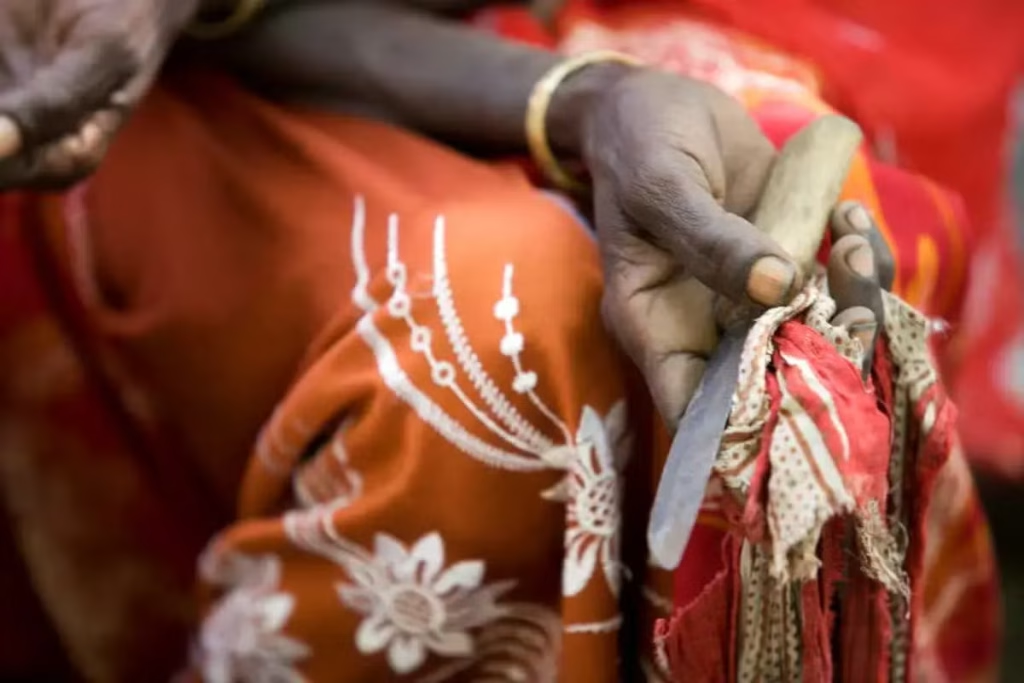
FGM continues due to deeply rooted social norms and gender inequality. In some communities, it is viewed as a rite of passage, while in others it is used to control female sexuality or enforce perceived ideals of purity and chastity.
Although neither Islam nor Christianity endorses FGM, religious interpretations are often misused to justify it. In high-prevalence regions, FGM may be seen as a prerequisite for marriage or inheritance, placing immense pressure on families to conform. Parents who refuse may face social exclusion, while their daughters risk being deemed unsuitable for marriage.
Historically, FGM has been normalized in parts of the world treated as tradition rather than recognized as harm.
FGM Consequences For Girls And Women
FGM offers no health benefits and exposes girls and women to severe and sometimes fatal risks.
Immediate And Short-Term Effects
- Extreme pain and shock
- Severe bleeding (haemorrhage)
- Swelling and infections
- Urination difficulties
- Risk of tetanus, HIV, and other infections
- Death in severe cases
Long-Term Consequences - Chronic pain and painful urination
- Menstrual complications and scarring (keloids)
- Recurrent urinary and reproductive tract infections
- Obstetric complications, including difficult labour, Caesarean sections, postpartum haemorrhage, and obstetric fistula
- Long-term sexual health challenges, such as reduced desire, pain during intercourse, and absence of orgasm
- Psychological effects including anxiety, depression, and post-traumatic stress disorder (PTSD)
For many survivors, FGM remains a lifelong source of trauma that affects physical health, emotional wellbeing, and quality of life.
Where FGM Remains Most Prevalent

While FGM is declining in many countries, progress has been uneven. In some places, prevalence rates have barely changed over the past three decades.
In countries such as Guinea and Somalia, over 90% of women and girls aged 15–49 have undergone some form of FGM, underscoring the need for targeted, culturally informed interventions.
Health Sector And Global Responses
A UNICEF-supported global initiative, launched in 2008, continues to drive progress across 18 countries in Africa, the Middle East, and Asia. The programme works alongside grassroots organizations, governments, and international partners to implement evidence-based strategies aimed at prevention and survivor support.
What Has Proven Effective
- Engaging community and religious leaders through education
- Expanding girls’ education, including reproductive health awareness
- Using mass media to challenge harmful norms
- Supporting local monitoring and early intervention
Since its launch: - 1.1 million girls under 14 have been protected from FGM
- 50 million people have publicly declared abandonment of the practice
- Nearly 7 million girls and women have received protection and prevention services
- Over 112,000 frontline workers have been mobilized
In 2025, the World Health Organization (WHO) and the Human Reproduction Programme (HRP) released updated, evidence-based guidelines on the prevention and clinical management of FGM. These guidelines support health systems to:
- Prevent FGM and address medicalization
- Manage FGM-related health complications across the life course
- Provide survivor-centred, respectful sexual, reproductive, and mental healthcare
- Strengthen health system responses in line with human rights and ethical standards
They also emphasize multi-sectoral approaches, including stronger laws, community engagement, and clear professional codes of conduct for health workers.
A Renewed Global Commitment
As the world marks the 2026 International Day of Zero Tolerance for FGM, partners are reaffirming their commitment to work alongside survivors, youth leaders, civil society, governments, and grassroots advocates.
With four years remaining until 2030, sustained action and investment are essential to protect girls, preserve progress already made, and finally bring an end to Female Genital Mutilation worldwide.
Discover more from LN247
Subscribe to get the latest posts sent to your email.

