As world leaders gather in New York for the 81st United Nations General Assembly, Africa is once again at the centre of conversations on peace and security, development, economic transformation, global governance and international cooperation.
The General Debate of the 81st UNGA is taking place from September 22 to 28, 2026, under the theme, “Restoring trust, managing transformation: A United Nations that delivers for all.” Nearly 130 heads of state and government are expected to attend the High-Level Week in person.
With 54 African countries represented within the United Nations, the continent forms the largest regional group at the organisation. Every one of the UN’s 193 member states has one vote in the General Assembly. But while Africa has considerable numerical strength, the question remains: how effectively does the continent convert that strength into influence?

AFRICA’S VOICE AT THE UN — HOW MUCH INFLUENCE?
Africa’s 54 UN member states give the continent significant voting strength within the General Assembly. Yet numbers alone do not automatically translate into political influence.
African countries often share concerns around development, debt, access to finance, reform of global institutions, climate finance, industrialisation and greater representation in international decision-making.
The challenge is coordination.

African countries have different national interests, economic circumstances and foreign-policy priorities. The extent to which those differences can be managed and transformed into common diplomatic positions remains an important question for the continent.
The African Union therefore has a potentially important coordinating role as African governments seek to advance shared priorities on the global stage.
Also Read this: Tinubu sends Shetima to UNGA
REFORMING THE GLOBAL SYSTEM — IS AFRICA STILL UNDER-REPRESENTED?
Reform of global governance remains one of Africa’s longstanding priorities.
The UN Office of the Special Adviser on Africa says the continent continues to push for reform of global institutions, including the UN Security Council, to ensure that Africa’s voice is better reflected in international decision-making.
The Security Council currently has 15 members: five permanent members — China, France, Russia, the United Kingdom and the United States — and ten non-permanent members elected for two-year terms. Africa currently has no permanent seat.

In 2026, discussions on Security Council reform continue, with UN documents noting broad agreement in the reform process that Africa should be equitably represented on a reformed Council. The African position has called for permanent representation as well as additional non-permanent seats.
Africa’s reform agenda extends beyond the Security Council.
African countries are also calling for changes to the global financial architecture, including measures addressing debt vulnerabilities, high borrowing costs, credit-rating methodologies and access to development finance.
FROM SPEECHES TO RESULTS — WHAT DOES AFRICA TAKE HOME?
For African countries, UNGA is more than an opportunity to deliver speeches.

The continent is seeking investment, infrastructure, technology, jobs, industrialisation, stronger health systems and financing for development. Peace and security also remain major concerns across several regions.
Ahead of UNGA 2026, the UN Office of the Special Adviser on Africa identified several priorities, including global governance reform, transformation of the global financial architecture, climate finance, sustainable industrialisation, critical minerals, peace and security.
Critical minerals are particularly significant. African countries are seeking greater value addition and industrialisation within the continent rather than relying solely on the export of raw materials. The objective is to create jobs, strengthen economic development and capture more value from Africa’s natural resources.
The bigger question, however, is what happens after the speeches and diplomatic meetings.
Can commitments made in New York translate into investment, stronger partnerships, development finance and tangible improvements for people across Africa?
WHAT IS ON THE UNGA 2026 AGENDA?
The 81st UNGA is addressing a wide range of global issues with direct relevance to Africa.
The programme includes high-level discussions on the right to development, climate action, sea-level rise, pandemic preparedness and response, peace and security and racial justice, among other issues.
The General Assembly itself is the UN’s main policy-making and representative organ, bringing together all 193 member states. Each country has an equal vote.
For Africa, these discussions intersect with some of the continent’s most pressing challenges — from financing development and managing debt to strengthening health systems, responding to insecurity and securing greater representation in global institutions.
NIGERIA’S PLACE IN THE AFRICAN AGENDA
Nigeria provides an important case study of Africa’s engagement at UNGA 2026.
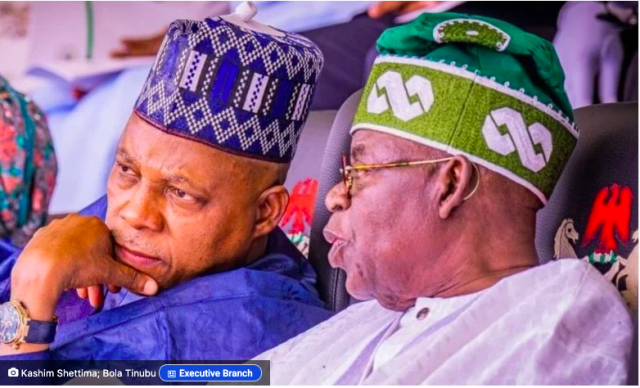
President Bola Tinubu has mandated Vice President Kashim Shettima to represent him and lead Nigeria’s delegation to the 81st UN General Assembly. Shettima is expected to deliver Nigeria’s national statement and participate in high-level meetings and bilateral engagements.
According to the Federal Government, Nigeria’s engagement is focused on issues including peace and security, economic development, climate action, reform of the global financial architecture, sustainable development and international cooperation.
Nigeria is also expected to use its engagements to push for stronger representation for Africa in global decision-making, alongside discussions on technology access, climate finance and international financial reform.
This raises a broader question for Nigeria: how can the country use its diplomatic influence to advance both its national interests and wider African priorities?
THE BIGGER QUESTION FOR AFRICA
Africa arrives at UNGA with significant numbers, vast natural resources and a long list of priorities.
But influence at the United Nations is not simply about the number of countries represented. It also depends on coordination, diplomacy, alliances and the ability to translate common interests into concrete outcomes.
UNGA provides Africa with a global platform. The challenge is turning that platform into meaningful influence — and turning diplomatic negotiations into results that can be felt at home.
As African leaders take their seats in New York, the question is therefore not simply whether Africa will be heard.
It is what Africa will do with its voice once the world is listening.
Discover more from LN247
Subscribe to get the latest posts sent to your email.