
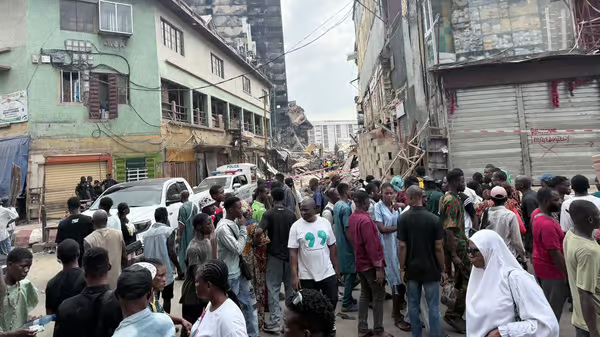
Fresh distress has engulfed hundreds of traders at Lagos’ historic Balogun Market following the sudden demolition of shops, allegedly carried out without prior notice. Bulldozers moved in while goods and personal belongings remained locked inside many of the structures, deepening the trauma of traders still recovering from the devastating Christmas Eve fire of December 24, 2025.
Viral videos circulating on social media show chaotic scenes at the market: heavy-duty machinery tearing through shops, clouds of tear gas hanging in the air, and distraught traders pleading with authorities for access to salvage their livelihoods. The development has shocked Nigerians nationwide, reigniting debates around urban renewal and government accountability.
In one emotional video, a female trader confronts officials amid tears, alleging that no notice was issued before the demolition. She claimed that many shop owners were away for the Christmas holidays when the operation began, leaving their goods trapped inside. According to her, tear gas was deployed, preventing traders from retrieving their belongings.
Another trader described the situation as a “double tragedy,” noting that many victims were only beginning to recover from the recent fire outbreak that destroyed properties worth billions of naira and claimed several lives. “Now, without any warning, our shops are being demolished with our goods inside,” the trader lamented.
The demolitions follow the tragic inferno at the 25-storey Great Nigeria Insurance (GNI) building, which reportedly killed at least eight people, trapped others beneath rubble, and caused massive economic losses. In response, Governor Babajide Sanwo-Olu ordered the demolition of the burnt structure and adjoining buildings deemed structurally unsafe, while sealing off the area to prevent further casualties.
However, traders insist that the ongoing demolition has extended beyond the officially declared unsafe zone, affecting additional shops and catching many off-guard during the post-holiday period. Balogun Market, one of Lagos’ oldest and busiest commercial centres, remains partially sealed, with traders warning that the prolonged closure has severely crippled their businesses.
Public outrage has since flooded social media, with calls for compensation, transparent engagement with traders, and a more humane approach to urban safety enforcement. Many Nigerians are questioning the timing and execution of the demolitions, especially so soon after the fire tragedy.
As the dust and tear gas settles, the Balogun Market crisis has once again brought national attention to critical issues of urban safety, trader welfare, and the need for compassionate urban renewal policies in Nigeria’s economic capital.
Discover more from LN247
Subscribe to get the latest posts sent to your email.

