
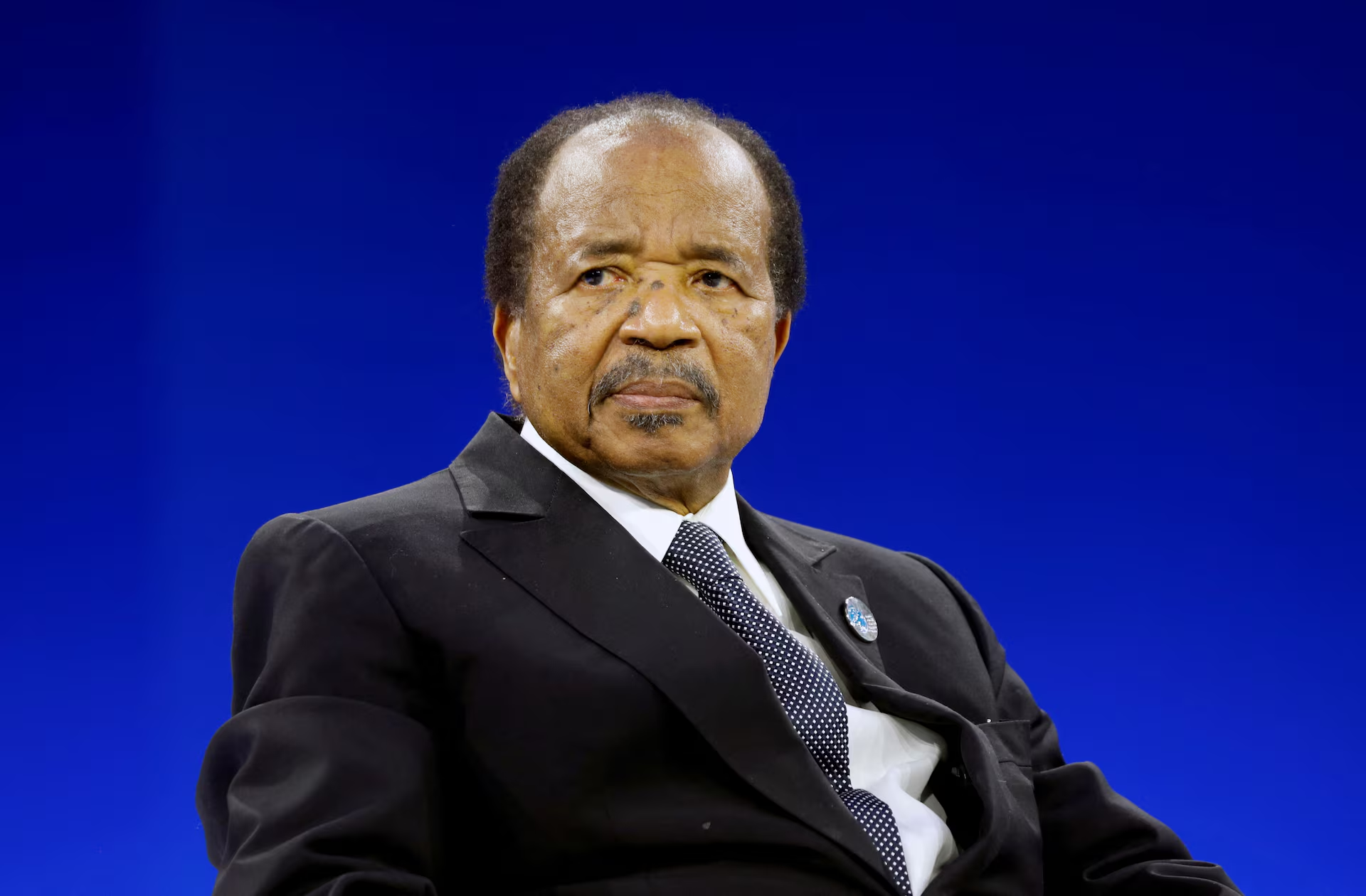
Cameroon is set for a significant constitutional shift as President Paul Biya, the world’s oldest serving leader, prepares to appoint a vice-president for the first time in his more than four decades in power. The move follows the approval of controversial constitutional amendments by parliament.
Constitutional Changes Approved.
Lawmakers overwhelmingly backed the reform during a joint session, paving the way for the reintroduction of the vice-presidential role—an office that was scrapped in 1972. The new law now awaits formal assent from Biya to come into effect.
Under the revised constitution, the vice-president will automatically assume office as head of state if the president dies or becomes incapacitated, completing the remainder of the seven-year term before fresh elections are held.
Before the amendment, Cameroon’s constitution designated the Senate president as interim leader in such circumstances, with the responsibility limited to overseeing a transition until elections were conducted.
The new arrangement marks a major departure, granting the vice-president—who will be appointed directly by the president—full authority to govern until the end of the term.
Government Justifies Reform
Supporters of the amendment argue that the change will improve governance and ensure continuity in leadership. They say it will also reduce the burden on the Senate, allowing it to focus on its legislative duties rather than succession responsibilities.
The reform is also seen by backers as a way to strengthen institutional stability in a country where leadership continuity has long been a sensitive issue.
Opposition Raises Concerns
However, the move has drawn sharp criticism from opposition groups, who claim the amendment was rushed through parliament without sufficient consultation. Some lawmakers have questioned the transparency of the process, describing it as “suspicious.”
The Social Democratic Front boycotted the vote, arguing that the vice-president should be elected alongside the president rather than appointed. The party also pushed for a power-sharing arrangement reflecting Cameroon’s linguistic divide between its English-speaking and French-speaking regions.
Prominent opposition figure Maurice Kamto went further, describing the reform as a “constitutional and institutional coup,” and warning that it risks concentrating power in the hands of the presidency.
Longstanding Leadership and Succession Debate
Biya, now 93, has ruled Cameroon since 1982, making him one of the longest-serving leaders in the world. His extended tenure has fueled ongoing speculation about succession, particularly amid recurring concerns about his health—though such discussions remain largely taboo within the country.
Despite long absences from public view, the president has repeatedly dismissed rumours about his condition by reappearing at official events.
Historical Context of the Vice-Presidency
Cameroon previously had a vice-president during its federal era between 1961 and 1972, when the country maintained a system that balanced its anglophone and francophone regions. The role was abolished after a 1972 referendum that transformed the nation into a unitary state.
The reintroduction of the position marks a return to a structure not seen in over five decades, though under very different political circumstances.
Uncertainty Over the Future
While the constitutional amendment provides clarity on succession procedures, it has also intensified speculation over who will be appointed as vice-president. Political discussions within Cameroon are now increasingly focused on the potential candidate and what the choice could signal for the country’s future.
As Cameroon moves to reinstate the vice-presidency, the reform highlights both an attempt to formalise succession and the enduring tensions surrounding governance in the country. With Paul Biya still firmly in power, questions about the nation’s political future remain unresolved.
Discover more from LN247
Subscribe to get the latest posts sent to your email.

