

Eric Dane, widely recognised for his roles in Grey’s Anatomy and Euphoria, has died at the age of 53, less than a year after publicly revealing his diagnosis with amyotrophic lateral sclerosis (ALS).
In April 2025, the California-born actor shared that he had been diagnosed with ALS. In the months that followed, he became an advocate for research and awareness surrounding the disease.
His family confirmed his passing in a statement, saying he died on Thursday afternoon after a courageous fight with ALS. He was surrounded by loved ones in his final days.
Who Was Eric Dane?

Born in San Francisco, California, in 1972, Eric Dane developed an early interest in performance before pursuing acting professionally.
He made his television debut in 1993 with a guest appearance on The Wonder Years, marking the beginning of a career that would span more than three decades.
Dane often spoke candidly about personal hardship, including the loss of his father to suicide during his childhood, an experience that shaped his resilience and outlook on life.
Personal Life
Dane was married to actress and model Rebecca Gayheart. Together, they had two daughters, Billie and Georgia, whom his family described as “the center of his world.”
In their statement, they said he spent his final moments surrounded by his devoted wife and daughters, along with close friends. They added that he deeply cherished his fans and remained grateful for their unwavering support throughout his illness.
Career Highlights

Dane’s breakthrough came with his portrayal of Dr. Mark Sloan famously nicknamed “McSteamy” on Grey’s Anatomy, that made him one of television’s most recognisable stars of the mid-2000s, before later portraying the complex family patriarch Cal Jacobs on HBO’s Euphoria.
Beyond Seattle Grace Hospital, he played Jason Dean in Charmed and later starred as Captain Tom Chandler in the action drama The Last Ship.
His film credits included roles in Marley & Me, Valentine’s Day and Burlesque.
In his final on-screen appearance, Dane portrayed a firefighter grappling with an ALS diagnosis in an episode of Brilliant Minds, a performance that mirrored his real-life battle.
Advocacy For ALS
Following his diagnosis, Dane became a prominent voice in the ALS community. He joined the board of directors of Target ALS, a nonprofit organisation dedicated to advancing research toward effective treatments and a cure.
He was later named among Time magazine’s 100 most influential people in health for his advocacy work. In interviews, he spoke openly about his determination to fight the disease — not only for himself, but for others facing similar diagnoses.
“I’m trying to save my life,” he said in a published interview. “And if my actions can move the needle forward for myself and countless others, I’m satisfied.”
Through fundraising campaigns and public appearances, he helped raise hundreds of thousands of dollars for ALS research and awareness initiatives.
What Is ALS?
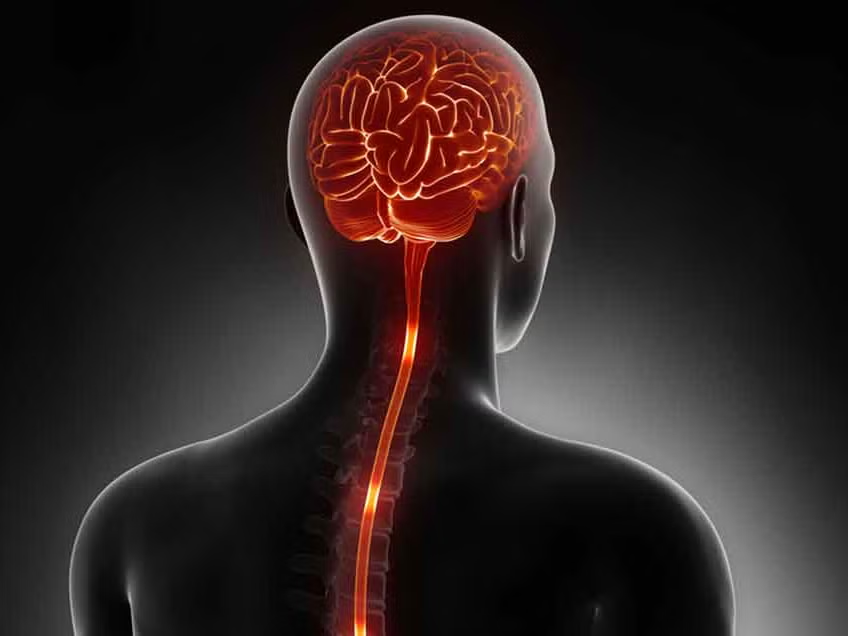
Amyotrophic lateral sclerosis (ALS), the most common form of motor neurone disease (MND) is a progressive neurodegenerative condition that affects the nerve cells controlling voluntary muscle movement.
The disease causes motor neurons in the brain and spinal cord to deteriorate and die. As these neurons break down, the brain loses the ability to control muscles, leading to progressive weakness and paralysis. Over time, individuals may lose the ability to speak, swallow, move and breathe independently.
ALS was first described in 1869 by French neurologist Jean-Martin Charcot. It later became widely known in the United States as “Lou Gehrig’s disease” after the condition ended the career of baseball legend Lou Gehrig in 1939.
There is currently no cure. According to major health organisations including the NHS and the Muscular Dystrophy Association, most people live between three and five years after diagnosis, though some survive much longer.
Symptoms

ALS symptoms vary depending on which motor neurons are affected but typically begin with muscle weakness that gradually worsens.
Common signs include:
- Difficulty walking or performing routine tasks
- Frequent tripping or falling
- Weakness in the hands, legs, feet or ankles
- Slurred speech or trouble swallowing
- Muscle cramps and twitching
- Emotional changes such as involuntary laughing or crying
- In some cases, behavioural or cognitive changes
The condition generally does not affect the senses, bladder control, or cause significant pain in its early stages.
Causes & Risk Factors
The exact cause of ALS remains unknown in most cases. About 10% of cases are inherited (familial ALS), while the remaining majority occur sporadically.
Researchers believe the disease may result from a complex interaction between genetics and environmental factors. Certain gene mutations including changes in C9orf72, SOD1, TARDBP and FUS have been linked to familial forms of the disease.
Potential environmental contributors under investigation include exposure to toxins, viral infections, trauma, and other external triggers, though definitive links remain under study.
Treatment & Prevention
While no treatment can reverse nerve damage caused by ALS, therapies and medications may help slow progression and manage symptoms.
Care often includes:
- Medication to delay disease progression
- Physical and occupational therapy
- Nutritional support
- Breathing assistance as needed
There is currently no proven way to prevent ALS. Ongoing research is focused on understanding genetic risk factors and identifying potential early interventions.
His Words On Living With ALS
After publicly announcing his diagnosis, Dane used his platform to push for greater research funding and awareness.
In interviews, he acknowledged feeling anger and fear, particularly about the possibility of leaving his daughters at a young age, a painful parallel to his own childhood loss. Yet he remained determined to contribute meaningfully to the fight against the disease.
He described himself simply as “an actor… a father, and now a person living with ALS,” and called for a collective push toward ending the illness.
Eric Dane leaves behind a legacy not only of memorable performances, but also of courage, advocacy, and devotion to his family.
Discover more from LN247
Subscribe to get the latest posts sent to your email.

