
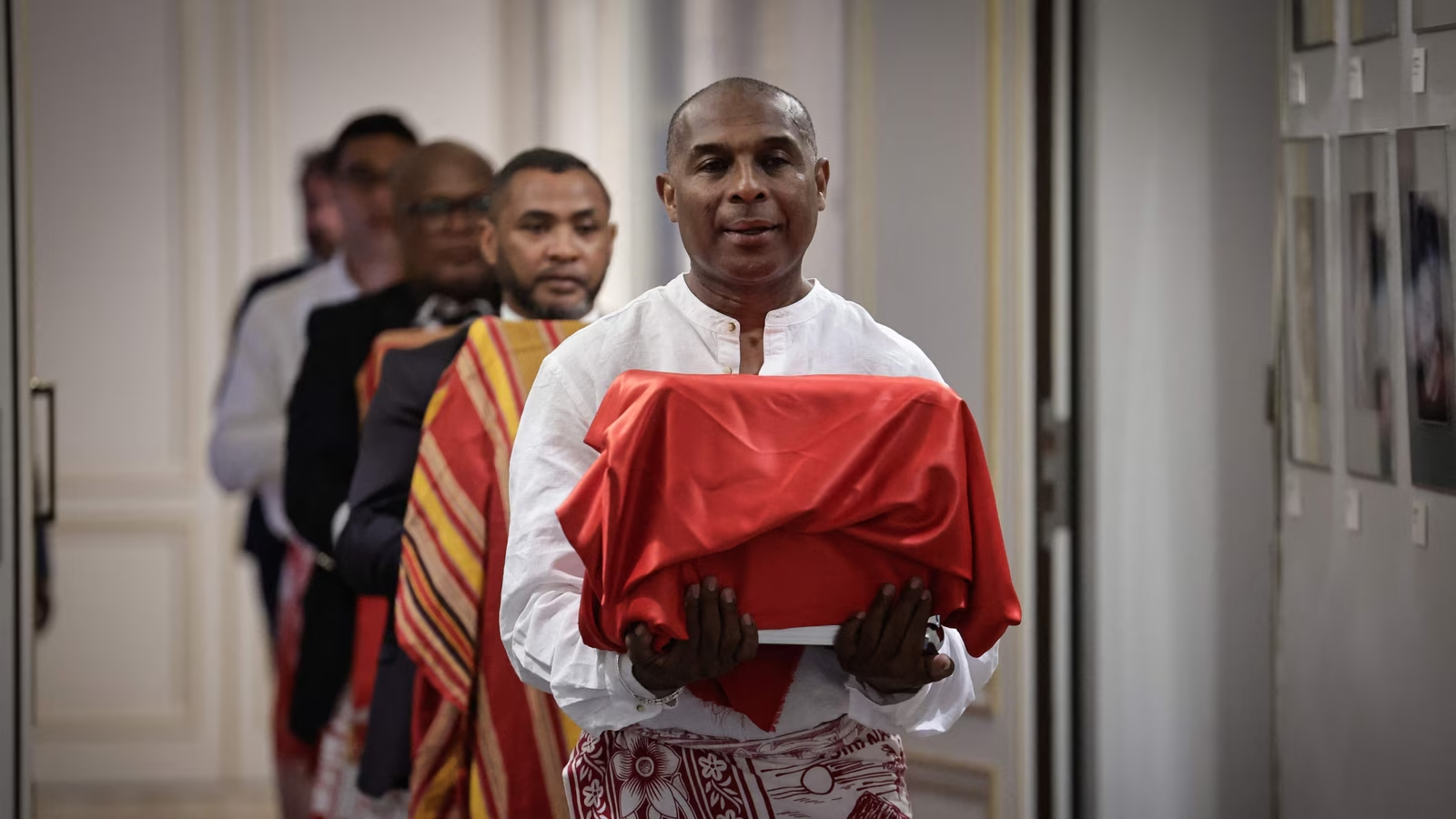
France has returned the skull believed to belong to King Toera, the last ruler of the Sakalava kingdom of Menabe in western Madagascar. Officials also handed over the skulls of two other high-ranking court members.
They made the historic return official during a ceremony on Tuesday, August 26, 2025, in Paris. This gesture closes a 128-year chapter of unresolved colonial injustice and marks the first human remains restitution under France’s 2023 cultural property law.
People across Africa see the event as a major step in addressing the painful legacy of colonialism. It has reignited calls to return other human remains and cultural artifacts to their countries of origin.
Historical Background
In August 1897, during France’s violent colonization of Madagascar, King Toera led armed resistance against French troops in the Menabe region. French forces captured and executed him after a fierce battle.
Historical accounts report that French troops beheaded him. They brought his skull, along with those of two of his advisors, to France and placed them in the Muséum National d’Histoire Naturelle in Paris.

For over a century, museum staff stored the remains in archives. Anthropologists used them for studies—a common colonial-era practice now widely condemned as unethical.
In Malagasy culture, the soul cannot rest if the body remains incomplete. The Sakalava people saw the absence of King Toera’s remains as a deep spiritual wound.
Madagascar first requested the return of the skulls in 2003. Descendants, including Princess Marie Francia Kamamy, renewed the appeals in 2024 and placed growing pressure on the French government.
The Return Ceremony

The French Ministry of Culture hosted the official return ceremony in Paris. French Culture Minister Rachida Dati handed the remains to her Malagasy counterpart, Volamiranty Donna Mara.
Minister Dati acknowledged that France had added the skulls to its national collections “in circumstances that clearly violated human dignity.” She said the return forms part of a broader effort to address colonial-era wrongs.
Minister Mara responded with emotion, saying, “Their absence has been, for more than a century—128 years—an open wound in the heart of our island.” She added that the return helps bring closure to a long and painful history.
Officials will fly the skulls back to Madagascar in the coming days. Sakalava leaders will carry out traditional burial rites to allow King Toera’s spirit to finally rest.
Although DNA tests proved inconclusive due to the skulls’ age and condition, experts from a joint Franco-Malagasy committee concluded that the remains most likely belonged to Sakalava individuals.
The Significance

This restitution marks a turning point in how France handles colonial history and African heritage.
French museums still hold more than 20,000 human remains. The return of King Toera’s skull could set a powerful precedent for future restitutions. In response, other African countries—including Senegal, Ghana, and Namibia—have renewed their demands for similar returns.
In Madagascar, the return serves as a unifying moment. It promotes national reflection, cultural revival, and greater youth engagement in preserving ancestral heritage.
This event also follows French President Emmanuel Macron’s April 2025 visit to Antananarivo, where he publicly asked for forgiveness for France’s colonial violence in Madagascar.
As global movements push for decolonization and historical justice, France’s return of King Toera’s skull signals a growing willingness to acknowledge and address long-ignored histories—with dignity and respect.
Discover more from LN247
Subscribe to get the latest posts sent to your email.


Comments are closed.