
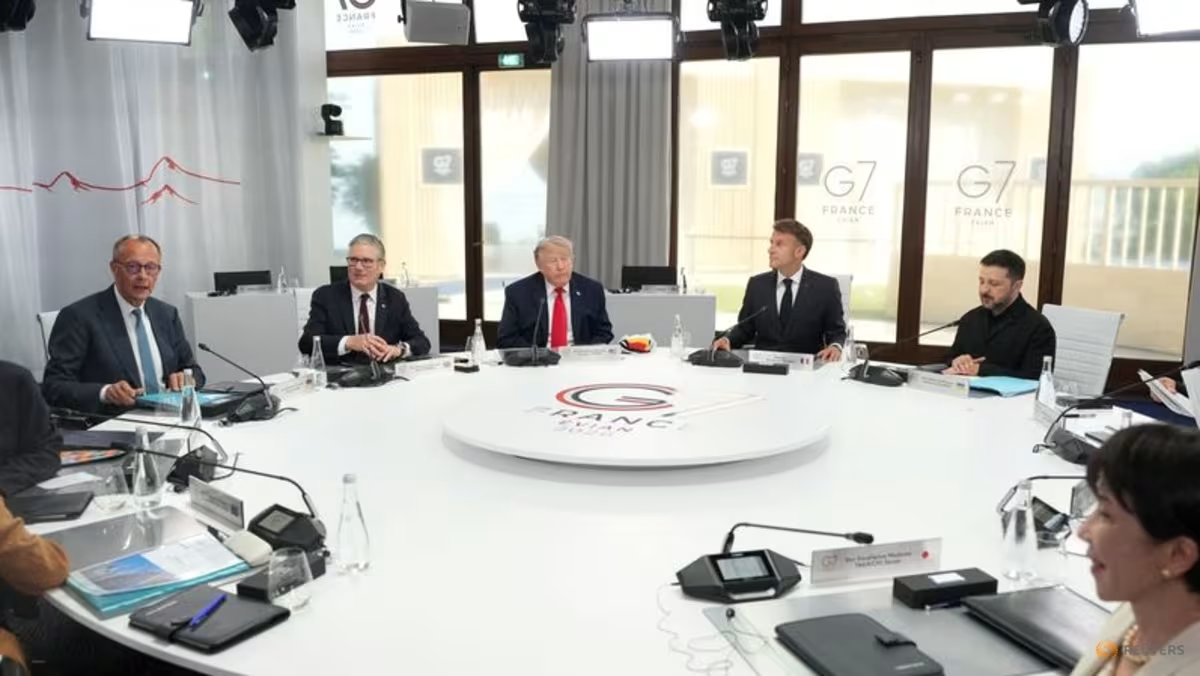
Leaders of the G7 nations have called for an immediate ceasefire in Lebanon while welcoming the interim agreement reached between the United States and Iran aimed at ending months of conflict in the region.
Speaking at the G7 summit in Evian-les-Bains, France, U.S. President Donald Trump cautioned that the recently reached agreement with Iran is not yet final and warned that military action could resume if Tehran fails to comply with its commitments.
“It’s a memorandum of understanding. And if I don’t like it, we’ll go back to shooting at them, dropping bombs on their head,” Trump said.
“If I don’t like it, if they don’t behave, we’ll go right back to dropping bombs right smack in the middle of their head, OK?”
The G7 leaders also announced plans to diversify global energy supply routes to reduce reliance on the Strait of Hormuz, following disruptions caused by the conflict involving Iran.
The summit, held in the French town of Evian-les-Bains near the Swiss border, comes ahead of a formal signing ceremony for the memorandum scheduled to take place in Switzerland on Friday.
The U.S.-Iran agreement is expected to pave the way for negotiations toward a permanent settlement to the conflict, which has reportedly claimed more than 7,000 lives, most of them in Iran and Lebanon.
G7 Backs Diplomatic Efforts
In a joint statement, G7 leaders reaffirmed their concerns about Iran’s nuclear ambitions.
“We underline the need for the negotiation … to address the threats posed by Iran in the region and beyond and ensure that they never obtain a nuclear weapon,” the leaders stated.
The summit provided Trump an opportunity to present the agreement to fellow G7 leaders from Britain, Canada, France, Germany, Italy, and Japan.
While the member nations share concerns about Iran’s nuclear programme, many had previously expressed reservations about the decision to pursue military action and remain cautious about Iran’s continued influence in the region.
The leaders pledged support for implementing the agreement, with a British and French-led coalition expected to assist in securing maritime routes once the Strait of Hormuz reopens.
Although details of the memorandum have not yet been made public, the agreement reportedly extends a ceasefire first announced in April by an additional 60 days to allow both sides negotiate a lasting peace arrangement.
Despite the deal, critics argue that several key objectives initially outlined by Trump remain unresolved. Iran’s government remains in power, its stockpile of highly enriched uranium has not been surrendered, its ballistic missile programme remains intact, and support for regional groups such as Hezbollah has not ended.
Trump maintains that the agreement guarantees Iran will not obtain a nuclear weapon, while U.S. officials say future negotiations will address the fate of Iran’s enriched uranium stockpile.
Lebanon Remains a Major Concern
One of the biggest unresolved issues remains the situation in Lebanon.
Israel launched military operations in Lebanon earlier this year following cross-border attacks by Hezbollah, which had acted in support of Tehran after U.S. and Israeli strikes on Iranian targets.
Israeli forces continue to occupy parts of southern Lebanon, where more than one million people have reportedly been displaced. Meanwhile, Hezbollah remains active despite ongoing military operations.
Iran insists that any ceasefire arrangement must also bring an end to hostilities in Lebanon and eventually lead to the withdrawal of Israeli forces. Israel, however, has maintained that it reserves the right to take military action when necessary and has ruled out an immediate withdrawal.
The disagreement has exposed tensions between Israel and the United States, with Trump recently criticizing Israeli Prime Minister Benjamin Netanyahu over military actions in Lebanon.
In their final communiqué, G7 leaders called for an “immediate robust ceasefire” in Lebanon and urged the disarmament of Hezbollah as part of broader efforts to stabilize the region.
Discover more from LN247
Subscribe to get the latest posts sent to your email.

