
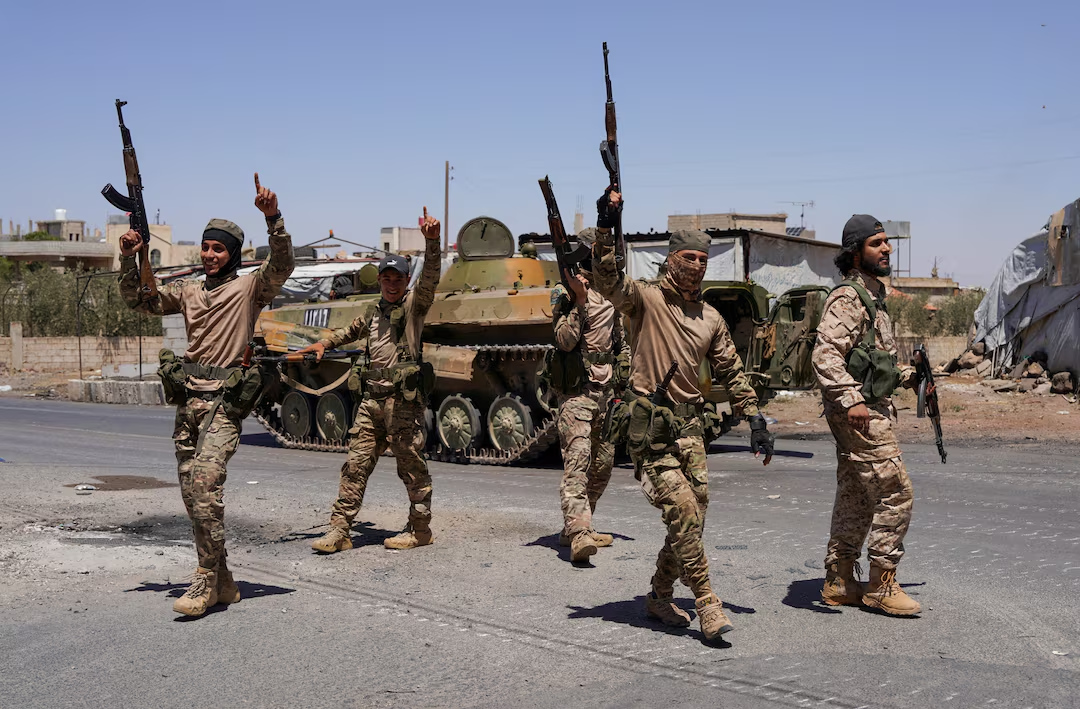
Fresh discussions have reportedly been initiated between Israeli and Syrian officials in the aftermath of recent deadly clashes, which included military actions by the IDF in Damascus and the southern Sweida region.
As per emerging reports, Turkey and the United States are said to be facilitating the renewed talks, while an Israeli team is expected to visit Baku, Azerbaijan, where key terms with Syria may be finalized.
Despite this development, Israel is reportedly maintaining its right to carry out military operations in Syria. It is also pressing for a demilitarized buffer area along its border, in addition to retaining military oversight in the zone it captured following the collapse of Bashar al-Assad’s administration last December.
Israeli authorities have not yet released an official statement on the matter.
Before the recent airstrikes, there were indications that both parties were engaged in “advanced talks” to de-escalate tensions, with strong encouragement from the Trump administration to move toward a broader normalization agreement.
Earlier in July, Israel entered the conflict in Syria, intervening in support of the Druze minority, a community it considers closely aligned and which has members serving in the Israeli military.
Israel laid blame on forces loyal to Syria’s interim leader, Ahmed al-Sharaa, for their alleged involvement in violent assaults by Bedouin tribes targeting the Druze community in Sweida. The violence reportedly came to a halt after a ceasefire, which was arranged with the assistance of Washington, was declared over the weekend.
On Monday, White House press secretary Karoline Leavitt remarked that Trump was “caught off guard” by the IDF’s offensive in Syria.
Her remarks followed anonymous reports from U.S. officials expressing dissatisfaction with Prime Minister Benjamin Netanyahu’s handling of the strikes, fearing the military actions could destabilize the new Syrian leadership that the U.S. hopes to support for regional recovery.
Meanwhile, the U.S. envoy for Syrian affairs, Tom Barrack, also voiced concern on Monday, calling Israel’s intervention ill-timed and suggesting it might hinder ongoing stabilization efforts.
Historically, Israel and Syria have found themselves on opposing ends of Middle Eastern geopolitical conflicts, often clashing directly.
With Assad’s departure in December, Syria’s new Islamist-led government is reportedly seeking to soften its global image and gain diplomatic traction in Western spheres.
Discover more from LN247
Subscribe to get the latest posts sent to your email.


Comments are closed.