
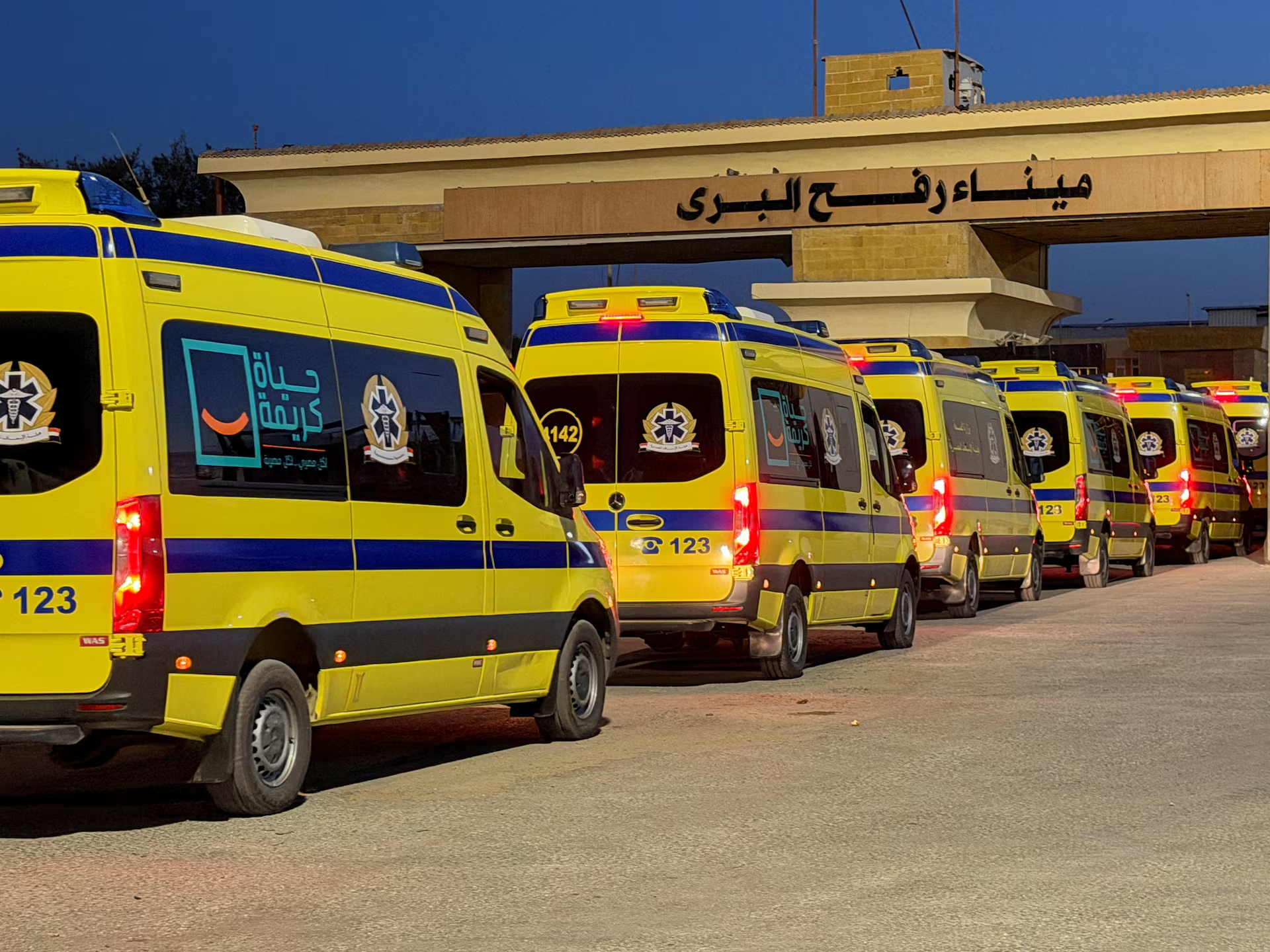
Israel reopened Gaza’s Rafah border crossing with Egypt on Monday, allowing limited foot traffic for Palestinians leaving the enclave and for those seeking to return after fleeing the war. The move marks a partial easing of restrictions but comes with tight controls and security screenings imposed by Israel.
The reopening is restricted in scope. An Egyptian official involved in ceasefire implementation talks said only 50 Palestinians would be allowed to cross in each direction on the first day of operations. Israel has insisted on strict security checks for anyone entering or exiting through the crossing. According to Gaza health officials, around 20,000 children and adults in urgent need of medical treatment are hoping to leave Gaza via Rafah, while thousands of Palestinians currently outside the territory are seeking to return home.
Israel seized control of the Rafah crossing in May 2024, about nine months into the Gaza war, which was later paused by an October ceasefire brokered by US President Donald Trump. Reopening the crossing was a key condition in the first phase of Trump’s broader plan aimed at halting fighting between Israel and Hamas. An Israeli security official confirmed that European monitoring teams had arrived at Rafah and that the crossing “has now opened to the movement of residents, for both entry and exit.”
During the first nine months of Israel’s assault on Gaza launched after the October 7, 2023 Hamas-led attack on southern Israel, Palestinians were generally able to flee to Egypt through Rafah. Palestinian officials estimate that about 100,000 people left Gaza during that period, some with sponsorship from aid groups, while others reportedly paid bribes to obtain permission to cross. Israel later shut the crossing and sealed the Philadelphi corridor, cutting off a vital route for wounded and sick Palestinians seeking medical care abroad.
Although Rafah has now partially reopened, Israel continues to bar foreign journalists from entering Gaza, a ban in place since the start of the war. Israel’s Supreme Court is reviewing a petition by the Foreign Press Association demanding access for international media. Government lawyers argue that allowing journalists into Gaza could endanger Israeli soldiers and reporters, a claim the FPA rejects, saying the public is being denied independent reporting. Nearly 220 media workers have been killed since the war began, according to RSF data.
Gaza’s roughly two million residents are largely living in damaged homes or makeshift shelters amid widespread destruction. Meanwhile, Trump’s Gaza plan now in its second phase, envisions governance by Palestinian technocrats, Hamas laying down its weapons, Israeli troop withdrawal, and large-scale reconstruction. Despite the ceasefire, health officials say more than 500 Palestinians have been killed by Israeli attacks since October, while militants have killed four Israeli soldiers. On Saturday, Israel carried out some of its heaviest airstrikes since the truce, killing at least 30 people, saying it was responding to an alleged Hamas violation.
Discover more from LN247
Subscribe to get the latest posts sent to your email.

