
Forecasters say the sun has unleashed its most powerful solar radiation storm in more than two decades, with charged particles now racing toward Earth and expected to spark vivid auroral displays while posing risks to satellites and aviation systems. The National Weather Service’s Space Weather Prediction Center (SWPC) confirmed the storm has reached level four out of five on the severity scale, making it an unusually intense space weather event.
“An S4 severe solar radiation storm is now in progress – this is the largest solar radiation storm in over 20 years,” SWPC announced on X, formerly Twitter. “The last time S4 levels were observed was in October, 2003. Potential effects are mainly limited to space launch, aviation, and satellite operations.” The 2003 “Halloween storms” caused widespread disruptions, including power outages in Sweden and transformer damage in South Africa.
Solar radiation storms can increase exposure risks for astronauts aboard the International Space Station and passengers on polar flight routes. As a precaution, SWPC has alerted airlines, NASA, the Federal Aviation Administration, the Federal Emergency Management Agency, and key power and satellite operators. “We’ve been making all these phone calls to ensure that we are keeping all the critical technological infrastructure operators in the know of what’s happening,” said SWPC forecaster Shawn Dahl.
Alongside the radiation storm, a severe geomagnetic storm reached Earth on Monday afternoon, raising the possibility of electric grid disturbances. These geomagnetic storms are triggered by coronal mass ejections huge bursts of plasma and magnetic fields from the sun often associated with powerful solar flares. The current event was sparked by an X-class flare, the most intense type, marking the first major solar flare of the year, according to solar physicist Ryan French.
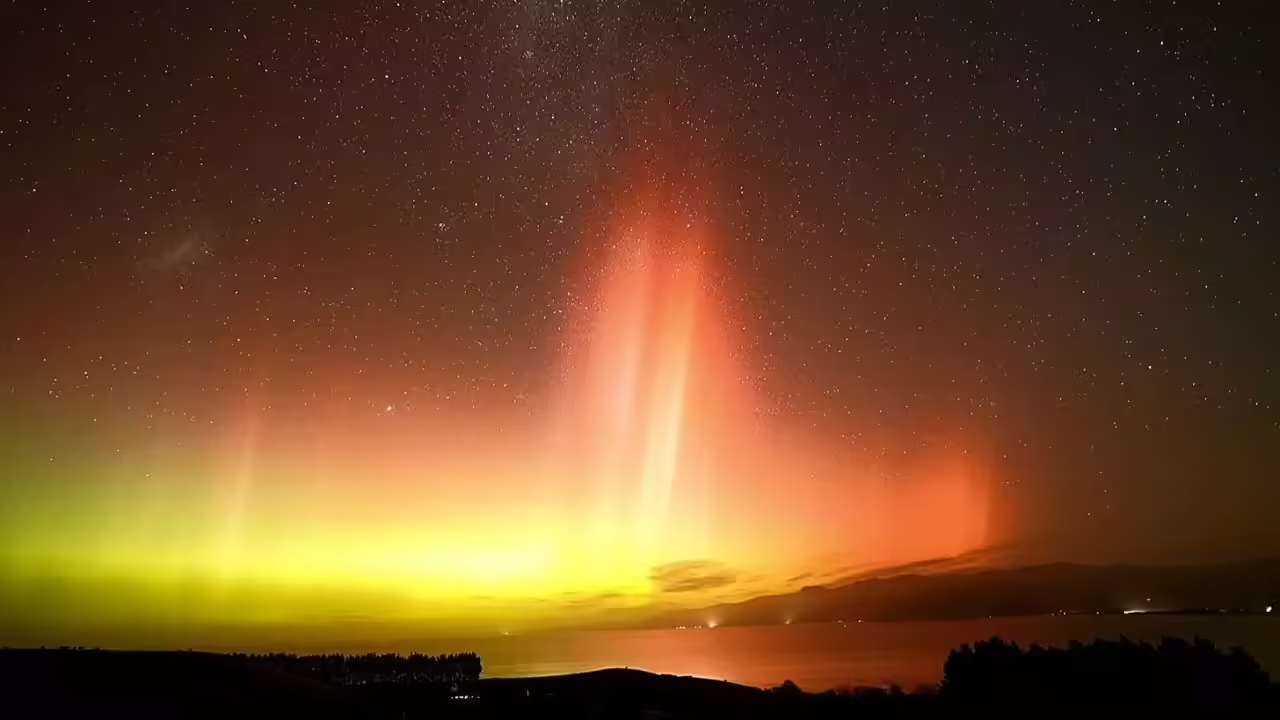
One visible upside of the heightened solar activity is the potential for widespread auroras. The northern lights could be seen across much of the northern United States and possibly as far south as Alabama and northern California. Clear skies in parts of the Midwest may offer prime viewing opportunities, while other regions could catch glimpses as clouds break. Even when auroras are faint to the naked eye, cameras including smartphones may still capture them.
“For aurora chasers, your best bet is to find somewhere with a clear and dark view north, without interference from light pollution,” French said. “Aurora will likely be strongest as soon as it is dark enough to see them at your location.” He added that auroras often intensify in short bursts, meaning more dramatic displays could appear unexpectedly farther south than usual.
Scientists also warn that the active sunspot region responsible for the storm may produce additional flares in the coming days, increasing the chances of further Earth-directed eruptions and continued space weather impacts.
Discover more from LN247
Subscribe to get the latest posts sent to your email.

