
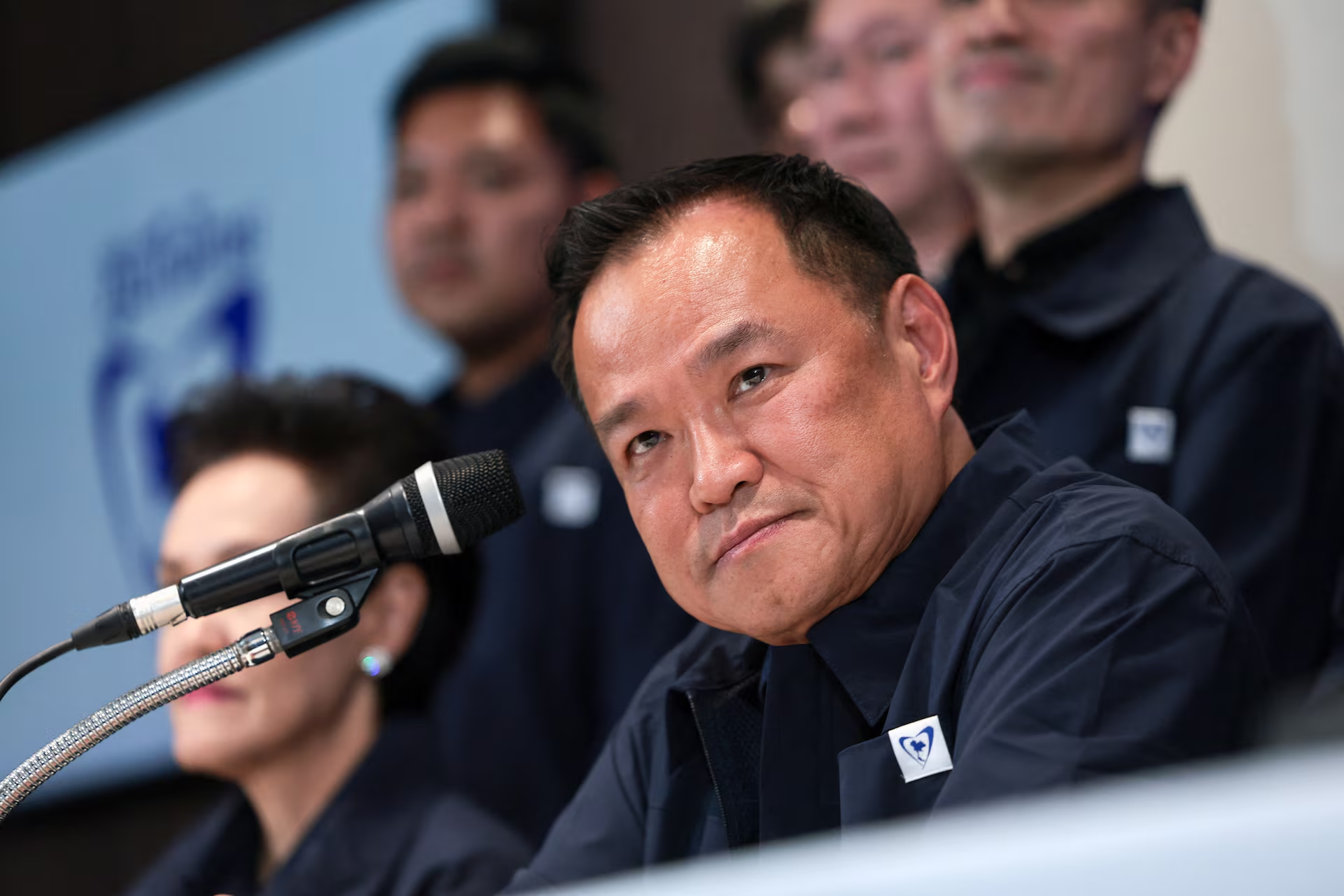
Thailand’s political landscape is set for a shake-up after Prime Minister Anutin Charnvirakul’s Bhumjaithai Party delivered a stronger-than-anticipated performance in Sunday’s general election, paving the way for coalition negotiations expected to begin in the coming days.
With 94% of ballots counted, Bhumjaithai emerged as the clear frontrunner, winning 193 of the 500 seats in parliament, according to Reuters calculations based on election commission figures. The People’s Party followed with 118 seats, while the Pheu Thai Party came third with 74.
Markets responded positively to the outcome, with Thai stocks climbing about 3% to their highest level in over a year, as investor concerns about prolonged political instability eased.
Several smaller parties secured a combined 115 seats, though the final distribution could still change under Thailand’s proportional representation system, which determines party-list allocations.
Anutin called the snap election in December, less than 100 days after taking office, seeking to ride a surge of nationalism triggered by Thailand’s three-week border conflict with Cambodia. He hailed the outcome as “a victory for all Thais”.
Analysts said Bhumjaithai’s 30.2% share of constituency votes reflected its success in consolidating conservative support, capitalising on nationalist sentiment and winning seats from the once-dominant Pheu Thai Party, linked to the influential Shinawatra family.
Speaking in a news broadcast on Monday, Anutin said he was aiming to form a broad-based coalition but would wait for the final results before making formal moves. “We need a strong government,” he said.
Highlighting the influence of nationalism on the campaign, Anutin reiterated his pledge to build a wall along Thailand’s border with Cambodia and bolster military strength. “I will still have to build the wall. I must keep strengthening the military’s capabilities. I believe Thai soldiers can win against anyone. And I still believe we need to keep the border checkpoints closed, not open them,” he said.
The prime minister has also indicated that, if re-elected, the current ministers of finance, foreign affairs and commerce would remain in their positions in the next cabinet.
The opposition People’s Party has ruled out joining an Anutin-led coalition. Its leader, Natthaphong Rueangpanyawut, said late on Sunday that the party would not attempt to form an alternative alliance.
Although opinion polls in late January had put the People’s Party well ahead, analysts said the Cambodia conflict and resulting nationalist mood shifted momentum in favour of conservative parties.
Voters also expressed strong support for constitutional reform, with nearly two-thirds backing plans to replace the charter introduced after the 2014 military coup. Critics argue the existing constitution grants excessive power to an unelected senate.
Implementing a new constitution is expected to take at least two years and will require two further referendums, one to approve the drafting process and another to endorse the final document.
Discover more from LN247
Subscribe to get the latest posts sent to your email.

