

The naira began the week on a weaker note at both the official and parallel markets after several weeks of relative stability.
According to data from the Central Bank of Nigeria (CBN), the naira dropped to ₦1,437.29 per dollar on Monday, down slightly from ₦1,436.58 recorded at the close of trading on Friday.
By midweek, it had slipped further to around ₦1,443.08, signalling a gradual but consistent decline.
In the parallel market, the pressure was more evident, with dealers quoting rates between ₦1,460 and ₦1,470 per dollar.
This movement occurred even as Nigeria’s external reserves rose marginally to about $43.39 billion as of November 11, showing that reserve growth did not immediately translate to currency stability.
Has Trump’s Threat To Nigeria Affected The Naira?
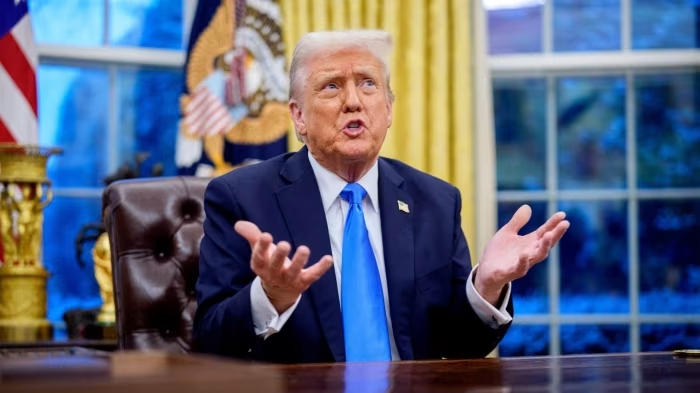
There are indications that Donald Trump’s recent comments about Nigeria contributed to the sudden depreciation of the naira. At the end of October 2025, the U.S. president declared that Nigeria could be designated a “Country of Particular Concern” over alleged religious-freedom violations. Days later, he threatened possible sanctions and military intervention if attacks on Christians continued.
These remarks unsettled investors and rattled markets. Shortly after the statement, Nigeria’s sovereign bonds dipped, and local economists reported that Trump’s threat had shaken investor confidence, sending ripples across the stock market and the foreign-exchange market.
While the naira’s weakness stems from several internal issues, the external shock from Trump’s comments appeared to amplify existing pressures.
Why Did The Naira Depreciate After A Period Of Appreciation?
The recent slide in the naira’s value comes after weeks of appreciation that followed renewed confidence in the Central Bank’s market reforms. However, multiple factors converged to reverse that progress.
Firstly, dollar demand surged as importers and investors sought to lock in foreign-currency positions, putting additional pressure on supply. Secondly, foreign-exchange inflows weakened as global investors adopted a cautious stance following Trump’s threats, which raised Nigeria’s perceived risk level.
Thirdly, structural liquidity problems persisted in the forex market, with a widening gap between official and parallel rates indicating ongoing inefficiencies.
Even though Nigeria’s external reserves improved slightly, these gains were not enough to offset the loss of market confidence. The combination of increased dollar demand, reduced inflows, and the geopolitical tension triggered by Trump’s statements created a perfect storm that pushed the naira lower.
While the impact of Trump’s threat may not be the sole cause, it clearly served as a catalyst that worsened existing vulnerabilities in Nigeria’s foreign-exchange market.
The coming weeks will reveal whether the CBN’s interventions and improved reserves can restore the naira’s upward momentum or whether external political shocks will continue to dictate its direction.
Discover more from LN247
Subscribe to get the latest posts sent to your email.


Comments are closed.