
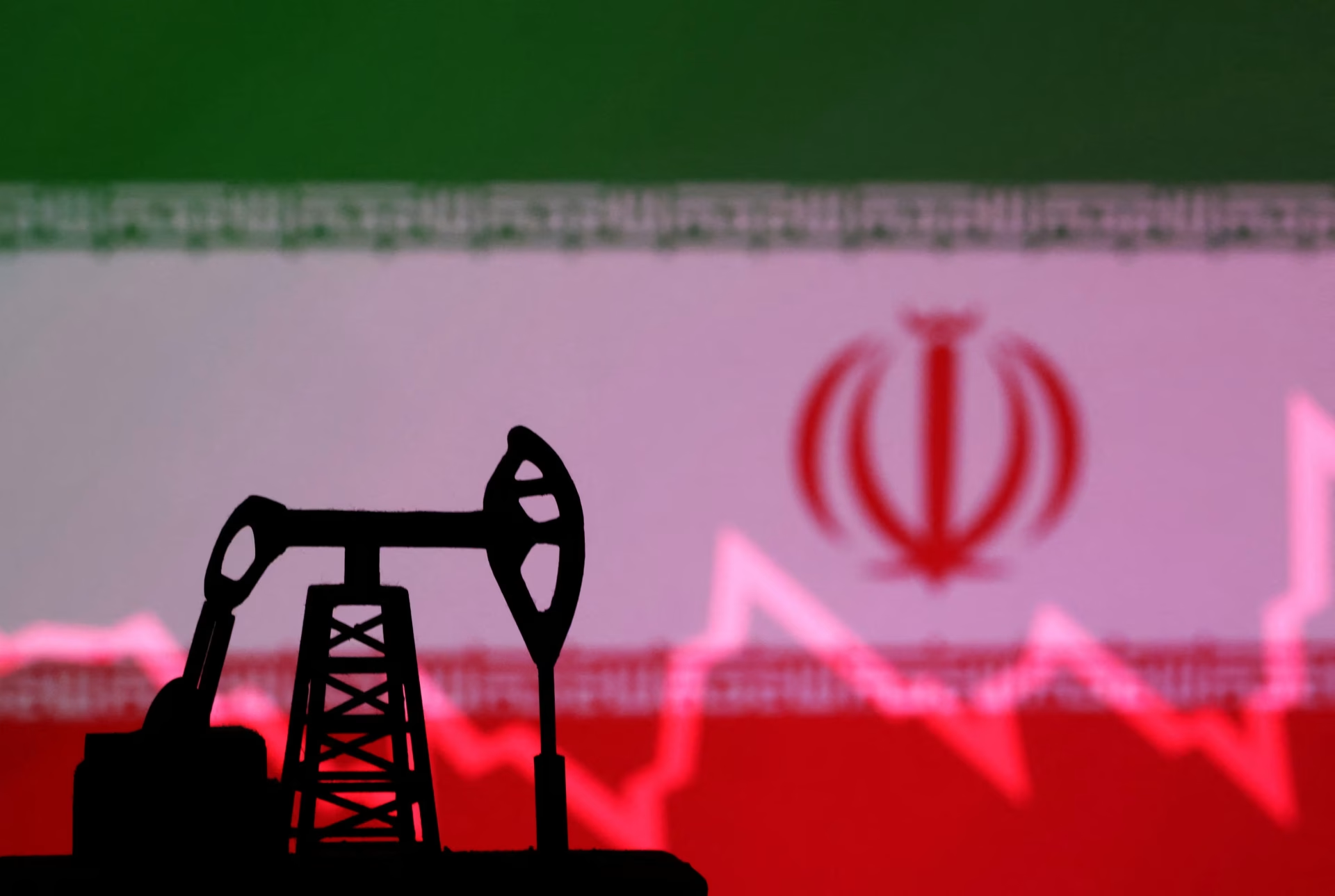
The situation unfolding in the Middle East following the military actions by the United States and Israel against Iran over this weekend, beginning on Saturday, 28th of February, has triggered an immediate and volatile ripple effect across the global economy.
Markets are currently reacting to the scale of the conflict, which notably includes the reported death of Iranian Supreme Leader Ali Khamenei and subsequent Iranian retaliatory strikes against U.S. and regional targets, with significant uncertainty.
Here is a summary of the current economic and logistical fallout as of Monday, 2nd of March.
Energy Markets: The Oil Price Surge

Oil has become the primary focal point of investor anxiety. The Middle East accounts for a significant portion of the world’s energy supply, and the conflict has placed the Strait of Hormuz, a critical maritime chokepoint through which approximately 20% of global seaborne oil passes, in the crosshairs of market concern.
Brent crude, the international benchmark, surged to roughly $82 per barrel, marking a 14-month high. And there are widespread fears that if the conflict leads to a formal blockade or severe disruption in the Strait, prices could escalate rapidly.
Some analysts are already flagging the risk of oil breaching $100 per barrel if the conflict continues to broaden.
Already, shipping operators are facing significant hurdles, as insurers are increasingly cautious about covering vessels transiting the region, leading to a bottleneck in oil logistics.
What Is The Global Economic & Financial Impact
The “risk-off” sentiment has dominated global financial markets as investors move away from equities toward traditional safe-haven assets.
Major global indices are facing downward pressure. In the Middle East, the impact has been more direct, with the Abu Dhabi and Dubai stock exchanges announcing a two-day closure from 2nd to 3rd of March, to mitigate extreme volatility and ensure market stability.
Gold, typically the go-to asset during geopolitical crises, has seen a notable climb, trading above $5,300 an ounce as investors seek security against the broader economic instability.
For import-dependent economies, particularly in developing regions, the sudden rise in energy costs is stoking fears of renewed inflation, potentially complicating the efforts of central banks to manage interest rates this year.
Updates On Travel And Infrastructure Disruptions

The conflict has effectively stalled significant portions of civilian air and maritime travel in the region.
Major airlines are rerouting or canceling flights to and from Gulf cities, including Dubai, Doha, and Manama, due to security concerns stemming from Iranian retaliatory missile and drone activity.
Hundreds of thousands of passengers remain stranded and reports indicate that civilian sites, including airports and commercial districts in the Gulf states, have been affected by intercepted debris or direct strikes.
This has led to the suspension of normal commercial operations, creating a cascading effect on regional business and tourism.
The Outlook
The situation remains fluid and highly unpredictable. Market analysts are watching two key variables: the potential for a swift de-escalation, which current official rhetoric suggests is unlikely in the immediate term, and the extent of Iranian retaliatory capabilities against regional infrastructure.
For now, the global economy is in a “wait-and-see” mode, bracing for a potentially prolonged period of higher energy prices and logistical friction.
Discover more from LN247
Subscribe to get the latest posts sent to your email.

