
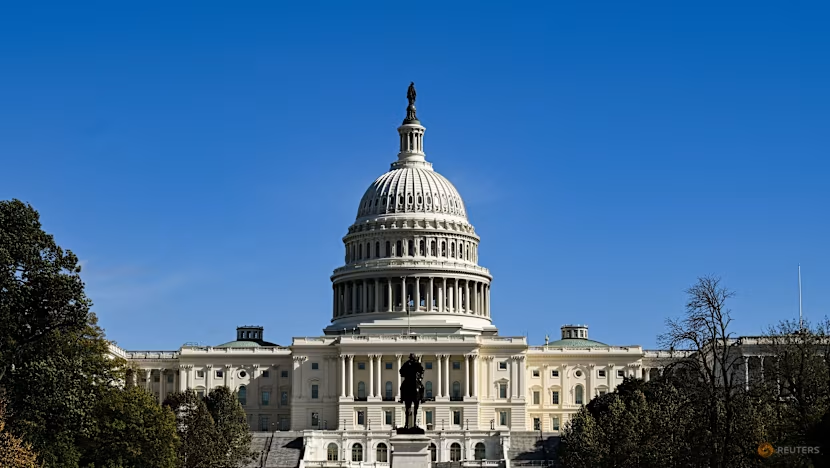
The U.S. Senate on Sunday took steps toward passing legislation to reopen the federal government and end the 40-day shutdown that has left federal employees idle, disrupted food assistance, and caused significant air travel delays.
In a procedural move, senators advanced a bill previously passed by the House, which will be amended to keep the government funded until January 30 and incorporate three full-year appropriations measures.
If the Senate approves the amended version, it will still require approval by the House of Representatives before being sent to President Donald Trump for signing, a process expected to take several days.
Under a deal negotiated with several Democrats who defied their party’s leadership, Republicans agreed to hold a December vote on extending Affordable Care Act subsidies. These subsidies, which help low-income Americans afford private health insurance and are set to expire at year’s end, have been a key Democratic demand in the funding standoff.
The procedural vote passed 60–40, the exact margin required to overcome a Senate filibuster.
“It looks like we’re getting very close to the shutdown ending,” Trump told reporters at the White House before the vote.
The bill would prevent federal agencies from terminating employees until January 30 — a victory for federal worker unions and their supporters and temporarily halt Trump’s efforts to reduce the size of the federal workforce.
At the beginning of Trump’s second term, about 2.2 million civilians were employed by the federal government, according to official data. Roughly 300,000 workers are projected to exit by year’s end as part of the downsizing initiative.
The measure would also guarantee back pay for all federal employees, including military personnel, Border Patrol officers, and air traffic controllers.
When the Senate reconvenes on Monday, Republican leaders will seek bipartisan support to bypass standard procedures and expedite the bill’s passage.
Otherwise, the chamber would have to spend much of the week completing procedural steps before a final vote, potentially prolonging the shutdown into the next weekend.
“It was a good vote tonight,” Senate Majority Leader John Thune told reporters after adjournment on Sunday. “Hopefully, we’ll get an opportunity tomorrow to set up the next votes. Of course, that’s going to take some cooperation and consent.”
Sunday’s agreement was brokered by Democratic Senators Maggie Hassan and Jeanne Shaheen of New Hampshire and Independent Senator Angus King of Maine, according to a source familiar with the discussions.
“For over a month, I’ve made clear that my priorities are to both reopen government and extend the ACA enhanced premium tax credits. This is our best path toward accomplishing both of these goals,” Shaheen posted on X.
Senate Minority Leader Chuck Schumer, the top Democrat in the chamber, voted against the measure.
Many Democrats on Capitol Hill reacted with frustration as the deal took shape.
“Senator Schumer is no longer effective and should be replaced,” U.S. Representative Ro Khanna wrote on X. “If you can’t lead the fight to stop healthcare premiums from skyrocketing for Americans, what will you fight for?”
Sunday marked the 40th day of the shutdown, which has kept federal employees off the job, disrupted food programs and national parks, and strained travel systems amid air traffic control shortages that threaten to upend Thanksgiving travel later this month.
Senator Thom Tillis, a Republican from North Carolina, said the worsening effects of the shutdown prompted lawmakers to find common ground.
“Temperatures cool, the atmospheric pressure increases outside and all of a sudden it looks like things will come together,” Tillis told reporters.
White House economic adviser Kevin Hassett warned on CBS’s “Face the Nation” that if the shutdown continues much longer, economic growth could turn negative in the fourth quarter particularly if air travel remains disrupted during the Thanksgiving season, which falls on November 27 this year.
Meanwhile, President Trump on Sunday renewed calls to replace the Affordable Care Act’s insurance subsidies with direct payments to individuals.
The subsidies, which helped boost ACA enrollment to 24 million since their introduction in 2021, remain the central issue in the shutdown. Republicans insist the matter should be addressed only after federal funding is reinstated.
Trump posted on Truth Social, condemning the subsidies as a “windfall for Health Insurance Companies, and a DISASTER for the American people,” while urging that the money instead go directly to individuals to purchase coverage independently. “I stand ready to work with both Parties to solve this problem once the Government is open,” Trump wrote.
Health experts estimate that Americans shopping for 2026 Obamacare plans could see their monthly premiums more than double on average as pandemic-era subsidies expire at the end of the year. The ACA enrollment period runs through January 15, leaving a short window for Congress to act on extending the credits for next year.
Discover more from LN247
Subscribe to get the latest posts sent to your email.


Comments are closed.