

Every year on January 15, Nigerians across the country observe a national occasion set aside to honour servicemen and women of the country’s military. Officially known as Armed Forces Remembrance Day, recently renamed Armed Forces Celebration and Remembrance Day by the Defence Headquarters, the date carries deep historical significance in Nigeria’s modern past. But it also raises a question: Why does the Federal Government frame this day as a tribute to the Armed Forces rather than a formal Civil War Remembrance Day?
A Day Rooted in History
To understand the significance of January 15, we have to go back to 1970. After nearly three brutal years of conflict, the Nigerian Civil War, also known as the Biafran War, officially came to a close when Biafran forces surrendered to the Nigerian military on January 15, 1970. The instrument of surrender was handed over by Colonel Philip Effiong of the Biafran army to General Olusegun Obasanjo of the Federal Government, effectively bringing the war to an end and signalling the reunification of Nigeria.
This date was chosen over the previously observed November 11, the Remembrance Day linked to World Wars I and II in many Commonwealth countries — because of its domestic importance in Nigerian history. It marks the conclusion of the nation’s most defining internal conflict and the beginning of a hard-won peace and unity.
January 15: The Evolution of Nigeria’s Remembrance Tradition
Historically, Nigeria observed Remembrance Day on November 11 to coincide with the traditional Poppy Day across the British Commonwealth, a day established after World War I to honour soldiers who died in the conflict. Following independence and later the Civil War, Nigeria shifted this observance to January 15 so the nation could reflect on its own struggles and sacrifices, particularly those of Nigerian servicemen during the Civil War.
This shift reflects two key choices:
- Recognition of internal sacrifice: By adopting January 15, Nigeria gives prominence to a date that resonates more closely with its own struggle for unity and peace rather than events abroad.
- Honouring the military’s role: The day is designed to honour the courage, professionalism and sacrifices of members of the Nigerian Armed Forces, both past and present, as symbols of national unity and defenders of the country’s sovereignty.
In 2026, the Federal Government officially updated the name to Armed Forces Celebration and Remembrance Day to underscore that the day is not just about mourning, but also celebrating the living heroes who continue to protect the nation.
Why Not a Civil War Remembrance Day?
While January 15 is the day the Civil War ended, the Nigerian government has deliberately chosen not to label the occasion strictly as a Civil War Remembrance Day for several reasons:
- National Unity Over Division
The civil war was deeply painful and divisive for Nigeria. Framing the day as solely a civil war commemoration could risk re-opening old wounds in a country still sensitive about that chapter of its history. Emphasising the armed forces offers a unifying theme, honouring those who fought for the peace and unity that eventually followed. - Inclusivity of All Conflicts
The armed forces are celebrated not just for their role in the Civil War but also for contributions in World War I and II, peacekeeping missions, and in maintaining internal security. This broader lens makes the observance more inclusive of all servicemen and women. - Fostering Patriotism and Support for Soldiers
Focusing on the military allows the nation to celebrate both the sacrifices of soldiers who have fallen and the dedication of those still serving. By honouring veterans and current personnel alike, the day promotes national pride and gratitude towards the forces tasked with protecting the nation. - Avoiding Singular Narratives
A Civil War Remembrance Day could be interpreted as aligning with a specific narrative or perspective about the conflict. In contrast, a military remembrance aims to transcend factional interpretations and celebrate the unity that followed the war’s end.
What Happens on January 15?

Every year, Nigerians observe the day with solemn ceremonies and symbolic acts of respect:
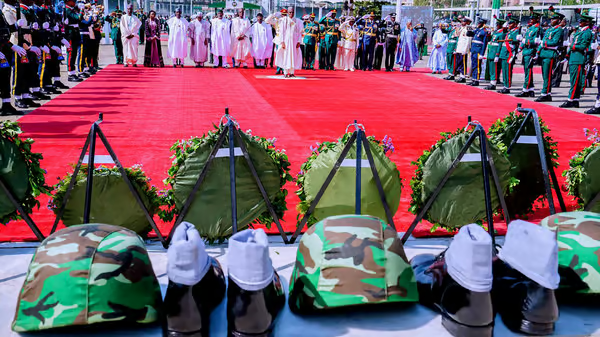
- Military parades and wreath-laying ceremonies at the National Cenotaph in Abuja, state capitals, and memorial sites like Remembrance Arcade in Lagos.
- 21-gun salutes, moments of silence, and prayers for soldiers who lost their lives serving the nation.
- Public speeches that reflect on national unity, sacrifice, and the need to support veterans and active military personnel.
January 15 stands as a testament to Nigeria’s painful journey through civil strife and its desire for lasting unity. By framing it as Armed Forces Celebration and Remembrance Day, the Federal Government anchors the commemoration in themes of national defence, unity, and shared sacrifice, rather than anchoring it solely in the painful memory of internal conflict.
In doing so, Nigeria not only honours its soldiers but also sends a powerful message: that peace and unity, once broken, must be remembered and protected by all.
Discover more from LN247
Subscribe to get the latest posts sent to your email.

