
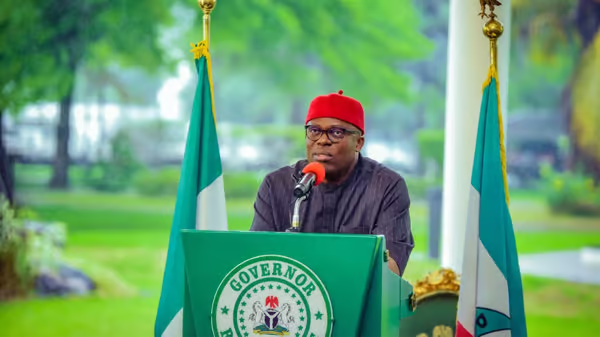
In a dramatic twist to the ongoing political crisis in Rivers State, four lawmakers who had initially withdrawn their support for the impeachment of Governor Siminalayi Fubara made a surprising U-turn on Friday, January 16, 2026.
The lawmakers, Minority Leader Sylvanus Nwankwo (Omuma constituency), Peter Abbey (Degema constituency), Barile Nwakoh (Khana I), and Emilia Amadi (Obio/Akpor II), announced their renewed backing for the impeachment during a live broadcast from the front of the Rivers State House of Assembly complex in Port Harcourt.
This reversal comes just days after the same group publicly called for dialogue and a political resolution to the impasse. Nwankwo, speaking on behalf of the group, cited ongoing media attacks from the governor’s aides as the primary reason for their change of heart, stating that instead of pursuing peace, the executive had chosen confrontation.
The development has reignited momentum for the impeachment process, which was initiated last week over allegations of gross misconduct, including the demolition of the Assembly complex and unauthorized spending of public funds.
The Rivers State House of Assembly, led by Speaker Martin Amaewhule, failed to reconvene on Thursday, January 15, 2026, amid rumors of an internal plot to oust the speaker himself.
This absence fueled speculation of deepening divisions, but the lawmakers’ Friday announcement suggests a consolidation of support for proceeding against Fubara and his deputy, Prof. Ngozi Odu. Members emphasized that the process is constitutional and essential to resolving the state’s political instability.
Reasons Why the Lawmakers Are Pushing Back
The initial pushback against the impeachment of Governor Siminalayi Fubara stemmed from growing internal divisions within the Rivers State House of Assembly and mounting external pressures for peace and stability in the state.
Between Monday, January 12, and Wednesday, January 14, 2026, four lawmakers Minority Leader Sylvanus Nwankwo (Omuma), Peter Abbey (Degema), Barile Nwakoh (Khana I), and Emilia Amadi (Obio/Akpor II), publicly withdrew their support for the proceedings.
They cited the need to de-escalate tensions, prioritize dialogue, and avoid further polarization that could stall development and disrupt governance.
The lawmakers acknowledged the allegations of constitutional breaches by Fubara and his deputy, Prof. Ngozi Odu, including failure to present the 2026 Appropriation Bill, extra-budgetary spending, and non-compliance with prior agreements brokered by President Bola Ahmed Tinubu but argued that impeachment should be tempered with mercy and restraint.
They emphasized appeals from respected stakeholders, elders, and leaders within and outside the state, who urged a political solution over confrontation.
Nwakoh and Amadi highlighted interventions by well-meaning figures calling for constructive engagement to restore trust and focus on service delivery rather than partisan disputes.
Broader concerns included the risk of exacerbating the protracted rift between Fubara and former Governor Nyesom Wike, potential ethnic tensions, and the impact on the state’s progress amid ongoing interventions from groups like the Pan Niger Delta Forum (PANDEF), Rivers State Elders and Leaders Forum, and even the Rivers State Council of Traditional Rulers, which formed mediation committees.
The withdrawals reflected fears that pursuing impeachment could undermine democracy, create uncertainty (especially with the Assembly’s failure to reconvene on January 15 amid rumors of a plot against Speaker Martin Amaewhule), and hinder legislative priorities like budget approval.
However, this pushback proved short-lived. On Friday, January 16, 2026, the same four lawmakers reversed course during a live press conference, citing continued media attacks from the governor’s aides, lack of willingness for genuine dialogue, and perceived blackmail as reasons to recommit to the process.
They insisted the impeachment is constitutional and necessary, signaling that initial calls for peace were unmet by reciprocal gestures from the executive.
Looking Ahead
With the four lawmakers’ reversal, the impeachment process appears to have regained steam, potentially leading to a formal investigation panel if the Chief Judge complies with the Assembly’s request.
Speaker Amaewhule has vowed to see it through, describing Fubara as a “mistake” and a threat to democracy, while no political solution will halt proceedings.
However, ongoing mediations by elders and forums could still pivot toward dialogue, especially if federal interventions intensify.
Critics warn that proceeding might deepen ethnic tensions, particularly among Ijaw communities supporting Fubara.
If impeachment advances, legal challenges are likely, given past court rulings on the Assembly’s legitimacy amid defections.
Rivers State remains on edge, with clarity on reconvening and next steps expected soon, as public calls for stability grow louder.
Discover more from LN247
Subscribe to get the latest posts sent to your email.

