

Chinese President Xi Jinping and North Korean leader Kim Jong Un have pledged to deepen bilateral ties and expand cooperation across multiple sectors as Xi concluded a rare two-day state visit to Pyongyang, his first trip to North Korea in nearly seven years. The summit underscored the enduring alliance between the two neighboring countries at a time of growing geopolitical tensions in East Asia and beyond.
According to North Korea’s state news agency KCNA, the two leaders agreed to strengthen cooperation in politics, the economy, culture, and people-to-people exchanges, while vowing to open what they described as a “new chapter” in bilateral relations. Both sides emphasized the importance of maintaining close strategic communication and increasing high-level exchanges between their governments.
Xi Reaffirms Support for North Korea
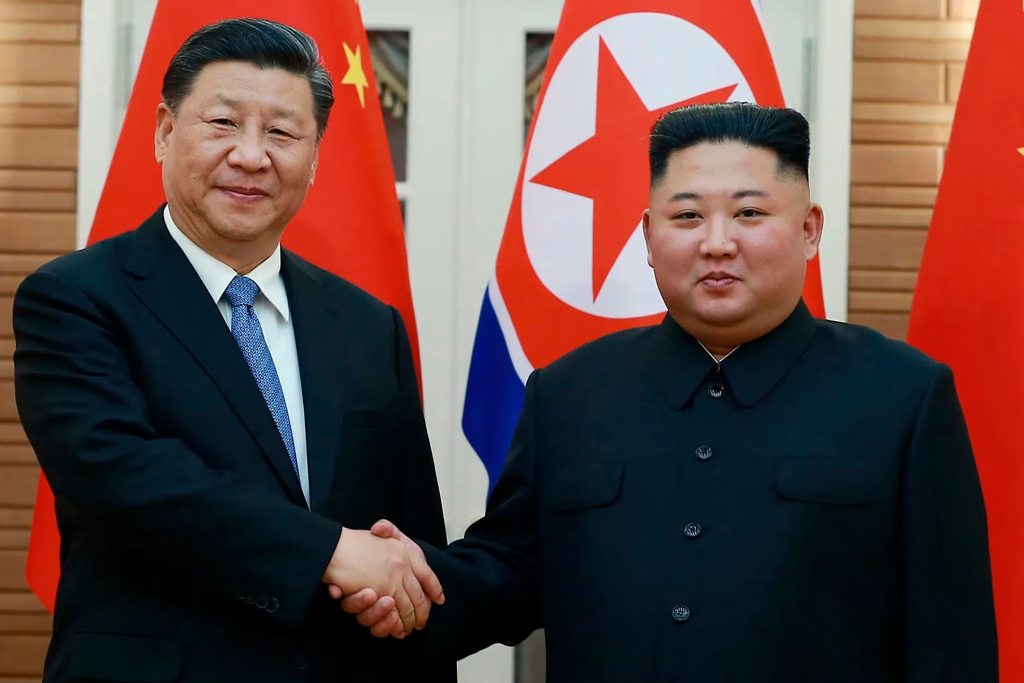
During the summit, Xi told Kim that China would remain committed to safeguarding the common interests of both countries and would not waver in its support for North Korea. The Chinese leader said Beijing and Pyongyang should work together to protect their sovereignty, security, and development interests amid a changing international environment.
Xi described relations between the two countries as standing at a “new historical starting point” and stressed the need to deepen strategic coordination. Chinese state media portrayed the visit as a demonstration of Beijing’s commitment to its only formal treaty ally.
Kim, in turn, expressed appreciation for China’s support and reaffirmed North Korea’s backing for the “One China” principle, a key foreign policy priority for Beijing regarding Taiwan. According to KCNA, Kim pledged that North Korea would continue to support China’s core interests regardless of changes in the international situation.
Elaborate Ceremonies Highlight Historic Alliance

Xi received a grand welcome in Pyongyang, with large crowds lining the streets, military honor guards, mass performances, and a formal ceremony at Kim Il Sung Square. The two leaders also attended a state banquet, planted a commemorative tree, and visited the Sino-Korean Friendship Tower, a monument honoring Chinese soldiers who fought during the Korean War.
The visit was marked by repeated references to the historical bonds forged during the Korean War and decades of socialist cooperation. State media in both countries highlighted what they called an “unbreakable” and “invincible” friendship between Beijing and Pyongyang.
China Seeks to Reassert Influence
Analysts view Xi’s visit as part of a broader effort by Beijing to reassert its influence over North Korea at a time when Pyongyang has strengthened economic and military ties with Russia. Since the end of the COVID-19 pandemic, North Korea has expanded cooperation with Moscow, including trade and security links that have increased its diplomatic options.
Xi’s trip is widely seen as an attempt to ensure that China remains North Korea’s most important strategic partner. Before the visit, Chinese officials said both countries would use the occasion to promote greater development of bilateral relations “in keeping with the times.”
Nuclear Issue Largely Absent from Public Discussions
Notably absent from public statements following the summit was any direct discussion of North Korea’s nuclear weapons program, despite international concerns over Pyongyang’s continued expansion of its arsenal. Just days before Xi’s arrival, Kim called for an “exponential” increase in North Korea’s nuclear capabilities and inspected a new nuclear material production facility.
Observers noted that both governments appeared keen to focus on economic cooperation, regional stability, and bilateral relations rather than contentious security issues. Analysts said China likely sought to frame the visit as a diplomatic and economic engagement rather than one centered on North Korea’s weapons programs.
Regional Implications
The summit comes amid heightened competition between China and the United States and ongoing security tensions on the Korean Peninsula. Both leaders stressed the importance of resisting external pressure and safeguarding their national interests, language widely interpreted as a reference to U.S.-led alliances and sanctions policies in the region.
The strengthened partnership could have significant implications for regional diplomacy, particularly as efforts to restart denuclearization talks between North Korea and the United States remain stalled. The visit also signals Beijing’s intention to remain a central player in shaping developments on the Korean Peninsula.
Looking Ahead
As Xi departed Pyongyang on Tuesday, both governments hailed the visit as a success and pledged to continue expanding cooperation. While concrete agreements announced during the summit focused primarily on economic, cultural, and political exchanges, the visit highlighted the strategic importance both countries place on their longstanding relationship.
With North Korea deepening ties with Russia and geopolitical competition intensifying across Asia, the renewed commitment by Xi and Kim to closer cooperation is likely to be closely watched by governments throughout the region and beyond.
Discover more from LN247
Subscribe to get the latest posts sent to your email.

