

Why a fuel depot in a border market turned one week of Sudan’s conflict into its deadliest, and possibly its most dangerous, yet
NAIROBI, 22 October 2026 — The fire would not go out, and with it the count kept climbing.
What happened
A drone strike hit Amiet Market, north of Abyei town, on Monday night, igniting a fuel depot inside the market. Yohana Akol Ngor, caretaker information minister of the Abyei administration, put the toll at 153 on Tuesday, revised up from 73, and expected to rise. “The fire is still burning.
So the recovery process of the dead ones is still continuing. The situation is terrible,” he told Reuters, adding that some bodies had been burned to ashes. Video filmed on Tuesday and verified by Reuters showed charred, twisted vehicles and buildings, with flames still rising from one structure as residents picked through the wreckage.

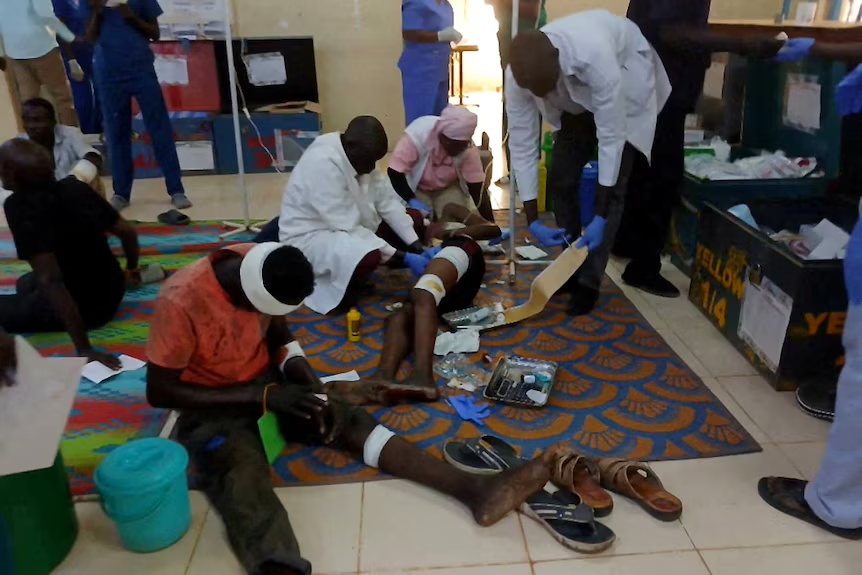
Some 8,000 people were displaced. Médecins Sans Frontières said it was treating more than 20 wounded, some with burns, at nearby Ameth Bek Hospital. “We are providing surgical services and wound dressing, along with other emergency care,” said MSF medical activities manager Christian Lindauer. Photographs from the charity showed bandaged patients lying on the floor.
Why the target is contested
Abyei officials blame Sudan’s army. Ngor did not provide evidence, and a Reuters request to the armed forces’ spokesperson went unanswered — but a senior Sudanese military officer told the Associated Press that the army had indeed carried out a Monday drone strike, aimed at fuel tankers arriving from South Sudan he said were bound for the paramilitary Rapid Support Forces. Those killed were RSF members and people involved in fuel smuggling, he said: “We do not target civilians.”

Three diplomatic sources, an aid worker and a conflict expert told Reuters the strike hit a fuel depot in the market that had in the past been used by the RSF to supply its forces.
An eyewitness who asked not to be named for safety said he heard five large explosions and saw shrapnel wounds to stomachs and legs. “In one site, I saw 28 bodies that were burnt.” He said he saw no RSF or uniformed fighters in the market, where sugar, flour and biscuits are sold for shipment into Sudan.
Why Abyei is the fuse
South Sudan split from Sudan in 2011, but both states still claim oil-rich Abyei, which is jointly administered and borders Sudan’s Kordofan region — now a major centre of the war fought between the Sudanese Armed Forces and the RSF since April 2023. Juba says it has taken no side.
Diplomats and experts say the territory has become a transit point for RSF logistics, above all fuel. The UN’s security force for Abyei, UNISFA, warned in May that an increasing RSF presence there was heightening insecurity for civilians and its own personnel, a risk compounded by the unresolved question of the region’s final status.
Why the drone changes the war
Sudan’s battlefield has migrated upward. A strike that killed roughly 84 people in RSF-controlled West Kordofan on Sunday, four children near army-held Khartoum airport on Monday, and 23 people at a market in RSF stronghold Nyala on Friday, shows a conflict in which the decisive weapon is cheap, unmanned and indifferent to front lines.
On 10 October an airstrike near the Egyptian border killed more than 70 artisanal miners, according to a local rights group, and Chad has accused Sudan’s military of striking its own territory, which UN experts say is used by RSF supply lines.
Why this week is different
It is not only the scale — more than 250 dead in days — but the geography. Every previous mass casualty this week fell inside Sudan. This one landed in disputed territory administered jointly with a neighbour that summoned Sudan’s ambassador in protest.
What comes next
Nothing, unless someone with leverage acts. The UN has condemned. UNISFA has warned. Medical supplies in Abyei are scarce, and the deadliest attack there in years is still being counted because the dead cannot yet be retrieved.
Discover more from LN247
Subscribe to get the latest posts sent to your email.

