Home Blog Page 128

National Assembly Resumes With 2026 Budget And Electoral Reforms In Focus

0

The National Assembly will resume plenary today, with lawmakers set to concentrate on the review of President Bola Tinubu’s N58.47 trillion 2026 budget proposal alongside proposed reforms to Nigeria’s electoral system.

Senate Leader, Senator Opeyemi Bamidele, said both the Senate and the House of Representatives would also accelerate work on the ongoing amendment of the 1999 Constitution, assuring that the final version would be transmitted to state Houses of Assembly before the end of the first quarter of 2026.

Speaking in Abuja on Monday, Bamidele disclosed that committees in both chambers had already commenced a detailed examination of the revenue and expenditure framework of the 2026 budget, which was presented by the President at a joint sitting of the National Assembly on December 18, 2025.

According to him, “Now that we have resumed plenary, we will devote quality time to the scrutiny and passage of the 2026 Appropriation Bill valued at N58.47 trillion. In both chambers, our committees are already looking deeply into the estimates of revenues and expenditures that President Bola Tinubu laid before the joint session of the National Assembly on December 18, 2025.
“The proposal is crucial to the growth, prosperity, and stability of our economy this year and even beyond, given its emphasis on consolidating the gains of the previous years.”

Bamidele stated that once approved, the budget would enhance macroeconomic stability, boost Nigeria’s global competitiveness, convert economic growth into tangible benefits for citizens, and help restore the January to December fiscal cycle.

“The budget, when it finally becomes effective, will further reinforce our collective resolve to guarantee our nation’s macroeconomic stability, deepen her global competitiveness and translate economic growth to decent jobs, rising incomes and a better quality of life across the federation.
“This will help us restore and maintain a budget cycle that annually starts from January and ends in December. Achieving these ends might be tough, perhaps unattainable, given the bottlenecks we have experienced before now,” he said.

He linked improved prospects for funding the 2026 budget to recent fiscal reforms, particularly the 2025 Tax Reform Act, which he noted had reshaped the fiscal framework to reduce pressure on low income earners while increasing obligations for higher income groups.

“Unlike previous years, we have significantly reformed our fiscal space to reflect our socio-economic realities. From the reforms of our fiscal space, we believe funding our budget will no longer be a challenge, and our budget deficit will definitely begin to shrink year by year,” Bamidele stated.

Beyond budgetary matters, the Senate Leader said electoral reforms would remain a major priority as the country prepares for the 2027 general elections. He explained that lawmakers were amending the Electoral Act to strengthen the credibility, transparency, and security of future polls.

He revealed that the proposed Electoral Bill, 2025, contains over 20 key amendments, including voting rights for inmates, early release of election funds to INEC, electronic voter identification, real time transmission of results, uniform delegates for indirect primaries, stricter voter registration guidelines, and tougher sanctions for electoral offences.

“Apart from the 2025 Appropriation Bill, we are prioritising the delivery of an electoral governance framework that will guarantee a credible and transparent process in the 2027 general elections. We have started the review of the Electoral Act, 2022, clause by clause, to achieve this end.
“The Bill introduces a system of consequences to our nation’s electoral regime. This provision forecloses the possibility of impunity when electoral offences are established,” he said.

On the constitutional amendment process, Bamidele said technical engagements and public hearings had been concluded, adding that the final report would soon be submitted to the Senate.

“The review of the 1999 Constitution is also at its peak. Before the first quarter elapses, the Deputy President of the Senate and Chairman, Senate Committee on the Review of the 1999 Constitution, Senator Barau Jibrin, will lay the report of the exercise before the Senate,” he said.

He noted that any proposed amendments would still require approval by at least two thirds of the 36 state Houses of Assembly, underscoring the critical role of state legislatures in the process.

Reflecting on the lifespan of the 10th National Assembly, Bamidele observed that only 16 months remained of its four year tenure and pledged that lawmakers would intensify efforts on reforms related to governance, elections, and economic development.

“At this highly critical time, when what happens in other parts of the world now dictates the direction of our economy and polity, the onus rests much more upon us than at any time in history to reinforce our constituents’ trust in their representatives, in the National Assembly and in their fatherland,” he said.

Two Lagos Schools Close Temporarily Over Explosion Threat

1

Two schools in Lagos, Avi-Cenna International School and Grange School, have suspended physical academic activities following a reported explosion threat.

Avi-Cenna International School announced its closure in a letter signed by Paul Olubajo.

The letter, addressed to parents and guardians, explained that the school management received an explosion threat through a text message.

The management disclosed that the police were immediately informed and that a special police unit was deployed to the school.

Avi-Cenna stated that despite the police confirming the premises were safe, the school would remain closed for the day.

The school management apologised for the inconvenience, noting that it remains committed to ensuring the safety of the school community.

“We wish to inform you that we received a text message about a fire explosion threat,” the letter reads.

“The police authorities were immediately informed, and they deployed their special unit with their devices to the school. After a thorough assessment of the entire premises, they confirmed that the premises are safe. However, school will remain closed for today.

“We are sharing this update to keep you informed and will share further updates as they become available. Kindly bear with us as we continue to strive to ensure the safety of our students, staff, and parents.”

Grange School also announced that it would shut down physical activities on Thursday.

In a letter to the school community, the head of school, Richard McMahon, said that although there was no immediate danger, it was necessary to act with caution.

The school added that online classes would be organised for students during the closure.

“While there is no immediate danger, we have chosen to act responsibly by taking the matter seriously and putting all necessary safety measures in place,” the statement reads.

“The school will use tomorrow to follow up fully with the appropriate authorities and receive official guidance.

“The safety and well-being of our students, staff, and families remain our highest priority, and this temporary closure allows us to ensure that all protocols are properly observed.

“This will be at the discretion of each teacher, and parents will be contacted directly if an online lesson is scheduled.”

Reacting to the development, the Lagos State Police Command said the threat had been neutralised.

In a statement issued by its spokesperson, Abimbola Adebisi, the police said the response team was led by the Lagos State Commissioner of Police, Olohundare Jimoh.

According to Adebisi, the team comprised officers from the Explosive Ordnance Disposal, Chemical Biological Radiological and Nuclear unit, as well as the Rapid Response Squad.

She explained that the operation involved a detailed sweep of the entire school premises, including classrooms, administrative offices, halls, and playgrounds.

The EOD-CBRN experts, however, confirmed that no Improvised Explosive Devices or other hazardous materials were found.

Despite this, the police commissioner ordered a full investigation to trace, identify, and arrest those responsible for sending the threat message.

Tinubu Accorded Full State Honours At Türkiye’s Presidential Palace

1

President Bola Tinubu was officially welcomed with full diplomatic and military honours at the Presidential Complex in Ankara on Tuesday, marking the start of his high-level state visit to the Republic of Türkiye.

The reception began at about 5:00 pm local time with the simultaneous rendition of the national anthems of Nigeria and Türkiye, followed by a ceremonial 21-gun salute.

President Tinubu, alongside his host, Turkish President Recep Tayyip Erdoğan, went on to inspect a guard of honour made up of members of the Turkish armed forces.

After the formal ceremonies, both leaders moved into a closed-door bilateral meeting where discussions on key strategic issues of national interest were expected.

This visit represents Tinubu’s first official trip to the European country and serves as a reciprocal engagement following President Erdoğan’s visit to Nigeria in October 2021 during the administration of former President Muhammadu Buhari.

In a statement issued on Sunday, the President’s Special Adviser on Information and Strategy, Bayo Onanuga, said the visit would concentrate on expanding cooperation in security, education, social development, innovation, and aviation.

Onanuga added that both nations would also hold high-level political and diplomatic talks centred on shared interests in finance, communication, trade, and investment.

Data from the International Trade Centre shows that trade between Nigeria and Türkiye reached $877.8 million in 2024.

According to Onanuga, the current visit is designed to significantly strengthen bilateral relations, with particular emphasis on Türkiye’s expertise in security and defence, which Nigeria considers vital to its present strategic needs.

The programme of activities includes meetings between senior officials from both countries, as well as the signing of memoranda of understanding covering areas such as scientific research, energy, technical cooperation, media and communications, military collaboration, and protocol.

A business forum is also scheduled to bring together investors from Nigeria and Türkiye to identify and explore opportunities of mutual benefit.

President Tinubu’s delegation comprises top government functionaries and heads of security agencies.

Those accompanying him include the Minister of Foreign Affairs, Yusuf Maitama Tuggar; the Attorney General of the Federation and Minister of Justice, Lateef Fagbemi; the Minister of Defence, General Christopher Musa (retd.); the National Security Adviser, Nuhu Ribadu; and the Director General of the National Intelligence Agency, Mohammed Mohammed.

Also in the delegation are the Minister of Interior, Olubunmi Tunji-Ojo; the Minister of Women Affairs and Social Development, Imaan Suleiman-Ibrahim; and the Chairman of the House Committee on Defence, Jimi Benson.

CBN Grants National Licences To Opay, Moniepoint And Other Fintechs

0

The Central Bank of Nigeria has upgraded the operating licences of several leading financial technology firms and microfinance banks to national status, formally authorising them to operate across all states of the federation.

The announcement was made by Yemi Solaja, director of the Other Financial Institutions Supervision Department at the CBN, during the annual Committee of Heads of Banks’ Operations conference held in Lagos.

Solaja explained that the licence upgrade was not automatic, noting that affected institutions were required to meet specific compliance, governance and operational benchmarks before qualifying.

He said many digital lenders and payment platforms had expanded beyond the geographical limits of their original licences, creating the need for regulatory updates that reflect their nationwide operations.

Under the new arrangement, major players such as Moniepoint Microfinance Bank, OPay and Kuda Bank now hold national licences, replacing the earlier regional or state-based approvals under which they operated.

CBN officials said the decision closes a regulatory gap in which fintech firms were serving customers nationwide despite holding restricted licences.

The upgrade is expected to strengthen regulatory oversight, improve consumer protection and ensure greater stability within the financial system.

The new licences also require fintechs and national microfinance banks to establish physical branches or service centres in key locations.

This is aimed at improving access to in-person support and dispute resolution, particularly for customers in the informal sector who may not be fully served through digital channels alone.

In addition, the revised framework supports the Central Bank’s cashless policy and financial inclusion objectives, as digital platforms continue to play a role in reducing the volume of cash circulating outside the formal banking system.

As part of the new requirements, capital thresholds for national microfinance banks have been increased to about N5 billion, up from the previous N2 billion.

Stricter compliance and reporting standards have also been introduced to enhance transparency and safeguard consumers.

DisCos Push Back Against FG’s Free Prepaid Meter Directive

0

Power distribution companies have raised concerns about the directive issued by the Minister of Power, Adebayo Adelabu, which mandates that prepaid meters be provided free of charge to all categories of electricity consumers.

Operators who spoke anonymously, citing the sensitivity of the issue, said the minister’s declaration appeared to be a political statement made without adequate consultation with key stakeholders, particularly meter installers and service providers.

On Thursday, the Federal Government prohibited electricity distribution companies and meter installers from collecting any fees for meter installation, warning that any official or installer found extorting customers would face prosecution. Adelabu issued this warning during an on site inspection of newly imported smart meters at APM Terminals in Apapa, Lagos.

The minister explained that the meters were procured under the World Bank funded Distribution Sector Recovery Programme and must be installed for consumers at no cost. He stressed that any demand for payment would be treated as a criminal offence.

He stated that the meters would be distributed to all electricity consumers, irrespective of their service band.

“I want to mention that it is unprecedented that these meters are to be installed and distributed to consumers free of charge—free of charge! Nobody should collect money from any consumer. It is an illegality. It is an offence for the officials of distribution companies across Nigeria to request a dime before installation; even the indirect installers cannot ask consumers for a dime. It has to be installed free of charge so that billings and collections will improve for the sector,” Adelabu said.

However, DisCo operators said the meters described as free by the Federal Government would still be paid for by the distribution companies over a ten year period. They questioned why the government expects DisCos to absorb the cost of installation.

According to the operators, meter installers are not employees of the DisCos, and the cost of installation must be borne by someone.

“Those meters you see, someone has to pay for them, and the government expects the DisCos to bear the cost of the so called free meters. They said the DisCos can pay it over 10 years.

When you ask the DisCos to pay for any capital expenditure, we call it allowable capex. You have to allow it when computing their tariffs; otherwise, it makes their balance sheets toxic,” an official with a distribution company stated.

Another operator said, “We need to know that meter installers are not staff of the DisCos. They are already asking who will pay them if the consumers do not pay. Did the minister consider all those? You said the people should not pay the installers; who should pay them? We, the DisCos, are not the ones installing meters. That role was taken away from the DisCos when Babatunde Fashola was the power minister.

“They said the DisCos have no business with metering. This is the result we are seeing today. Assuming the DisCos are the ones installing meters, you can force them to pay. We will all see the outcome of that pronouncement in the coming days. If the government can pay installers, no problem, but I’m not sure any DisCo will volunteer to pay the installers.”

The officials described Adelabu’s remarks as populist in nature.

“The statement was just a populist statement from a politician. We are not sure if the President sent him that message. He said everything should be free; where is the position of cost recovery? Anything you do in the power sector, you have to first consider who bears the cost. Somebody has to bear the cost to avoid debt piling up.

“The government ought to sit with the DisCos and the meter manufacturers to seek advice if the plan is to make sure the people don’t bear any cost, and we will come up with our various contributions. But instead of doing that, the government would go and make unrealistic promises to the public. For instance, the meters are coming in batches, but you have made the masses believe that there are enough meters for everyone. That’s not the reality,” one source said.

The operators warned that the free meter declaration could undermine the Meter Asset Providers scheme, which allows consumers to purchase meters directly.

“People are now rejecting the Meter Asset Providers scheme because they have heard that meters are free. The minister came up with a very wrong narrative. Has he sat down with stakeholders before going out to say meters are free? How can you say you have enough meters for over five million people? We still have the MAP scheme ongoing, whereby the meter provider sells directly to the customer. MAP is still there because the free meters they are bringing cannot fill the metering gap.

“So, MAP has been going on simultaneously over the years. But this latest statement is now affecting MAP because people don’t know the difference. The government should clarify and let the people know that the free meters can’t go round everyone; they should state the areas that can get the free meters and the category of customers, so that others not captured will know they will have to go for MAP by getting the meters with their money and get a refund through energy credits over time.

“But with the minister’s statement that the free meters are for all customers, nobody will go for MAP again, and I don’t know how badly this will affect local meter suppliers in the MAP scheme,” one operator said.

The stakeholders urged the government and the electricity regulator to prioritise cost recovery in all sector policies.

“If he says meter installers should not be paid, who’s going to pay them? The DisCos or the Ministry of Power? Those are the questions the government should answer. The regulator should always talk about cost recovery. From the look of things, the minister does not seem to care much about cost recovery, and he’s happy making political statements.

“He has to tell us who’s going to pay. We agree, people should not pay, no problem, but who will pay? Is it going to be subsidised again? Is the government going to pay for it? If the government says the operators should pay, where will they recover the money from? Every penny has to be accounted for and recovered. The purpose of doing business is cost recovery; if you cannot recover your cost, you will be cutting corners,” another operator said.

The DisCos also called on the government to be transparent with consumers, noting that the minister’s comments have already heightened tensions.

“We must always tell the people the truth. I don’t know how the minister intends to do it, but his comments are not helping matters; he’s not even protecting the MAP scheme. He is putting the MAP scheme in jeopardy. Already, customers are fighting their DisCos because the minister made a statement that meters are free for all. How’s that possible? It is a challenge, but we see how it goes,” an official with one of the DisCos said.

22 Kano Assembly Members Dump NNPP For APC Following Yusuf’s Defection

0

Twenty two members of the Kano State House of Assembly have switched their allegiance from the New Nigeria Peoples Party to the All Progressives Congress.

The lawmakers announced their decision during Monday’s plenary session, coming shortly after Governor Abba Yusuf officially resigned from the NNPP following his recent visit to President Bola Tinubu at the State House in Abuja.

In a resignation letter addressed to the chairman of the Diso Chiranchi Ward in Gwale Local Government Area, Yusuf said his exit was prompted by what he described as “deepening internal crises” and “prolonged leadership disputes” within the party.

The governor’s defection occurred alongside that of 22 state lawmakers, eight members of the House of Representatives, and all 44 local government chairmen in Kano State.

Those who defected include the Speaker of the House, Jibril Falgore (Rogo), and the Deputy Speaker, Muhammad Bello Butu Butu (Tofa Rimin Gado).

Also leaving the NNPP are the Majority Leader, Lawan Hussain (Dala); the Deputy Majority Leader, Garba Shehu Fammar (Kibiya); and the Chief Whip, Muddasir Ibrahim Zawachiki (Kumbotso).

A video of the session shared on X by user @Imranmuhdz showed the proceedings inside the assembly chamber, with Speaker Falgore calling on each lawmaker to step forward and publicly declare their defection.

While announcing his decision, Rep. Rabiu Shuaibu (Dawakin Kudu) said, “I, Shuaibu Rabiu, representing Dawakin Kudu, resign my membership of the NNPP to the APC with immediate effect from today (Monday).”

Another lawmaker, Tukur Mohammed (Fagge), stated, “Mr Speaker, I am here to confirm I am resigning my membership of the NNPP and joining the APC.”

Other lawmakers who joined the APC include Zakariyya Abdullahi Nuhu (Gabasawa), Lawal Tini (Ajingi), Musa Tahir Haruna (Albasu), Ali Lawan Alhassan (Bagwai Shanono), Ali Muhammad Tiga (Bebeji), and Hafiz Gambo (Bunkure).

The list further features Murtala Muhammad Kadage (Garko), Abdulmajid Isah Umar (Gwale), Ahmad Ibrahim (Karaye), Alhassan Zakari (Kura Garun Malam), Suleiman Mukhtar Ishaq (Madobi), Abdulhamid Abdul (Minjibir), Muhammad Ibrahim (Rano), Kabiru Sule Dahiru (Tarauni), and Ali Abdullahi Manager (Wudil).

Responding to Governor Yusuf’s defection, the national leader of the NNPP, Rabiu Musa Kwankwaso, had earlier condemned the move, describing it as a betrayal and declaring January 23 as “World Betrayal Day”.

Kwankwaso was instrumental in Yusuf’s emergence as Kano State governor during the 2023 election through the Kwankwasiyya political movement.

NNPC Confirms Awodi-07 Oil Well Discovery

0

The Nigerian National Petroleum Company Limited (NNPC Ltd) has congratulated Chevron Nigeria Limited for successfully completing the Awodi-07 appraisal and exploration well in the shallow offshore western Niger Delta.

Chevron Nigeria Limited operates the asset under the NNPC Ltd/CNL Joint Venture.

The Awodi-07 well was drilled as part of the Joint Venture’s initiative to further define and unlock hydrocarbon potential within its asset portfolio.

Drilling operations began in late November 2025 and were completed by mid-December 2025.

The company stated that all operations were conducted safely, efficiently, and in full compliance with approved operational and regulatory standards.

After extensive testing, logging, and data collection, the well was securely capped, bringing the drilling programme to a successful close.

These details were highlighted in a press release signed by Andy Odeh, Chief Corporate Communications Officer of NNPC Ltd, and dated 26 January 2026.

The release noted that the Awodi-07 well confirmed significant hydrocarbon presence across multiple reservoir zones.

NNPC Ltd described the discovery as a major milestone for the Joint Venture, boosting confidence in the asset and confirming the area’s exploration potential.

The company emphasized that the success reflects disciplined exploration, strong technical evaluation, and effective operational collaboration between the partners.

On the development, NNPC Ltd Group Chief Executive Officer, Bashir Ojulari, praised Chevron Nigeria Limited for its performance.

“The success of the Awodi-07 well further reinforces the strength of the NNPC Ltd/CNL Joint Venture and our shared commitment to responsibly growing Nigeria’s hydrocarbon reserves,” Ojulari said.

“This achievement aligns squarely with our strategic priorities of increasing production, enhancing national energy security, and delivering sustainable value for the Nigerian people,” he added.

Also commenting, NNPC Ltd Executive Vice President, Upstream, Mr. Udy Ntia, said the results demonstrate the benefits of continuous collaboration and sector reforms.

“This discovery underscores the importance of disciplined exploration programmes, strong partnerships, and the positive impact of the reforms introduced under the Petroleum Industry Act,” Ntia said.

“We look forward to working closely with Chevron Nigeria Limited to mature this opportunity and progress it towards timely development and monetisation,” he added.

The release noted that NNPC Ltd and Chevron Nigeria Ltd operate under a joint venture covering multiple oil and gas fields in the Niger Delta.

Under this arrangement, Chevron holds a 40 percent interest while NNPC Ltd retains the remaining share.

The partnership combines resources, expertise, and investment to develop Nigeria’s hydrocarbon reserves.

Through the Joint Venture, both companies aim to increase oil production to approximately 146,000 barrels per day to support national energy supply, government revenue, and job creation.

Soludo Shuts Onitsha Main Market For A Week Over Sit-at-Home Defiance

0

Anambra State Governor, Professor Chukwuma Soludo, has ordered the Onitsha Main Market to be closed for one week after traders refused to ignore the Monday sit-at-home directive issued by the state government.

The governor made this announcement during a visit to the market on Monday, accompanied by his aides and other government officials.

He cautioned that the closure could be extended if traders continue to defy the order, noting that security agencies have sealed the market to ensure compliance.

Soludo described the move as the latest, and possibly most forceful action in an ongoing struggle over economic control in the South-East on Mondays.

He explained that despite repeated assurances of improved security and calls to reclaim public spaces, many traders at the renowned market again chose to keep their stalls shut.

According to the governor, their absence represented a silent act of rebellion, reflecting the persistent climate of fear in the area.

Soludo stated, “The government cannot stand by while a few individuals willfully undermine public safety and disregard official directives meant to restore normalcy. This is plain economic sabotage.

“We are not going to allow this. The closure is a protective measure for law-abiding citizens.”

He also issued a strict warning that if the market does not reopen after the one-week shutdown, it will be closed for a full month.

“You either decide that you are going to trade here or you go elsewhere. I am very serious about this,” the governor added.

On Monday, the market was heavily secured by a joint task force of police, army, and other security agencies, enforcing the closure.

With the gates remaining locked throughout the week, the standoff in Onitsha underscores the broader challenge of ending Monday sit-at-home observances.

When the market is scheduled to reopen next Monday, all eyes will be on whether traders return to their stalls or whether empty aisles persist.

The outcome will not only affect the market but could also influence economic activity across Anambra State on Mondays.

Previously, the state government had instructed traders and businesses to maintain normal operations on Mondays to restore stability and reduce disruptions caused by the recurring sit-at-home orders.

Meanwhile, it was reported that the state government would start pro-rata salary payments for civil servants as a step toward ending the Monday sit-at-home practice.

The state Commissioner for Information, Law Mefor, told journalists in Awka that starting February 2026, workers’ salaries would reflect attendance on Mondays.

Mefor added that this decision emerged during the end-of-tenure retreat of the Anambra State Executive Council in Awka, which reviewed the administration’s achievements over the last four years and outlined priorities for the new term beginning on March 17, 2026.

NLC, FCTA Workers Stage Protest At Industrial Court

0

Workers of the Federal Capital Territory Administration, backed by the Nigeria Labour Congress, on Monday picketed the National Industrial Court in Abuja as part of an ongoing total and indefinite strike over unresolved labour disputes.

The protest followed a directive by the NLC declaring full support for the industrial action, which it described as justified in view of what it called persistent violations of workers’ rights by the FCTA management and political leadership.

Hundreds of protesters gathered at the court premises, carrying placards with inscriptions such as “Wike must go!!”, “Abuja no be Rivers”, “Pay promotion arrears”, “Enough is Enough” and “No working tools”.

The industrial action is being coordinated by the Joint Unions Action Congress, which said it remains open to dialogue but would not be swayed by misinformation, intimidation or divide and rule tactics. The union vowed that the strike would continue until its core demands are met.

In a statement, the NLC described the strike as “a necessary and heroic response to a vicious cocktail of neoliberal attacks, gross administrative impunity, and a systematic violation of the fundamental rights of workers by the FCTA management and the political leadership,” and urged its affiliate unions to mobilise in solidarity.

The protesting workers are demanding, among other issues, the payment of unpaid promotion arrears, outstanding pension and National Housing Fund remittances, provision of working tools and the removal of the FCT Minister, Nyesom Wike.

FCTA officials, however, said significant progress had been made, insisting that 10 out of the 14 demands presented by the unions had already been addressed. They said these include the commencement of payment of a five month wage award and the settlement of long standing hazard and rural allowances, while the remaining issues are being handled administratively.

Amid the standoff, Minister Wike filed a suit at the National Industrial Court seeking to restrain the unions from continuing the strike. The case was scheduled for hearing on Monday, the same day workers converged on the court to protest.

The strike has led to the shutdown of several FCTA offices and has raised concerns over possible disruptions to public services across Abuja.

Union leaders urged workers to remain calm but warned that the action would be escalated if the government fails to fully and transparently resolve the outstanding issues.l

Cunha’s Late Strike Silences Emirates As United Stun Arsenal

0

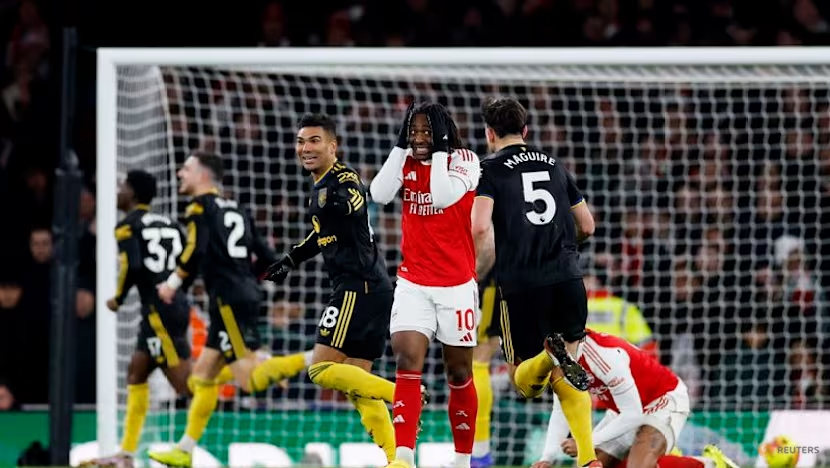
Manchester United delivered a crushing blow to Arsenal’s Premier League title hopes with a dramatic 3–2 comeback victory at the Emirates Stadium on Sunday, capping a day of thrilling action that reshaped the league’s title race and intensified battles across the table.

In a match that swung violently between dominance and despair, United overturned an early deficit to claim all three points, with substitute Matheus Cunha’s stunning late goal sealing a memorable triumph over the league leaders.

Arsenal Strike First, Emirates Erupts

Arsenal began the contest with authority, pressing high and dictating the tempo as the home crowd sensed another statement performance.

Their breakthrough arrived in the 29th minute when a dangerous Arsenal attack ended with United defender Lisandro Martínez inadvertently turning the ball into his own net. The goal ignited the Emirates and seemed to confirm Arsenal’s early dominance.

For long spells, the Gunners controlled possession, moving the ball with confidence and threatening through Bukayo Saka and Martin Ødegaard. United looked rattled, but not defeated.

United Respond, Momentum Shifts

Just when Arsenal appeared in control, the game’s narrative flipped.

In the 37th minute, Bryan Mbeumo punished a costly defensive error to restore parity for Manchester United. The equaliser changed the mood of the contest instantly, shifting momentum from Arsenal’s dominance to United’s growing belief.

By halftime, the match had transformed into a tense battle, with both sides sensing vulnerability in the other.

Dorgu’s Wonder Goal and United’s Rising Confidence

Five minutes into the second half, Patrick Dorgu delivered a moment of brilliance that stunned the Emirates.

The young United player unleashed a spectacular strike to put the visitors ahead in the 50th minute, marking a decisive turning point in the match. Arsenal, once comfortable, suddenly found themselves chasing the game.

United’s confidence surged, while Arsenal struggled to regain control as the tempo tilted in favour of the visitors.

Late Drama: Arsenal Fight Back, Cunha Finishes It

As the match entered its final minutes, Arsenal launched a desperate push for an equaliser, and found it.

In the 84th minute, Mikel Merino struck from a set-piece situation to bring the Gunners back level at 2–2, sending the Emirates into frenzy and seemingly rescuing a crucial point.

But the drama was far from over.

Just three minutes later, substitute Matheus Cunha produced a breathtaking long-range effort in the 87th minute, restoring United’s lead and silencing the stadium. It was the decisive moment in a match defined by momentum swings and individual brilliance.

United held on to secure a famous 3–2 victory.

Results That Shook the Premier League

Sunday’s Premier League fixtures delivered major outcomes beyond North London:

  • Nottingham Forest defeated Brentford 2–0.
  • Chelsea secured a 3–1 victory over Crystal Palace.
  • Aston Villa beat Newcastle United 2–0, keeping pressure on the top of the table.
  • Manchester United stunned Arsenal 3–2 in the headline clash.

These results tightened the title race and underlined the unpredictability of the Premier League.

Title Race Wide Open

Arsenal’s defeat narrowed their lead at the top of the table, allowing rivals to close the gap and reigniting the title race.

For Manchester United, the victory was more than three points—it was a statement of resilience and ambition. For Arsenal, it was a reminder that even the strongest teams are vulnerable in the relentless Premier League marathon.

The clash at the Emirates was not just a football match—it was a spectacle of momentum, emotion, and tactical warfare.

From Martínez’s own goal to Cunha’s late masterpiece, the game encapsulated everything that makes the Premier League extraordinary.

And if Sunday’s drama is any indication, the race for the title is only just beginning.