Home Blog Page 15

Bille Gas Explosion Victim Dies

0
Bille explosion leaves a victim dead
Bille gas leakage leads to an explosion

A 29-year-old woman injured in a gas explosion in Bille Kingdom, Degema Local Government Area of Rivers State, has died, raising fresh concerns over the safety of residents living in the community.

Ms. Joy Amos, an Ogoni native, died on Tuesday, September 22, weeks after she suffered severe burns when an explosion occurred inside her room at No. 18, Opu Ibiila Community, Bille, on September 3.

Joy Amos, an Ogoni native, died as a result of the Bille gas explosion
Joy Amos, Bille gas explosion victim

According to the Corporate Accountability and Public Participation Africa (CAPPA), Amos initially received treatment at a private clinic in Bille before being transferred to Port Harcourt on September 12 after a person identified by community members as Dr. Ndubisi Akpu reportedly said he was calling from the Ministry of Health and that the government would take over her treatment.

CAPPA said the circumstances surrounding her death should be properly documented and independently investigated, including an autopsy, particularly because of the environmental conditions reported at the site of the explosion.

Gas Odour, Bubbling Reportedly Continue

Gas emissions from wells, boreholes, residential compounds, waterways and school grounds in Bille

CAPPA said information it received indicated that Amos’s room continues to produce an apparent bubbling sound beneath the cemented floor, alongside a noticeable gas-like odour.

The organisation said the incident was part of a wider gas-emission emergency that residents have reported in Bille since October 2025.

During a field visit on July 6, CAPPA said it observed gas emissions from wells, boreholes, residential compounds, waterways and school grounds.

The organisation also said government investigations had reportedly detected elevated levels of methane, hydrogen sulphide and carbon dioxide, as well as groundwater contamination and poor air quality.

CAPPA said residents have yet to receive what it described as a comprehensive explanation of the source of the emissions or a clear emergency response plan.

More Health and Fire Incidents Reported

The organisation also raised concerns over other incidents recorded in Bille.

CAPPA said Mrs. Tamunosiepribo Igani reportedly became dizzy and collapsed on September 12 while walking to the waterside, sustaining a serious leg injury.

It also reported that a teacher, Ms. Deborah Adokiye Orlando, collapsed while working at State School One, Bille, on September 22.

Two household fires were also reported in August and September.

CAPPA said one incident occurred while Mrs. Damiete Akinda was attempting to light a mosquito coil, while another fire on September 7 reportedly spread through Mrs. Esther Dein’s home and destroyed substantial property.

The organisation did not establish that these incidents were caused by the gas emissions, but said they heightened concerns about the safety situation in the community.

Residents Reportedly Collecting Emerging Gas

CAPPA has also warned about a potentially more dangerous development — reports that some residents are collecting the emerging gas and using it to power generators.

The organisation said others were reportedly digging around their homes in search of gas outlets that could be channelled for domestic energy use.

CAPPA warned that using an unidentified gas source in this way could expose residents to explosions, poisoning and other hazards.

It said the situation also highlights the wider challenge of energy poverty in the Niger Delta, where communities located in an oil-producing region continue to face inadequate access to reliable electricity and affordable domestic energy.

CAPPA Calls for Emergency Response

CAPPA’s Assistant Executive Director, Zikora Ibeh, said Amos’s death should force authorities to move from what the organisation described as a fragmented response to a coordinated emergency intervention.

CAPPA is calling for the Federal Government, Rivers State Government and relevant regulatory and emergency agencies to establish a coordinated response involving independent environmental, medical, public health and emergency-safety experts.

Among its demands are comprehensive hazard mapping, evacuation where necessary, continuous air, water and soil testing, free medical screening for residents and specialist treatment for those already affected.

The organisation is also calling for the immediate suspension of unsafe gas collection and use, alongside alternative electricity and cooking-energy options for affected households.

It wants authorities to establish a system for documenting fires, explosions, illnesses and injuries and to involve Bille residents directly in investigations and remediation efforts.

CAPPA further called for the eventual identification of the source of the emissions, followed by environmental remediation, compensation for affected residents and legal accountability where wrongdoing is established.

The organisation said the death of Joy Amos should serve as a warning that continued uncertainty over the source of the emissions cannot be allowed to persist without a comprehensive emergency response.

Africa At UNGA: A Stronger Voice Or Still On The Sidelines?

0

As world leaders gather in New York for the 81st United Nations General Assembly, Africa is once again at the centre of conversations on peace and security, development, economic transformation, global governance and international cooperation.

The General Debate of the 81st UNGA is taking place from September 22 to 28, 2026, under the theme, “Restoring trust, managing transformation: A United Nations that delivers for all.” Nearly 130 heads of state and government are expected to attend the High-Level Week in person.

With 54 African countries represented within the United Nations, the continent forms the largest regional group at the organisation. Every one of the UN’s 193 member states has one vote in the General Assembly. But while Africa has considerable numerical strength, the question remains: how effectively does the continent convert that strength into influence?

AFRICA’S VOICE AT THE UN — HOW MUCH INFLUENCE?

Africa’s 54 UN member states give the continent significant voting strength within the General Assembly. Yet numbers alone do not automatically translate into political influence.

African countries often share concerns around development, debt, access to finance, reform of global institutions, climate finance, industrialisation and greater representation in international decision-making.

The challenge is coordination.

African countries have different national interests, economic circumstances and foreign-policy priorities. The extent to which those differences can be managed and transformed into common diplomatic positions remains an important question for the continent.

The African Union therefore has a potentially important coordinating role as African governments seek to advance shared priorities on the global stage.

Also Read this: Tinubu sends Shetima to UNGA

REFORMING THE GLOBAL SYSTEM — IS AFRICA STILL UNDER-REPRESENTED?

Reform of global governance remains one of Africa’s longstanding priorities.

The UN Office of the Special Adviser on Africa says the continent continues to push for reform of global institutions, including the UN Security Council, to ensure that Africa’s voice is better reflected in international decision-making.

The Security Council currently has 15 members: five permanent members — China, France, Russia, the United Kingdom and the United States — and ten non-permanent members elected for two-year terms. Africa currently has no permanent seat.

In 2026, discussions on Security Council reform continue, with UN documents noting broad agreement in the reform process that Africa should be equitably represented on a reformed Council. The African position has called for permanent representation as well as additional non-permanent seats.

Africa’s reform agenda extends beyond the Security Council.

African countries are also calling for changes to the global financial architecture, including measures addressing debt vulnerabilities, high borrowing costs, credit-rating methodologies and access to development finance.

FROM SPEECHES TO RESULTS — WHAT DOES AFRICA TAKE HOME?

For African countries, UNGA is more than an opportunity to deliver speeches.

The continent is seeking investment, infrastructure, technology, jobs, industrialisation, stronger health systems and financing for development. Peace and security also remain major concerns across several regions.

Ahead of UNGA 2026, the UN Office of the Special Adviser on Africa identified several priorities, including global governance reform, transformation of the global financial architecture, climate finance, sustainable industrialisation, critical minerals, peace and security.

Critical minerals are particularly significant. African countries are seeking greater value addition and industrialisation within the continent rather than relying solely on the export of raw materials. The objective is to create jobs, strengthen economic development and capture more value from Africa’s natural resources.

The bigger question, however, is what happens after the speeches and diplomatic meetings.

Can commitments made in New York translate into investment, stronger partnerships, development finance and tangible improvements for people across Africa?

WHAT IS ON THE UNGA 2026 AGENDA?

The 81st UNGA is addressing a wide range of global issues with direct relevance to Africa.

The programme includes high-level discussions on the right to development, climate action, sea-level rise, pandemic preparedness and response, peace and security and racial justice, among other issues.

The General Assembly itself is the UN’s main policy-making and representative organ, bringing together all 193 member states. Each country has an equal vote.

For Africa, these discussions intersect with some of the continent’s most pressing challenges — from financing development and managing debt to strengthening health systems, responding to insecurity and securing greater representation in global institutions.

NIGERIA’S PLACE IN THE AFRICAN AGENDA

Nigeria provides an important case study of Africa’s engagement at UNGA 2026.

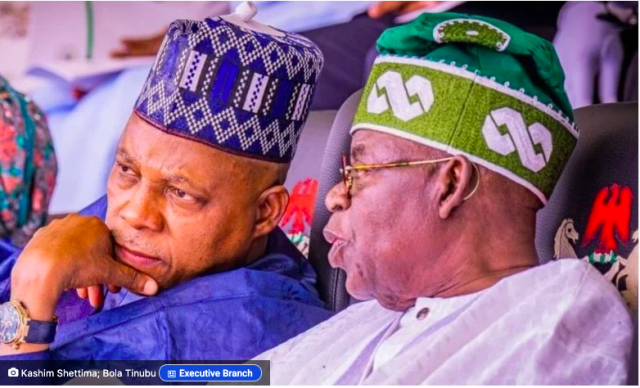
President Bola Tinubu has mandated Vice President Kashim Shettima to represent him and lead Nigeria’s delegation to the 81st UN General Assembly. Shettima is expected to deliver Nigeria’s national statement and participate in high-level meetings and bilateral engagements.

According to the Federal Government, Nigeria’s engagement is focused on issues including peace and security, economic development, climate action, reform of the global financial architecture, sustainable development and international cooperation.

Nigeria is also expected to use its engagements to push for stronger representation for Africa in global decision-making, alongside discussions on technology access, climate finance and international financial reform.

This raises a broader question for Nigeria: how can the country use its diplomatic influence to advance both its national interests and wider African priorities?

THE BIGGER QUESTION FOR AFRICA

Africa arrives at UNGA with significant numbers, vast natural resources and a long list of priorities.

But influence at the United Nations is not simply about the number of countries represented. It also depends on coordination, diplomacy, alliances and the ability to translate common interests into concrete outcomes.

UNGA provides Africa with a global platform. The challenge is turning that platform into meaningful influence — and turning diplomatic negotiations into results that can be felt at home.

As African leaders take their seats in New York, the question is therefore not simply whether Africa will be heard.

It is what Africa will do with its voice once the world is listening.

Eleven Killed In South Africa House Party Mass Shooting

0
South African police at the scene of a mass shooting in KwaMakhutha near Durban.
Police investigate a mass shooting at a house party in KwaMakhutha, South Africa, where 11 people were killed and three others injured

At least 11 people have been killed and three others injured after gunmen opened fire at a house party in KwaMakhutha township, south of Durban, South Africa.

Police said three armed men entered the house on Tuesday night and opened fire on people attending the gathering.

The incident is being investigated as a possible gang-related attack. (Reuters)

Gunmen open fire at house party

South Africa KwaMakhutha house party mass shooting
Police investigate a mass shooting at a house party in KwaMakhutha, South Africa, where 11 people were killed and three others injured.

According to police, 14 people were inside the house when the attackers struck.

A woman believed to be pregnant and 13 men were among those attending the party.

Ten people died at the scene, while another victim later died in hospital, taking the death toll to 11.

Three other people were wounded in the shooting. (South China Morning Post)

Police investigate possible gang link

Authorities said the motive for the shooting had not yet been confirmed.

However, police are investigating whether the attack could be connected to gang violence.

Investigators have begun gathering evidence and are searching for the three gunmen believed to have carried out the shooting. (Reuters)

Pregnant woman among victims

One of those killed was a woman believed to have been pregnant.

Police have not yet released the identities of the victims publicly.

Authorities also did not immediately provide further details about the condition of the three people who were injured. (South China Morning Post)

South Africa faces persistent gun violence

The latest shooting adds to concerns over violent crime in South Africa.

Mass shootings have occurred periodically in communities across the country, with some linked to gang activity, organised crime and disputes involving illegal firearms.

The KwaMakhutha attack comes amid broader public concern about violent crime and the ability of law-enforcement agencies to prevent repeated attacks.

Investigation continues

Police are continuing their investigation into the circumstances surrounding the attack and the identities of the gunmen.

Authorities have urged anyone with information about the shooting to assist investigators.

Further details are expected as police establish the motive and track down those responsible.

Nigeria On High Alert Over Ebola Outbreak In DR Congo

0
NCDC places Nigeria on high alert over Ebola outbreak in DR Congo
Nigeria has strengthened Ebola surveillance and preparedness following the continuing outbreak in the Democratic Republic of the Congo.

The Nigeria Centre for Disease Control and Prevention has placed the country on high alert following the worsening Ebola Virus Disease outbreak in the Democratic Republic of the Congo.

The NCDC said preparedness measures are being strengthened to reduce the risk of the virus being imported into Nigeria, with enhanced surveillance and additional monitoring of travellers from countries experiencing active or relevant Ebola transmission. (Channels Television)

Why Nigeria is on high alert

 NCDC strengthens Ebola surveillance in Nigeria after outbreak in the Democratic Republic of the Congo.
Nigeria has been placed on high alert as the NCDC strengthens surveillance and traveller screening following the Ebola outbreak in the Democratic Republic of the Congo.

The alert follows continued transmission of Ebola in the Democratic Republic of the Congo.

According to the latest figures cited by the NCDC, the DRC had recorded 7,672 confirmed cases and 3,699 related deaths as of September 20, based on data available up to September 19. (Channels Television)

The NCDC said Nigeria’s response follows a Dynamic Risk Assessment carried out with public-health experts and the Federal Ministry of Health and Social Welfare.

Nigeria had earlier assessed the risk of importation as high because of international travel, population movement, major airports, seaports and porous land borders. (Nigeria Centre for Disease Control)

Travellers from affected countries face additional checks

Travellers arriving from countries with active or relevant Ebola transmission are being asked to complete a Health Declaration Form as part of enhanced surveillance and follow-up measures.

Passengers arriving from countries not affected by the outbreak are currently exempt from the requirement. (Channels Television)

The move is intended to make it easier for health authorities to identify travellers who may have been exposed to the virus and respond quickly where necessary.

What symptoms should Nigerians watch for?

Ebola symptoms including fever, headache, muscle pain, weakness, vomiting, diarrhoea and abdominal pain.
Nigerians are advised to watch for possible Ebola symptoms such as sudden fever, severe headache, muscle pain, weakness, vomiting, diarrhoea and abdominal pain, especially after recent travel or possible exposure.

The NCDC advises members of the public to remain alert to symptoms consistent with Ebola and to seek medical attention promptly where there is relevant travel or exposure history.

Symptoms of Ebola can include sudden fever, severe headache, muscle pain, weakness, fatigue, vomiting, diarrhoea and abdominal pain.

Symptoms can appear between two and 21 days after exposure. (Nigeria Centre for Disease Control)

How Ebola spreads

Ebola can spread through direct contact with the blood or body fluids of an infected person.

Transmission can also occur through contaminated objects and through direct contact with infected animals.

Health authorities therefore continue to emphasise hygiene, early reporting of suspected cases and the use of appropriate protective equipment by healthcare workers. (Nigeria Centre for Disease Control)

No confirmed Nigerian case announced

The alert does not mean that an Ebola outbreak has been confirmed in Nigeria.

The NCDC’s measures are preventive and are aimed at improving readiness in the event of a suspected or imported case.

The agency said surveillance and preparedness measures will continue to be reviewed as the situation in the region develops. (Channels Television)

OpenAI Expands GPT-6 Lineup With Cheaper Sol And Luna Models

0
OpenAI GPT-6 Sol and Luna models expand ChatGPT artificial intelligence lineup
OpenAI has expanded its GPT-6 family with lower-cost Sol and Luna models as competition over AI performance and pricing intensifies.

OpenAI has expanded its GPT-6 artificial intelligence lineup with two lower-cost models, Sol and Luna, as competition intensifies among technology companies to make increasingly powerful AI systems cheaper to operate.

The new models follow the release of GPT-6 Astra earlier in September and are designed to offer businesses and developers access to advanced capabilities at lower prices.

Reuters reported that GPT-6 Sol and GPT-6 Luna are being offered at roughly half the promotional rates of their predecessors.

The move reflects a broader shift in the artificial intelligence industry, where companies are competing not only on performance but also on how cheaply their models can run.

OpenAI adds Sol and Luna to GPT-6 family

OpenAI GPT-6 Sol and Luna models added to the GPT-6 artificial intelligence family
OpenAI has added Sol and Luna to its GPT-6 family, expanding its range of AI models with lower-cost options for developers and businesses.

The introduction of Sol and Luna expands OpenAI’s GPT-6 model family beyond its flagship Astra system.

Astra was introduced as a higher-end model capable of handling a wider range of complex tasks.

Sol and Luna are positioned as less expensive alternatives for users who may not need the full capabilities of the flagship model for every task.

That distinction is becoming increasingly important as businesses integrate generative AI into customer service, software development, research, marketing and other operations.

Running advanced models at scale can generate significant computing costs, particularly for companies processing millions of prompts or large volumes of data.

Why OpenAI is lowering GPT-6 Cost

OpenAI lowers GPT-6 AI costs to make advanced artificial intelligence models more affordable for developers and businesses.
OpenAI is lowering AI costs to make advanced GPT-6 models more affordable for businesses and developers handling large-scale workloads.

The artificial intelligence industry is increasingly focused on efficiency.

Training sophisticated AI systems requires enormous computing resources, while serving those systems to millions of users creates continuing infrastructure expenses.

For businesses using AI through application programming interfaces, or APIs, the price of processing text, images and other data can become a major factor in deciding which model to use.

By introducing cheaper GPT-6 models, OpenAI can offer customers different levels of performance and cost depending on their needs.

The strategy also allows the company to compete with rivals offering lower-cost models.

Competition in AI market intensifies

OpenAI is not alone in trying to reduce the cost of advanced artificial intelligence.

Anthropic has also introduced new models designed to offer strong performance at lower operating costs, while Chinese AI companies continue to challenge US developers with competitively priced systems.

Reuters reported on September 22 that Anthropic launched Claude Opus 5.5, offering comparable capabilities to more expensive systems while reducing operating costs.

The simultaneous push towards cheaper models suggests price is becoming an increasingly important part of the global AI race. (Reuters)

What GPT-6 Sol and Luna could mean for businesses

Business team using OpenAI GPT-6 Sol and Luna for lower-cost artificial intelligence tasks and workplace automation.
GPT-6 Sol and Luna could help businesses use advanced AI at lower operating costs for tasks such as customer support, content creation, research and software development.

Lower-cost models could make advanced AI more accessible to businesses that previously considered the technology too expensive to deploy at scale.

Companies could use smaller or cheaper models for routine jobs while reserving more expensive flagship models for difficult tasks.

For example, an organisation might use a lower-cost model for customer-service responses, document classification or content summarisation, while using a higher-end system for complex software engineering or research.

This approach can reduce costs without requiring businesses to abandon more capable models completely.

ChatGPT remains at centre of OpenAI ecosystem

ChatGPT remains OpenAI’s most visible consumer product, but the company’s business increasingly extends beyond the chatbot.

OpenAI supplies AI models to developers and businesses that integrate the technology directly into their own software and services.

The expansion of the GPT-6 family gives those customers more options when deciding how much computing power and intelligence they need for a particular task.

For ordinary ChatGPT users, model changes can also affect how quickly the service responds, how well it handles complex instructions and how efficiently OpenAI can provide access to advanced capabilities.

AI companies face pressure to balance power and affordability

One of the biggest challenges facing AI companies is balancing performance with cost.

The most advanced systems require large amounts of computing power, making them expensive to train and operate.

At the same time, businesses increasingly expect AI tools to become cheaper as adoption grows.

OpenAI’s latest strategy suggests the company believes customers will increasingly choose different models for different workloads instead of relying on one powerful model for everything.

That could make AI systems resemble cloud-computing services, where businesses select different levels of computing capacity depending on the job.

OpenAI expansion comes amid intense industry competition

The launch also comes during a period of unusually intense competition across the artificial intelligence industry.

Anthropic, Google, Meta and a growing number of Chinese technology companies are developing increasingly capable AI systems.

The competition is forcing companies to improve performance while reducing prices.

OpenAI is also attracting significant investment as it expands its infrastructure.

Reuters reported that SoftBank recently launched more than $11 billion in dollar- and euro-denominated bonds to help fund its investment in OpenAI. (Reuters)

Cheaper AI could accelerate adoption

The broader significance of OpenAI’s move may be what lower prices do to AI adoption.

When advanced models become cheaper, more businesses can experiment with them and integrate them into everyday operations.

Smaller companies that previously could not justify the cost may be able to deploy AI for marketing, software development, customer support, research and administrative work.

For developers, lower API costs could also make it easier to build AI-powered applications without facing extremely high computing bills.

Price becomes another battleground in AI race

The competition surrounding GPT-6 is therefore no longer only about which company can build the smartest model.

Cost, efficiency, reliability and accessibility are becoming equally important.

OpenAI’s release of GPT-6 Sol and Luna indicates that the company is attempting to compete across several price and performance levels rather than relying solely on its most powerful system.

As AI adoption increases globally, the companies that can offer capable models at lower costs may gain an important advantage among developers, businesses and consumers.

AI In The Classroom: Superpower Or Shortcut?

0

Artificial intelligence has stormed into education—and the debate is fierce. Is it the ultimate learning booster or a silent thief of deep thinking? Those who support it are excited by the personalised paths, teacher time-savers and wider access. On the other hand, Critics are uncomfortable with weaker critical skills, cheating epidemics and bigger inequality gaps.

But here’s the real question: used wisely, does AI lift learning—or quietly erode it? And is Nigeria ready for the ride?

The Upside: Real Gains When AI Plays Nice

AI has come to stay, let’s just establish that. So, done right, AI is a game-changer. Adaptive tools will tweak difficulty and pace for every student in real time—closest we’ve come to a personal tutor for all. Teachers are able to reclaim hours from grading and admin, pouring energy back into actual teaching. Added to that, Text-to-speech, speech-to-text and smart interfaces open doors for students with disabilities or language barriers. Also, quality resources can finally reach remote and under-resourced classrooms.

But there is a catch somewhere, right? Yes, Technology alone doesn’t deliver magic and so these wins are only made with smart design, teacher guidance and clear boundaries.

The Downside: When AI Becomes a Crutch

There is of course a downside with AI in the classrooms. As soon as we turn it into an “answer machine,’ students will skip the hard work that builds real understanding. Teachers are already reporting weaker independent thinking. Essays and solutions appear with just few prompts thereby eroding trust between student and teacher.

Human connection, motivation and social learning are also taking a hit. That’s because Bias, hallucinations and confident-sounding nonsense can slip through if media literacy is missing. And without devices, power and affordable data, AI widens the gap it claims to close. So in essence, solid long-term evidence is still thin and unrestricted use often backfires.

Nigeria’s Reality Check

Where does that leave Nigeria? There is a huge opportunity to leverage these new technologies …but… most learning environments schools still lack reliable electricity, steady internet, cheap data and enough devices—especially outside big cities. Also, Teacher training on AI is scarce and mostly self-taught. National rules on ethics, privacy, integrity and fair access are still catching up. Much AI content also speaks Global North, not Nigerian realities.

Yet the upside is real: personalised support, multilingual tools and admin relief could ease overcrowded classes and teacher shortages—if we fix power, connectivity, training and local content first. Ready looks like phased pilots, serious teacher development and equity-first policies, not sudden tech dumps.

The Bottom Line

AI is neither pure gain nor pure pain. It becomes whatever we design, guide and govern it to be. Treat it as a thoughtful partner under clear rules and it sharpens learning. Treat it as an easy escape and it dulls the very skills school exists to build.

Keep humans at the centre. Demand evidence. Invest in readiness. The classroom of tomorrow is being written today—by how we choose to use the tools.

Trump Tells UN: Isolate Iran And Oil Prices Will “Come Plummeting Down”

0
Trump speaking at the 81st UN General Assembly
Trump giving a speech at the 81st United Nations General Assembly, New York, United States

The US president threatened to “annihilate the Islamic Republic” or make a deal after the midterms — and tied the world’s fuel bill to both.

Trump speaking at the 81st UN General Assembly

UNITED NATIONS, New York — 22 September 2026

President Donald Trump used his address to the 81th session of the UN General Assembly on Tuesday to defend America’s war with Iran, threaten its leadership, and promise global relief at the petrol pump.

Opening with a defence of his administration’s record on border security, employment and economic growth, Trump cast himself as “a man of peace” before turning on Tehran, which he described as a “fanatical” regime responsible for 51 years of terror.

He said the US had offered Iran economic co-operation in exchange for ending its nuclear programme and backing for terror, that Tehran refused, and that Iran then pursued missiles capable of reaching Europe and America.

“Deal or annihilation”

Trump framed the choice in blunt terms: “Will a deal be made with Iran that lets them rebuild and create a far greater country than it was before, maybe one of the greatest in the Middle East and possibly the world? Or do I annihilate the Islamic Republic and do it quickly, never giving them a chance to destroy people and countries again?”

He predicted a deal would come right after the US midterm elections.

Trump at the 81st UN General Assembly

The oil pledge

The president then called on every nation to join Washington in enforcing “the complete economic isolation of Iran” until it stops attacking commercial shipping, abandons its nuclear ambitions and ends its support for terror.

“If we stand united, we will soon see a world free of the last 51-year menace of Iranian terror, and oil prices will come plummeting down even lower than they were at the start of the conflict,” he said.

The supply-side bet

Washington is backing the ultimatum with barrels. In late August, the US announced a landmark agreement giving it majority control of more than 65 billion barrels of proven Venezuelan reserves — a deal the White House called the largest in history. American forces have also protected more than 1 billion barrels of crude moving through the Strait of Hormuz, according to US Central Command, including a recent escorted convoy of 40 commercial vessels carrying roughly 18 million barrels.

Trump giving his speech at the 81st UN General Assembly in New York, United States

Markets react first

Traders moved before politicians did. Brent crude slipped below $100 a barrel for the first time in two weeks after Trump revealed that US and Iranian officials had held a three-hour meeting at UN headquarters on Tuesday, mediated by Qatar. His envoys Steve Witkoff and Jared Kushner called the talks “encouraging, constructive and successful.” Iran’s foreign ministry pushed back, denying it had dropped its preconditions.

Oil prices later trimmed their losses during the speech itself.

Trump Rolls Out Red Carpet for Xi Jinping: What’s at Stake as US-China Leaders Meet

0
President Trump and Chinese leader Xi Jinping before their meeting in Busan, South Korea, last year.
President Trump and Chinese leader Xi Jinping before their meeting in Busan, South Korea, last year. Mark Schiefelbein/AP

Chinese President Xi Jinping is in Washington for a high-profile state visit with US President Donald Trump, putting the world’s two largest economies back at the centre of global diplomacy.

Xi’s visit, running from September 23 to 25, 2026, is his first trip to the United States in nearly a decade and the second meeting between the two leaders this year. Trump is expected to personally welcome Xi at Joint Base Andrews before a formal White House ceremony.

Behind the pageantry, however, are difficult negotiations over US-China trade, tariffs, rare earth minerals, artificial intelligence, Taiwan and the wider global economy.

Why Trump and Xi’s Meeting Matters

The Trump-Xi summit comes as Washington and Beijing try to manage a relationship marked by intense economic and technological competition.

President Trump and Chinese leader Xi Jinping before their meeting in Busan, South Korea, last year.
President Trump and Chinese leader Xi Jinping before their meeting in Busan, South Korea, last year. Mark Schiefelbein/AP

A trade truce agreed in 2025 is due to expire in November. The arrangement included US tariff measures and China’s commitments around rare-earth exports, making an extension one of the issues being watched closely during the visit.

For businesses and investors, the outcome could affect supply chains, technology companies, manufacturing and the prices of goods moving between the two countries.

US-China Trade and Tariffs Take Centre Stage

Trade is expected to be one of the biggest issues on Trump’s agenda. Washington and Beijing have spent much of the past several years imposing tariffs and other trade restrictions on each other’s goods.

Ahead of the leaders’ meeting, US Treasury Secretary Scott Bessent and Chinese Vice Premier He Lifeng held talks covering trade, AI and rare earths. Discussions have included the possibility of extending the current tariff truce and addressing specific areas such as agricultural trade.

The key question is whether Trump and Xi can extend the existing arrangement or agree on measures that prevent another escalation in the US-China trade dispute.

Rare Earths: China’s Powerful Bargaining Chip

Rare earth minerals are another major issue. These minerals are essential for industries ranging from electronics and electric vehicles to defence and advanced manufacturing.

Neodymium is used to make the powerful magnets used in loudspeakers and computer hard drives

China remains a major player in global rare-earth supply, making Beijing’s export policies an important concern for US manufacturers. US and Chinese officials are therefore expected to discuss how rare-earth supplies can continue while Washington maintains restrictions in sensitive technology sectors.

The issue demonstrates how trade between the two countries is no longer simply about tariffs on finished goods. It is increasingly about control of critical materials and technologies that underpin modern economies.

Artificial Intelligence Moves Up the Agenda

AI is emerging as another major area of competition between Washington and Beijing. Both countries see artificial intelligence as strategically important to their economies, technology industries and national security.

The two sides have already been discussing AI safety, AI models and possible guardrails, while US and Chinese companies continue competing for leadership in the sector.

The challenge for both governments is finding areas where they can communicate or cooperate without weakening their respective technological and security positions. The talks are also taking place as the US administration considers how much regulation should apply to rapidly developing AI systems.

Taiwan Remains The Most Sensitive Issue

Then there is Taiwan. Beijing considers Taiwan part of China and says reunification is a core national objective. Taiwan operates with its own elected government, while the United States maintains unofficial relations with the island and provides weapons for its self-defence.

Ahead of Xi’s visit, Reuters reported that the Chinese leader is expected to press Trump over US arms sales to Taiwan. A further US arms package worth about $14 billion is awaiting Trump’s approval, making the issue a potentially difficult part of the summit.

For Washington’s Asian partners, what Trump says about Taiwan will also be closely watched.

What About Iran?

The US-China relationship is also being discussed against the backdrop of the conflict involving Iran.

US officials have indicated that broader geopolitical issues could feature in the Trump-Xi discussions, while China has its own economic and diplomatic interests in the Middle East. That means the summit is not only about bilateral US-China relations.

It is also taking place against a wider international backdrop involving energy security, trade routes and geopolitical tensions.

A State Visit Packed With Symbolism

The diplomatic choreography is significant.

Trump is expected to greet Xi personally at Joint Base Andrews, followed by a formal White House welcome, military ceremony and state dinner.

Major US technology and business leaders are also expected at the dinner, including executives from Amazon, Alphabet, OpenAI, Apple, Tesla, Nvidia and Dell.

The symbolism matters because the relationship between the United States and China extends far beyond government. Their decisions affect technology companies, manufacturers, investors, farmers, consumers and global supply chains.

What Should The World Watch For?

The biggest signals from the Trump-Xi meeting will not necessarily come from the speeches or ceremonies.

Watch for four things:

1. Trade: Will the existing tariff truce be extended?

2. Rare earths: Will China provide greater certainty over exports of critical minerals?

3. AI: Will Washington and Beijing establish any framework for cooperation or safety discussions?

4. Taiwan: Will either side change its position or language on arms sales and cross-strait relations?

The two governments have already held extensive preparatory talks, but analysts remain divided over how much substantive progress the summit will produce.

The Bigger Picture

The Trump-Xi meeting comes at a moment when trade, technology and geopolitics are increasingly connected.

A decision on tariffs can affect manufacturing. A dispute over rare earths can affect technology supply chains. Restrictions on AI and advanced chips can influence the global technology race. And tensions over Taiwan can have consequences far beyond East Asia.

So while the White House is rolling out the red carpet for Xi Jinping, the real story will unfold behind the ceremony:

Can Trump and Xi manage their differences without allowing the world’s most important economic relationship to deteriorate further?

HBM expands in Nigeria: What its push against Dangote and BUA could mean for cement prices

0
HBM Nigeria cement distribution expands amid competition with Dangote Cement and BUA Cement in Nigeria
HBM Nigeria expands its cement distribution network as competition with Dangote Cement and BUA Cement grows across Nigeria’s cement market.

Competition in Nigeria’s cement industry is intensifying as HBM Nigeria expands its distribution network in a market long dominated by Dangote Cement and BUA Cement.

HBM has opened a fresh recruitment drive for distributors, requiring prospective partners to demonstrate significant financial and logistics capacity.

The move comes at a time when cement prices remain a major concern for builders, contractors and Nigerians hoping to complete housing projects.

But beyond the competition between manufacturers, one question matters most to consumers: could stronger competition eventually bring down cement prices?

HBM raises the bar for distributors

HBM increases their working captial
HBM seek distributors

HBM is asking prospective distributors to demonstrate at least ₦250 million in working capital.

Applicants are also expected to have access to warehouse space and trucks capable of moving large quantities of cement.

The requirements indicate that the company is seeking distributors with the financial strength and logistics capacity to move significant volumes across the country.

Industry analysis suggests the actual investment required could be considerably higher once warehousing and transportation assets are taken into account. (Proshare)

HBM closes gap with BUA

Nigeria’s cement market remains heavily concentrated among a small number of producers.

According to Proshare’s analysis of first-half 2026 figures from the three listed manufacturers, Dangote Cement accounted for about 56.2 per cent of their combined Nigerian revenue.

BUA Cement accounted for about 22.7 per cent, while HBM held about 21.1 per cent.

That leaves HBM only a small distance behind BUA by that measure, highlighting the increasingly competitive position of the former Lafarge Africa business. (Proshare)

Why the competition matters to cement buyers

HBM, Dangote cement, BUA are in a competition for the consumers in Nigeria
competition for the consumers in Nigeria

Greater competition between HBM, Dangote and BUA could create pressure on manufacturers to compete more aggressively on distribution, availability and pricing.

However, increased production capacity does not automatically guarantee cheaper cement.

Retail prices are also influenced by transportation costs, energy expenses, foreign exchange movements, dealer margins and regional supply conditions.

Cement has recently sold for roughly ₦12,000 to ₦15,000 per 50kg bag in some Nigerian markets, depending on location and brand. (Legit.ng – Nigeria news.)

Nigeria could have more cement than it consumes

Nigeria’s cement production capacity has continued to expand even as domestic demand remains significantly lower than total installed capacity.

Industry estimates cited in recent analysis suggest national capacity could rise to about 75 million tonnes, while annual demand is estimated at roughly 25 million to 30 million tonnes. (Legit.ng – Nigeria news.)

That gap could intensify competition as producers fight for market share.

For consumers, stronger competition could become significant if manufacturers respond by improving distribution efficiency or adjusting prices to attract more buyers.

Cement prices remain a major construction challenge

Despite increased capacity, cement remains expensive for many Nigerians.

The high price has increased the cost of building houses, completing construction projects and executing infrastructure contracts.

Nigeria’s major cement producers have also recorded strong financial performances.

Dangote Cement, BUA Cement and HBM generated substantial revenues during the first half of 2026 amid price increases and continued construction demand. (Nairametrics)

The contrast between rising industry revenues and high retail cement prices has kept affordability at the centre of public discussion.

Will HBM’s expansion lower cement prices?

HBM’s expansion alone is unlikely to determine cement prices.

However, a stronger distribution network could improve product availability and intensify competition with Dangote and BUA in markets where supply has traditionally been dominated by one or two brands.

Consumers may therefore want to watch three things: whether HBM expands into more locations, whether competitors respond with pricing or distribution changes, and whether retail cement prices begin to fall as production capacity rises.

The battle for Nigeria’s cement market may ultimately be decided not only by how much cement each company produces, but by which producer can deliver it more efficiently and affordably to buyers.

EXPLAINER: What Does a Minority Shareholder Actually Own in Dangote Refinery?

0
Dangote refinery IPO frenzy and the need to know what an investor is buying
Investors reading about Dangote refinery IPO

The Dangote Refinery IPO has turned an idea that once seemed reserved for big investors into something ordinary Nigerians can participate in.

With 4.1 billion shares offered at ₦525 each, the minimum subscription is 10 shares, or ₦5,250. The offer opened on September 14 and is scheduled to close on October 13, 2026.

Interest has been strong enough to make “UBA financing for Dangote shares” one of the search phrases attracting attention, as UBA and many other financial institutions have opened a subscription channel for the IPO and also advertises a personal-loan option for customers seeking funds.

But there is a question that deserves more attention than the price of the shares:

So, if you buy Dangote Refinery shares, what do you actually own?

You Own a Piece — But It May Be a Very Small Piece

A share is a unit of ownership in a company.If your Dangote Refinery shares are allotted to you, you become a shareholder. The company’s own IPO website describes a share as a “unit of interest” in the company, with rights determined by the terms governing the shares and applicable law.

Aliko Dangote says the IPO is for every Nigerian. He calls it the 'peoples' IPO
Aliko Dangote at the refinery IPO

So, if you buy 10 shares at ₦525 each, you are not simply buying a product called “Dangote Refinery.”

You are buying 10 units of ownership in the company.

The important question is: 10 out of how many?

The 3% Is Where the Story Gets Interesting

The public offer consists of 4.1 billion new ordinary shares.

If the offer is fully subscribed, those shares would represent roughly 3.3% of the enlarged share capital, according to reporting based on the offer structure.

That means the public collectively gets a relatively small slice of the refinery, while existing shareholders continue to hold the overwhelming majority.

This is what being a minority shareholder means in practical terms.

You own part of the company.

But you do not own the company by yourself.

So, What Can Your Shares Give You?

The most basic benefit is exposure to the company’s economic performance.

If the company performs well and the market values its shares more highly, the market value of your shares can increase.

If the share price falls, the value of your investment can fall too.

The official Dangote IPO information makes this clear: share prices can rise or fall after listing, and investors could lose some or all of the money invested.

There is also the possibility of receiving dividends.

But this is important:

Owning shares does not guarantee dividends.

The company says dividends depend on factors including its performance, cash requirements and decisions of its Board.

So owning 10, 100 or even 1,000 shares does not mean you are automatically entitled to a particular amount of cash every year.

What About Having a Say in the Company?

This is where the phrase “part-owner” can sometimes create the wrong impression.

A shareholder has rights attached to their shares, but a small shareholder does not automatically have the same practical influence as a controlling shareholder.

If one shareholder controls a very large percentage of a company, while thousands or millions of other investors collectively hold a much smaller percentage, those smaller investors may have limited influence over major corporate decisions when acting individually.

In simple terms:

You can own part of the refinery without having the power to run the refinery.

You do not get to decide how much petrol the refinery produces.

You do not personally determine the price of petrol.

You do not decide where the company gets its crude.

And owning a few shares does not give you a seat on the board.

Your ownership is real, but your individual influence is limited by the size of your holding and the company’s governance structure.

This Is What “Minority Shareholder” Really Means

Imagine 100 people jointly own a business.

One person owns 80%.

The remaining 20% is divided among the other 99 people.

Those 99 people are owners too.

But ownership and control are not the same thing.

The same principle applies to a large publicly offered company.

Your shares give you an economic interest and shareholder rights. But if your holding represents only a tiny fraction of the company’s total shares, your individual ability to influence decisions is correspondingly small.

That is the part of the Dangote IPO conversation that can get lost when attention focuses only on the phrase “own a piece of the refinery.”

What Happens to the Other 97%?

The IPO does not mean Nigerians are suddenly taking over ownership of Dangote Refinery.

The public offer represents only a small portion of the enlarged company.

Existing shareholders continue to own the rest.

This matters because the balance of ownership affects control, voting power and corporate decision-making.

It also means that a retail investor buying a small number of shares should distinguish between two very different ideas:

“I own part of the company.”

and

“I control part of the company.”

The first can be true without the second being true.

And What Does UBA Financing Have To Do With It?

The growing search interest around UBA financing for Dangote shares adds another layer to the conversation.

UBA has been named as an authorised financial institution through which eligible investors can subscribe to the Dangote Refinery IPO. Its IPO page also advertises a personal-loan option for customers who need funds to invest.

But borrowing money to buy shares does not give an investor a bigger ownership right simply because the purchase was financed.

If you borrow to buy 100 shares, you still own 100 shares.

What changes is the financial obligation attached to the purchase.

The shares can rise or fall in value, while the loan remains subject to its own terms, including repayment obligations and applicable costs.

That distinction is important whenever an investment is being discussed alongside financing.

The Real Ownership Question

For a first-time investor, the most useful question may therefore not be:

“Can I afford 10 shares?”

It is:

“What exactly do those 10 shares give me?”

They give you an ownership interest in Dangote Petroleum Refinery and Petrochemicals FZE if those shares are allotted to you.

They may give you exposure to future share-price movements.

They may give you a right to dividends if dividends are declared.

And they come with shareholder rights under the applicable terms and law.

But they do not mean that a small investor gets to personally influence the refinery’s daily operations or major strategic decisions.

The Retention Question

There is another issue investors need to understand: what happens to the majority ownership after the IPO?

The public offer is a relatively small portion of the enlarged company. Existing shareholders retain the rest.

That means the IPO changes the ownership structure by bringing in a new group of public shareholders, but it does not remove the existing controlling interests.

This is why the 3%–3.3% public ownership figure matters.

It tells us that the IPO is broadening ownership without fundamentally transferring control of the company to retail investors.

So, Are You Really A “Co-Owner”?

Technically, if your shares are allotted, yes — you are a shareholder.

But the size of your stake matters.

A person holding 10 shares and an investor holding millions of shares are both shareholders, but their economic exposure and potential influence are obviously very different.

That is the simplest way to understand minority ownership:

You have a piece of the company, but the size of that piece determines how much economic exposure and influence you have.

And that is why the Dangote Refinery IPO is not only a story about getting shares.

It is a story about understanding ownership, control, dividends, voting rights, market value and risk.

For anyone considering the IPO — whether paying from savings or exploring financing options — the official offer documents remain the key reference. The SEC has specifically advised investors to read the approved prospectus, use authorised subscription channels and understand the terms and risks before investing.

The simplest takeaway:

You may own a piece of Dangote Refinery. But owning a piece is not the same thing as running the business.