Home Blog Page 161

Naira Reaches New High Of N1,401.22/$ Following EFEMS Rollout

0

The naira strengthened significantly on Tuesday, closing at a record N1,401.22 per dollar at the official foreign exchange market, its strongest performance since the launch of the Electronic Foreign Exchange Matching System.

Figures from the Central Bank of Nigeria showed that the currency gained 1.26 percent on the day, with the dollar quoted at N1,401.22. This represented an appreciation of N17.73 from the N1,418.95 recorded on Monday at the Nigerian Foreign Exchange Market.

The data also indicated strong demand dynamics, as foreign exchange market participants submitted bids as high as N1,400 per dollar.

The gain at the official window occurred alongside relative calm in the parallel market, commonly referred to as the black market, where the naira closed unchanged at N1,485 per dollar.

Nigeria’s external reserves have continued to rise steadily, offering further backing for the local currency. Data published on the CBN’s website showed that external reserves increased to $46.03 billion as of January 26, 2026, reflecting sustained inflows and growing confidence in the foreign exchange market.

Market analysts generally expect the naira to maintain relative stability in the medium term. Several forecasts indicate that the currency is likely to trade between N1,400 and N1,500 per dollar this year, supported by stronger FX liquidity and ongoing macroeconomic reforms.

Tilewa Adebajo, chief executive officer of CFG Advisory, said the naira is expected to remain within the N1,400 to N1,500 per dollar range, pointing to improving economic fundamentals. He noted that reforms in the oil sector, increased foreign capital inflows, and stronger diaspora remittances are helping to reinforce exchange rate stability and boost confidence in the FX market.

In a similar projection, the Nigerian Economic Summit Group said the naira is likely to trade around N1,480 to the dollar in 2026. The group also forecast that Nigeria’s external reserves could climb to about $52 billion over the same period, driven by the consolidation of recent macroeconomic reforms and sustained stabilisation efforts.

The Central Bank of Nigeria’s outlook broadly aligns with these expectations. The apex bank projects an average exchange rate of N1,451.63 per dollar at the Nigerian Foreign Exchange Market in the fourth quarter of 2025, with further moderation to around N1,400 per dollar in 2026.

This outlook is based on anticipated improvements in FX market efficiency, stronger capital inflows, a current account surplus, and a broad-based economic recovery.

The recent appreciation of the naira has occurred alongside structural changes in the foreign exchange market. On October 3, 2024, the CBN announced the introduction of the Electronic Foreign Exchange Matching System, aimed at reducing speculative activities while improving transparency and price discovery in the FX market.

The EFEMS platform, which is operated by authorised dealers in the Nigerian Foreign Exchange Market, became fully operational on December 2, 2024, after a two-week pilot phase conducted in November.

Since its implementation, market participants have cited improved confidence, better price alignment, and enhanced transparency as key factors supporting recent gains in the naira.

Senate Pushes For Mandatory Real-Time Electronic Result Transmission

0

The Senate is preparing to strengthen Nigeria’s electoral system ahead of the 2027 general elections, with a proposal to enforce real-time electronic transmission of results forming the core of proposed amendments to the Electoral Act.

The draft provision, which requires the Independent National Electoral Commission to transmit results electronically from polling units directly to the INEC Result Viewing Portal immediately after votes are counted, is scheduled for clause-by-clause debate on Thursday. This will take place when the Senate considers the report of its Committee on Electoral Matters.

The committee’s report, slated for presentation at plenary, was formally laid before lawmakers on Wednesday following a motion by the Senate Leader, Senator Opeyemi Bamidele (Ekiti Central), who encouraged senators to carefully review the document ahead of deliberations on what he described as a highly sensitive legislation.

With the consent of the President of the Senate, Senator Godswill Akpabio, Bamidele revealed that a brief closed-door meeting would be held before the committee-of-the-whole session. He explained that the session would give senators the opportunity to exchange views on the report prior to the final debate.

A copy of the committee’s report obtained by THISDAY shows that a new subsection (3) has been added to the Electoral Act (Amendment) Bill, 2025, aimed at reducing result manipulation and incidents of ballot box snatching.

The inserted provision clearly states: “INEC shall electronically transmit election results from each polling unit to the IREV portal in real time and such transmission shall be done simultaneously with the physical collation of results.”

As part of broader reforms, the committee also proposed a new subsection (2) to Section 77, which makes it an offence for presiding officers to fail to sign and stamp ballot papers and the results announced at polling units.

To reflect current electoral practices, Sections 47(2) and (3) were amended to replace references to the “smart card reader” with the “Bimodal Voter Accreditation System (BVAS),” thereby formally recognising BVAS as the approved legal tool for voter accreditation.

The report also proposes changes to Section 54(1) to address reported abuses involving visually impaired and incapacitated voters.

Under the amendment, political party agents, candidates, and officials would be prohibited from accompanying such voters into the voting cubicle, a measure intended to safeguard ballot secrecy and integrity.

In an effort to curb vote trading and the unlawful handling of voter cards, the committee recommended tougher penalties for the buying and selling of Permanent Voter Cards.

The proposal seeks to raise the fine stipulated under Section 22 from N500,000 to N5 million for offenders.

Given the far-reaching impact of the amendments on Nigeria’s democratic process, Akpabio urged senators to handle the exercise with care and responsibility.

“Distinguished colleagues, as suggested by the Leader, please let us study the report very well ahead of final consideration tomorrow, first at the closed-door session and then at the committee of the whole,” the Senate President said.

The debate scheduled for Thursday is expected to shape what could become the most significant reform of Nigeria’s electoral framework since the adoption of electronic accreditation and result viewing.

Key Moments You Missed During President Tinubu’s Visit To Turkiye

0

President Bola Ahmed Tinubu paid a landmark state visit to Türkiye from January 26 to 28, 2026, following an invitation from President Recep Tayyip Erdoğan.

Officially described as historic, the visit focused on strengthening bilateral relations through major economic ambitions, including a proposed 5 billion dollar bilateral trade target, as well as deeper defense and security cooperation between Nigeria and Türkiye.

While public attention centered on the ceremonial welcomes and widely shared video clips, the three day visit also featured several meaningful but less visible moments, that contributed to the overall success of the trip and underscored the depth of the Nigeria Türkiye partnership.

Based on official accounts and insights into the itinerary, here are five key moments that unfolded in diplomatic engagement.

Physical Glitches During Protocol

During the official welcome at the Presidential Complex on January 27, a few candid and lighthearted physical moments occurred but were quickly downplayed.

As President Tinubu walked along the blue carpet, he briefly stumbled, which spokesperson Bayo Onanuga later attributed to a possible metal object or uneven placement. The president recovered immediately and continued with his engagements without issue.

In another moment, President Recep Tayyip Erdoğan offered a guiding hand during the ceremonial march past, assisting with movement through protocol and stairs as a gesture of hospitality.

During the playing of the national anthems, Erdoğan also subtly adjusted Tinubu’s position to ensure proper alignment with the military band. Although these moments generated online discussion, they highlighted the human side of high level diplomacy and the adaptability often required during formal state events.

Officials reaffirmed the president’s strong physical condition, keeping attention on the substance of the visit.

Guided Tour Through The Presidential Complex

Beyond the grand reception, President Tinubu received a guided tour of selected areas within Ankara’s vast Presidential Complex.

The walkthrough, coordinated by protocol officials, offered insight into the architectural significance of the complex and its function as the center of Turkish governance, comparable to Nigeria’s Aso Rock.

The tour provided informal windows for dialogue, blending cultural exchange with an overview of state symbols. Such elements are standard in fostering mutual understanding during state visits, adding a subtle yet meaningful dimension to the overall agenda.

Erdoğan’s Private Courtesy Visit

Before the day’s official engagements on January 27, President Erdoğa made an unpublicized courtesy visit to President Tinubu’s private hotel suite.

This brief and relaxed meeting allowed both leaders to exchange initial thoughts in a less formal setting. Such gestures are standard in diplomatic practice and help smooth the path for more official talks, underscoring the relational foundation of the visit.

The Nigeria Türkiye Business Forum

One of the most important but less publicized aspects of the visit was the Nigeria Türkiye Business Forum.

The forum brought together investors and business leaders from both countries to explore opportunities for trade and investment cooperation.

With a focus on sectors such as finance, communication, and innovation, the meeting built on the presence of more than 50 Turkish companies already operating in Nigeria, with investments estimated at around 400 million dollars.

The forum helped lay the foundation for future partnerships and capital inflows, directly supporting the ambitious trade target without the fanfare of major public announcements.

Reception By The Nigerian Delegation At The Hotel

After arriving in Ankara at 9:03 p.m. on January 26 via Esenboğan Airport, President Tinubu was received at his hotel by a strong Nigerian delegation.

Present were Attorney General Lateef Fagbemi, Finance Minister Wale Edun, Solid Minerals Minister Dele Alake, Defence Minister General Christopher Musa (rtd), Interior Minister Olubunmi Tunji Ojo, Women Affairs Minister Imaan Suleiman Ibrahim, Innovation Minister Kingsley Udeh, Chairman of the House Defence Committee Babajimi Benson, Policy Communication Adviser Daniel Bwala, and Director General of the NIA, Ambassador Mohammed Mohammed.

The reception served as an internal briefing and coordination session, ensuring alignment on the objectives of the visit and demonstrating the level of teamwork supporting Nigeria’s international engagements.

As the visit concluded successfully, these moments revealed the mix of strategy, courtesy, and collaboration that drove efforts to strengthen Nigeria Türkiye relations.

Beyond the headlines, they reflected the depth of preparation and cooperation invested in advancing shared goals in trade, security, and broader bilateral engagement.

2026 IDE: The Power Of Youth In Co-creating Education

0

The 2026 International Day of Education highlights a powerful truth: young people are no longer just recipients of education, they are active partners in shaping it. With youth making up more than half of the world’s population, their ideas, creativity, and lived experiences are essential to building inclusive, relevant, and future-ready learning systems.

The theme calls for meaningful youth participation in educational policies, curricula, and innovation, especially at a time when technology and global change are transforming how we learn. By involving young people in designing education systems, societies can create learning environments that truly reflect their aspirations and prepare them for sustainable development and social transformation.

Ultimately, the message is clear: when youth co-create education, they don’t just shape classrooms, they shape the future.

China Executes 11 Members Of Myanmar-Based Scam Syndicate

0

China has executed 11 members of the Ming family, a powerful mafia clan accused of running large-scale online scam operations from neighbouring Myanmar, according to state media.

The executions followed sentences handed down in September by a court in China’s Zhejiang province, where the family members were convicted of crimes including homicide, illegal detention, fraud and operating illegal gambling operations. 

The Ming family was one of several influential clans that once dominated Laukkaing, a border town in Myanmar’s Shan State, transforming it from a poor settlement into a centre for casinos, red-light districts and extensive online fraud schemes.

Their criminal network collapsed in 2023 after ethnic militias seized Laukkaing during intensified clashes with Myanmar’s military. Members of the Ming family were later detained by the militias and handed over to Chinese authorities.

By carrying out the executions, Beijing appears to be sending a strong warning to organised scam networks that have targeted Chinese citizens for years. Analysts, however, note that such operations have since relocated to other parts of Southeast Asia, including areas along Myanmar’s border with Thailand, as well as Cambodia and Laos, where China’s influence is weaker.

The United Nations estimates that hundreds of thousands of people have been trafficked across the region and forced to work in online scam centres. Thousands of Chinese nationals are believed to have been among those coerced into running fraud schemes that have cost Chinese victims billions of dollars.

China’s frustration with Myanmar’s military often accused of tolerating or profiting from the scam industry has intensified in recent years. In late 2023, Beijing quietly backed an offensive by an ethnic insurgent alliance in Shan State, which seized large areas from the military and overran Laukkaing, a major base for scam operations.

The executed Ming family members are believed to be the first Myanmar-based scam leaders to receive the death penalty in China. Authorities have indicated more cases are forthcoming. In November, five members of the Bai family were also sentenced to death, while trials involving members of the Wei and Liu families are still underway.

The Ming family’s trial was held behind closed doors, though more than 160 people, including relatives of victims, attended the sentencing hearing last year. China’s top court said the family’s scam and gambling activities generated more than 10 billion yuan (£1 billion) between 2015 and 2023 and were linked to the deaths of 14 Chinese citizens, with many others injured.

More than 20 additional members of the Ming family received prison terms ranging from five years to life. The clan’s patriarch, Ming Xuechang, reportedly died by suicide in 2023 while trying to evade capture, according to Myanmar’s military.

Chinese state media have aired televised confessions from suspects in documentaries, highlighting the government’s determination to dismantle cross-border scam networks.

The Ming family rose to prominence in the early 2000s after Laukkaing’s former warlord was ousted in a military operation led by Min Aung Hlaing, who later became Myanmar’s military ruler following the 2021 coup. 

Initially focused on gambling and prostitution, the family later expanded into online fraud, operating heavily guarded compounds where trafficked workers were forced to carry out scams under brutal conditions.

China’s actions underscore its growing resolve to confront the regional scam industry, even as these criminal networks continue to adapt and relocate beyond its immediate reach.

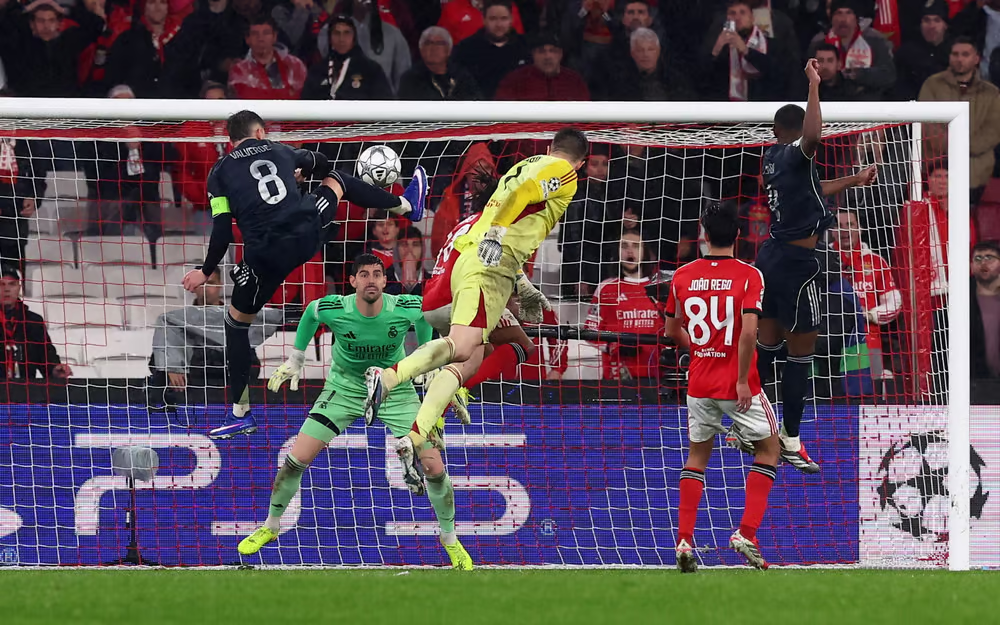
Estádio da Luz Explosion: Benfica Shock Real Madrid

0

On a night where Europe held its breath, Benfica delivered one of the most astonishing results of the UEFA Champions League season, defeating Real Madrid 4–2 in a pulsating clash at the Estádio da Luz.

The match had everything: star power, controversy, red cards, late drama — and an unforgettable moment when Benfica goalkeeper Anatoliy Trubin scored a stoppage-time header to seal victory.

Kylian Mbappé struck first for Madrid in the 30th minute, continuing his blistering form and briefly silencing the Lisbon crowd. But Benfica responded with fearless intensity as Andreas Schjelderup equalised in the 36th minute, igniting belief among the home fans.

Just before halftime, Vangelis Pavlidis converted a penalty to put Benfica ahead, shifting the momentum firmly in the Portuguese side’s favour.

Second-Half Momentum: Benfica Refuse to Back Down

The second half opened with Benfica in full control. Schjelderup struck again in the 54th minute, completing his brace and pushing Benfica into a commanding lead.

Madrid, however, refused to collapse.

Mbappé struck again in the 58th minute, dragging the Spanish giants back into the contest and setting up a frantic finale.

What followed was chaos.

Real Madrid pushed forward relentlessly but struggled to break down Benfica’s compact defence, while tensions boiled over in stoppage time.

Chaos at the End: Red Cards and a Goalkeeper’s Glory

As Madrid chased an equaliser, the game spiralled into drama.

Raúl Asencio and Rodrygo were both sent off in stoppage time, leaving Madrid with nine men and exposing their desperation.

Then came the moment that defined the night.

In the 98th minute, Benfica goalkeeper Anatoliy Trubin rose above everyone to head home a sensational fourth goal — a rare and historic moment that sealed a famous victory.

The final whistle confirmed Benfica’s 4–2 triumph — a result that reshaped the Champions League standings and sent shockwaves across Europe.

Tactical Storyline: Mourinho vs Madrid — A Familiar Script

Beyond the goals, the match carried a deeper narrative.

Benfica, led by José Mourinho, executed a disciplined tactical plan — absorbing pressure, striking on transitions, and exploiting Madrid’s defensive vulnerabilities.

Madrid dominated possession but lacked defensive stability, while Benfica showed ruthless efficiency in key moments.

The victory pushed Benfica into the playoff places, while Madrid dropped out of the top eight and into the knockout playoff round — a major setback for the 14-time European champions.

Other Champions League Highlights: Europe’s Night of Drama

While Lisbon hosted the headline shock, other matches across Europe delivered their own storylines:

  • Barcelona cruised to a convincing victory, reinforcing their status as title contenders.
  • Arsenal edged a thrilling contest with late drama.
  • Atlético Madrid suffered a surprise defeat, denting their momentum.
  • Sporting and Olympiacos claimed dramatic away wins, keeping their European dreams alive.

Together, the results underlined the unpredictability of the Champions League — where giants fall and underdogs rise.

Big Picture: What the Night Means for the Champions League

The events of January 28, 2026, will be remembered as a turning point in the season.

For Benfica, it was a statement of intent — proof that they belong among Europe’s elite.

For Real Madrid, it was a warning — brilliance in attack cannot always mask fragility in defence.

And for the Champions League, it was another reminder of why it remains football’s most dramatic stage.

Update: Diezani Alison-Madueke’s UK Bribery Trial

0

The bribery trial of Nigeria’s former Minister of Petroleum Resources, Diezani Alison-Madueke, is underway at Southwark Crown Court in London, placing renewed international focus on long-running corruption allegations tied to Nigeria’s oil sector.

Alison-Madueke, 65, has pleaded not guilty to six charges related to bribery and conspiracy. The trial, which began on January 27, is expected to last up to three months.

Events Leading To The Charges

Diezani Alison-Madueke rose through Nigeria’s oil industry after joining Shell Petroleum Development Company in 1992, later becoming the firm’s first female executive director.

Her political career gathered momentum with ministerial appointments in Transportation and Mines and Steel Development, before she was named Minister of Petroleum Resources in 2010 under President Goodluck Jonathan.

In that role, she oversaw the Nigerian National Petroleum Corporation and later became the first woman to serve as President of OPEC between 2014 and 2015.

Her tenure was shadowed by persistent allegations of corruption, favoritism and opaque oil deals involving billions of dollars.

Matters escalated after the 2015 election of President Muhammadu Buhari, whose administration prioritized anti corruption reforms. Alison-Madueke left Nigeria for the United Kingdom shortly before the transition.

In October 2015, she was arrested in London by the UK National Crime Agency as part of a joint investigation with Nigerian authorities. Over the years, multiple probes followed across jurisdictions.

In the UK, courts ordered the forfeiture of millions of pounds in assets deemed proceeds of crime. In Nigeria, the Economic and Financial Crimes Commission filed several charges accusing her of diverting large sums from NNPC funds and laundering money through shell companies.

The United States also pursued civil forfeiture actions linked to properties, cash and luxury assets allegedly bought with stolen oil revenues.

Despite these developments, Alison-Madueke consistently denied wrongdoing, describing the accusations as politically motivated. Health challenges, including cancer treatment, contributed to delays in formal prosecution. UK authorities eventually filed criminal charges in August 2023 after extended investigations.

Proceedings And Developments In The UK Trial

The London trial focuses on allegations that between 2011 and 2015, Alison-Madueke accepted bribes from oil industry figures in exchange for influencing oil contracts and strategic decisions involving state entities.

Prosecutors allege she enjoyed an extravagant lifestyle funded by businessmen who benefited from lucrative oil deals.

Evidence presented so far includes claims of millions of pounds spent on luxury shopping at Harrods and other high end stores, exclusive use of multimillion pound properties in London and the countryside, cash payments, private jet travel, chauffeur services and school fees for her son.

Prosecutors say these benefits were provided by oil executives whose companies secured or retained valuable contracts.

The court has also heard about alleged payments routed through associates and family members, including claims involving her brother, Doye Agama. Recorded phone calls and text messages from seized devices have been played to the jury, with prosecutors arguing they show awareness of the sensitive nature of the benefits she received.

Alison-Madueke and her co defendants have all pleaded not guilty. Her legal team is expected to argue that the items and services cited were lawful gifts or personal arrangements unrelated to official decisions, and that no improper influence was exercised.

As proceedings continue into their third day, the case has attracted wide attention in Nigeria and beyond, seen as a major test of international cooperation against corruption.

The outcome could have significant implications for ongoing asset recovery efforts and future extradition requests, while the trial itself continues to unravel years of alleged dealings at the heart of Nigeria’s oil wealth.

Gov. AbdulRazaq Hails $35m Chinese Investments Commencing in Kwara

0

Kwara State has secured at least two foreign direct investments valued at $35m, reflecting Governor AbdulRahman AbdulRazaq’s commitment to driving industrialization and economic expansion in the state.

Sun Qing Rong, team lead of ER-KANG Company Limited, disclosed that the company has completed and officially launched its $20m lithium processing factory, in line with the state government’s policy of promoting value addition and strengthening local manufacturing capacity.

He explained that the company currently employs more than 300 workers, most of whom are indigenes of Kwara State, and noted that the facility processes lithium into finished materials rather than exporting the mineral in its raw form without added value.

Rong also revealed that the firm is establishing a pharmaceutical manufacturing company in Kwara State with an investment exceeding $15m. He added that ER-KANG will partner with the state government in the development of the industrial park.

“This is one of the fruits of the meeting that we held with Your Excellency in Beijing about two years ago. Today, we have completed the lithium plant and it is up and running. And this year, we are starting the pharmaceutical company with the help of Your Excellency,” he said.

“The factory will include two phases of construction for large infusion and small volume injection workshops, which will make up for the shortage of such products in the Nigerian market. At present, the relevant preparatory work is basically completed,” he said.

He praised Governor AbdulRazaq for creating an “outstanding investment environment for foreign investors like us,” adding that the company upholds a strong sense of social responsibility within its host communities.

Governor AbdulRahman AbdulRazaq expressed delight over the investments, stating that they would generate employment opportunities, facilitate technology transfer, and stimulate the state’s local economy.

“We are willing to support you and others to invest more in our state,” he said.

Members of Rong’s delegation at the meeting included the company’s legal adviser, Barrister Ibrahim Atanda; Project Architect, Arch. Sayi Yekeen; Quality Control Supervisor, Shuai Hai Tao; Factory Manager, Cao Zheng Hai; Pharmaceutical Manager, Xie Chuan Li; and Administrative Manager, Mi Guang Hua.

The Governor was accompanied at the meeting by the Special Adviser on Special Duties, Alhaji AbdulRazaq Jiddah.

Zelensky Denounces Russian Drone Attack On Passenger Train As “Terrorism”

0

Ukrainian President Volodymyr Zelensky has condemned a Russian drone strike on a packed passenger train in north-eastern Ukraine, describing the attack as “terrorism.” Local officials say the incident killed at least five people and left several others injured.

According to authorities, more than 200 passengers were on board when a drone hit one of the carriages in the Kharkiv region on Tuesday, while two additional drones exploded nearby. Zelensky said 18 people were inside the affected carriage at the time and stressed that there was no “military justification” for targeting civilians.

Russia has not commented on the incident, though it has stepped up drone and missile attacks on Ukraine’s energy and transport infrastructure during what has been described as the harshest winter in years.

Elsewhere, Ukraine’s southern port city of Odesa was struck by dozens of drones, killing three people and injuring many others. Energy officials reported that a local facility sustained “enormous damage” overnight into Tuesday, while Odesa regional chief Serhii Lysak said attacks continued into Wednesday for a second consecutive night.

In the Kyiv region, police said a residential apartment block was hit, killing a couple and injuring their four-year-old child in a district near the capital. 

The continued strikes have left millions of Ukrainians without heating, electricity and water. Since Russian President Vladimir Putin launched a full-scale invasion in February 2022, Moscow has seized control of about 20% of Ukrainian territory.

In a late-night social media post on Tuesday, Zelensky wrote: “In any country, a drone strike on a civilian train would be considered in exactly the same way – purely as terrorism.”

Images released by Ukraine’s emergency services showed at least one train carriage badly damaged and still burning following the attack. Kharkiv’s regional prosecutor’s office said the strike occurred near the village of Yazykove.

Officials said the train was travelling from the western border town of Chop to Barvinkove in the Kharkiv region, passing through the regional capital, Kharkiv. The route extends further east into the Donetsk region and is commonly used by civilians as well as Ukrainian soldiers travelling to and from leave, along with family members visiting them.

In Odesa, officials said Russia launched more than 50 drones overnight into Tuesday. Rescue teams later recovered three bodies from the rubble after several floors of a residential building collapsed, while multiple nearby buildings sustained damage.

The latest attacks come despite ongoing diplomatic efforts to end the war. Ukraine and Russia held talks last week in the United Arab Emirates, with US negotiators also involved. All sides described the discussions as constructive, although major territorial disputes remain unresolved, and further negotiations are expected this weekend.

What You Should Know About PayPal And Paga Nigeria Partnership

0

In a significant development for Nigeria’s digital economy, global payments giant PayPal has officially relaunched its services in the country through a strategic partnership with local fintech leader Paga.

Announced in late 2025 and going live in early 2026, this collaboration allows Nigerian users to receive international payments directly into their Paga wallets, marking the end of over two decades of restrictions that limited PayPal’s functionality in Africa’s most populous nation.

This move comes amid PayPal’s broader push into emerging markets, backed by a $100 million fund for African fintech acquisitions and partnerships, as the company seeks to reverse a 75.6% decline in its share price over the past five years.

The partnership enables seamless integration between PayPal accounts and Paga digital wallets, facilitating cross-border receipts from over 200 countries, instant withdrawals in Naira, and access to PayPal’s network of more than 430 million global users.

Users can now shop internationally, pay bills, transfer funds to banks, or spend via Paga’s Visa card, bridging global earnings with local needs. For merchants, it opens doors to accept payments in up to 25 currencies, potentially boosting exports and small business growth.

History of PayPal in Nigeria

PayPal’s relationship with Nigeria has been fraught with challenges since its initial entry into the market. The company first allowed Nigerian users to sign up in 2004 but quickly imposed strict limitations, restricting accounts to outbound payments only, no inbound receipts or local withdrawals were permitted.

PayPal cited high fraud risks, including the use of stolen credit cards via Nigerian IP addresses and deficiencies in the country’s identification infrastructure, as reasons for these measures.

These restrictions, initially described as temporary, persisted for nearly two decades, effectively excluding Nigerian freelancers, online entrepreneurs, and small businesses from one of the world’s largest payment platforms.

Many users resorted to workarounds, such as using VPNs or intermediaries in other countries, but these were often unreliable and costly. Accounts were frequently frozen without clear explanations, leading to lost funds and widespread frustration.

In the absence of full PayPal access, Nigeria’s fintech sector flourished independently.

Companies like Paystack, Flutterwave, Monnify, Kora, Grey, and Cleva emerged to fill the gap, providing cross-border payment solutions and processing billions in transactions annually.

Paga itself, founded in 2009 by Tayo Oviosu, was inspired by PayPal’s model, aiming to create a “PayPal for Africa.” Early attempts at collaboration, including Oviosu’s 2013 email to PayPal outlining potential partnerships, went unrealized until now.

Previous partnerships, such as a 2014 tie-up with First Bank for outbound payments and a 2021 collaboration with Flutterwave focused on businesses, failed to enable full inbound access for individuals.

PayPal’s absence reinforced negative stereotypes and hindered Nigeria’s integration into the global digital economy, but it also spurred local innovation, with digital payments soaring to ₦1.07 quadrillion ($754 billion) in 2024.

What the Paga and PayPal Partnership Means

PayPal X Paga

This partnership represents a pivotal shift, potentially injecting much-needed foreign currency into Nigeria’s economy and enhancing financial inclusion in one of Africa’s fastest-growing digital markets.

With Nigeria being Africa’s largest remittance recipient, the integration could streamline inflows for gig workers, families, and businesses, reducing reliance on informal channels or cryptocurrencies. Currency conversions will occur at market rates, making it competitive with alternatives.

For users, getting started is straightforward: log into the Paga app or website, link a PayPal account (only Nigeria-registered ones qualify for receipts), and begin transacting.

Funds can remain in dollars or be converted to Naira for local use, and the setup even allows receipts from Venmo users in the U.S. However, some requirements, like providing a Bank Verification Number (BVN), have raised privacy concerns, as they differ from processes in other countries.

The implications extend to competition and market dynamics. PayPal’s entry could challenge established local fintechs, many of which have achieved unicorn status and process over $100 billion annually.

Skeptics warn of potential market consolidation, where PayPal might leverage local insights before sidelining partners, or continue with biased risk models that lead to account freezes.

With mixed reactions on social media, while some celebrate the milestone as a win for global access, others highlight alternatives like Cleva or Grey, questioning if PayPal’s return is too late or insincere.

Tayo Oviosu, Paga’s founder, emphasized the long-term vision, “This is about making global funds accessible locally in a simple, secure way.”

Otto Williams, PayPal’s regional head, added that the focus is on supporting local innovation and expanding inclusion. Paga, with its 21 million users and ₦17 trillion ($12 billion) processed in 2025, anticipates volume growth from international inflows.

Overall, the partnership signals Nigeria’s maturing digital infrastructure and PayPal’s strategic pivot to Africa, but its success will depend on building trust, addressing past grievances, and delivering reliable service amid stiff local competition.