
The Federal Government has authorized the concession of the Port Harcourt International Airport to private operators, stating that this action will enhance efficiency and minimize financial losses from the running of underperforming terminals nationwide.
Minister of Aviation and Aerospace Development, Festus Keyamo, disclosed this information to State House correspondents after Thursday’s Federal Executive Council meeting in Abuja, also assuring aviation workers that the concession plan would not result in job losses.
Keyamo affirmed, “This is a message to the unions: we will engage them. Nobody will lose their job. I’m making this very clear because there has been all kinds of misinformation to the union members. I am pro-union, pro-workers, and I know the kind of pressure they have been putting on me, including people within the system instigating them against these concessions.”
”They will not dictate policies of the government. I repeat, no worker will lose his job as a result of concessions,” Keyamo reiterated.
The minister mentioned that the Federal Government had previously struggled to attract interest in the Port Harcourt Airport during the last administration. However, a revitalized investor confidence under the Tinubu-led government reversed the situation.
”Before we came in, Port Harcourt was a no-go area. Almost all the investors shunned Port Harcourt. But since this government came to power, more than six people were scrambling and falling over themselves to get to Port Harcourt. We now have a business case approved,” he stated.
Keyamo announced that the FEC approved all eight memos presented by the Ministry of Aviation. These approvals encompass the procurement of 15 new firefighting vehicles, which will be deployed at the nation’s five international airports: Abuja, Lagos, Kano, Port Harcourt, and Enugu.
”This is in tune with ICAO standards. The International Civil Aviation Organisation regularly audits our airports to determine whether they meet global standards. One of the key requirements is adequate fire-fighting equipment,” he explained.
Also sanctioned was the procurement and installation of tertiary power supply at all airports and 14 Very High Frequency remote stations managed by the Nigerian Airspace Management Agency (NAMA). He said this measure aims to guarantee continuous support for air navigation systems.
Keyamo further noted that the Council approved the full business case for a biometric verification system across all Nigerian airports.
”Too many anonymous people board aircraft using fake identities. That is not good for national security. With this system, your NIN will be linked to boarding data. We will verify that you are truly the one flying. This meets ICAO standards,” the Minister emphasized.
The Council additionally sanctioned the construction of a permanent headquarters for NAMA in Abuja, following its move from Lagos. The minister clarified that the agency is currently operating from rented facilities in the Federal Capital Territory.
Keyamo also declared that all properties belonging to the Federal Airports Authority of Nigeria (FAAN) both within and around airports have been officially excluded from being sold to private individuals.
”This is a public announcement to those who purported to have bought airport properties: we will not give those properties to them,” he proclaimed.
”Airports are high-security zones. We need quarters for emergency personnel like the fire service and security staff. The President has now approved a memo to that effect,” he detailed.
He pointed out that the previous sales, conducted by a presidential committee under former President Olusegun Obasanjo, had been the source of longstanding security issues at multiple airports.
Finally, the Council also approved contracts within the ministry’s 2024 budget for runway and perimeter lighting, allowing for late-night operations at selected airports.
”Some airports close as early as 6 pm because there are no lights for night operations. We want airlines to fly till 10 or 11 pm to increase capacity and revenue,” Keyamo announced.
FEC Approves Biometric Flight Boarding And Port Harcourt Airport Concession

Crystal Palace Topples AZ Alkmaar As Conference League Heats Up

At a packed Selhurst Park, Crystal Palace delivered a decisive performance, edging AZ Alkmaar 3‑1 to kick‑start their Conference League campaign in style.
Right off the bat, Palace looked a little uneasy; a penalty awarded early was wasted by Jean‑Philippe Mateta (saved by AZ keeper Rome‑Jayden Owusu‑Oduro).
But the hosts didn’t let that stumble define the night:
- Maxence Lacroix broke the deadlock with a fierce volley (after a lengthy VAR check) around the 22nd minute.
- Then, just before half‑time, Senegal international Ismaïla Sarr slid in for the second, giving Palace the two‑goal cushion they craved.
- AZ tried to fight back early in the second half via Sven Mijnans (deflected strike), but Sarr was quick to respond, slotting home his second and Palace’s third around the 57th minute.
What this result gave Palace: their first home win in a main stage European competition. It moves them into contention, offers momentum and – crucially – lifts a weight after their earlier group‑stage stumble.
Tactical takeaways:
- Palace’s set‑piece dominance stood out: the Lacroix goal and Sarr’s first both stemmed from dead‑ball situations.
- AZ, despite possessing more of the ball (64.7 % possession by some reports), struggled to convert pressure into goals and were punished on the break and via quick transitions.
- Sarr’s pace and off‑ball movement proved decisive – he created constant problems, even when he didn’t score.
Implications:
Palace now has six points from three games (according to table tracking) and sit in a more favorable position to aim for the knockout phase.
For AZ, the loss exposes vulnerability away from home and makes their road to qualification much harder.
Other Notable Fixtures & Storylines
While Palace’s win takes the spotlight, Matchday 3 served up several other intriguing results across the competition:
- AEK Athens vs Shamrock Rovers ended 1‑1: The Irish side were so close to a historic win before conceding a late penalty after a VAR review.
- NK Celje edged out Legia Warsaw 2‑1, picking up a valuable win in a tight group.
- KuPS Kuopio defeated Slovan Bratislava 3‑1, boosting their hopes of advancing.
- FC Noah fell to Sigma Olomouc 1‑2 at home, leaving them with work to do in their group.
These games reinforce one recurring theme of the Conference League: small margins, big consequences. A single set‑piece, offside check, or moment of concentration can tilt a group in favour of one side.
Closing Thoughts
The night belonged to Crystal Palace – not just because of the scoreline, but because of the statement they made. After the early penalty miss, they didn’t panic. Their set‑pieces worked, Sarr stepped up, and the clean transitions and defensive maturity were there for all to see.
For AZ Alkmaar, the game highlights how quickly opportunities can slip away when your opponent defends resolutely and counters sharply.
As the group phase continues, teams will look back at nights like this and think: we either took our chance or we wasted it. Palace made theirs count; others must now respond.
Godswill Udoh, Sunday Jackson, Others Awaiting Trial For Over Ten Years

Godswill Udoh, an aluminum window-frame maker, was arrested in 2010 while returning home with ₦96,000 in savings. Police allegedly beat him, seized his money, and forced him to sign a false confession to armed robbery.
He spent 11 years in detention as prosecutors failed to present any witnesses, evidence, or an investigating officer. When a judge finally struck out the case in 2021, Udoh regained his freedom but found his business ruined and his family life shattered beyond repair.
Sunday Jackson, another victim, a university student arrested in 2015 for allegedly killing a herdsman, spent a decade on death row awaiting judgment. During that time, his wife left, his second daughter was born without him ever meeting her, and his home was destroyed. In 2025, the Supreme Court upheld his death sentence. a grim reminder of how delayed justice can become its own form of execution.
Mansur Ismail spent five years in detention simply for being near a group of men smoking cigarettes. Though eventually acquitted, the ordeal left deep scars, his reputation destroyed, and former customers too afraid to associate with him.
Jamiu Adedokun, a 17-year-old apprentice tailor, was arrested by a police task force while walking home late at night because he couldn’t afford transport fare. Accused of “breach of public peace,” he spent months in Kirikiri Prison until volunteer lawyers secured his release
These are just a few of the over 66% of inmates, about 53,000 to 70,000 people, awaiting trial in Nigeria’s correctional system.
The system is in crisis, with many languishing for years without legal representation.
Alleged widespread corruption, police abuse, and a slow judiciary have turned prisons into holding cells for the poor, prompting urgent calls for a state of emergency over this human rights disaster.
What Obtains in Nigeria Without Trials
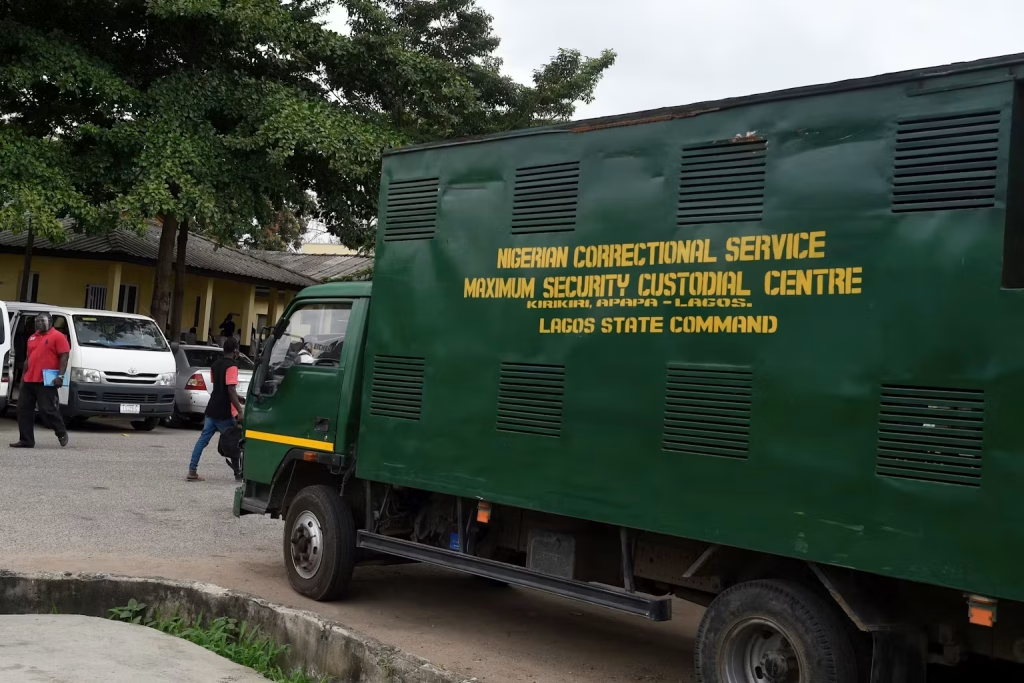
Nigeria’s justice system today operates as justice without trial, fueled by corruption, inefficiency, and the neglect of due process.
Over 66 percent of the inmate population are awaiting trial, far exceeding the number of convicted persons. This has resulted in deplorable conditions within correctional facilities, the spread of chronic diseases, and, in some cases, death among detainees.
Police officers are alleged to frequently abuse their powers through indiscriminate raids, framing poor suspects for fabricated crimes such as armed robbery, and seizing their belongings. Many victims are beaten and forced to sign false confessions without access to legal counsel.
And the inability to afford legal representation, which can cost between ₦50,000 and ₦100,000, remains the greatest barrier to freedom. While wealthy suspects can secure their release, the poor are left to languish indefinitely in detention.
In an interview with LN247 Digital, Barrister Don Akaegbu explained that the persistent delays in Nigeria’s justice system are the result of deep-seated inefficiencies and poor implementation of existing laws.
“Trials drag for years mainly because of systemic inefficiencies. You have constant adjournments, witnesses not showing up, poor investigations, and overloaded court dockets. Sometimes judges are transferred or promoted, and the new judge has to start the case all over again—that alone can waste years.
Another problem is the lack of technology. Most of our courts still operate manually.. So the real issue is not the absence of laws, but the poor implementation of the ones we already have.
What the Law Says

The grim reality across Nigeria’s correctional system stands in stark violation of the country’s own laws and constitutional safeguards.
Constitutional Right to Counsel
Section 36(6)(c) of the 1999 Constitution guarantees every accused person the right to legal representation and a fair hearing within a reasonable time. This right, meant to protect the vulnerable, is routinely denied to thousands who remain behind bars without counsel.
Presumption of Innocence
By law, every Awaiting Trial Inmate is presumed innocent until proven guilty. Yet, they are often subjected to the same harsh and degrading conditions as convicted criminals, stripped of dignity and due process.
The Legal Aid Mandate
The Legal Aid Act of 2011 requires the Legal Aid Council of Nigeria (LACON) to offer free legal services to indigent citizens. In practice, the agency is severely underfunded and overstretched, leaving countless detainees without access to justice.
Speedy Trial Legislation
The Administration of Criminal Justice Act (ACJA) 2015 was designed to ensure faster trials and reduce the number of awaiting trial inmates. However, enforcement has remained weak, and the law’s promise of timely justice continues to be undermined by poor implementation and systemic neglect.
What The Government Has Been Up To
Government actions have largely centered on welfare measures rather than fixing the systemic legal failures that sustain Nigeria’s justice crisis. As a result, civil society groups continue to bear the burden of securing justice for detainees.
Focus on Welfare
Authorities have increased the daily feeding allowance for inmates from ₦750 to ₦1,150, with lawmakers pushing for a further rise to ₦4,000. Budgetary allocations for upgrading correctional facilities have also been expanded, though conditions remain dire in most prisons.
Judicial Commitment
The Attorney General of the Federation and other senior officials have made public pledges to fast-track judicial processes and reduce the population of awaiting trial inmates. However, progress remains slow and uneven across the states.
Reliance on NGOs
In reality, the bulk of efforts to secure the release of detainees comes from non-governmental organizations.
Godswill Udoh regained freedom through the intervention of the Headfort Foundation, while Jamiu Adedokun was released by the Take It Back Movement Legal Aid.
The Public and Private Development Centre (PPDC) has also provided free legal services to more than 20,900 detainees, describing the situation as “intolerable.”
Insufficient Interventions
Barrister Don Akaegbu observed that while the government has made attempts to decongest prisons, the measures remain inadequate due to weak resource allocation and poor implementation.
“To be fair, the government has made some efforts. We’ve seen prison decongestion exercises where minor offenders and people detained beyond lawful limits are released. The Legal Aid Council and some NGOs also try to help indigent defendants get legal representation.
But the truth is, these efforts are not enough. Legal aid is underfunded, there are too few lawyers and judges, and the prison system is overstretched… Until the government invests more in judicial infrastructure, legal aid, and technology, we’ll keep having people languishing in jail for years without trial.”
The Road Ahead
Stakeholders insist that Nigeria must go beyond welfare measures and confront the structural roots of its justice crisis. They are calling on the President to declare a state of emergency to fast-track the release of detainees held for minor or unproven offenses and to ensure that justice is no longer delayed or denied.
A key priority is proper funding for the Legal Aid Council of Nigeria (LACON) to enable it to recruit and train enough lawyers to represent the more than 53,000 awaiting trial inmates. The judiciary must also embrace digital case management and virtual hearing systems to curb the endless delays caused by manual processes and administrative bottlenecks.
Equally critical is the need to hold law enforcement accountable through independent oversight that investigates and punishes officers involved in torture, extortion, and wrongful arrests. Without dismantling these deep-rooted injustices and enforcing due process, Nigeria’s justice system will continue to betray the very citizens it was meant to protect.
Senate Approves 14-year Jail Term For Lecturers Who Harass Students Sexually

A powerful rebuke of power abuse in Nigeria’s universities resonated through the Senate chamber on Wednesday as lawmakers passed a historic bill imposing up to 14 years in prison for lecturers found guilty of sexually harassing students.
The approval of the Sexual Harassment of Students (Prevention and Prohibition) Bill, 2025 marked a defining step in confronting sexual exploitation in higher institutions — an issue long murmured about in elite circles but rarely addressed with action.
Sponsored by Senate Leader Opeyemi Bamidele (APC, Ekiti Central), the bill aims to dismantle what he called a “culture of coercion and silence” that has undermined the trust between students and educators.
Bamidele explained that the law was designed to “protect students from all forms of sexual misconduct and abuse within academic environments,” while promoting respect for human dignity and ethical conduct in teaching.
“This law safeguards the sanctity of the student-educator relationship built on authority, dependency, and trust,” he told lawmakers. “It ensures that no educator ever uses that trust as a weapon of exploitation again.”
Under the new Act, any educator convicted of sexual harassment will face a minimum of five years and a maximum of 14 years in prison, with no option of a fine.
Lesser related offences carry between two and five years of imprisonment, also without a fine.
The law classifies as offences: demanding or coercing sex from a student or prospective student; making unwelcome sexual advances or creating a hostile environment; touching, kissing, hugging, or pinching a student in a sexual manner; sending sexually explicit images or remarks; stalking, or making sexually suggestive jokes or comments.
Even indirect involvement, such as aiding or encouraging someone else to commit sexual harassment, now carries criminal liability.
The Act further eliminates consent as a defence, declaring that “it shall not be a defence that a student consented” to the act. Only a legally recognised marriage between both parties is exempted.
Students or their representatives — including family members, guardians, or lawyers — can now submit a written petition of sexual harassment directly to the Nigerian Police Force, the Attorney-General, or the institution’s Independent Sexual Harassment Prohibition Committee.
All tertiary institutions will be required to establish such committees, which will have the authority to investigate and issue binding decisions in line with the law.
However, once a case proceeds to court, no internal disciplinary panel may continue handling the same matter to prevent jurisdictional overlap.
The passage sparked debate. Senator Adams Oshiomhole (APC, Edo North) commended the objective but argued that the legislation should also apply to workplaces and public offices.
“There is no need to restrict this law to students,” he said. “Sexual harassment exists everywhere — in offices, factories, and even politics. We should give this bill universal application.”
Deputy Senate President Barau Jibrin (APC, Kano North), who presided, clarified that because the bill originated from the House for concurrence, substantial changes could not be made.
He further noted that existing laws already address harassment in workplaces, emphasizing that this legislation specifically targets the education sector, where such cases have become disturbingly frequent.
For years, Nigerian universities have been plagued by “sex-for-grades” scandals, many of which ended without justice. The Senate’s action, analysts believe, signals a new zero-tolerance stance against such abuses.
The passage of the bill represents not only a legal breakthrough but also a cultural shift — an effort to restore higher education as a space of mentorship rather than manipulation.
“This law gives voice to the voiceless,” said one female lawmaker after the session. “No student should ever have to trade dignity for a degree.”
With concurrence secured, the bill now awaits the President’s assent to become law — a step expected to set a new moral standard in Nigeria’s tertiary education system.
Cameroon’s 92-year-old Biya Takes Oath For Eighth Term
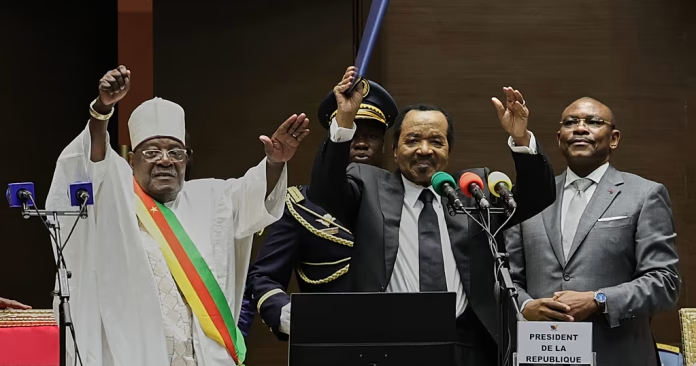
Cameroon’s President Paul Biya, the world’s oldest sitting leader, was sworn in on Thursday for an eighth term, extending his 43-year rule after a disputed election that triggered widespread protests and a violent crackdown that left several demonstrators dead.
The 92-year-old leader secured victory in the October 12 election with 53.7 percent of the vote, according to official figures, defeating his main rival, former government minister Issa Tchiroma Bakary, who garnered 35.2 percent.
Biya took the oath of office during a parliamentary ceremony in Yaounde, marking the beginning of another seven-year tenure at the helm of the Central African nation.
“I will spare no effort to continue to be worthy of this trust,” Biya declared at the event, which was attended by domestic political figures but no foreign dignitaries.
“I fully understand the gravity of the situation our country is going through. I understand the number and severity of the challenges we face and I understand the depth of frustrations and the scale of expectations,” he added.
Tchiroma, once a close ally of Biya who later joined the opposition, captured strong support among young voters yearning for change and maintains that he was the legitimate winner of the election.
“There are now two presidents — the president elected by the Cameroonian people (me) and the president appointed by the Constitutional Council (whom you know),” he posted on social media on Wednesday.
He has persistently called on his followers to challenge the official outcome, which turned out to be tighter than many had anticipated.
Several fatalities were reported when security forces violently dispersed opposition demonstrations shortly before and after Biya’s victory was officially announced on October 27.
– Political Standoff –
Tchiroma has since called on citizens to observe “dead city” protests, urging businesses to close and public life to pause.
Reactions have varied across the country; the movement gained traction in Garoua and Douala, while in Yaounde, most shops stayed open, students attended classes, and workers reported to their jobs.
Following the announcement of results, Tchiroma was placed under house arrest in Garoua, though a spokesperson told AFP on Tuesday that he was “on the move.”
Authorities have announced plans to prosecute the opposition leader, accusing him of making “repeated calls for insurrection.”
The government has admitted that people lost their lives during the unrest but has yet to disclose an official casualty count.
“With neither side willing to back down, the risks of worsening unrest are high,” the International Crisis Group (ICG) warned in an October 29 report.
Both the European Union and the African Union have condemned the government’s violent suppression of protests, while the UN High Commissioner for Human Rights has demanded an investigation into the incidents.
Since Cameroon’s independence from France in 1960, Biya has been only the nation’s second president.
He has maintained power through authoritarian rule, stifling political dissent and armed opposition while navigating persistent social unrest, economic disparity, and separatist conflicts.
US Moves to Impose Visa Ban, Asset Freeze On Miyetti Allah

A new legislative proposal in the US Congress has suggested targeted punitive measures and other restrictions against individuals and groups allegedly involved in serious breaches of religious freedom in Nigeria.
The legislation specifically named the Miyetti Allah Cattle Breeders Association of Nigeria (MACBAN) and the Miyetti Allah Kautal Hore as organizations implicated in these abuses.
The bill, put forth by House of Representatives member Smith Christopher, proposed sanctions on members of these groups, including visa restrictions and the freezing of assets.
He introduced the bill on Tuesday while praising US President Donald Trump for once again designating Nigeria a country of particular concern (CPC).
“President Donald J. Trump acted appropriately and decisively to redesignate Nigeria as a CPC and hold the Nigerian government accountable for its complicity in religious persecution by radical Islamists, such as Boko Haram and Fulani terrorists,” Christopher said.
In the bill, Christopher highlighted that the US has also placed “Fulani Ethnic Militias” operating in Benue and Plateau States on its Entities of Particular Concern (EPC) list under the International Religious Freedom Act.
Entities of Particular Concern (EPCs) are defined under U.S. law as non-state actors who have committed particularly severe violations of religious freedom.
Christopher’s bill also recommended that the US should immediately provide humanitarian aid directly to faith-based organizations to support internally displaced people in Nigeria’s middle belt states.
The bill also advocated for making US foreign assistance, including funding through global health programs, conditional upon immediate steps being taken to address religious freedom violations.
It strongly urged the creation of long-term strategies to foster peace and stability, which involves requiring the Nigerian government to take prompt and effective action to prevent religious persecution, prosecute those responsible for violence, offer support for the millions of internally displaced persons, and uphold constitutional protections for religious freedom.
Christopher’s bill was introduced concurrently with US Senator Ted Cruz’s announcement of his commitment to holding Nigerian officials accountable for accusations of genocide against Christians.
Cruz is championing the Nigeria Religious Freedom Accountability Act of 2025, a bill designed to shield Christians and other religious minorities from widespread persecution in Nigeria.
Following the CPC designation, Trump also issued a warning of potential military action in Nigeria if its leaders fail to safeguard Christians in the country.
Is there any part of this rephrased text or the original context you’d like me to elaborate on?
Trump’s Threat: U.S. Military Prepares Nigeria Airstrike Blueprints

The United States military has reportedly prepared contingency plans for potential airstrikes in Nigeria after President Donald Trump directed the Pentagon to “prepare to intervene” to shield Christians from terrorist assaults, according to The New York Times.
The newspaper reported on Wednesday that U.S. Africa Command had submitted multiple operational blueprints to the Department of War after Secretary Pete Hegseth ordered strategies aligned with Trump’s directive.
Insiders familiar with the talks revealed that the classified proposals labeled “heavy,” “medium,” and “light”, detailed varying degrees of U.S. involvement in Nigeria.
The “heavy option” would station an aircraft carrier strike group in the Gulf of Guinea, supported by fighter jets or long-range bombers to strike militant strongholds in the north.
The “medium option” calls for MQ-9 Reaper and MQ-1 Predator drones to conduct pinpoint attacks on insurgent camps, convoys, and vehicles, guided by real-time U.S. intelligence.
The “light option” focuses on sharing intelligence, providing logistics, and conducting joint missions with Nigerian forces against Boko Haram and other Islamist factions blamed for massacres, kidnappings, and church bombings.
Senior Pentagon leaders cautioned that limited airstrikes or drone operations cannot end Nigeria’s protracted insurgency without a full-scale invasion akin to Iraq or Afghanistan, an option Washington is not pursuing.
Days earlier, Trump posted on Truth Social, ordering the U.S. War Department to ready possible operations in Nigeria.
He charged the Nigerian government with ignoring what he termed widespread slaughter of Christians.
Trump threatened to cut off all U.S. aid and support to Nigeria unless the attacks cease.
He also signaled that America could launch military action to eradicate what he labeled “Islamic terrorists” behind the violence.
“If the Nigerian Government continues to allow the killing of Christians, the U.S.A. will immediately stop all aid and assistance to Nigeria, and may very well go into that now disgraced country, ‘guns-a-blazing,’ to completely wipe out the Islamic Terrorists who are committing these horrible atrocities,” Trump wrote.
He added, “I am hereby instructing our Department of War to prepare for possible action. If we attack, it will be fast, vicious, and sweet, just like the terrorist thugs attack our CHERISHED Christians! WARNING: THE NIGERIAN GOVERNMENT BETTER MOVE FAST!”
China on Tuesday declared its backing for Nigeria and warned against foreign meddling under the guise of religion or human rights.
“As Nigeria’s comprehensive strategic partner, China firmly opposes any country using religion and human rights as an excuse to interfere in other countries’ internal affairs, and threatening other countries with sanctions and force,” Chinese Foreign Ministry spokesperson Mao Ning stated in Beijing.
Brugge’s Own Goal Lights Up Champions League Drama as Giants Falter and Underdogs Rise

It was one of those nights the Champions League was made for, full of chaos, comebacks, and pure football theatre. From a wild 3–3 draw in Bruges to a masterclass in Manchester, November 5th delivered another reminder that in Europe’s top competition, reputations mean little once the whistle blows.
Barcelona’s Rollercoaster in Bruges
The night’s headline drama came in Belgium, where Club Brugge and FC Barcelona shared six goals in a breathless 3–3 draw. The hosts, stung by a heavy defeat to Bayern Munich a week earlier, responded with passion and precision — and a touch of luck.
An early own goal from a Brugge defender handed Barcelona an unexpected advantage, but the Catalans struggled to maintain control. The Belgian champions struck back twice within the opening 20 minutes, capitalising on defensive lapses from Barça to turn the match on its head.
Barcelona, fresh from a 6–1 demolition of Olympiacos, seemed set for another comfortable win after regaining their attacking rhythm in the second half. Goals in the 61st and 77th minutes showed their intent, but Brugge’s spirited equaliser in the 63rd kept the contest alive until the very end.
In truth, both sides could have won it, and both had reason to feel frustrated. Barcelona dominated possession but lacked sharpness in transition. Brugge, buoyed by their home crowd, proved that heart and hunger can level any tactical advantage.
City’s Ruthless Precision Destroys Dortmund

While chaos reigned in Bruges, Manchester City were their usual efficient selves. Pep Guardiola’s men brushed aside Borussia Dortmund 4–1 at the Etihad, showcasing why they remain favourites to retain their European crown.
Phil Foden was the star of the show with two expertly taken goals, while Erling Haaland continued his relentless scoring run against his former club. City’s movement and intensity overwhelmed Dortmund, who simply couldn’t keep pace. For Guardiola, it was another tactical masterclass; for Dortmund, a painful reminder of the gap between good and great.
Atalanta’s Late Heroics Break Marseille Hearts
Over in Italy, Atalanta produced one of the night’s most dramatic finishes. Locked at 1–1 with Marseille deep into stoppage time, the home side snatched a 2–1 victory with a deflected shot that sent the Gewiss Stadium into pandemonium.
It was a cruel ending for Marseille, who had played bravely and seemed destined for at least a point. Instead, Gian Piero Gasperini’s side grabbed all three, tightening their grip on a potential knockout berth and leaving Marseille’s campaign hanging by a thread.
Leverkusen Grind Out Victory, Newcastle Shine at Home

In Lisbon, Bayer Leverkusen edged Benfica 1–0 in a cagey contest defined by discipline rather than drama. Patrik Schick’s first-half goal was enough to secure all three points, while Benfica’s misfiring attack once again failed to deliver.
Back in England, Newcastle United impressed with a confident 2–0 win over Athletic Club. Eddie Howe’s men looked composed, clinical, and determined to prove that last season’s European run was no fluke.
The New Format, the Old Tension
This season’s expanded league-style Champions League format means every match carries extra weight, and every goal, even an own goal, can shift the standings dramatically. With 36 teams battling for the top eight automatic spots, fine margins have never mattered more.
Wednesday night underscored that reality. City continue to set the pace, Leverkusen and Atalanta are quietly climbing, while traditional powerhouses like Barcelona and Benfica face mounting pressure.
The Takeaway
From Brugge’s accidental generosity to Atalanta’s last-gasp joy, this round had everything, goals, grit, and the glorious unpredictability that defines the Champions League.
Barcelona’s draw was a reminder that even Europe’s most elegant teams can be undone by the smallest twist of fate. For Brugge and other underdogs across the continent, it was proof that courage, not budget, often decides the night.
The Champions League remains a stage where giants stumble and outsiders rise, and on this November evening, it shone brighter than ever.
NNPCL Restates Goal To Hit 2 million Barrels Daily By 2027

The Nigerian National Petroleum Company Limited (NNPCL) reaffirmed its pledge to reach 2 million barrels per day (bpd) of oil production by 2027, urging bold global partnerships and investments to eradicate energy poverty throughout Africa.
At the “Energy Talk” session of the ongoing Abu Dhabi International Petroleum Exhibition and Conference (ADIPEC 2025) in the United Arab Emirates, NNPC Group Chief Executive Officer Bayo Ojulari delivered these remarks.
Responding to questions from the host and Pulitzer Prize-winning energy author Daniel Yergin, the GCEO underscored Nigeria’s central role in Africa’s energy landscape, declaring that NNPC serves as the cornerstone for achieving energy self-sufficiency across the continent.
He noted that NNPC has boosted Nigeria’s oil production to 1.7 million barrels per day, aiming for 2 million bpd by 2027 and 3 million bpd over the longer term, a trajectory fueled by refreshed ties with Independent Oil Companies (IOCs) and independents, the elimination of longstanding obstacles, and alignment on mutual benefits.
He reiterated the company’s dedication to collaborating with OPEC counterparts, African National Oil Companies (NOCs), and financial institutions to secure $30–$60 billion in new capital by 2030.
Ojulari highlighted that fresh government incentives, building on the Petroleum Industry Act (PIA), are already drawing funds into deep-water exploration, dry-gas projects, and cost-efficiency measures.
He showcased flagship initiatives including the revival of upstream assets through fast-tracked field development, major gas-infrastructure growth—such as the nearly finished Ajaokuta-Kaduna-Kano (AKK) pipeline and the Obiafu-Obrikom-Oben (OB3) line—and the rollout of cleaner fuels via the Presidential CNG Initiative and expanded autogas networks.
Ojulari emphasized Nigeria’s immense oil, gas, and renewable resources, pointing out that President Bola Tinubu’s Renewed Hope Agenda is steering the country from raw extraction toward a diversified, investment-friendly energy powerhouse.
“Africa’s energy future must be built on pragmatism, partnerships, and purpose. At NNPC Limited, we are not just participating in the energy transition, we are shaping it from an African perspective. Our focus is pragmatic: grow production, monetize gas, deepen partnerships, and deliver value to Nigerians and global partners alike,” Ojulari stated.
Mirroring the keynote by UAE Minister of Industry and ADNOC CEO Dr. Sultan Ahmed Al Jaber—who advocated “pragmatic, not performative” energy policies and stressed the need for $4 trillion in annual global energy investment—Ojulari called on international players to co-finance Africa’s energy evolution.
“Our message to the world is clear: Nigeria is open for business, and NNPC Limited is fit for the future and we invite the world to co-invest in Africa’s energy transformation,” he said.
NNPC declared that its participation in ADIPEC 2025 reflects its transformation into a profit-driven, globally active energy leader that powers Nigeria while helping chart the continent’s energy destiny.
ADIPEC, hosted by the Abu Dhabi National Oil Company (ADNOC) and one of the planet’s premier energy gatherings, carries the 2025 theme “Energy. Intelligence. Impact” in its 41st edition.
Days earlier, Ojulari guided a senior delegation through NNPC’s exhibition booth at ADIPEC, reinforcing the company’s resolve to forge worldwide alliances, advance energy equity, and secure sustainable capital.
Greeted by Executive Vice President, Business Services Sophia Mbakwe and other top officers, the GCEO’s tour—joined by the NNPC Board Chairman and directors—signaled cohesive leadership behind the company’s global outreach.
Ojulari also addressed a private gathering of the Global Oil Club, an elite assembly of top energy firms and institutions, where he stressed the pressing need to end energy poverty in Africa and proposed joint-investment models to de-risk infrastructure and unlock shared wealth.
“Africa’s energy future must be built on collaboration, innovation, and inclusion. NNPC Limited stands ready to co-create solutions that will deliver real impact,” the GCEO stated.
Representing NNPC further, Executive Vice President, Upstream Udy Ntia spoke at the Global Strategy Session “Beyond the Barrel: The Future of Upstream Strategy,” affirming the company’s eagerness to co-fund sector-wide breakthroughs while rapidly scaling Nigeria’s oil and gas output in step with national and regional energy goals.
FG Appoints John Nwabueze As Tax Ombudsman

The Federal Government has named Dr John Nwabueze as the Tax Ombudsman, pursuant to the Joint Revenue Board of Nigeria (Establishment) Act, 2025.
This was disclosed in a statement released by the Special Adviser to the President on Information and Strategy, Bayo Onanuga, on Tuesday.
The statement noted: “The appointment aligns with President Bola Tinubu’s commitment to implementing far-reaching and sustainable reforms in the tax and revenue administration framework.”
It added: “Dr John Nwabueze, from Oshimili South Local Government Area of Delta State, brings extensive professional and public service experience to the new job.”
Before this appointment, he was Managing Partner of a leading tax advisory firm, Technical Adviser to the Joint Senate Committees on the Federal Capital Territory and Finance, and Technical Adviser to the Chief Economic Adviser to former President Olusegun Obasanjo, among other notable roles in the public and private sectors.
Dr Nwabueze earned a Doctor of Business Administration (Finance) from Walden University, Minneapolis, USA; a Master of Science in Accounting from Strayer University, Washington, D.C.; and double Bachelor of Science degrees in Accounting and Mathematics from the University of Jos, Nigeria.
President Tinubu congratulated Dr Nwabueze on his appointment and expressed full confidence in his ability to execute the duties of the office with integrity, diligence, and the highest level of professionalism.
The Office of the Tax Ombudsman has been created to bolster transparency and accountability in the tax system, boost public trust in tax administration, and establish a formal, fair, and impartial channel for resolving disputes between taxpayers and revenue agencies.
The Office will receive, investigate, and settle complaints concerning taxes, levies, regulatory fees, customs duties, excise matters, and related issues, in line with existing laws and regulations.
The Tax Ombudsman is also charged with ensuring that disputes are handled efficiently, impartially, and without confrontation, thereby protecting taxpayers from arbitrary or abusive actions by tax officials.
