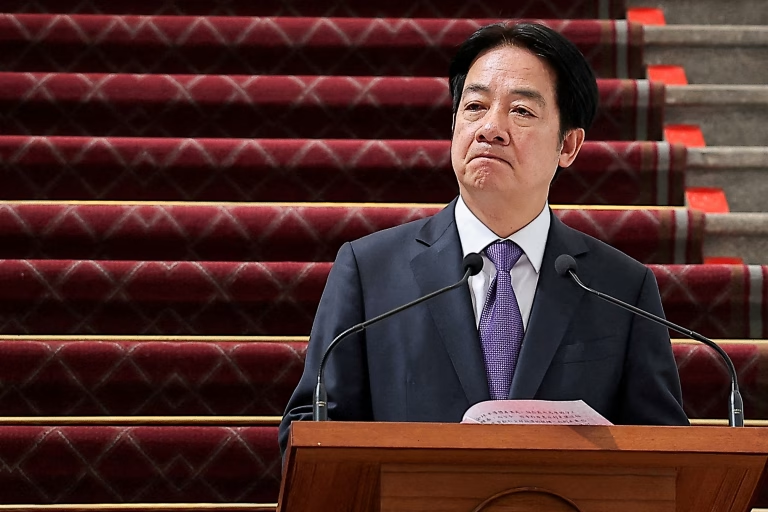
Taiwan’s Minister of Economic Affairs, Kuo Jyh-huei, has announced plans to support local industries that may be impacted by upcoming US tariffs, as President Donald Trump moves to impose widespread trade levies.
Trump is set to unveil “reciprocal tariffs” on Wednesday, calling it “Liberation Day,” in what he claims is a response to years of unfair trade practices against the US. Since returning to office in January, he has threatened tariffs to reduce trade imbalances and encourage companies to shift manufacturing operations back to the US.
Taiwan, which holds the seventh-largest trade surplus with the US at $73.9 billion in 2024, is closely monitoring the situation.
“Our countermeasures have been assessed and analyzed, including responses to potential 10% or 25% tariffs,” Kuo said. “All scenarios have been evaluated to ensure the best possible support for domestic industries.”
Kuo added that Taiwan will unveil its official response on Thursday after Trump clarifies which industries will be affected.
As a global semiconductor powerhouse, Taiwan has sought to mitigate potential tariffs by increasing its investment in the US. Trump has accused Taiwan of undermining the US chip industry and has even threatened tariffs of up to 100% on semiconductor imports.
Taiwan is hopeful that TSMC’s recently announced $100 billion US investment will help shield its semiconductor sector—a critical pillar of Taiwan’s economy—from these trade restrictions.
Public anger continues to mount over last week’s tragic killing of 16 hunters in Udune-Uromi, Esan North-East Local Government Area of Edo State. The incident has sparked widespread outrage, raising concerns over security and justice.
Governor Okpebholo’s Response and Investigation Efforts
In response to the escalating situation, Edo State Governor Monday Okpebholo has intensified efforts to prevent retaliatory actions and restore calm. To address the crisis, he traveled to Abuja and Kano, personally offering condolences and assuring stakeholders that those responsible will be brought to justice. Meanwhile, law enforcement authorities have transferred 14 suspects arrested in connection with the attack to Abuja for further investigation.
Circumstances of the Killings
The victims, a group of travelers, were intercepted by local vigilantes who, upon discovering weapons in their possession, suspected them of criminal intentions. This led to a tragic confrontation that resulted in their deaths. The incident has since drawn widespread criticism and heightened concerns over security in the region.
Reactions from Political Leaders
Governor Abba Yusuf (Kano State)
Kano State Governor Abba Yusuf expressed deep sorrow over the killings, calling for the suspects to be publicly paraded upon arrest to ease the grief of affected families. He also urged that compensation be provided to the bereaved, emphasizing the need to support them during this difficult time.
Senate President Godswill Akpabio
Senate President Godswill Akpabio weighed in on the issue, urging a thorough probe to ensure justice is served.
Deputy Senate President Jibrin Barau & Arewa Consultative Forum (ACF)
Deputy Senate President Jibrin Barau and the ACF condemned the attack, describing it as unnecessary and deeply troubling. Given that many of the slain hunters were from Kano State, the tragedy has sparked strong reactions across the northern region.
President Tinubu’s Intervention and Lawmakers’ Reactions
In reaction to the growing national outcry, President Bola Ahmed Tinubu instructed security agencies to track down and apprehend those behind the killings. Lawmakers, including Speaker of the House of Representatives Tajudeen Abbas, also condemned the brutal attack and called for urgent justice. The ACF commended President Tinubu for his swift intervention and commitment to ensuring accountability.
Governor Okpebholo’s Commitment to Justice and Security
Governor Okpebholo strongly denounced the attack, labeling it a senseless act of violence that cannot be tolerated. Confirming the transfer of the suspects, he stated:
“I was deeply saddened by this unfortunate incident. Upon my arrival, I met with my Hausa brothers, who had generously supported me during my election campaign. We have implemented robust security measures to hold all those involved accountable. Security agencies have already launched investigations to bring the culprits to justice.”
He emphasized that such an attack is a grave concern and goes against the fundamental principles of a just society:
“This cowardly act contradicts the fundamental principles of our society, which are deeply rooted in both Islamic and Christian teachings. So far, 14 suspects have been arrested in connection with the killings. As Kano remains dear to my heart, we will continue to uphold the value of being our brother’s keeper.”
Security Measures to Prevent Reprisal Attacks
Kano State Governor Abba Yusuf commended Okpebholo for his swift and decisive actions, noting that they have helped to manage the rising tension. He further called for strong security measures to prevent any retaliatory attacks and insisted that those arrested should be publicly paraded to bring relief to the victims’ families and ensure accountability.
Support for Victims’ Families
Speaking to journalists after Okpebholo’s visit, Governor Yusuf acknowledged the Edo governor’s proactive response to the tragedy:
“We appreciate the Governor of Edo State for his prompt response to this tragic event. It is well known that our people were returning from Port Harcourt (Rivers State capital) when they were brutally murdered. The majority of the victims were from two local governments in Kano State. Governor Okpebholo immediately visited the scene, ensured that the bodies were retrieved, and arranged for their proper burial. He also made commitments to support the affected families, and I can confirm that he has fulfilled his promises.”
He further expressed confidence in Okpebholo’s assurance that those responsible would face the full weight of the law:
“We trust his assurance that the culprits will be brought to book, as justice remains our utmost priority. The people of Kano State are peaceful and hospitable. This tragedy serves as a lesson to all, and I urge all leaders across Nigeria to ensure the safety and protection of all citizens, regardless of their location. Governor Okpebholo’s visit today is a mark of true leadership, and we appreciate his gesture.”
As investigations progress, many are closely watching how authorities handle the case and whether these measures will be enough to prevent similar incidents in the future. The demand for justice continues to grow, with many calling for comprehensive security reforms to prevent such tragedies from recurring.
The Nigeria Police Force (NPF) is one of the country’s largest employers, providing thousands of young Nigerians with opportunities to serve in law enforcement.
Over the years, the recruitment process has evolved, facing several challenges while presenting career prospects for those seeking stable employment.
Here’s an in-depth look at the requirements, challenges, training effectiveness, and what applicants need to do now that the recruitment process has advanced.
Recruitment Status Update
Although the recruitment exercise has successfully completed its initial stages, including application submission and screening, shortlisted candidates have undergone physical screening and aptitude tests.
The next phase requires applicants to check their status to determine if they have been selected for training.
Successful candidates are expected to commence training on April 12, 2025 at designated police training institutions.
Recruitment Criteria and Requirements
Candidates who applied had to meet the following eligibility requirements:
Age: Between 18 and 25 years old.
Education: A minimum of four credits, including Mathematics and English, in SSCE, NECO, or GCE.
Physical Fitness: Male applicants must be at least 1.67m (5ft 6in) tall, while female applicants should be 1.64m (5ft 4in). Male candidates must also have an expanded chest size of at least 86cm.
Nationality: Only Nigerian citizens by birth with a National Identification Number (NIN) were eligible.
Medical Fitness: Candidates had to be in good physical and mental health, free from any form of disability.
Challenges in the Recruitment Process
Training Deficiencies: Many officers receive minimal training in modern policing techniques, community relations, and human rights, reducing their effectiveness in the field.
Resource Constraints: The lack of adequate equipment and training facilities limits the preparedness of new recruits.
Opportunities for Job Seekers
Joining the police force provides several benefits, including:
Stable Employment: Securing a police job offers financial security in a country with high unemployment rates.
Career Growth: Officers have opportunities to rise through the ranks and specialize in different units such as intelligence, counterterrorism, or cybercrime.
Community Service: Serving in law enforcement allows individuals to contribute directly to national security and public safety. Effectiveness of Police Training The efficiency of the Nigerian police force largely depends on how well officers are trained. While the government continues to improve training programs, challenges still exist:
Outdated Curriculum: Training modules often lack critical areas such as ethics, human rights, and technology-driven policing.
Inadequate Facilities: Many police training colleges lack modern resources and infrastructure.
Limited Practical Exposure: Officers sometimes enter the field with insufficient hands-on experience, affecting their decision-making and crisis management skills.
Steps to Check Your Status After Screening
If you applied for the Nigeria Police recruitment and completed the screening process, the following steps are required to check your application status:
Log in to your account: Use the email and password you registered with.
Click on ‘Check Recruitment Status’: This will take you to the page displaying shortlisted candidates.
Enter your details: Provide your application number or National Identification Number (NIN) to search for your status.
Download your call-up slip (if shortlisted): If successful, print your invitation slip for training.
Prepare for training dates must report to their assigned training institutions on April 12, 2025 with all required documents.
As the force continues to evolve, improvements in training, transparency, and resource allocation will be essential in building a more effective and professional police service..
Nigeria’s Minister of Art, Culture, and Creative Economy, Hannatu Musawa, has called for increased collaboration between the government and private sector to drive growth and sustainability in the country’s art industry.
Speaking at the International Art Fair held at the Ecobank Pan African Centre in Lagos on Monday, Musawa praised the diverse artistic displays, including paintings, photography, and sculptures, highlighting their role in shaping Nigeria’s creative economy.
She acknowledged the contributions of Ecobank Nigeria, the Africa Finance Corporation, Soto Gallery, and other sponsors for providing a platform for emerging artists. Musawa reaffirmed the ministry’s commitment to supporting initiatives that foster value creation within the creative sector.
“This event beautifully reflects the richness of Nigeria’s emerging talent and creative ideology. It serves as a bridge to the future, drawing inspiration from our artistic heritage,” she stated.
Musawa emphasized the necessity of government participation in ensuring the long-term success of the art industry. Her attendance at the fair’s second edition, she noted, was a testament to the government’s dedication to elevating Nigeria’s creative sector on the global stage.
She assured attendees that the government would continue providing strategic support to strengthen Nigeria’s presence in the international art community.
At least seven suspected kidnappers were burned alive in a brutal mob attack in Uromi, a town in Edo State, Nigeria, according to the state’s governor. Governor Monday Okpebholo condemned the lynching, vowing that those responsible would face prosecution to the fullest extent of the law.
Preliminary investigations revealed that the victims, identified as northern Hausa hunters, were stopped by local security forces while traveling in a commercial truck. A search of the vehicle uncovered firearms, which prompted a mob of residents to accuse the men of being kidnappers and Fulani herders.
“The commissioner of police has been directed to carry out a full investigation into the incident,” Okpebholo stated, adding that at least four people had been arrested in connection with the attack.
Kidnapping for ransom and violence attributed to Fulani herders have become a growing crisis in Nigeria, contributing to widespread insecurity, displacement, and inter-ethnic tensions. In recent years, clashes between the semi-nomadic Fulani herders and settled farming communities have led to hundreds of deaths.
Jungle Justice Killings in Nigeria
Jungle justice refers to situations where people are subjected to violent punishment or killing by mobs, often without due process of law. These actions are typically carried out by citizens who believe that the authorities won’t take swift action or bring perpetrators to justice. Here are five notable cases of jungle justice killings in Nigeria:
The Aluu Four (2011):
In October 2012 (though it falls just outside 2011), Aluu community near Port Harcourt, Rivers State, four university students from the University of Port Harcourt identified as Lloyd, Chidiaka, Tekena, and Ugonna had run into a local vigilante group at dawn.
There had been a spate of robberies in the area and at that time of the morning, people became suspicions. Accused of being petty thieves, the four – Llody Toku, Ugonna Obuzor, Chiadika Biringa and Tekena Elkanah – were given a mock trial and found guilty. Their punishment was handed out immediately: they were stripped, marched around the community, brutally beaten and set alight by the mob as thousands watched and filmed.
The students were beaten, tortured, and publicly lynched by a mob. Their deaths were filmed and circulated on social media, sparking widespread outrage and discussions about the issue of jungle justice in Nigeria.
Following widespread outrage, several arrests were made. In 2017, three individuals were convicted and sentenced to death for their roles in the killings, while four others were acquitted due to insufficient evidence.
Deborah Samuel In Sokoto(2022):
In May 2022, a Christian student named Deborah Samuel was arrested in Sokoto, northern Nigeria, at the Shehu Shagari College of Education in Sokoto, and killed by a mob after being accused of blasphemy for allegedly making derogatory remarks about the Prophet Muhammad in a WhatsApp group.
The incident occurred on May 12, 2022 when a group of students at the college attacked Deborah, beating her and then setting her on fire. Her killing was widely condemned both within Nigeria and internationally.
The arrest of the two suspects came after public outcry and a series of investigations by the Nigerian authorities. While the case drew attention to the issue of religious intolerance and mob violence, it also led to concerns about the increasing frequency of blasphemy-related killings in the country. The arrest of the suspects was part of the government’s efforts to address such acts of violence and to hold individuals accountable for crimes, especially in cases involving blasphemy accusations.
Following Deborah’s death, there were calls from human rights organizations and some religious leaders for stronger measures to combat mob justice and religious extremism in the country. The killing also highlighted the tensions between different religious groups in Nigeria, particularly in the northern states where Islamic law is sometimes interpreted and enforced more strictly.
Two suspects were arrested and charged with criminal conspiracy and inciting public disturbance. However, they were later acquitted due to the absence of prosecution lawyers during the trial.
Oluwatoyin Salau in Lagos (2020):
In 2020, Oluwatoyin Salau, a 22-year-old lady was lynched by a mob in Lagos after being accused of kidnapping. The incident occurred in the Ketu area of Lagos, The mob’s actions were reportedly driven by rumors, though there was no solid evidence to support the claim. Her death sparked widespread outrage. The woman was brutally beaten to death, and later, the police confirmed that no substantial proof of kidnapping was found.
Monday in Lagos(2024):
In September 2024, a man identified as Monday was beaten to death in Lagos state over alleged cable theft. The mob used copper wire to tie his neck, strangling him to death.
The Lagos State Police Command has arrested two suspects in connection with the mob killing.
The arrests were confirmed by Lagos Police spokesperson Benjamin Hundeyin, who stated that the investigation was ongoing and that authorities were searching for other individuals involved in the crime. The victim’s body was moved to Mainland General Hospital in Yaba for an autopsy as part of the investigation.
Unidentified civilian in Ogun State (2024):
A yet-to-be-identified man was lynched and set ablaze by a mob in Ilisha-Remo, Ikenne Local Government Area of Ogun State. The attack, carried out by commercial motorcyclists (Okada riders), was allegedly over the theft of motorcycles.
In the ensuing violence, the mob also attacked a soldier, stabbing him multiple times. The soldier, who was wearing his uniform, managed to escape into a nearby building. The Okada riders, determined to capture him, demanded his whereabouts, escalating the chaos.
Security forces, including soldiers and police officers, were deployed to restore order, leading to further clashes with the mob. The situation caused significant unrest in the community as authorities worked to contain the violence.
Suspected Kidnappers in Enugu (2011):
In 2011, a group of individuals suspected of being involved in kidnapping activities was apprehended by a mob in Enugu State. The suspects were brutally beaten and killed by the crowd, despite the lack of formal charges or legal proceedings.
These incidents highlights the increasing tendency for people to take justice into their own hands, particularly amid rising concerns over kidnappings in various parts of Nigeria. The cases underscored the dangers of jungle justice, where individuals are punished without due process, often based on suspicion and rumors.
Government Efforts to Address Jungle Justice
The Nigerian government has recognized the dangers of jungle justice and has initiated several measures to combat it:
Enforcement of Anti-Mob Laws:
Several state governments have introduced stricter penalties for jungle justice participants, including life imprisonment and the death penalty.
Public Condemnation and Calls for Justice:
Traditional and religious leaders, such as the Sokoto Sultanate Council, have publicly condemned acts of mob violence and called for the arrest and prosecution of perpetrators.
Legal Actions and Sentencing:
In notable cases like the Aluu Four, the judiciary has prosecuted and sentenced individuals involved in mob killings, demonstrating a commitment to upholding the rule of law.
Public Awareness Campaigns:
Various organizations and media outlets have highlighted the dangers and injustices of mob actions, aiming to educate the public and discourage participation in such acts.
While progress has been made, jungle justice remains a significant problem in Nigeria, often fueled by distrust in the justice system, religious tensions, and the rise in violent crime. More concerted efforts are needed to ensure justice is served through legal means rather than mob actions.
Operators in Nigeria’s downstream oil and gas sector are anxiously awaiting the Federal Government’s decision on the naira-for-crude agreement between the Nigerian National Petroleum Company Limited (NNPCL) and the Dangote Petroleum Refinery as the deal officially expires today, March 31, 2025.
The six-month agreement, which began in October 2024, was aimed at stabilizing fuel supply, saving foreign exchange, and controlling petrol prices. However, discussions on extending or terminating the deal remain inconclusive, causing uncertainty and fuel price hikes across the country.
Fuel Prices Rise as Naira-for-Crude Talks Stall
Within a week, petrol prices have jumped from N860 per liter to over N930 per liter, with marketers warning that prices could surpass N1,000 per liter if the deal is not renewed.
The Dangote refinery, which processes 650,000 barrels per day, is also set to shut down its petrol-producing unit for maintenance in June, a move that could further worsen fuel supply challenges.
Dangote Suspends Naira-Denominated Fuel Sales
On March 19, 2025, the Dangote Refinery announced a temporary halt to petroleum product sales in naira, citing a currency mismatch between its sales revenue (in naira) and its crude oil procurement obligations (in US dollars).
“Our sales of petroleum products in naira have exceeded the value of naira-denominated crude received. To align with our crude procurement currency, we must temporarily adjust our sales currency,” the refinery stated.
Following this announcement, private depot prices in Lagos surged from N850 to N900 per liter, while pump prices reached N930 in Lagos, N950 in Abuja, and N960 in the North.
Industry Stakeholders Call for Urgent Intervention
Oil marketers blame the Federal Government for failing to renew the deal, which they argue has exacerbated fuel price volatility.
“We’ve called for a stakeholders’ meeting to address this crisis. Selling crude oil in naira was a critical policy, and any deviation affects us all,” said Chinedu Ukadike, National Publicity Secretary of the Independent Petroleum Marketers Association of Nigeria (IPMAN).
The meeting, initially scheduled for March, was postponed to May 1, 2025, due to the Eid-el-Fitr and Easter holidays. It will include representatives from IPMAN, the *Petroleum Products Retail Outlets Owners Association of Nigeria, and other key industry players.
Petrol Prices Could Hit N1,000 Per Liter
IPMAN Vice President, Hammed Fashola, expressed concerns that petrol prices could exceed N1,000 per liter if the naira-for-crude arrangement isn’t reinstated.
“The Federal Government must act swiftly. The economic burden of dollar-based fuel pricing is unsustainable for Nigerians,” Fashola warned.
Meanwhile, Dangote refinery reportedly faced pressure from major distributors such as MRS, Heyden, and Ardova, leading to an increase in petrol prices over the Eid-el-Fitr weekend.
With no clear resolution in sight, the ongoing uncertainty threatens higher fuel prices, increased transportation costs, and greater economic strain on Nigerians.
Segun ‘Success’ Olanrewaju, a National and West African light-heavyweight champion, has passed away after collapsing during a boxing match in Ghana on Saturday, March 29.
Olanrewaju ‘Success’ the Boxer
Olanrewaju, 40, was a Lagos-based boxer who turned professional in 2019. He won his debut fight against Jimoh Najeem on July 30, 2019, securing two more victories before suffering his first loss to Durodola Olanrewaju via a fourth-round technical knockout.
At the time of his final bout, he was on a four-fight losing streak, having suffered defeats to Russia’s Savely Sadoma, Ibragim Estemirov, Muibi Lekan, and Rashid Idowu. He had also lost all eight of his fights outside Nigeria—six in Russia and two in Ghana. His professional record stood at 13 wins, 9 losses, and 2 draws, with 12 of his victories coming by knockout.
The Ghana Boxing Authority (GBA), which sanctioned the fight, has yet to comment on the tragedy.
What Happened to Segun Olanrewaju
The fight, which was part of the Bel 7 Star Professional Boxing League at the Bukom Boxing Arena, featured Olanrewaju against Ghanaian-Nigerian boxer Jonathan Mbanugu (also known as “Jon Power”). Mbanugu entered the fight with a record of 12 wins, 1 loss, and 1 draw, with all 12 victories by knockout.
The scheduled eight-round contest took a tragic turn within seconds. Olanrewaju landed two weak punches before Mbanugu countered with a right hand to his face. Almost immediately, Olanrewaju staggered backward, fell against the ropes, and collapsed, shocking the crowd.
As the referee began the mandatory count, the Nigerian boxer lay motionless, his throat resting against the ropes. His corner team rushed in, removed his gum shield, and attempted to resuscitate him. Despite swift intervention by the emergency medical team, he was transported to Korle Bu Teaching Hospital, where he was later pronounced dead.
Other Tragic Boxing Incidents
Olanrewaju’s death is a painful reminder of past boxing tragedies involving Nigerian fighters.
Chukwuemeka Igboanugo (2022 National Sports Festival, Asaba, Nigeria) Competing in the 86kg category for Imo State, Igboanugo collapsed after being knocked out by Prince Gaby Amagor of Anambra State. Despite immediate medical attention, he was pronounced dead. Officials suggested an underlying health condition may have contributed.
Sherif Lawal (2024, London, England) On May 14, 2024, London-based Nigerian boxer Sherif Lawal collapsed in the fourth round of his professional debut against Malam Varela at Harrow Leisure Centre. Despite prompt medical intervention, including CPR and defibrillation, he was pronounced dead at Northwick Park Hospital.
Asymin Mustapha (1982, England) Known as “Young Ali,” Mustapha’s promising career ended in tragedy. Facing Barry McGuigan, he was knocked out in the sixth round and lapsed into a coma. He never regained consciousness, passing away while his wife was pregnant.
The powerful 7.7-magnitude earthquake which shook Myanmar’s central region near Mandalay on March 28, 2025, has caused massive destruction, reverberating across Southeast Asia.
The tremors were felt as far as China and India, underscoring the intensity of the seismic activity.
Casualties and Structural Damage
In Myanmar, authorities have confirmed at least 1,700 fatalities, with over 3,400 people injured and more than 300 still missing.
Mandalay, one of the hardest-hit cities, has witnessed collapsed bridges, crumbling infrastructure, and widespread damage.
The historic city of Bagan, home to centuries-old temples and pagodas, has also suffered extensive ruin, with many structures either heavily damaged or reduced to rubble.
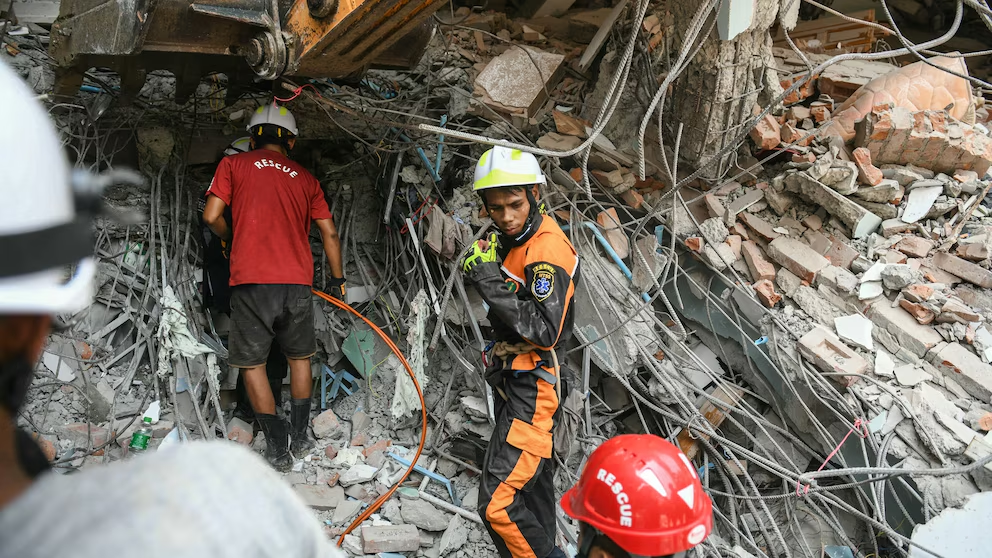
Meanwhile, in nei Thailand, the impact has also been severe, with reports confirming at least 18 deaths and 33 injuries. In Bangkok, a 30-story building under construction crumbled in the Chatuchak district, leaving several workers trapped beneath the debris.
The earthquake affected 56 out of Thailand’s 76 provinces, causing significant structural damage and panic among residents.
Ongoing Rescue and Relief Efforts
Search and rescue teams are racing against time to pull survivors from the wreckage in both Myanmar and Thailand.
Emergency response crews, alongside international aid organizations, are on the ground providing medical assistance and relief supplies. In Mandalay, teams face logistical hurdles due to damaged roads and persistent aftershocks, making access to affected areas more challenging.
Several countries, including China and India, have dispatched search and rescue teams, medical personnel, and emergency supplies to assist Myanmar.
Despite these efforts, the response in Myanmar is complicated by the country’s ongoing political turmoil.
Myanmar’s Political Landscape Complicates Aid Distribution
The relief operation in Myanmar faces additional challenges due to the nation’s internal conflict. The opposition-led National Unity Government (NUG) and the People’s Defense Force have declared a temporary ceasefire in earthquake-affected zones to allow aid to be delivered.
However, concerns persist about whether Myanmar’s military-led government will fairly distribute assistance to all communities, given its history of uneven disaster response.
Thailand’s Response and Future Prevention Measures
Thailand has swiftly mobilized emergency relief efforts, with Prime Minister Paetongtarn Shinawatra declaring Bangkok a disaster zone. Investigations have been launched to determine why certain structures, including the collapsed high-rise in Chatuchak, failed to withstand the tremors.
To mitigate future risks, Thailand is now exploring advanced earthquake-resistant technologies. One proposed measure involves implementing seismic isolation systems, which elevate buildings and allow them to absorb shock waves more effectively.
Additionally, authorities are reviewing building codes and urban planning strategies to improve structural resilience across the country.
Aftershocks and the Road to Recovery
Myanmar and Thailand, both located in seismically active zones, have experienced numerous earthquakes throughout history. Myanmar, in particular, sits along the boundary of the Indian and Eurasian tectonic plates, making it highly prone to devastating tremors. The country has recorded several major quakes, including the 1839 Ava earthquake, the 1912 Maymyo quake, and more recently, the 2012 Thabeikkyin earthquake. However, the March 28, 2025, 7.7-magnitude quake stands as one of the deadliest in Myanmar’s modern history, leaving over 1,700 dead and thousands injured.
Thailand, though less prone to powerful earthquakes, has also felt the impact of seismic activity over the years. Notable quakes include the 1975 northern region earthquake, the 1983 Kanchanaburi tremor, and the 2014 Mae Lao earthquake in Chiang Rai province. The latest disaster originating from Myanmar sent shockwaves through Thailand, causing a 30-story building collapse in Bangkok and affecting 56 out of the country’s 76 provinces.
The region continues to experience aftershocks, raising concerns about further damage to already weakened structures. Authorities are urging residents to remain in safe areas and avoid returning to unstable buildings. The full scale of the destruction is still being assessed, and as rescue efforts continue, the death toll is expected to rise.
This earthquake has been one of the most devastating in Southeast Asia in recent history, underscoring the urgent need for coordinated international support and robust disaster preparedness plans to mitigate the impact of future seismic events.
A violent attack in Uromi, Edo State, has left 16 hunters dead, sparking widespread outrage and discussions about security oversight in the region.
What Really Happened?
The incident, which took place on Friday, March 28, 2025, involved a local vigilante group and residents of Udune Efandion, who allegedly profiled and attacked a group of northern Nigerian travelers, accusing them of being kidnappers.
The victims were on their way from Elele in Rivers State to Kano for the Muslim Eid al-Fitr festivities when their truck was intercepted along the Uromi/Obajana Expressway at around 1:30 p.m.
Survivors’ Account
About 16 people were reportedly killed but survivors have recounted how they were ordered to disembark before being beaten.
Some managed to escape, while others were not as fortunate.
Dayabu Yahaya, a resident of Kano State, described the attack:
“They [the vigilantes] ordered everyone to get down. I was confused as to why, but we obeyed. As soon as we did, they began flogging us aggressively and gathered us in one place.”
According to him, the attackers did not find anything incriminating but seized their hunting knives, locally made guns, and palm oil.
“These guns are licensed, but they seized the documents and our luggage and burned them,” Dayabu added. “We were 27 in number. Right now, 20 people are missing, five are here, and two are in the hospital.”
Another survivor, Mustapha Alhassan from Katsina State, managed to escape and shared his ordeal:
“After stopping our vehicle, the vigilantes gathered onlookers, who were residents of the town, and then stepped aside, leaving us to their mercy. They kept on beating us as if they were out to kill us. Some of us ran- I was fortunate to be among those who escaped. While on the run, I was divinely connected with some of our Hausa brothers, who contributed money for my transport fare to get to our king’s house.”
“No one interrogated us. They just started beating us,” he added.
The Nigerian police confirmed the incident, stating that the group of travelers, who identified themselves as hunters, were found in possession of 19 locally fabricated firearms.
The vigilantes, unconvinced by their explanation, assumed they were kidnappers and took matters into their own hands.
It remains unclear whether the victims were members of the Nigerian Hunter and Forest Security Service (NHFSS), the recognized body for hunters in the country. NHFSS has yet to respond to requests for comments.
But a manhunt is ongoing for others involved in the attack. The Inspector-General of Police has directed the Force Criminal Investigation Department to take over the case, underscoring the gravity of the incident.
What is the state government’s response so far
Edo State Governor, Monday Okpebholo, has condemned the attack, emphasizing that “nobody has the right to take another man’s life.”
He assured that those responsible would be brought to justice.
Following the tragic event, the governor has suspended the commander of the Edo State Security Corps, Friday Ibadin, and banned unregistered vigilante groups operating within the state.
The Edo State Government clarified that the vigilante group responsible for the killings was operating illegally.
“It is to be reiterated that the local vigilante group involved in the gruesome killing of 27th March was never profiled or registered with Edo State Security Corps,” the statement read.
The statement further emphasized that the actions of the group “do not reflect the core values, character and principles of the Okpebholo administration, or the objectives of the corps as enshrined in the Edo State Security Corps Governance Law.”
So far, 14 individuals have been arrested in connection with the attack, while a special police team is actively pursuing other suspects.
The Edo State Government reaffirmed its commitment to upholding citizens’ constitutional rights, particularly the freedom of movement and lawful business activities. Officials are currently in contact with the victims’ families, community leaders, and authorities from Kano State, where most of the deceased were from.
The government urged the public to remain calm, assuring that “the State Government remains committed to ensuring that justice is done in a most efficient, transparent and proactive manner.”
President Bola Tinubu also directed the police and other security agencies to conduct a thorough investigation and ensure that the perpetrators face legal consequences.
With investigations ongoing, many are questioning whether the suspension of security officials and the crackdown on unregistered vigilante groups will be enough to prevent future tragedies. The situation remains a critical test of Edo State’s security framework.
Despite President Bola Tinubu’s mediation in the Lagos Assembly leadership crisis, Speaker Mudashiru Obasa is proceeding with his lawsuit against former Speaker Meranda and other Assembly members.
Chief Afolabi Fashanu (SAN), Obasa’s lawyer, confirmed that the case would not be withdrawn, stating that his legal team is awaiting the court’s judgment. This stance contradicts reports suggesting that part of Tinubu’s resolution required Obasa to drop the lawsuit.
Justice Yetunde Pinheiro of the Lagos State High Court reserved judgment on March 17, 2025, following objections from the defendants’ lawyers. The court will communicate the ruling date to all parties.
“We are just waiting for the judgment. The court will inform us when it is ready,” Fashanu stated.
When asked about the possibility of withdrawing the suit, he firmly responded, “That does not arise anymore. Arguments have been concluded, and he’s not withdrawing.”
Meanwhile, former Lagos APC chairman Otunba Henry Ajomale expressed confidence that Obasa would eventually withdraw the case due to Tinubu’s intervention. Speaking at an event honoring Governor Babajide Sanwo-Olu, he stated:
“Very soon, at the next sitting, you will see the difference… Since the President has intervened, the issue will not escalate into a bigger problem.”
Obasa, who was removed as Speaker on January 13, 2025, fought for reinstatement, eventually regaining the position after Meranda’s resignation following a 49-day tenure. The APC’s national leadership played a crucial role in resolving the dispute.
On March 12, 2025, all 40 Lagos Assembly members met with President Tinubu in Abuja to settle their differences. However, the House has not convened since March 3, with its next sitting expected after the Sallah break.
Meanwhile, sources revealed that Obasa is currently in Mecca for a holy pilgrimage, further delaying legislative activities.
To provide the best experiences, we use technologies like cookies to store and/or access device information. Consenting to these technologies will allow us to process data such as browsing behaviour or unique IDs on this site. Not consenting or withdrawing consent, may adversely affect certain features and functions.
Functional
Always active
The technical storage or access is strictly necessary for the legitimate purpose of enabling the use of a specific service explicitly requested by the subscriber or user, or for the sole purpose of carrying out the transmission of a communication over an electronic communications network.
Preferences
The technical storage or access is necessary for the legitimate purpose of storing preferences that are not requested by the subscriber or user.
Statistics
The technical storage or access that is used exclusively for statistical purposes.The technical storage or access that is used exclusively for anonymous statistical purposes. Without a subpoena, voluntary compliance on the part of your Internet Service Provider, or additional records from a third party, information stored or retrieved for this purpose alone cannot usually be used to identify you.
Marketing
The technical storage or access is required to create user profiles to send advertising, or to track the user on a website or across several websites for similar marketing purposes.