Home Blog Page 271

US And Indonesia Finalize New Trade Deal With Lower Tariffs

0

In a move expected to reshape trade dynamics between the two nations, President Donald Trump and Indonesian President Prabowo Subianto announced a major reduction in tariffs on Indonesian imports from 32% down to 19%.

Trump stated that this change was secured in return for “full access” for American firms.

In a post shared via social media, Prabowo described the development as marking a “new era of mutual benefit” with Washington. Speaking to journalists in Jakarta, he added that Trump was “quite a tough negotiator”.

This breakthrough follows a series of intense negotiations prompted by a wave of new tariffs introduced by the U.S. administration earlier this year. Those actions triggered a number of talks with trade allies worldwide.

Although Trump had previously paused some of his earlier tariff strategies, he resumed his aggressive stance this month sending formal notices to numerous countries warning of steep duties starting August 1.

Nations named in those warnings included many of America’s largest economic partners such as Canada, Japan, Mexico, South Korea, and the European Union.

Indonesia, too, received a formal letter last week notifying them of an intended 32% tariff, which reportedly surprised officials who had believed a deal was nearing completion.

On Tuesday, Trump shared that the reduced rate followed a direct phone conversation with President Prabowo.

He added that the deal also included a commitment from Indonesia to ease tariffs on U.S. goods particularly those related to agriculture and manufacturing which Washington had long criticized as being too high.

“They are going to pay 19% and we are going to pay nothing… we will have full access into Indonesia,” he said.

The agreement also includes significant purchases: Indonesia has agreed to acquire $15 billion worth of U.S. energy, $4.5 billion in American farm goods, and 50 aircraft from Boeing, Trump later confirmed on his social media account.

These commitments, however, appear more modest than projections made earlier in the month by trade insiders close to the matter.

Prabowo, when speaking to reporters, did not detail the numbers but referred broadly to the themes of the deal outlined by Trump.

“We need planes, and they want to sell,” Prabowo told reporters. “Boeing is quite good, and we’ll also continue to work with Airbus.”

“We also need things. For example, we still import fuel, gas, wheat, soybeans and so on. And we managed to find common ground,” he added.

While he didn’t explicitly confirm that American products would enter Indonesia tariff-free, he noted, “we have negotiated everything”.

“We also have our own position. This is our offer, and we simply can’t afford to buy more. But the key thing for me is that our workers are safe,” he said.

Indonesia is one of the United States’ top 25 trade partners. In the past year, it exported about $28 billion worth of goods to the U.S., including items such as footwear, palm oil, and apparel.

One U.S.-based economist remarked that the benefits to Indonesia appeared to lean more toward political gains than economic ones.

“Certainly, [the US does] have some major imports categories from Indonesia – electronics, apparel, footwear, palm oil products which are used in cosmetics,” he said.

“Relative to total trade, the US is a significant importer from Indonesia, though not as great as some of its Asian trading partners.”

Beyond Indonesia, similar deals have been reached with just a few other countries so far including Vietnam, China, and the UK. In each case, the agreements have left many tariffs unchanged and lacked clear resolutions on several trade issues.

A former senior economic official familiar with White House trade strategy said he expects additional trade deals to be announced soon. He also noted that some governments now appear more willing to accept compromises they would have rejected in the past.

He referenced remarks made recently by Canada’s prime minister, suggesting the possibility of settling for tariff levels previously deemed unacceptable.

“The tone is changing a lot,” he said, noting a shift in how countries are approaching negotiations.

“For governments, I think it’s best to be at the negotiating table rather than to walk away,” he added.

PTDF Shortlists 5,000 Nigerians For 2025–2026 Foreign Scholarship Scheme

2

The Petroleum Technology Development Fund (PTDF) has shortlisted 5,000 Nigerian graduates for interviews in its 2025–2026 Overseas Scholarship Scheme. The candidates were selected from a competitive pool of over 29,000 applicants nationwide.

This initiative, aimed at closing Nigeria’s technical manpower gap in the oil and gas sector, offers fully funded opportunities for postgraduate studies in select universities across the United Kingdom, France, Germany, and Malaysia. Successful applicants will pursue master’s and doctoral degrees in energy-related disciplines.

According to the PTDF, interviews are being held simultaneously across Nigeria’s six geopolitical zones. Candidates are assessed on academic performance, research potential, and professional relevance. A panel comprising university lecturers and industry experts is responsible for the screening process.

In a new addition to the scheme, selected PhD candidates bound for the UK will undertake a split-site study model, combining research in Nigerian institutions—particularly through the College of Petroleum and Energy Studies in Kaduna—with study abroad.

The scheme, which began in 2000, is fully funded by revenue from Nigeria’s oil sector. It covers tuition, travel expenses, accommodation, living allowances, and health insurance. The final number of awardees will be announced after the interview process is completed.

Rand Strengthens Slightly Ahead Of Key Mining Figures

0

South Africa’s currency made modest gains on Tuesday morning as markets positioned themselves ahead of two major events: the release of the country’s mining sector data and U.S. inflation numbers that may influence the direction of Federal Reserve interest rate decisions.

By 0702 GMT, the rand was changing hands at 17.8125 per dollar, marking a 0.5% rise compared to where it closed on Monday.

April had seen mining production shrink by 7.7% year-on-year. However, fresh forecasts anticipate a smaller dip, with some economists projecting declines of 5.4% and others suggesting a milder 2.1% contraction.

“Despite marginal improvements, logistics remain a significant hindrance to production, particularly in the current context of subdued commodity prices and soft demand,” Nedbank economists said in a research note.

Meanwhile, the U.S. dollar was stable in relation to a group of major currencies as global traders awaited the upcoming inflation report for June, expected later in the day at 1230 GMT.

In bond markets, South Africa’s 2035 benchmark government security remained steady during early transactions, yielding 9.885%.

INEC Unveils Continuous Voter Registration Plan For 2027 Elections

0

‎The Independent National Electoral Commission (INEC) has announced the launch of its continuous voter registration (CVR) exercise in preparation for the 2027 general elections, aiming to ensure a transparent and inclusive electoral process.
‎
‎The initiative, revealed by INEC Chairman Prof. Mahmood Yakubu during a press conference in Abuja on Monday, July 14, 2025, is designed to enable eligible Nigerians to register as voters, update their details, or transfer their voting locations ahead of the polls.
‎
‎The registration process will begin with an online pre-registration phase on August 18, 2025, allowing citizens to submit their information through INEC’s official portal.
‎
‎This will be followed by an in-person biometric capture starting August 25, 2025, at designated centers, including INEC offices and select local government areas across the country.
‎
‎The CVR targets new voters who will be 18 by 2027, those needing to correct voter details or replace lost cards, and individuals relocating to new polling units.
‎
‎To enhance accessibility, INEC plans to deploy mobile registration units to remote communities and provide special provisions for persons with disabilities.
‎
‎Yakubu emphasized the commission’s commitment to leveraging technology to streamline the process, reduce errors, and ensure data integrity.
‎
‎“Our goal is to make voter registration as seamless as possible while maintaining the credibility of the electoral roll,” he said.
‎
‎The announcement has been welcomed by civic groups, who see it as a proactive step toward strengthening Nigeria’s democracy.
‎
‎However, some stakeholders have called for increased public awareness campaigns to ensure rural dwellers and marginalized groups are not left out.
‎
‎INEC has assured Nigerians that adequate measures, including partnerships with local organizations, will be implemented to maximize participation.
‎
‎The CVR is expected to run continuously until a cutoff date closer to the 2027 elections, which INEC will announce later.
‎
‎The commission urged citizens to take advantage of the exercise and verify their voter status early to avoid last-minute challenges.
‎
‎With this initiative, INEC aims to build on lessons from previous elections to deliver a credible and inclusive electoral process in 2027.

SEC Issues Warning About Forsman & Bodenforms, Cautions Investors

0

‎The Securities and Exchange Commission (SEC) on Monday issued a warning to the investing public regarding Forsman & Bodenforms Limited, stating that the company is not registered to operate in the capital market or to raise funds from the public.
‎
‎The SEC announced this on its website, noting that it had become aware of Forsman & Bodenforms Limited’s activities, particularly its promotion of services on social media platforms.
‎
‎The commission said: “ The attention of the Securities and Exchange Commission has been drawn to the activities of Forsman & Bodenfors Ltd also known as F&B, which is paraded by its promoters as the Nigerian Branch of a Swedish advertising company bearing that name with obvious criminal intent.”
‎
‎”The promoters of this fraudulent Nigerian entity go about promising Nigerians automatic employment in the company as compensation for recruiting more members who are lured to pay various sums of money for various positions in the company.”
‎
‎The commission stated that initial investigations show Forsman & Bodenfors Ltd is being actively promoted on social media and online forums, and that its activities display common signs of a fraudulent Ponzi scheme.
‎
‎“The Commission hereby informs the public that Forsman & Bodenfors Ltd is not registered by the Commission nor authorized to solicit funds from the public or to operate in any capacity in the Nigerian capital market.
‎
‎Consequently, the public is strongly advised to avoid any dealings with Forsman & Bodenfors Ltd or its representatives concerning business in the Nigerian capital market, as there is a significant risk of financial loss to the fraudulent operators behind the company.
‎
‎“The investing public is further advised to verify the status of companies and entities offering investment opportunities on the Commission’s dedicated portal – http://www.sec.gov.ng/cmos, before transacting with them”.
‎

Naira Strengthens Against Dollar, Hits ₦1518 In Official Market

0

‎The Nigerian naira recorded a significant gain against the US dollar on Tuesday, July 15, 2025, closing at ₦1518 per dollar in the official Nigerian Foreign Exchange Market (NFEM), a 0.74% appreciation from the previous day’s rate of ₦1529.22.
‎
‎This marks the naira’s strongest performance in four months, reflecting growing confidence in Nigeria’s foreign exchange market.
‎
‎According to data from the Central Bank of Nigeria (CBN) and market analysts, the naira’s rebound is driven by increased dollar liquidity, bolstered by fresh foreign exchange inflows from undisclosed sources.
‎
‎The CBN’s recent policies, including enhanced dollar sales to authorized dealers and stricter regulations on bureaux de change, have contributed to stabilizing the currency.
‎
‎In the parallel market, the naira traded at approximately ₦1550 for selling and ₦1535 for buying, a slight improvement from the previous day’s rates of ₦1555 and ₦1540, respectively, though the gap between official and black market rates persists.
‎
‎Market experts attribute the naira’s strength to a combination of factors, including a surge in Nigeria’s external reserves, which reached $37.282 billion on July 8, 2025, and reduced foreign exchange pressure from the Dangote Refinery’s operations.
‎
‎“The naira’s competitive edge is a positive signal for Nigeria’s economy, encouraging foreign investment and easing import costs,” said Pascal Oparada, a business analyst.
‎
‎However, analysts warn that sustained stability requires addressing structural issues like oil theft and diversifying forex revenue sources.
‎
‎The naira’s gain has sparked optimism among businesses and consumers, who have faced rising costs due to currency volatility.
‎
‎The CBN has reiterated its commitment to discouraging black market transactions, urging Nigerians to use authorized channels for forex dealings to further stabilize the market. As the naira continues its upward trend, stakeholders are hopeful that ongoing reforms will maintain this momentum, fostering economic growth ahead of the 2027 elections.

Former President Muhammadu Buhari’s Body Arrives Daura

0

The remains of former President Muhammadu Buhari have arrived in Daura, Katsina State, for final burial rites, following his death in London at the age of 82.

The presidential jet carrying Buhari’s body touched down at the Umaru Musa Yar’Adua International Airport in Katsina around 1:59 p.m. on Tuesday. The late president’s body, draped in the Nigerian national flag, was received by President Bola Tinubu on the tarmac, alongside Vice President Kashim Shettima and the Chief of Staff, Femi Gbajabiamila. Several members of Buhari’s family also accompanied the body on the journey from London.

The former president passed away on Sunday at approximately 4:30 p.m. at The London Clinic after battling an undisclosed illness. In response to the news of his death, President Tinubu dispatched Shettima and other top officials to London to escort the late leader’s remains back home.

At the airport, a solemn military farewell was conducted by Nigerian Armed Forces personnel before the body was transported to Daura for interment in accordance with Islamic rites.

Among the dignitaries who gathered at the airport to pay their final respects were First Lady Remi Tinubu—who was seen comforting former First Lady Aisha Buhari—as well as Katsina State Governor Dikko Radda, members of the Katsina State Executive Council, and Deputy Senate President Barau Jibrin.

Muhammadu Buhari holds a significant place in Nigeria’s history, having first ruled as a military head of state from January 1984 to August 1985, and later serving as the country’s democratically elected president from 2015 to 2023, making him Nigeria’s second-longest-serving leader.

His burial in his hometown of Daura marks the end of an era in Nigerian politics and governance.

Iran Set To Engage Chinese And Russian Officials

0

Iran has announced plans to meet separately with China and Russia on the sidelines of an upcoming summit hosted by the Shanghai Cooperation Organization (SCO), as it seeks regional backing in the aftermath of last month’s 12-day military confrontation with Israel.

“We will have bilateral meetings with the Chinese foreign minister, which naturally has its own importance in the current situation, as well as with the Russian foreign minister,” Iranian Foreign Minister Abbas Araqchi said on Telegram.

The diplomatic gathering, hosted in Tianjin in northern China, marks the 25th meeting of SCO foreign ministers. The SCO is a regional alliance composed of 10 member states, including China, Russia, India, Pakistan, and Iran, with a focus on political, economic, and security cooperation.

Back in June, Israeli and U.S. forces conducted strikes on Iranian nuclear-related targets, alleging the facilities were part of a weapons development programme. Iran has consistently rejected these claims, maintaining that its nuclear activities are for peaceful purposes.

Iran’s foreign partnerships with China and Russia have grown significantly, especially following renewed sanctions imposed by the United States during Donald Trump’s administration. These alliances have been cemented through long-term strategic agreements: a 20-year deal with Moscow, and strong trade ties with Beijing, which currently purchases the vast majority of Iran’s oil exports.

“The SCO is gradually opening up its place in the global arena, meaning it is gradually going beyond the regional arena, and it has many different issues on its agenda, including in the economic, political and security fields,” Araqchi wrote.

UK Overhauls Trade Rules To Boost African Exports And Consumer Access

0

Entrepreneurs and exporters across Africa are poised to gain from a newly announced UK trade initiative aimed at deepening commercial relationships with developing nations. This initiative, titled Trade for Development, seeks to streamline trade processes and ease entry into the UK market.

One of the most significant changes involves simplified rules of origin, which will allow countries under the Developing Countries Trade Scheme (DCTS) including those with more advanced manufacturing sectors like Nigeria to source raw materials and components from across the continent without losing their tariff-free status when exporting to the UK.

This reform is also expected to enhance intra-African commerce by supporting broader integration with the African Continental Free Trade Area, potentially tapping into its estimated $3.4 trillion market.

In 2023 alone, goods worth over £3.2 billion entered the UK from African nations under preferential access agreements offered through UK development-focused trade frameworks.

UK Minister for Development, Jenny Chapman said, “The world is changing. Countries in the Global South want a different relationship with the UK as a trading partner and investor, not as a donor. These new rules will make it easier for developing countries to trade more closely with the UK. This is good for their economies and for UK consumers and businesses.”

UK Minister for Trade Policy, Douglas Alexander added that, “no country has ever lifted itself out of poverty without trading with its neighbours. Over recent decades trade has been an essential ingredient in lifting hundreds of millions of people out of poverty around the globe.”

Alongside changes to DCTS, the UK government plans to deliver targeted assistance that will help African suppliers comply with UK import standards and smoothly navigate customs clearance processes.

The reforms will also open the door for easier trade in services—including digital, legal, and financial sectors by reinforcing upcoming trade agreements and building long-term market connections.

These developments fall under the broader Trade for Development framework, aimed at supporting economic expansion in partner countries while ensuring UK households and companies benefit from greater access to competitively priced, high-quality imports.

The changes also complement the UK’s modernised Trade Strategy, which focuses on fostering international growth through sustainable, forward-looking partnerships.

Legendary Marathon Runner Fauja Singh Dies At 114 After Road Tragedy In India

0

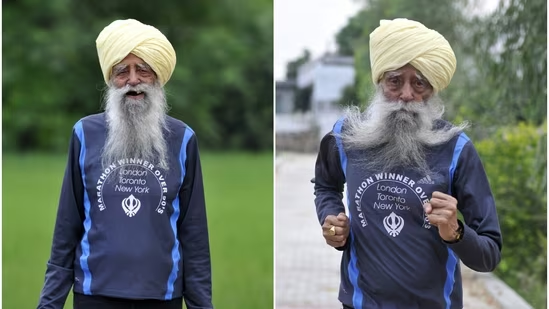
Fauja Singh, the celebrated British-Indian athlete widely regarded as the oldest person to complete a marathon, has died at the age of 114 after a tragic hit-and-run accident in his native Punjab.

Authorities reported that Singh was attempting to cross a street in the village of his birth when he was struck by an unknown vehicle. He was rushed to a nearby hospital by bystanders but unfortunately did not survive.

Known around the world for his remarkable endurance, Singh earned admiration for running marathons well into his centenarian years. He began his athletic journey at 89 and participated in nine full marathons from 2000 until his retirement in 2013.

His running group, Sikhs In The City, announced plans to dedicate their upcoming events in Ilford—where Singh had lived since 1992—to commemorate his legacy.

The fatal accident occurred on Monday while Singh was walking through Beas Pind, the village near Jalandhar where he was born.

“A search is under way, and the accused will be caught soon,” said Harvinder Singh, a top district police officer.

News of his passing sparked a wave of emotional responses from around the globe.

Indian Prime Minister Narendra Modi called him an “exceptional athlete with incredible determination”.

Harmander Singh, who coached Singh through much of his late-life running career, confirmed his death in a public statement from the running group.

The statement said: “It is with great sadness that we can confirm our icon of humanity and powerhouse of positivity Fauja Singh has passed away in India.

“His running club and charity Sikhs In The City will be devoting all of its events until the Fauja Singh Birthday Challenge on Sunday 29 March 2026 to celebrate his life of success and achievements.

“We will be doubling the efforts to raise funds to building the Fauja Singh Clubhouse on the route in Ilford where he used to train.”

When he was visited in June, Singh remained lively and mobile, maintaining a daily walking routine.

“I still go for walks around the village to keep my legs strong. A person has to take care of his own body,” he said.

A symbol of resilience, Singh was selected as a torchbearer for the London 2012 Olympics. One of his most extraordinary feats was completing a full marathon at age 100 in Toronto in 2011—an achievement that drew international attention.

Although Guinness World Records declined to certify his title due to lack of a 1911 birth certificate, Singh’s British passport listed his birthdate as 1 April 1911, and he had even received a letter from the Queen marking his 100th birthday.

His coach, Harmander Singh, explained that official birth documents weren’t issued in India at the time of Singh’s birth.

Guinness World Records officials said they would have loved “to give him the record”, but that they could only “accept official birth documents created in the year of the birth”.

As a child in Punjab, Singh struggled with mobility, often teased for his frail legs and only learning to walk properly at the age of five.

“But the same boy, once mocked for his weakness, went on to make history,” he told BBC Punjabi in June.

Before turning 40, Singh had already witnessed both World Wars and the partition of India.

“In my youth, I didn’t even know the word ‘marathon’ existed,” Singh told BBC Punjabi. “I never went to school, nor was I involved in any kind of sports. I was a farmer and spent most of my life in the fields.”

His introduction to running came through personal tragedy.

After losing his wife Gian Kaur in the early 1990s, he relocated to London to live with his oldest son. However, during a later visit to India, he witnessed his younger son Kuldeep’s fatal accident, which left him emotionally shattered.

He began isolating himself near the site of his son’s cremation, prompting concerned villagers to advise his family to return him to the UK.

Back in London, a visit to the gurdwara led him to discover a group of elderly runners, one of whom introduced him to his future coach, Harmander Singh.

“Had I not met Harmander Singh, I wouldn’t have got into marathon running,” he said in June.

He ran his first London Marathon just weeks before his 89th birthday, participating on behalf of a charity supporting premature babies. His slogan read: “Oldest running for the youngest! May they live as long as him.”

Singh insisted on wearing his turban during the race despite pushback.

“I refused to run without my turban. Eventually, the organisers allowed me to run with it, and for me, that’s my biggest achievement,” he said.

His debut marathon took him nearly seven hours, but with each race, he improved. By his third appearance in London, he had trimmed almost 10 minutes from his time.

In 2003, he achieved his personal best in Toronto, completing the race in 5 hours and 40 minutes—more than an hour faster than his previous time.

“I don’t remember my timings; it is my coach, Harmander Singh, who keeps the record of all my timings. But whatever I have achieved is all because of his training, and I sincerely followed his schedule,” Singh said in June.

“In London, he used to make me run uphill, and because of that, I kept on improving,” he added. “Almost after every training session in London, I used to go to the gurdwara, where my diet was taken care of. Everyone there motivated me to run long distances.”

He rose to international fame in 2003 when he was featured in Adidas’s Impossible is Nothing campaign alongside global icons like Muhammad Ali.

He was later invited to run the first Lahore Marathon by Pakistan’s Prime Minister in 2005, and the following year, he received a special visit to Buckingham Palace at Queen Elizabeth II’s request.

Among his treasured possessions back in Punjab was a framed photograph of that royal encounter.

Nicknamed the “Turbaned Tornado,” Singh competed into his 100s, donating most of his sponsorship earnings to charity.

“I was the same Fauja Singh before I entered the world of running – but running gave my life a mission and brought me global recognition,” he recalled.

He ran his final long-distance race in 2013, completing a 10km event in Hong Kong in just over 90 minutes.

He attributed his remarkable longevity to simplicity and discipline.

“Eating less, running more, and staying happy – that is the secret behind my longevity. This is my message to everyone,” he said in June.

In his later years, he spent time between the UK and India, maintaining close ties with his children and his longtime coach.

When last interviewed, Singh said he hoped to visit London again soon to reconnect with loved ones.

British MP Preet Kaur Gill shared a photo with him, writing: “A truly inspiring man. His discipline, simple living, and deep humility left a lasting mark on me.”

Jas Athwal MP said Singh “inspired millions across the world”. He wrote on X: “His spirit and legacy of resilience will run on forever.”