
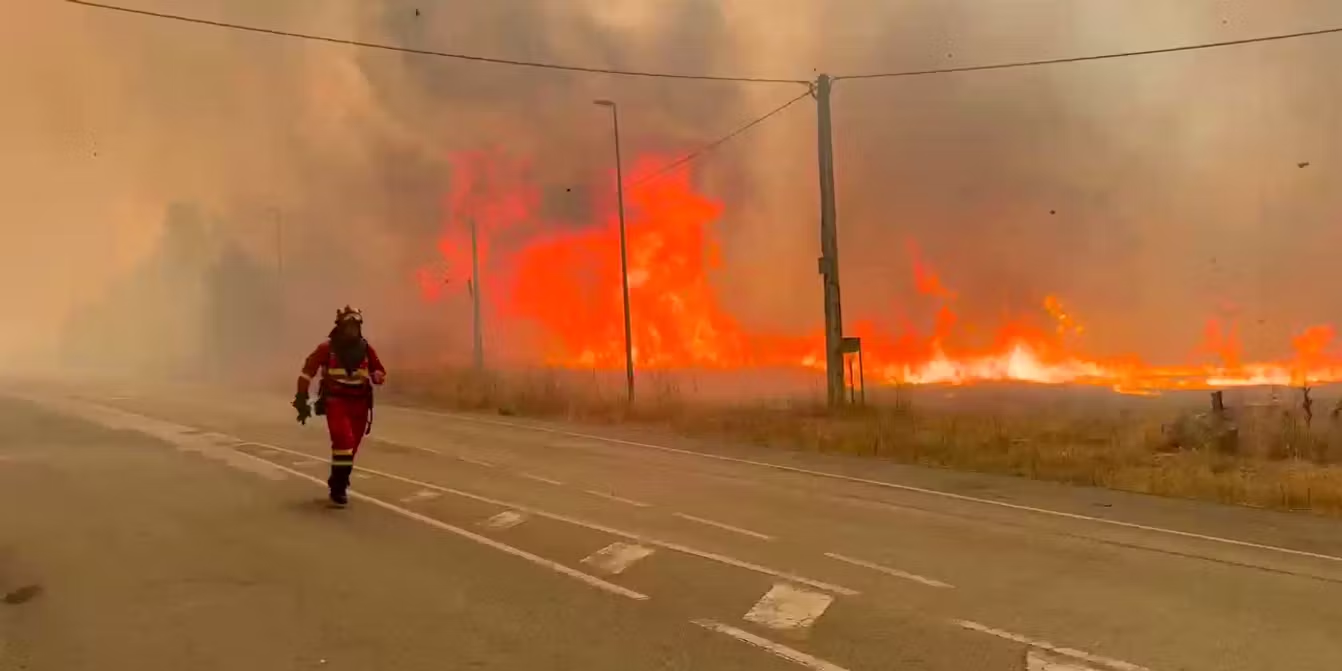
Southeastern Europe continued to grapple with the effects of a record-breaking heatwave on Monday, as soaring temperatures fueled wildfires, disrupted daily life, and heightened concerns over public safety across several countries.
Meteorologists have also warned that another wave of extreme heat is expected to build from next week, particularly in countries such as France and Germany, which have already experienced some of the most severe conditions in recent days.
In Croatia, the national weather service issued a red alert for several regions, including the capital, Zagreb, and popular tourist destinations such as Split and Dubrovnik, warning residents to take precautions against dangerous heat levels.
On the Adriatic island of Vis, approximately 55 kilometres southwest of Split, dozens of firefighters supported by four aircraft battled a wildfire that swept through pine forests.
Neighbouring Serbia also faced intense heat, with the State Hydrometeorological Service (RHMZ) forecasting temperatures as high as 39 degrees Celsius (102 degrees Fahrenheit) on Monday.
Further south, authorities in Albania managed to contain a wildfire that destroyed large areas of bushes and olive trees near the southern village of Klos during the weekend.
Scientists have described the ongoing heatwave, which began on June 20, as the worst ever recorded in Europe. The prolonged high temperatures have disrupted electricity generation, damaged infrastructure, and placed significant pressure on healthcare systems across the continent.
France has reported approximately 1,000 excess deaths linked to the extreme weather. According to the French public health agency, most of the victims were elderly people, with officials warning that the number of heat-related fatalities could continue to rise.
Researchers have also concluded that the current heatwave would have been “virtually impossible” without human-induced climate change, saying rising global temperatures have made this week’s exceptionally hot nights 100 times more likely than they would have been just two decades ago.
Luca Mercalli, President of the Italian Meteorological Society, warned that temperatures are expected to climb again around July 5 and 6.
“The areas affected look broadly the same as in the first wave, including France, Spain, Germany, Italy, Switzerland and to some extent Britain,” he told Reuters.
He also noted that while extreme temperatures increase the risk of wildfires, scattered thunderstorms could reduce the danger in some locations.
“With the extreme heat the risk of forest fires increases, but we are also seeing a lot of rainstorms, which obviously mitigates that risk,” he said, adding that the storms remain highly localised, meaning rainfall amounts differ significantly from one area to another.
The heatwave also claimed more lives over the weekend.
In Cyprus, police confirmed that two boys aged eight and ten were found dead inside a hot car on Sunday afternoon. The Mediterranean island is currently recording temperatures of about 38 degrees Celsius, although officials noted that such temperatures are not considered unusual for this time of year.
In Poland, two cyclists aged 30 and 71 died while participating in a Poland Bike Marathon event in Marki, near Warsaw, on Sunday.
The country also recorded a new all-time temperature record of 40.5 degrees Celsius on Sunday, highlighting the widespread impact of the unprecedented European heatwave.
Discover more from LN247
Subscribe to get the latest posts sent to your email.

