
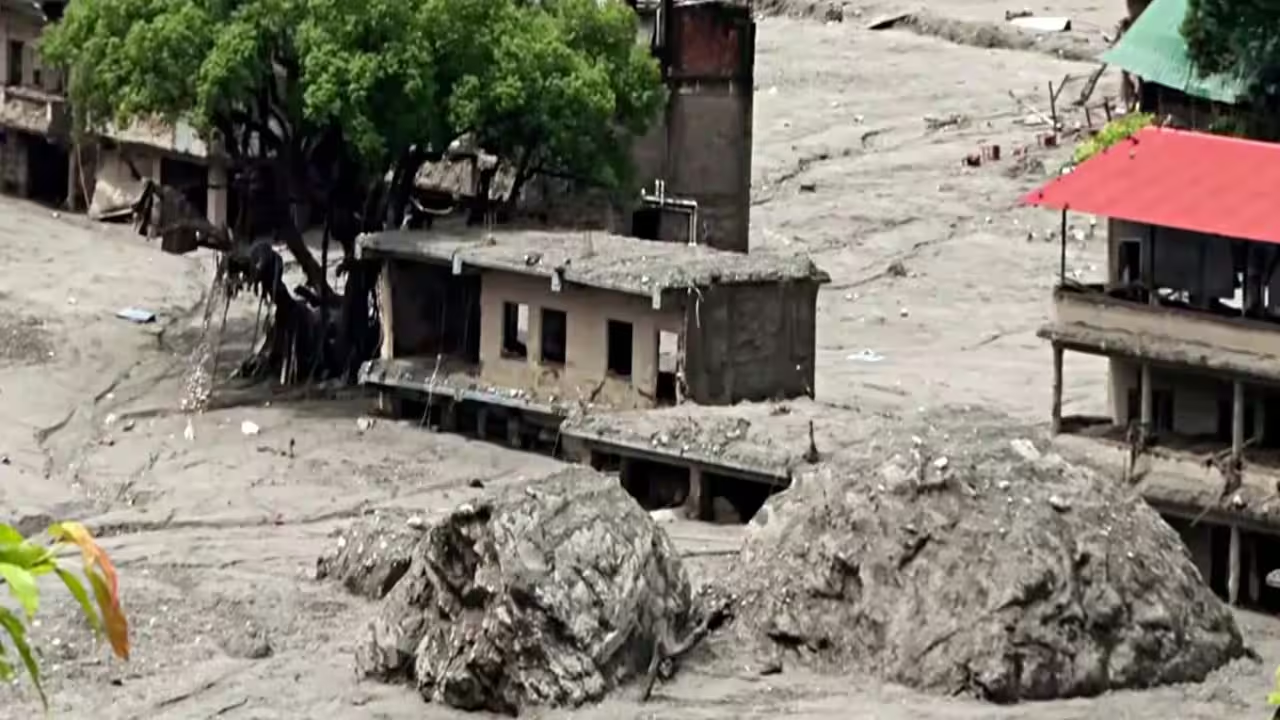
Rescue operations in Nepal entered a sixth day on Monday as teams battled through mud, debris and difficult terrain following devastating glacial floods along the China-Nepal border.
The confirmed death toll has risen to at least 903 in Nepal and Tibet, while nearly 5,000 people remain unaccounted for. At least 17 bodies have also been recovered from rivers downstream in India.
The tsunami-like surge of freezing water, rocks and debris swept through villages and towns after a glacial collapse, leaving widespread destruction and creating a major humanitarian emergency.
Nepali Prime Minister Balendra Shah described the disaster as “unimaginable and heartbreaking” late Sunday.
Rescue teams are racing against time to reach hydropower workers believed to be trapped inside tunnels. Teams from Nepal, China, India and South Korea are involved in the ongoing operation, which includes digging, drilling and blasting through layers of mud and debris.
So far, three bodies have been recovered from two tunnels, while several access routes remain blocked by mud.
Six-Year-Old Rescued After Four Days
Amid the devastation, rescuers have recorded some remarkable survival stories.
A six-year-old girl was pulled from the mud four days after the disaster and later reunited with her parents after police found her crying for her mother.
“Her body was trapped in mud, but her head was outside,” Nepali Armed Police spokesman Netra Bahadur Karki told AFP.
“She is out of danger and recovering at a hospital and has reunited with her family.”
Climate Change Raises Fresh Concerns
The US Geological Survey said the disaster was triggered by a glacial collapse, although the exact cause of the collapse remains unclear.
Scientists have warned that rising global temperatures are accelerating glacier melt around the world and increasing the risk of glacial disasters.
Nepali Foreign Minister Shisir Khanal said the country was among those suffering heavily from the effects of a changing climate.
“The people of Nepal are one of the major victims of the changing climate and its impact.”
The Himalayas, home to some of the world’s largest glaciers, are experiencing faster melting as global temperatures rise.
The scale of the destruction has also created enormous humanitarian needs. Entire communities have been swept away, leaving thousands of people without homes and forcing many to seek shelter in temporary facilities.
“This is an unfolding disaster,” UN Children’s Fund official Abiodun Banire told AFP, highlighting the huge needs of the tens of thousands of people affected.
Roads have been destroyed, power plants damaged and dozens of bridges swept away by the floods.
“We are continuing to work for search, rescue and relief operations,” Karki told AFP on Monday, as communications gradually improved in affected areas.
“Rescue teams have now reached most areas, by road or by helicopters,” he added.
Families Struggle to Identify the Dead
With morgues overwhelmed by the number of bodies recovered, Nepal has begun burying some victims after collecting DNA samples so that relatives can identify and reclaim the remains later.
Kathmandu has appealed for international assistance, saying the country needs “more than a thousand” freezer units to preserve the bodies.
Families searching for missing relatives have also been examining images of recovered victims at community centres in the hope of identifying loved ones.
Shobha Adhikary, from the southern city of Bharatpur, said she believed one of the images showed her childhood best friend.
“It looks like him, for sure,” she said, while showing a photograph of a smiling, middle-aged man.
“My husband and I are best friends with Rajkumar and his wife Geeta,” she said. Geeta has also been missing since Wednesday.
Among those still missing in Nepal are 592 foreigners, including tourists who had travelled to the Himalayan region for trekking and Hindu pilgrims heading towards the sacred Mount Kailash in Tibet.
Hundreds of Hydropower Workers Missing
Nepali army rescuers said teams were working to “clear water, mud and sediment” from tunnels where around 100 workers are believed to still be alive.
The missing workers are part of 933 employees at hydropower plants who remain unaccounted for in Nepal.
At the Upper Trishuli 3A hydropower site, rescuers managed to break into the upper section of a tunnel buried under mud. They pumped air into the tunnel and used drilling and excavating equipment in an attempt to reach those trapped below.
“When members of the team descended using ropes and called out to those inside, there was no response,” Shah said, adding that rescue efforts were continuing.
China Faces Difficult Rescue Operation
The disaster also caused extensive damage in Tibet, where access for foreign journalists remains heavily restricted and Chinese authorities are the main source of information.
More than 2,000 personnel are involved in rescue operations on the Chinese side, but teams have faced major difficulties reaching the worst-hit areas.
State media reported that rescuers heading towards Gyirong Port, the epicentre of the disaster, had advanced only 285 metres on Sunday.
The glacial collapse also created large lakes held back by unstable debris, raising fears of further flooding and putting rescue workers at additional risk.
China has reported 16 deaths and 546 missing people in Tibet.
In Nepal, the disaster agency said 4,247 people remained missing, while 903 bodies had been recovered.
Reconstruction Could Cost Billions
The floods have struck Nepal at a time when its economy is already under pressure, adding another major challenge for the government.
Several foreign governments have pledged millions of dollars in humanitarian assistance, but the scale of the destruction is expected to make recovery a much longer and more expensive process.
Kathmandu has warned that rebuilding damaged homes, roads, bridges, power infrastructure and other facilities could cost “billions of dollars.”
Discover more from LN247
Subscribe to get the latest posts sent to your email.

