Suspended Rivers State Governor, Siminalayi Fubara continues to be a major topic of discussion following the state of emergency pronouncement last Tuesday, 18th of March and now allegations linking him to militant groups.
However, he has firmly denied these claims, dismissing the reports and viral social media posts as deliberate falsehoods aimed at escalating tension in the state.
In a statement released by his Chief Press Secretary, Nelson Chukwudi, Fubara condemned the circulation of fabricated videos that allegedly show explosions at oil and gas facilities in Rivers State.
The statement clarified that residents of the purportedly affected areas have debunked these claims, confirming that all critical infrastructure remains intact and fully operational.
“For the avoidance of doubt, Governor Siminalayi Fubara has no link to any militant group, does not contemplate any such association, and has no reason to encourage any criminal elements to undertake actions that threaten peace, security, or the economy,” the statement read.
Commitment to Peace and Stability
The suspended governor reiterated his dedication to ensuring peace in Rivers State, stressing that meaningful governance and development can only thrive in a secure and stable environment.
He cautioned against attempts to exploit the political crisis in the state for personal or political gains.
Additionally, he issued a strong warning to bloggers and social media influencers, urging them to desist from spreading misleading information that could fuel instability. He emphasized that unverified reports and propaganda could heighten political tension and disrupt public order.
Call for Security Action
As concerns over misinformation grow, Fubara has called on security agencies to thoroughly investigate the situation and take decisive action against those responsible for spreading false narratives. He stressed the importance of protecting the state from deceptive tactics that could destabilize governance and public trust.
With Rivers State already at the center of intense political developments, Fubara’s response to these allegations has further fueled discussions across social media and political circles.
The coming days will reveal how the situation unfolds and whether security agencies will act on his call for action against misinformation.
Last Tuesday, 18th of March, 2025, President Bola Tinubu invoked a state of emergency in Rivers state for 6 months, with the suspension of the governor, his deputy and the lawmakers. He also appointed an administrator, Vice Admiral Ibok-Ete Ekwe Ibas, to take charge.
Portugal’s Francisco Trincão came off the bench to score twice and Cristiano Ronaldo also netted as they beat Denmark 5-2 after extra time on Sunday for a 5-3 aggregate win that set up a Nations League semi-final against Germany.
Ronaldo bounced back from missing an early penalty to play a crucial role in his team’s recovery, and though he had to watch extra time from the bench, he continued to drive the crowd on as Portugal finally found a way to end Denmark’s resistance.
With the Danes leading the tie 1-0 thanks to Rasmus Hojlund’s goal in Thursday’s first leg in Copenhagen and fullback Joakim Maehle having left the camp to attend the birth of his child, his replacement Patrick Dorgu handed Portugal an early gift, bundling over Ronaldo to concede a penalty in the third minute.
Ronaldo stepped up to take the spot kick himself, but Denmark keeper Kasper Schmeichel won the battle of nerves and got down smartly to his left to deny the Portuguese captain.
The former Real Madrid star almost made amends in the 17th minute, ghosting in at the far post to head a ball from Nuno Mendes at goal but again Schmeichel got the better of him.
Portugal eventually took the lead on the night in the 38th minute thanks to an own goal from Danish defender Joachim Andersen, who headed a corner won by Ronaldo into his own net.
That goal was cancelled out by a Rasmus Kristensen header from a corner of their own in the 56th minute, and though Ronaldo gave the home side the lead again with a finish from a tight angle, Christian Eriksen put Denmark back in front on aggregate in the 76th minute.
Trincão then took over, scoring in the 86th minute to make it 3-3 on aggregate and force extra time before netting again with a superb clipped finish in the 91st to put his side in the driving seat.
Denmark defended heroically but they ran out of steam after Trincão’s second goal, and substitute Gonçalo Ramos added the coup de grace with Portugal’s fifth to send them through to a final-four meeting with Germany, who beat Italy 5-4 on aggregate.
Five crucial matches Christian Ronaldo has missed penalty kick’s:
In a dramatic contest, Patrick Dorgu gifted Portugal an early penalty after bringing down Ronaldo inside the area, but Schmeichel got down low to his left to keep out the Portugal captain’s effort.
Undeterred, the hosts continued to create the better openings and took a deserved lead seven minutes before half-time when Fulham defender Joachim Andersen inadvertently headed Bruno Fernandes’ corner into his own net.
2012 Champions League Semi-final: Bayern Munich vs Real Madrid: Ronaldo’s penalty was saved by Manuel Neuer in the shootout, which Bayern Munich eventually won.
2008 Champions League Final: Manchester United vs Chelsea: Ronaldo missed a penalty in the shootout, but Manchester United still won the championship.
2016 Euro Quarter-final: Poland vs Portugal: Ronaldo’s penalty was saved by Lukasz Fabianski, but Portugal went on to win the match in a penalty shootout.
2013 La Liga match: Real Madrid vs Valencia: Ronaldo missed a penalty in a crucial La Liga match, which ended in a 2-3 loss for Real Madrid.
2022 Premier League match: Manchester United vs Aston Villa: Ronaldo missed a penalty in a Premier League match, which ended in a 2-2 draw.
Every year, March 24 is observed as World TB Day to emphasize the urgency of ending tuberculosis and raise awareness about it as the world’s deadliest infectious disease. The day marks the discovery of TB by Dr. Robert Koch in 1882.
TB continues to devastate millions globally, causing severe health, social, and economic consequences.
According to WHO, This year’s theme is “Yes! We Can End TB: Commit, Invest, Deliver.” It provides an opportunity to reflect on ongoing efforts and encourage stronger commitments at local, national, and international levels to end TB, including tackling the growing threat of drug-resistant TB.
Bethrand Odume, the executive director and Chair of the 2024 National TB Conference, explained that this year’s theme underscores the urgent need to unite and intensify the fight against TB, aiming for commitments to end TB by 2030.
“The theme also centres on the increased engagement of those affected by TB, communities, and civil society who are leading the movement toward ending this disease, and the progress made in research and development, many new TB diagnosis tools, shorter, more efficient treatment and preventive regimens, as well as several vaccines in phase 3 clinical trials,” he added.
“The time to accelerate all efforts towards ending TB is now more than ever before. We all need to sustain the progress we have made in recent years in finding the missing TB cases, by scaling up key proven strategies while sustaining advocacy efforts to improve funding,” he further said.
What Is Tuberculosis
Tuberculosis is a contagious airborne disease primarily caused by Mycobacterium tuberculosis, most commonly affecting the lungs. TB spreads through the air when individuals with lung TB cough, sneeze, or spit. A person only needs to inhale a few germs to become infected.
Symptoms Of Tuberculosis
Tuberculosis (TB) can have various symptoms depending on which part of the body is affected. The most common symptoms of active TB, especially pulmonary (lung) TB, include:
Coughing that lasts more than 3 weeks
Coughing up blood or sputum (mucus from deep inside the lungs)
Chest pain or pain with breathing or coughing
Fatigue or feeling weak
Fever and chills
Night sweats
Unexplained weight loss
Loss of appetite
If TB affects other parts of the body (like the kidneys, spine, or brain), symptoms can vary based on the organs involved.
TB disease of the lymph nodes may cause a firm red or purple swelling under the skin.
TB disease of the kidney may cause blood in the urine.
TB meningitis (TB disease of the brain) may cause headache or confusion.
TB disease of the spine may cause back pain.
TB disease of the larynx may cause hoarseness.
Is Tuberculosis Contagious?
TB is a contagious airborne disease caused by the Mycobacterium tuberculosisbacteria. It primarily affects the lungs, but it can spread to other parts of the body also. Transmission occurs when an infected person: Coughs, sneezes or spits. Only a few inhaled TB bacteria are enough to cause an infection.
If you suspect you have TB or have been in close contact with someone who has it, it’s important to see a healthcare provider for testing and proper diagnosis.
Preventive Measures
Improve ventilation in indoor spaces
TB spreads through the air when an infected person coughs, sneezes, or talks. Poorly ventilated spaces increase the risk of infection. Ensuring good airflow by keeping windows open, using exhaust fans, and avoiding enclosed, crowded areas can significantly reduce exposure to TB bacteria.
Maintain strong immunity with a healthy diet
A nutrient-rich diet helps the immune system fight infections, including TB. Consume foods rich in vitamin C (citrus fruits), vitamin D (sunlight, fish, eggs), zinc (nuts, seeds), and protein (lean meats, legumes) to keep your immune defences strong. People with weak immunity, such as those with diabetes or malnutrition, are at a higher risk of TB.
Practice good respiratory hygiene
Cover your mouth and nose with a mask, tissue, or elbow when coughing or sneezing. This prevents the spread of TB bacteria. If you interact with TB patients or work in healthcare settings, using N95 masks can provide additional protection against airborne transmission.
Avoid close contact with TB-infected individuals
TB is highly contagious, especially in enclosed settings. If you live with or work around someone with active TB, ensure they receive proper treatment and follow medical guidelines. Regular health check-ups and screenings help detect TB early, preventing its spread to others.
Ensure early detection and treatment
TB symptoms include persistent cough (lasting over 3 weeks), weight loss, night sweats, fatigue, and fever. If you experience these, seek immediate medical attention. Latent TB (dormant infection) can become active if left untreated, so early diagnosis and full completion of prescribed antibiotics are crucial to stop TB from spreading.
Strengthen lung health with regular exercise
Physical activity improves lung function and overall immunity. Exercises like brisk walking, yoga, breathing exercises, and swimming help keep the lungs strong and reduce the risk of respiratory infections, including TB. Avoid smoking and secondhand smoke, as they weaken lung defences.
Reduce exposure to polluted or crowded areas
People in overcrowded, poorly ventilated settings such as slums, prisons, and refugee camps are at higher risk of TB transmission. If unavoidable, wearing protective masks, maintaining distance, and ensuring sanitation can help lower the risk. By following these preventive measures, you can lower the risk of TB infection and contribute to the global fight against tuberculosis.
Impact Of Health Organizations To Cure Tuberculosis
The Tuberculosis Leprosy Control Program (TLCP) in Nigeria has played a crucial role in the fight against tuberculosis (TB) by implementing strategies aimed at improving early detection, treatment, and overall public awareness.
At least one person in Nigeria dies from Tuberculosis (TB) every five minutes, the National Tuberculosis and Leprosy Control Programme (NTBLCP), disclosed on Tuesday, noting that Nigeria alone accounts for 23 percent of the death burden in Africa. Laraban Shehu, National Coordinator of NTBLCP who disclosed this at the 2024 Pre-World TB Day Press Conference in Abuja, with the theme “Yes! We can end TB”, decried that Tuberculosis have killed more Nigerians than COVID-19 even though it is preventable and has a cure.
Shehu, said an estimated 97,900 people died of Tuberculosis in Nigeria in 2022; while 424,000 died in the entire Africa. In addition, Nigeria recorded a total 479, 000 TB cases in the same year and 2.48 million cases were recorded in Africa.
The coordinator expressed concerns that this burden of TB is borne significantly by Nigerians, explaining that 71% of people with TB face catastrophic costs as they spend over 20% of their income on treating Tuberculosis. Shehu, while calling for more action to eradicate TB, highlighted some gaps that need to be addressed including the huge TB funding gap and high level of donor dependency .
While noting that 70% percent of the TB budget is not funded, he expressed concerns that a significant portion of the remaining 30% is funded by donors. The coordinator also noted that thousands of cases go undetected every year. Among children, he said only an estimated 23% of childhood TB cases are detected and the remaining 77% go undetected, and consequently without treatment, which often results in death.
The World Health Organization (WHO) has played a significant role in helping curb tuberculosis (TB) in Nigeria. Alongside the Nigerian government, the WHO has supported TB control programs through funding, technical assistance, and capacity-building efforts aimed at improving diagnosis, treatment, and prevention of TB.
Additionally, the Global Fund and United States Agency for International Development (USAID) have also contributed significantly to TB control in Nigeria by providing funding, resources, and expertise in managing TB outbreaks, improving healthcare infrastructure, and strengthening health systems.
Together, these organizations have worked toward increasing awareness, promoting early detection, and ensuring access to treatment, which has led to some progress in addressing TB in Nigeria.
South Korea’s Constitutional Court has dismissed the impeachment of Prime Minister Han Duck-soo, reinstating him as acting president after his suspension over allegations tied to a controversial martial law declaration.
The ruling marks a major development in South Korea’s ongoing political turmoil, which began when President Yoon Suk Yeol attempted to impose martial law in December—an effort swiftly rejected by lawmakers who impeached him soon after. Han assumed the role of acting president but was impeached weeks later over alleged involvement in the crisis and disputes over judicial appointments.
“The Constitutional Court has rendered a decision to reject the impeachment trial request against Prime Minister Han Duck-soo,” the court announced on Monday.
The court ruled 5-1 against Han’s impeachment, with two judges arguing that lawmakers lacked the required supermajority to proceed with the case.
Han, who immediately resumed his duties, welcomed the decision, stating:
“I believe that all citizens are clearly speaking out against the highly polarized political sphere. Now, our priority is to move forward.”
Awaiting Yoon’s Impeachment Verdict
The ruling comes as South Korea awaits a decision on President Yoon Suk Yeol’s impeachment, which has become the longest-running deliberation in the court’s history. Yoon was suspended in December and later arrested in January on insurrection charges, becoming the first sitting South Korean president to stand trial in a criminal case.
Opposition leader Lee Jae-myung has urged the court to expedite its ruling, stating:
“The entire nation is losing sleep over Yoon Suk Yeol’s illegal military coup. Every day, every hour, every second, international trust in South Korea is deteriorating, and economic damage is mounting.”
If Yoon’s impeachment is upheld, South Korea will hold fresh elections within 60 days.
Meanwhile, pro- and anti-Yoon rallies have intensified, drawing hundreds of thousands of demonstrators across the country.
Lawmaker Kweon Seong-dong from Yoon’s ruling People Power Party welcomed Han’s reinstatement and criticized the opposition for disrupting governance.
“They should apologize for paralyzing state affairs for 87 days with a hasty impeachment bid.”
While Han’s reinstatement does not directly impact Yoon’s fate, legal experts note that the court focused on Han’s role in the crisis rather than the legality of martial law itself.
In a world where digital fraud is becoming more sophisticated, even the most vigilant individuals can fall prey to scams. Popular Nigerian comedian and activist, Mr. Debo Adedayo, popularly known as Mr. Macaroni, recently shared his near-miss experience with fraudsters. According to his account, he almost got duped by a scammer posing as a reputable organization. It was only through sheer caution and a second verification step that he narrowly avoided losing his hard-earned money.
His story is a wake-up call. If someone as sharp and socially aware as Mr. Macaroni can almost be scammed, then anyone can. However, there are ways to protect yourself from these cybercriminals. Here are five key strategies:
1. Verify Before You Trust
Scammers often pose as legitimate businesses, government agencies, or even celebrities. If you receive an unexpected call, email, or message requesting money or sensitive information, always verify the source. Cross-check the official website, call their official numbers, or confirm from trusted sources before taking any action.
2. Be Wary of Too-Good-to-Be-True Offers
If an offer sounds too good to be true, it probably is. Scammers use enticing deals, lottery wins, or fake job offers to lure victims. Before jumping at such opportunities, do a thorough background check and never send money upfront.
3. Never Share Personal Information Carelessly
Many scams succeed because victims willingly give out personal details. Avoid sharing your bank details, OTPs, or National Identification Numbers with anyone unless you’re 100% certain about their authenticity. Legitimate organizations will never ask for such information over the phone or via email.
4. Double-Check Payment Requests
Many fraudsters impersonate vendors, landlords, or service providers and ask for payments via unofficial channels. Before making any transaction, confirm account details directly with the supposed recipient through a secure and independent means.
5. Stay Updated on Scam Trends
Cybercriminals keep evolving their methods, so staying informed is your best defense. Follow cybersecurity updates, listen to scam awareness campaigns, and educate yourself on new fraud techniques to stay ahead of scammers.
The internet is a double-edged sword—while it offers convenience, it also presents risks. As Mr. Macaroni’s experience shows, scammers are constantly on the prowl, and anyone can be a target. However, by staying cautious, verifying information, and keeping personal details secure, you can significantly reduce your chances of falling victim.
For anyone familiar with Nigerian military barracks, Mammy Market is more than just a marketplace, it’s an institution. Found in virtually every military cantonment across the country, these markets serve as a hub for soldiers and their families, offering food, drinks, essentials, and a place to unwind.
But how did it all begin? Behind this widely known market is the remarkable story of Maria Ochefu, the woman whose small entrepreneurial venture transformed into a nationwide phenomenon.
The Early Life of Maria Ochefu
Maria Ochefu was not born into wealth or privilege, but she possessed a strong entrepreneurial spirit that would later redefine barrack life in Nigeria. She hailed from Benue State, a region known for its rich agricultural heritage and hardworking people.
Her journey to fame was not through politics or activism, but through a simple act of business ingenuity—one that would create an economic lifeline for military families across Nigeria.
The Birth of Mammy Market: A Business Born from Necessity
The story of Mammy Market dates back to the late 1950s when Maria Ochefu was married to Colonel Anthony Ochefu, a senior Nigerian military officer. At the time, they were stationed in Enugu, a city in southeastern Nigeria, where Maria noticed a common challenge among soldiers.
Due to strict military rules, soldiers were often not allowed to go outside the barracks to purchase basic goods, including food and drinks. Seeing an opportunity to fill this gap, Maria began selling pap (corn pudding) and akara (bean cakes) to the soldiers within the barracks.
Her small business quickly became popular, as soldiers and their families relied on her for daily meals. Soon, her little shop expanded, and she became affectionately known as “Mammy”—a nickname given to her by the soldiers.
Growth and Expansion: How Mammy Market Became a National Phenomenon
Maria’s business grew beyond just a food stall. Soldiers and their families started setting up their own small businesses alongside hers, selling everything from household goods to tailoring services. What started as a single stall evolved into a full-fledged marketplace within the barracks.
Recognizing the value of this informal economic hub, the Nigerian military officially designated these markets as “Mammy Markets”, naming them after Maria. Over time, the concept spread across military barracks in Nigeria, becoming an integral part of military life.
Even as the military cantonments expanded, Mammy Markets became a standard feature, offering a wide range of goods and services, from groceries to barbershops, entertainment spots, and relaxation centers.
Maria Ochefu’s Influence and Entrepreneurial Spirit
Though Maria Ochefu did not set out to build an empire, her simple idea became a pioneering model in Nigeria’s informal economy.
Her story reflects the resilience and adaptability of Nigerian women in business. Without formal recognition or investment, she built a sustainable business that catered to the needs of an entire community. Today, Mammy Markets remain a symbol of self-reliance and grassroots entrepreneurship, providing jobs and economic opportunities for countless families.
The Legacy of Mammy Market Today
Mammy Markets have grown beyond military barracks. Similar informal markets have sprung up around police barracks, university hostels, and other closed communities where mobility is restricted. The model has influenced countless other small-scale businesses across Nigeria.
Despite modernization and changes in military policies, Mammy Markets remain a vital part of military life. They serve as a social and economic hub, preserving the legacy of a woman who saw a need and turned it into an opportunity.
The Woman Who Built a Lasting Business Model
Maria Ochefu may not have started with a grand vision, but her initiative created a business model that has stood the test of time. The Mammy Market phenomenon is a testament to her ingenuity, resilience, and ability to adapt to the needs of her community.
Her story is a powerful reminder that entrepreneurship is not always about grand ideas—it’s about seeing an opportunity and acting on it. Maria Ochefu’s legacy lives on in every Mammy Market across Nigeria, where vendors continue to serve military personnel and their families, just as she did decades ago.
In a major development for Nigeria’s aviation sector, the Minister of Aviation and Aerospace Development, Festus Keyamo, has signed a Bilateral Air Services Agreement (BASA) with Canadian authorities. The signing took place at the ministry’s headquarters in Abuja.
Keyamo clarified that the agreement is a code-share arrangement, allowing multiple airlines to market and sell seats on flights operated by partner airlines. He added that Nigeria will designate specific airline operators to implement this agreement effectively.
Expressing gratitude to Canadian authorities, the minister noted that while his Canadian counterpart had already signed the agreement, signing it in Nigeria helped reduce costs. He emphasized that the deal will strengthen bilateral relations and enhance air connectivity between both nations.
The Permanent Secretary, Dr. Ibrahim Abubakar Kana, commended Keyamo’s dedication to advancing Nigeria’s aviation industry. He also highlighted Nigeria’s strong economic ties with Canada, stating that the BASA agreement will mutually benefit both countries.
The Canadian High Commissioner to Nigeria, Pasquale Salvaggio, praised the Nigerian government for finalizing the agreement. He reaffirmed Canada’s commitment to working closely with Nigeria on bilateral partnerships.
Code-sharing agreements improve passenger convenience by enabling single-ticket bookings across multiple airlines, expanding route options without adding extra flights. This practice is a key feature of modern airline alliances, enhancing global connectivity.
The Nigerian National Petroleum Company Limited (NNPCL) has cautioned the public against fraudulent recruitment advertisements circulating online, clarifying that it is not currently hiring.
In a statement posted on its official X handle on Friday, NNPCL urged job seekers to be wary of scam recruitment schemes, emphasizing that all legitimate job openings would only be announced through its official website and verified social media channels.
“The general public is hereby informed that NNPC Limited is not recruiting. Official recruitment announcements will only be made through our website and verified social media platforms,” the company stated.
NNPCL reaffirmed that its hiring process is transparent, merit-based, and does not require external assistance. It also warned Nigerians to disregard any unofficial job postings falsely claiming to be from NNPCL, as they are likely scams designed to defraud unsuspecting applicants.
The company assured the public that it remains committed to upholding the integrity of its recruitment process and will officially announce any job openings when available.
“We advise the public to always verify information directly from our official platforms to avoid being misled by scammers,” NNPCL stated.
Additionally, the company encouraged individuals to report any suspicious recruitment advertisements falsely linked to NNPCL to the appropriate authorities.
On the evening of Tuesday, March 18, 2025, President Bola Tinubu declared a state of emergency in Rivers State during a nationwide broadcast, citing an ongoing political crisis, violations of the constitution, and escalating insecurity.
In his announcement, Tinubu ordered the suspension of Governor Siminalayi Fubara, Deputy Governor Ngozi Odu, and all members of the Rivers State House of Assembly for an initial period of six months.
To oversee the administration of the state, the President appointed Vice Admiral Ibokette Ibas (Rtd) as Administrator, effective immediately. Tinubu emphasized that the move was crucial to restoring peace, order, and governance in Rivers, which had been grappling with political instability for several months.
Ijaw’s Push For Self Determination
The President’s announcement has now ignited the Ijaw ethnic group’s call for self-determination in the Niger Delta.
Prof Benjamin Okaba, the president of the Ijaw National Congress (INC), the foremost socio-cultural organization for the Ijaw people, expressed his thoughts in a statement on Tuesday, 18th of March, 2024.
According to hm “For Ijaw people, we are not too happy because we see this as another slap on us. But again, our position will be deliberated upon in a wider stakeholders’ meeting that will be convened later.
“In that meeting, I am sure the Ijaw people will look at how we have fared in this Nigerian project and what options are left to drive home our quest for self-determination.
“We say it is hasty because the President has so much opportunity to leverage on the calls made by Nigerians from all quarters to call his minister, Nyesom Wike, to order.
“Secondly, while Wike himself has been the antagonist, he had boldly stated that he would make governance impossible for the governor, Siminalayi Fubara, in as much as he does not dance to his tune.
“In a recent statement credited to him, he (Wike) said the two conditions he must meet are: ‘Allow him to control all the LGAs in Rivers State, and that he (Fubara) should sign an agreement that he would not contest in 2027.’
“So, the man, Wike, is desperate to capture state power and resources, as we had said earlier, and persistently. He wants to turn Rivers State into his property, and the people of Rivers State are the ones to suffer.
“The governor, who entered into a covenant with the people of Rivers to deliver on sustainable development, cannot mortgage that mandate because he wants to satisfy somebody.
“These are obvious facts flying all over the place, and I thought the President should have looked at all of these. I said it is lopsided—why will you leave Wike and sack Sim? The best thing is to remove everybody who played a role in this.
“Wike has to be sacked, and all the federal appointees from the state also have to be sacked because if you do not sack them, they will use their positions to perpetrate more crises and create more advantageous roles for themselves.”
The Place Of The Lawmakers
On Thursday, the National Assembly endorsed the state of emergency imposed on Rivers State by President Bola Tinubu on Tuesday. The resolution was passed during separate plenary sessions in the two chambers, where they deliberated on the suspension of Governor Siminalayi Fubara, his deputy, Prof Ngozi Odu, and the state Assembly members. The parliament supported Tinubu’s proclamation, despite calls from opposition leaders to reject it.
Fubara Broke His Silence
However, on Thursday, 20th March 2025, Fubara spoke out and denied allegations from the Federal Government, claiming that he had teleguided attacks on oil installations by suspected militant groups in the state. Additionally, the governor stated that claims he had done nothing to rebuild the bombed state House of Assembly, after ordering its demolition, were untrue.
Fubara explained that he had acted on expert advice before demolishing the Assembly complex, which was reported to have integrity issues. In a statement issued in Port Harcourt by his Chief Press Secretary, Nelson Chukwudi, the suspended governor emphasized the importance of setting the record straight.
Recall that in his speech declaring a state of emergency in Rivers, President Bola Tinubu criticized Fubara for failing to prevent attacks on oil pipelines. Tinubu also referred to Fubara as a despot, echoing the Supreme Court’s stance, and pointed to the demolition of the state House of Assembly complex, effectively denying lawmakers a place to hold plenary.
However, the suspended governor insisted the allegations were false, asserting that the attacks were sparked by comments from the Minister of the Federal Capital Territory, Nyesom Wike, who allegedly disparaged the Ijaw nation during a media chat. Fubara stated that Wike remained defiant even when Ijaw leaders and groups demanded an apology.
Fubara’s statement read: “Our attention has been drawn to a number of allegations claiming that Governor of Rivers State, His Excellency, Sir Siminalayi Fubara, did nothing to dissuade criminal groups and militants from making good their threats to attack oil installations in the state.
“There was also another claim that after demolishing the hallowed chamber of the state House of Assembly on Moscow Road in Port Harcourt, the governor did nothing to rebuild the facility. Ordinarily, we would have ignored the statements as mere results of lack of adequate information to the Presidency by those tasked with the responsibility of providing same to guide decision-making, but it has become imperative to set the records straight and correct the erroneous impression such narratives are creating in the minds of the Nigerian people.
“First, it is important to clarify that Governor Fubara has nothing to do with the threats by militants and also did not, in any way ‘telegraph’ the reported attacks on any oil facility in the state.
It is on record that the reaction of stakeholders in the Niger Delta, especially elders, chiefs, women, Ijaw National Congress, its youth wing, IYC, as well as militants, among others, was triggered by remarks by the Minister of the Federal Capital Territory, Chief Nyesom Wike, in a live media chat, during which he dismissed Ijaws as a minority of the minorities and powerless in the Nigerian polity, saying that Ijaws are not the only ones that are militants and can blow up pipelines; that Ogonis, Ikwerres, and others are also militants and can as well blow up pipelines. Most of the Ijaw groups and leaders even demanded an apology from the FCT Minister, which he rebuffed.”
The governor continued, “Available public records show that Governor Fubara, on several occasions and at every forum, including all the project commissioning events as well as the handover of the AW139 Helicopter to the Nigerian Air Force, between March 3 and 13, 2025, made it clear that his administration was committed to the peace, security, and safety of oil facilities in the state.
He often recalled his pivotal role as a member of the Presidential Committee on the Protection of Oil Installations in the region, and repeatedly emphasised the need to protect oil pipelines and other facilities in the state, urging his supporters and the people of the state to avoid acts capable of destabilising the state or sabotaging the nation’s economy.
“Since inception as the Chief Executive of Rivers State, Governor Fubara has prioritised investment in upscaling the welfare and operational equipment of all personnel and arms of the Armed Forces and security agencies in the state by building livable office and residential accommodation for officers and men and donating vehicles, gunboats, helicopters, and other critical needs of the formations to enhance efficiency and effectiveness in the performance of their duties. His commitment to total peace and good governance in the state has contributed significantly to increased oil production and revenues for the country since May 29, 2023, as the continuous rise in the accruable revenue from the State into the Federation Account has shown over the months.”
On the claim that Fubara acted with impunity to demolish the state House of Assembly complex and did nothing to rebuild it 14 months after, the statement said, “It is on record that Governor Fubara acted based on professional advice and guidance.”
He added, “Let it be clarified that the former governor and now FCT Minister repeatedly criticised the dilapidated and leaking Assembly Complex, and during the commissioning of the Assembly Quarters in August 2022, challenged the lawmakers to take responsibility for the poor state of the edifice, rejecting requests to rebuild it to ensure a conducive legislative environment for the lawmakers.
“It must be noted that immediately after the incident of October 29, 2023, and experts’ reports, the government decided to heed the age-old demands of the lawmakers to rebuild the facility and promptly demolished the dilapidated structure to give way for a state-of-the-art Assembly complex, which is now nearly 80 per cent completed.
“It would be recalled that in the wake of the most peaceful and violence-free local government election in the state on the 5th of October, 2024, the supporters of the FCT Minister violently attacked and razed facilities in some local government council secretariats without any reprisals from Governor Fubara’s supporters. It is also pertinent to draw the attention of security agencies to the fact that LGAs, where those attacks were unleashed, are the same places that have repeatedly witnessed violence perpetrated by detractors of the Governor Fubara-led administration.
“This is why it is important for security agencies to focus on the real purveyors of violence, critically evaluate these incidents, and diligently undertake investigations to unravel the elements behind the crimes and bring them to justice without let or hindrance.
“It is clearly untrue that somebody who has all the while preached peace and non-violence, even in the face of extreme provocations, would be ‘telegraphing attacks on oil pipelines’ and breaching the peace he has worked so hard to promote and sustain for the good of the people of the state.”
Ibok-Ete Ibas As Administrator
Ibok-Ete Ibas, a retired vice admiral and former chief of naval staff, has taken over as sole administrator of Rivers State. Mr Ibas arrived at Port Harcourt, the state capital, at about 11:25 a.m. on Thursday. He was received by high-ranking naval personnel amidst strict media protocol, he finally addressed journalists shortly after his arrival at the government house.
His arrival occurred almost the same time Nigeria’s House of Representatives approved the declaration of a state of emergency in the south-southern state.
Vice Admiral Ibok-Ete Ekwe Ibas described the atmosphere in the state as calm and pledged to restore normalcy in the state.
He said he will be receiving briefings from the head of service, permanent secretaries, and service chiefs on the state of affairs and promised to have a proper parley with journalists thereafter
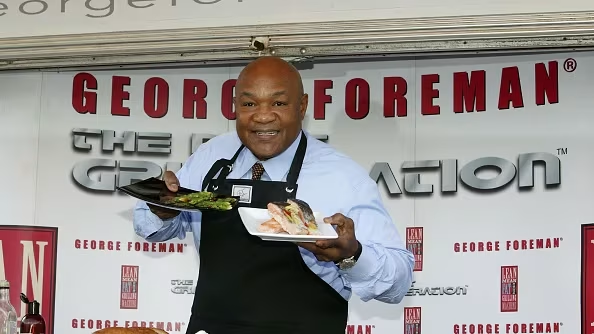
George Foreman’s journey is one of grit, redemption, and reinvention. From his rise as a feared heavyweight champion to his unexpected return to the ring and later success as a businessman, his life is filled with inspiring lessons.
Humble Beginnings: A Rough Start in Texas
Born on January 10, 1949, in Marshall, Texas, George Foreman grew up in Houston’s Fifth Ward, a rough neighborhood known for crime and poverty. As a teenager, he was a school dropout, constantly in trouble and engaging in street fights. His life took a turn when he joined the Job Corps, a government program that helped troubled youth develop skills and find purpose. It was there that he discovered boxing, and under the guidance of trainer Doc Broadus, his raw power was transformed into a disciplined craft.
The Rise of a Boxing Titan
Foreman’s natural talent and aggressive style quickly propelled him through the amateur ranks. In 1968, he won a gold medal at the Olympics in Mexico City, a victory that put him on the global stage. Turning professional soon after, he dominated his opponents with an unmatched combination of power and intimidation. His knockout streak made him one of the most feared fighters of his era, and in 1973, he faced heavyweight champion Joe Frazier. In a stunning display of force, Foreman knocked Frazier down six times in two rounds to claim the undisputed heavyweight title. The world had a new boxing king.
The First Reign: A Fearsome Champion
As champion, Foreman seemed unstoppable, defending his title with brutal knockouts. His punches carried an almost mythical reputation, with opponents rarely making it past the early rounds. Then came the legendary 1974 fight against Muhammad Ali, known as the “Rumble in the Jungle.” Foreman, the overwhelming favorite, dominated the early rounds, but Ali’s rope-a-dope strategy wore him down. In the eighth round, Foreman was exhausted, and Ali knocked him out, handing him his first professional defeat. The loss crushed Foreman, shaking his confidence and altering the course of his career.
The Fall and Spiritual Awakening
After the Ali loss, Foreman struggled to reclaim his dominance. In 1977, after losing a fight to Jimmy Young, he experienced what he described as a near-death vision in the locker room. Believing he had seen the afterlife, Foreman renounced boxing and devoted himself to Christianity. He became a preacher, founded a church, and spent the next decade helping troubled youth. The once-intimidating boxer had found peace, seemingly leaving his fighting days behind for good.
The Unbelievable Comeback: From Preacher to Champion Again
In 1987, at the age of 38, Foreman shocked the world by announcing his return to boxing. Many dismissed it as a publicity stunt, believing he was too old and out of shape to compete. But Foreman proved them wrong. He slowly climbed the ranks, using experience and power rather than speed and aggression. At 42, he fought Evander Holyfield for the heavyweight title, losing a hard-fought match but earning widespread respect. Then, in 1994, the impossible happened—at 45 years old, he knocked out Michael Moorer to reclaim the heavyweight championship. The world watched in awe as he stood in the ring, the oldest heavyweight champion in history, proving that comebacks are real and second chances exist.
The Birth of a Business Empire
Foreman’s legend didn’t stop in the ring. After retiring, he reinvented himself as a businessman. He lent his name to the George Foreman Grill, a product that became a household sensation. Initially hesitant, he eventually embraced the brand, and his charismatic personality helped sell over 100 million units worldwide. The success of the grill made him even wealthier than his boxing career ever did. His business acumen and ability to connect with audiences turned him into one of the most successful athlete-entrepreneurs in history.
Legacy and Impact
George Foreman’s life is a story of resilience, faith, and reinvention. He influenced generations of fighters with his power and determination, but his greatest lesson goes beyond the ring—showing the world that it’s never too late to change, to come back, and to succeed in a whole new way. Today, Foreman remains an icon, a living testament to perseverance, proving that champions aren’t just made in the ring, but in life itself.
To provide the best experiences, we use technologies like cookies to store and/or access device information. Consenting to these technologies will allow us to process data such as browsing behaviour or unique IDs on this site. Not consenting or withdrawing consent, may adversely affect certain features and functions.
Functional
Always active
The technical storage or access is strictly necessary for the legitimate purpose of enabling the use of a specific service explicitly requested by the subscriber or user, or for the sole purpose of carrying out the transmission of a communication over an electronic communications network.
Preferences
The technical storage or access is necessary for the legitimate purpose of storing preferences that are not requested by the subscriber or user.
Statistics
The technical storage or access that is used exclusively for statistical purposes.The technical storage or access that is used exclusively for anonymous statistical purposes. Without a subpoena, voluntary compliance on the part of your Internet Service Provider, or additional records from a third party, information stored or retrieved for this purpose alone cannot usually be used to identify you.
Marketing
The technical storage or access is required to create user profiles to send advertising, or to track the user on a website or across several websites for similar marketing purposes.