The Academic Staff Union of Universities (ASUU), Bauchi Zone, has issued a fresh warning that public universities may soon be plunged into another round of strikes if the Federal Government fails to resolve outstanding issues affecting its members.
In a statement released on Friday, the Zonal Coordinator, Dr. Namo Timothy, criticized the government for what he described as years of neglect despite numerous negotiations and appeals. He reminded Nigerians that the union’s nationwide strike, which lasted from February to October 2022, was suspended in good faith with the expectation that the authorities would implement pending agreements.
“Unfortunately, many of the issues we suspended our strike over remain unresolved. Three months ago, we held a press briefing to highlight these lingering challenges, but little progress has been made. Once again, we call on the government to act now or risk another industrial crisis,” Timothy said.
The union identified the key issues to include the re-negotiation of the 2009 ASUU/FGN Agreement, sustainable funding and revitalization of public universities, payment of arrears on the 25–35 percent wage award, settlement of promotion arrears, release of withheld third-party deductions, and an end to what it described as victimization of members at Lagos State University, Kogi State University, and the Federal University of Technology, Owerri.
Timothy alleged that some lecturers in the listed institutions were unlawfully dismissed and denied their salaries, calling on the Federal Government to urgently address these grievances, release revitalisation funds, and implement the renegotiated 2009 agreement without further delay.
While praising ASUU members for their patience since the suspension of the last strike, he cautioned that the union could no longer guarantee industrial peace if the issues remain unresolved.
The Bauchi Zone of ASUU covers institutions across Bauchi, Gombe, Plateau, and other neighbouring states.
The Minister of Interior, Dr. Olubunmi Tunji-Ojo, has revealed that President Bola Tinubu has approved a new welfare policy that guarantees lifetime salary payments for senior officers retiring from the rank of Deputy Controller, Comptroller, or Commandant-General and above.
Tunji-Ojo made this known on Thursday at the 2025 Ministerial Retreat, where he presented the ministry’s achievements and restated its commitment to strengthening the capacity and performance of all agencies under its supervision.
According to a statement signed by the Federal Fire Service spokesperson, DCF P.O. Abraham, the new initiative is designed to reward the contributions of top-ranking officers. “In recognition of the welfare of senior officers, the minister announced that any officer retiring from the rank of Deputy Controller/ Comptroller /Commandant-General will now receive lifetime salary benefits, a policy graciously approved by President Bola Ahmed Tinubu,” the statement said.
The minister also conveyed gratitude to the President for his support, noting that agencies within the ministry are already experiencing positive outcomes from the Renewed Hope Agenda.
He pointed out that the backlog of long-pending promotions had been cleared, with over 50,000 officers promoted in the last two years. “We have successfully cleared the long-standing backlog of promotions,” he stated, while adding that going forward, officer advancement will be tied to performance and capacity.
As part of efforts to modernise institutions under the ministry, Tunji-Ojo disclosed that new training manuals have been created and construction has begun on a world-class Fire Academy, expected to rival leading institutions such as the Arizona Fire Academy.
He further emphasised the importance of mental health in the workplace, assuring officers of the ministry’s commitment to their well-being.
In addition, he encouraged the Federal Fire Service to engage the private sector through partnerships that can improve service delivery, enhance infrastructure, and modernise firefighting operations across the country.
Russia unleashed its heaviest aerial assault on Ukraine’s capital in months on Thursday, striking residential neighborhoods, a shopping mall, and European diplomatic offices. At least 21 people were killed, including four children, and dozens more injured, Ukrainian authorities said.
According to Ukraine’s Air Force, Moscow launched nearly 600 drones and 31 missiles in a coordinated overnight barrage, targeting all ten districts of Kyiv. Most of the projectiles were intercepted, but several ballistic and cruise missiles pierced air defenses, causing widespread destruction.
The deadliest strike occurred in the Darnytskyi district, where a five-story apartment building collapsed, killing 17 people. In central Kyiv’s Shevchenkivskyi district, explosions damaged the British Council and European Union offices. Emergency workers pulled survivors from the rubble as fires burned through the night.
President Volodymyr Zelenskyy condemned the attack, calling it Moscow’s retaliation against recent peace initiatives. “Russia chooses ballistics over diplomacy,” he said in a televised address, urging Western allies to tighten sanctions and accelerate weapons deliveries.
The Kremlin defended the strikes, saying they targeted military and industrial facilities, while insisting Russia remained “open to negotiations.”
The attack triggered swift international condemnation. The European Union and the United Kingdom summoned Russian envoys to protest the damage to their institutions in Kyiv. The United Nations Security Council convened an emergency session, and Washington announced an $825 million arms package to bolster Ukraine’s defenses.
The assault dominated headlines worldwide and fueled a surge of online activity, with CCTV footage and eyewitness videos from Kyiv shared widely across social media platforms.
The strikes also came as NATO projected that all 32 of its members will reach the alliance’s defense spending benchmark of 2% of GDP this year, underscoring heightened security concerns across Europe.
Despite the devastation, Ukrainian officials vowed resilience. “Kyiv will endure,” said Mayor Vitali Klitschko. “We will rebuild, and we will not be broken.”
Bauchi State Governor, Bala Mohammed, says the Peoples Democratic Party’s (PDP) decision to zone its 2027 presidential ticket to the south is a demonstration of sacrifice for the sake of national unity.
On Monday, the PDP’s National Executive Committee (NEC) — its highest decision-making body — resolved that the party’s next presidential candidate will come from the south, while the national chairmanship position remains in the north.
The decision rules out Mohammed and other northern politicians who were reportedly eyeing the party’s presidential ticket.
Speaking with journalists in Bauchi on Tuesday, the governor said he was fully in support of the resolution.
“I am very satisfied with the resolution because I am part and parcel of it — from the arrangement, to the strategy, and delivery,” he said.
He explained that the party agreed to hold its convention in Ibadan, Oyo State, on November 15, preceded by another NEC meeting on October 15.
According to him, maintaining the current zoning formula for party offices while shifting the presidential ticket southward was necessary to ensure “sanity, understanding, and unity.”
“Politics is not about self-interest. It is about actualisation within the framework of party decisions, manifesto, and national progress. Everything is predicated on sacrifice, not self-interest. We must live and let live,” Mohammed said.
He added that mutual respect among members was key, stressing that “power comes from God.”
Two days of fresh clashes between government troops and rebel factions have intensified concerns about the fragile 2018 peace agreement in South Sudan.
The Sudan People’s Liberation Army in Opposition (SPLA-IO) accused government forces of launching attacks on their fighters in Western Equatoria and Upper Nile States. According to the SPLA-IO, one rebel fighter and two government soldiers were killed, with several others wounded.
These renewed clashes threaten to unravel the peace deal aimed at ending years of brutal civil war between President Salva Kiir’s government and forces loyal to his former deputy, Riek Machar.
Fighting erupted again near Mathiang in Longechuk County, where rebel fighters reportedly joined armed local youth to hold key positions against government soldiers.
Meanwhile, military mobilisation in Pigi County, Jonglei State, has alarmed civilians as forces loyal to Machar and the White Army militia gather and move toward Malakal. The rising tensions have caused widespread fear, with many civilians fleeing their homes to avoid becoming caught in the conflict
Fighting on the Ground and Rising Political Tensions
Clashes between government forces and SPLA-IO rebels have reignited tensions in Western Equatoria and Upper Nile States. Rebel fighters, joined by local youth, have taken positions against government troops near Mathiang in Longechuk County. In Jonglei’s Pigi County, forces loyal to Vice President Riek Machar and allied militias are mobilising, causing civilians to flee.
The situation is worsened by reports of Ugandan troops supporting government operations, which Machar condemns as a violation of sovereignty. A recent border clash between South Sudanese and Ugandan forces also escalated tensions before a ceasefire was reached.
Politically, Machar’s house arrest earlier this year sparked international concern over renewed conflict. The SPLA-IO refuses dialogue until violence ends and detainees are released. Meanwhile, Juba faces rising youth gang violence and forced recruitment into government forces, with local groups stepping in to provide support and mentorship.
With fighting spreading and regional tensions escalating, South Sudan stands at a crossroads. Whether its leaders can restore trust and honour the promise of peace will determine the country’s future stability and the lives of millions caught in the crossfire.
To prevent a slide back into full-scale conflict, immediate de-escalation orders must be enforced, especially in hotspots like Mathiang, Pigi, and Malakal. Recommitment to the peace process, including the rapid integration of the Necessary Unified Forces (NUF), remains essential.
Vice President Kashim Shettima has reiterated the Federal Government’s readiness to unlock the economic and developmental value of Nigeria’s geo-heritage sites, stressing that the Tinubu administration will work closely with stakeholders to achieve this goal.
Speaking in Abuja while receiving a delegation from the UNESCO International Geoscience and Geoparks Programme (IGGP) Nigeria National Committee, led by its chairman, Dr. Aminu Abdullahi Isyaku, Shettima declared that the government’s “doors are open for collaboration,” particularly with state governments.
He maintained that although Nigeria had come late in maximizing the benefits of its geo-heritage resources, the current administration was determined to make progress. “It is better late than never,” he said, adding that President Bola Tinubu’s government is committed to repositioning the country across sectors — from the economy and culture to diplomacy, education, and agriculture.
The vice president praised the Nigerian Geological Survey Agency and the Minister of Innovation, Science and Technology, Uche Geoffrey Nnaji, for their efforts in safeguarding the nation’s geo-heritage. He also lauded UNESCO IGGP’s alignment with the government’s Renewed Hope Agenda.
Shettima highlighted the vast opportunities embedded in geo-heritage, ranging from job creation and sustainable tourism to peacebuilding in host communities and access to international research funding. “This country is richly endowed. All hands must be on deck to make it work. I urge you to join us as partners in repositioning Nigeria,” he urged.
Earlier, Dr. Isyaku called for federal backing to enable the committee to map and develop a full inventory of Nigeria’s geo-heritage sites, while completing ongoing geoscience projects nationwide. He noted that the formation of Nigeria’s national committee, five decades after the global body was established, has formally integrated the country into the International Geoscience Programme framework.
He assured the vice president that the committee would continue to align with the Renewed Hope Agenda, with a focus on advancing climate resilience and raising public awareness of geoscience benefits.
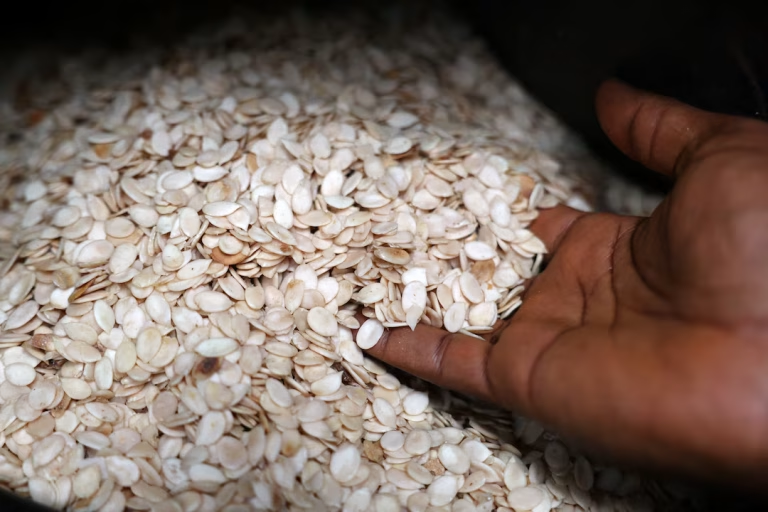
Egusi melon seeds, a staple ingredient in Nigeria’s beloved egusi soup, have made history after being sent to the International Space Station (ISS) for scientific research. The experiment is part of a project studying how food crops react to space conditions, with the long-term goal of ensuring astronauts have access to nutritious, culturally diverse meals during missions to the Moon, Mars, and beyond.
The seeds spent seven days orbiting Earth in the Crew-11 capsule launched from NASA’s Kennedy Space Centre on August 1. They were carefully packed in test tubes alongside heritage seeds from Costa Rica, Armenia, and Guatemala.
Nigerian space scientist Temidayo Oniosun, who handpicked the egusi seeds from markets in Oyo State, explained that the mission is about more than nutrition: “The goal is that in the next couple of decades, when people are living on the Moon, on Mars and they’re looking at growing food… foods that are native to Africa would be part of that.”
Egusi is valued not only for its cultural significance but also for its high protein content, making it a strong candidate for space farming. Florida-based scientist Wagner Vendrame, one of the researchers on the project, highlighted the importance of moving beyond the processed dried meals astronauts rely on today.
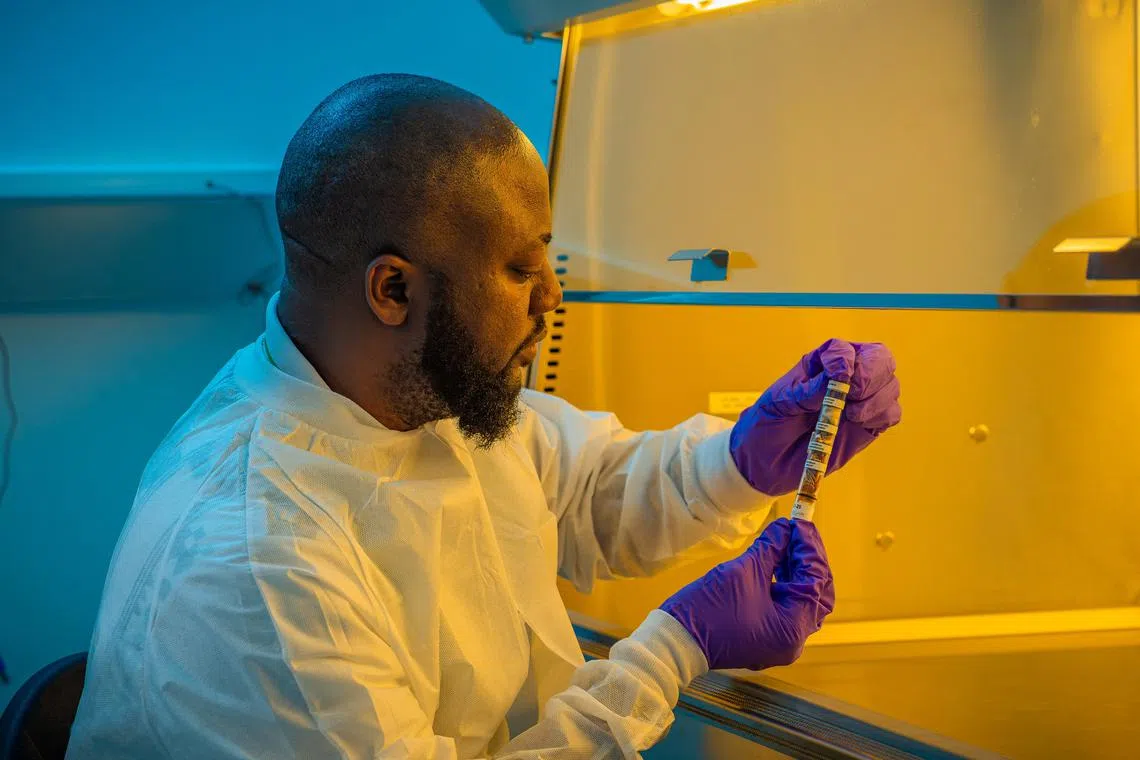
The seeds are now being distributed to laboratories for propagation and testing. Scientists aim to determine whether exposure to space altered their genetic makeup or nutritional quality.
“By looking at the changes in the plants and the seeds themselves, we can tell—are those plants still the same? Would they still provide the same level of nutrition to astronauts?”Vendrame said.
If successful, the experiment could pave the way for traditional African foods to be cultivated in extraterrestrial environments, ensuring both diversity and sustainability in future space diets.
As preparations intensify for the 2025 G20 Summit in Johannesburg, South Africa, on November 22–23, world leaders are focusing on new strategies to tackle the $4 trillion annual financing gap required to achieve the Sustainable Development Goals (SDGs). Africa alone accounts for $1.7 trillion of this shortfall—roughly 40 per cent of the global funding need.
The financing gap has nearly doubled from $2.5 trillion in 2015 to its current $4 trillion, creating a serious barrier to development across the continent. To address this, the G20’s Fourth International Conference on Financing for Development (FFD4) has placed Domestic Resource Mobilisation (DRM) at the centre of proposed solutions.
The African Tax Administration Forum (ATAF) highlighted that DRM can reduce Africa’s dependence on volatile external funding sources while restoring fiscal independence. In its latest report, ATAF noted that “the G20 under the South African Presidency has emphasised the importance of revisiting and prioritising Domestic Resource Mobilisation as a critical tool within the broader financing mix for achieving the SDGs.”
Currently, Africa’s tax-to-GDP ratio remains below the 15 per cent benchmark needed for sustainable development. However, ATAF estimates that raising this ratio by just one percentage point could generate an additional $35 billion each year—amounting to $350 billion by 2030—and significantly reduce the financing deficit.
Illicit Financial Flows (IFFs) remain one of the biggest threats to DRM. ATAF has called for comprehensive reforms, including better tax and trade policies, stronger tax and customs administrations, and broader tax bases. It also stressed the need to combat practices such as transfer mispricing and trade mis-invoicing, which strip African economies of critical revenues.
To boost cross-border cooperation, ATAF recommended measures such as unique taxpayer identifiers, stronger anti-corruption frameworks, and the automatic exchange of tax and customs information. Under South Africa’s G20 Presidency, efforts to tackle IFFs have gained traction, with the Development Working Group (DWG) now tasked with drafting voluntary, non-binding high-level principles to address the issue.
Funding constraints—including declining Official Development Assistance (ODA), insufficient public resources, and the heavy cost of borrowing—continue to slow SDG progress. The G20 DWG acknowledged that development financing is a shared concern for both finance and development ministers.
ATAF concluded that effective tax systems are not only critical to bridging Africa’s funding gap but also to advancing inclusive growth. It noted that reforms promoting gender equality and empowering women are central to sustainable DRM, making taxation a tool for broader social and economic transformation.
The Nigeria Immigration Service (NIS) has announced a fresh upward review of passport application fees, raising concerns on affordability and government priorities.
Effective September 1, 2025, Nigerians applying within the country will now pay ₦100,000 for a 32-page passport with a five-year validity, and ₦200,000 for a 64-page passport with ten-year validity.
This change comes just a year after the last adjustment in September 2024, when the 32-page passport rose from ₦35,000 to ₦50,000, and the 64-page option increased from ₦70,000 to ₦100,000. The latest increment has doubled costs in less than 24 months, raising concerns about its impact on ordinary Nigerians.
Meanwhile, the fee for Nigerians in the diaspora remains unchanged at $150 for the 32-page (five years) and $230 for the 64-page (ten years).
The Reason for the Increment
The NIS explained that the review was necessary to maintain the quality and integrity of the Nigerian passport, which is globally recognized as a security document. Officials highlighted the high cost of production, enhanced security features, and the need to sustain service delivery as factors behind the decision.
The agency also argued that the increment will help reduce pressure on the service’s operations by aligning fees with the realities of passport production and maintenance.
What the Federal Government is Saying
The Federal Government has backed the increment, insisting that the hike is part of broader efforts to reform public service delivery and reduce reliance on subsidies. Government officials maintain that Nigeria cannot continue to operate at a loss when producing international-standard passports.
At the same time, authorities claim that the revised pricing structure will discourage unnecessary passport applications, streamline demand, and ensure better service to genuine applicants. However, critics argue that the move comes at a difficult time when many Nigerians are already grappling with economic challenges.
Comparing Nigeria’s Passport Fees with Global Standards
As passport costs continue to rise in Nigeria, it is important to place the new fees within the context of what citizens in other parts of the world pay. While the Nigerian Immigration Service argues that the adjustment aligns with global realities, a closer look at international standards shows a mixed picture.
United States: First-Time Adult Passport Book (DS-11) costs $165 (₦253,210) with a 10-year validity.
United Kingdom: Adults (16 and over) pay £94.50 (₦194,072) for a standard 34-page passport online (£107 (₦220,909) if applied on paper). For the 54-page frequent traveller passport, the cost is £107.50 online or £120 (₦247,743) via paper application. Validity is 10 years.
Canada: Adult passports cost CAD 120 (₦133,920) for 5 years or CAD 160 (₦178,568) for 10 years.
Germany: An adult passport (24 years and above) is priced at €70 (₦125,335) for 10 years.
From these comparisons, Nigeria’s 10-year passport at ₦200,000 falls within the range of developed countries in terms of absolute figures. However, when adjusted for income levels and purchasing power, it becomes significantly more expensive for the average Nigerian.
How Nigeria Compares with Other African Countries
Looking at Africa, the differences in passport pricing are even more striking. Many African countries charge considerably lower fees, making Nigeria’s new rates among the highest on the continent.
Ghana: A standard passport costs about ₵350 (₦45,000).
Kenya: Ordinary passports are priced at KES 7,550 (₦89,674) for a 34-page booklet, KES 9,550 (₦113,000) for a 50-page booklet, and KES 12,050 (₦143,000) for a 66-page booklet.
South Africa: An ordinary passport costs about R1,200 (₦103,846) for a 32-page booklet and R2,400 (₦207,749) for a 48-page booklet.
Uganda: A 48-page passport with 10-year validity costs UGX 250,000 (₦108,098).
In this regional context, Nigeria’s ₦200,000 charge for a 64-page, 10-year passport ranks as one of the most expensive, coming very close to South Africa’s 48-page option.
While the Nigerian government and the Immigration Service defend the new passport fees as necessary for quality assurance and sustainability, the figures place Nigeria well above most African nations. On the global stage, the prices may seem comparable to those in Western countries, but the disparity in living standards and income levels makes the burden considerably heavier for Nigerians.
The adjustment is therefore likely to remain a contentious issue, with debates focusing on whether the hike will genuinely improve service delivery or further restrict citizens’ access to a fundamental document of national identity.
With about 85 days to go, South Africa is entering the final stretch of preparations for the historic G20 Leaders’ Summit—the first time the event will take place on African soil on 22nd and 23rd of November, 2025.
As the host nation, South Africa is working around the clock to ensure a successful and impactful gathering, the summit aims to bring together global leaders under the theme “Solidarity, Equality, and Sustainability,” with a sharp focus on solving some of the world’s most pressing challenges.
So far, the country has successfully hosted 87 of the planned 132 G20 meetings across both the Sherpa and Finance tracks.
These meetings have laid the groundwork for the highly anticipated Leaders’ Declaration, which is expected to set the tone for global cooperation on economic recovery, climate action, and inclusive growth.
A final round of ministerial meetings in September will wrap up the preparatory process.
In a major step forward, President Cyril Ramaphosa has launched a high-level G20 task force dedicated to tackling global inequality and sovereign debt. This task force is chaired by Nobel Prize-winning economist Joseph Stiglitz and includes top financial thinkers from around the world. Its goal is to draft bold, actionable proposals that G20 leaders can adopt during the summit.
The focus areas include building fairer global tax systems, implementing effective debt relief strategies for low-income countries, and encouraging sustainable investments through innovative financing models.
The task force is expected to present its policy paper just weeks before the summit.
Tensions Rise Over Trump’s Attendance
One unresolved issue is whether U.S. President Donald Trump will attend the summit. Trump has publicly criticised South Africa’s domestic policies, particularly land reform, and has indicated he may send a representative instead. His potential absence has sparked diplomatic chatter, but South African officials are standing firm.
“We will proceed with the G20 Leaders’ Summit with or without President Trump,” said International Relations Minister Ronald Lamola. “This summit is not about individuals—it’s about collective action on global challenges.” The official U.S. position remains unclear, but the invitation stands.
Who’s Coming: Confirmed Attendees and Allies
Despite the uncertainty surrounding the U.S., many other G20 leaders have confirmed their attendance. These include German Chancellor Olaf Scholz, Indian Prime Minister Narendra Modi, Chinese President Xi Jinping, UK Prime Minister Keir Starmer, and the heads of Canada, Brazil, Japan, and the European Union.
International organisations such as the International Monetary Fund (IMF) and the World Bank will also be represented at the highest levels. India, which held the previous G20 presidency, has pledged strong support to South Africa, calling the summit “a milestone moment for the Global South.”
To provide the best experiences, we use technologies like cookies to store and/or access device information. Consenting to these technologies will allow us to process data such as browsing behaviour or unique IDs on this site. Not consenting or withdrawing consent, may adversely affect certain features and functions.
Functional
Always active
The technical storage or access is strictly necessary for the legitimate purpose of enabling the use of a specific service explicitly requested by the subscriber or user, or for the sole purpose of carrying out the transmission of a communication over an electronic communications network.
Preferences
The technical storage or access is necessary for the legitimate purpose of storing preferences that are not requested by the subscriber or user.
Statistics
The technical storage or access that is used exclusively for statistical purposes.The technical storage or access that is used exclusively for anonymous statistical purposes. Without a subpoena, voluntary compliance on the part of your Internet Service Provider, or additional records from a third party, information stored or retrieved for this purpose alone cannot usually be used to identify you.
Marketing
The technical storage or access is required to create user profiles to send advertising, or to track the user on a website or across several websites for similar marketing purposes.