

Why one night in the Persian Gulf could put the Strait of Hormuz — and the world’s oil market — over the edge
TEHRAN, 22 October 2026 — Iran’s Revolutionary Guard said it set four ships on fire at once, and that three more paid the price of a line Tehran had drawn in the water.
What Iran claimed
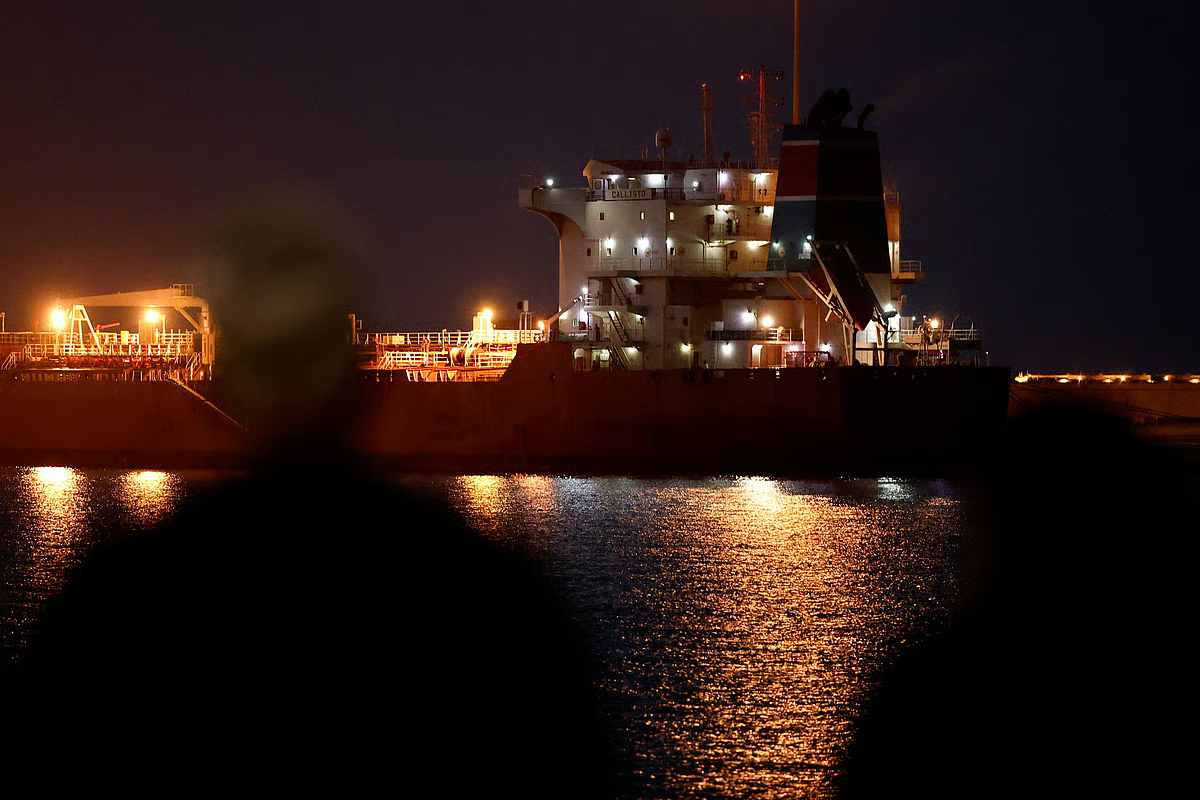
The IRGC Navy said on Thursday that four vessels involved in what it called illegal oil transfers in the northern Persian Gulf were tracked by its forces on Wednesday, then “simultaneously hit” and set alight. Three further vessels, it added, collided with mines west of the Strait of Hormuz. In the same statement the Guard warned the US military that continued provocations could trigger a wider response against its regional bases — a threat that, if executed, would move the confrontation from the shipping lanes to American troops.
Iranian state television reported that seven oil tankers caught fire or were damaged overnight, the largest single-day count of vessels damaged in the waterway since the start of the Iran war. The IRGC did not name the vessels or report casualties. Independent confirmation of the strikes, of responsibility for the fires, or of the mine locations was not available.
Why mines change the calculation
A missile stops a ship. A mine closes a lane. Sea mines are the cheapest, most asymmetric tool in Tehran’s arsenal and the most expensive to remove, and they make insurance — not hulls — the binding constraint on traffic. The IRGC has warned that ships transiting the Strait and the Gulf with navigation and identification systems switched off will face a “firm response,” effectively declaring that going dark is now the same as going unauthorised. The International Maritime Organization has warned the lane remains too unsafe to transit, while maritime data shows strikes in and around Hormuz this month already exceeded the total recorded in March, at the height of the war.
Why Washington is the stated target
The Guard accused the US of “inciting” ships to pass through mined waters, framing each wreck as American policy made visible. Iranian officials have separately said Washington has accepted some but not all of Tehran’s seven conditions, that other issues remain unresolved, and that Tehran is no longer engaging directly — leaving escalation, not negotiation, holding the wheel. US Central Command has earlier said its forces disabled a cargo vessel attempting to bypass the American naval blockade in the Gulf of Oman, and Secretary of State Marco Rubio has insisted Iran has “lost complete control” of the strait, pointing to at least 16.5 million barrels a day of crude leaving the Gulf in September.
Why the world economy is the hostage
Roughly a fifth of the world’s oil normally passes through Hormuz. Every burning hull raises war-risk premia, re-insurance costs and freight rates before a single barrel is lost — which is why a night of seven damaged ships can move crude without a formal blockade.
Why Nigeria should care
For Nigeria, Hormuz risk does not stay in the Gulf. Higher Brent, longer voyages from the Middle East and costlier tanker hire flow into landed fuel costs, transport and food prices within weeks — pressure on the naira and on the pump at a moment the economy can least absorb it. Iran’s oil exports themselves are only a fraction of the risk; the chokepoint is the exposure.
The next 48 hours will be measured in three places: whether a US base or asset is hit, whether minesweepers are deployed, and whether war-risk insurance premiums drop or double.
Discover more from LN247
Subscribe to get the latest posts sent to your email.

