
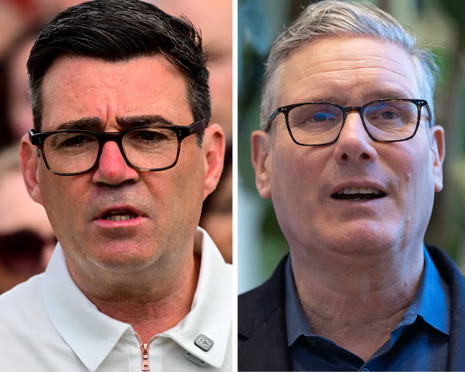
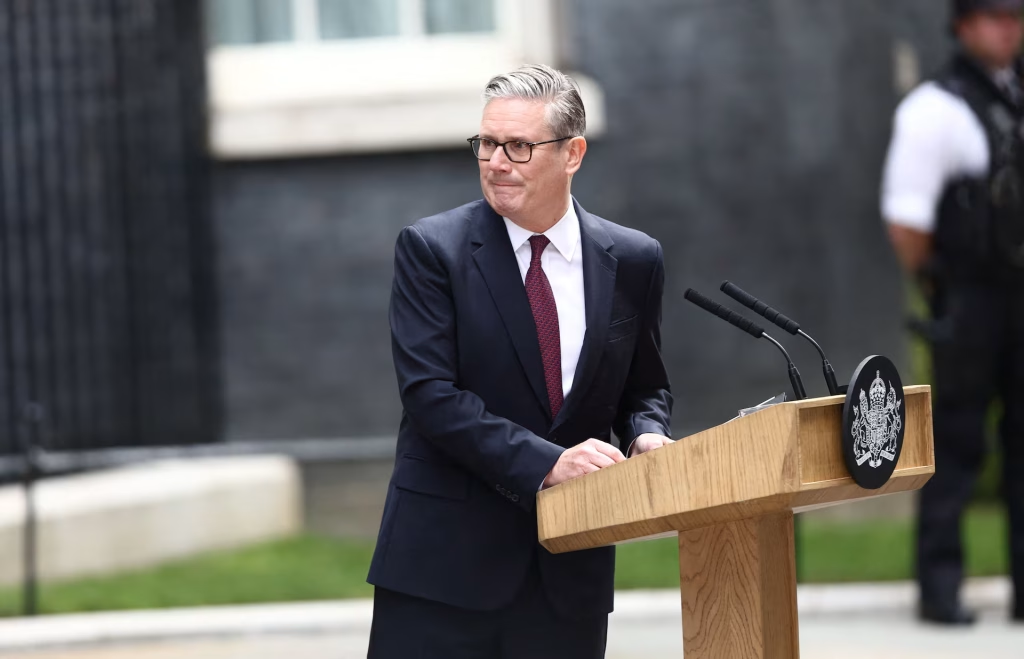
British Prime Minister Keir Starmer has announced his resignation, bringing an end to his leadership of both the Labour Party and the UK government.
Speaking during a press conference at Downing Street, Starmer said he would work to ensure an orderly transfer of power and pledged his full support to whoever succeeds him. His departure follows months of growing political pressure within Labour, concerns over the party’s electoral fortunes, and increasing calls from some lawmakers for a change in leadership.
The resignation marks a major turning point in British politics, coming just two years after Labour’s landslide victory in the 2024 general election returned the party to power after more than a decade in opposition.
Why Did Keir Starmer Resign?
Although Starmer had repeatedly insisted he would contest any leadership challenge, pressure within Labour intensified following disappointing local election performances and declining approval ratings.
Many party members became concerned about Labour’s ability to maintain public support ahead of future elections, particularly amid the growing popularity of Reform UK and mounting dissatisfaction among traditional Labour voters. Reports suggest that Starmer ultimately concluded that stepping aside would allow the party to reset and avoid a prolonged internal battle. Keir Starmer is understood to have accepted the party’s mood and decided to facilitate a smooth leadership transition.
His departure makes him one of several recent British prime ministers to leave office before completing a full parliamentary term, highlighting the continued instability that has characterised British politics in recent years.
Who Is Likely To Take Over?

Attention has quickly shifted to Andy Burnham, who is widely regarded as the leading contender to replace Starmer.
Burnham’s position strengthened considerably after his decisive victory in the Makerfield by-election, which saw him return to Parliament and remove the biggest obstacle to any future leadership bid.
The former cabinet minister has long been viewed as one of Labour’s most influential figures. He previously served as Health Secretary and Culture Secretary under Labour governments and has led Greater Manchester as mayor since 2017.
His profile rose nationally during the COVID-19 pandemic when he publicly challenged the Conservative government over regional lockdown restrictions and funding arrangements for northern England. He has also received praise for reforms to Greater Manchester’s public transport network through the Bee Network initiative.
Many Labour MPs see Burnham as someone capable of reconnecting the party with working-class voters and rebuilding support in areas where Labour has recently struggled.
While other names could emerge in a leadership contest, Burnham is currently considered the strongest candidate based on support among party members, MPs and sections of the wider Labour movement.
Why Burnham Is Seen As The Favourite
Burnham’s victory in Makerfield was more than just a by-election win; it was viewed by many within Labour as evidence that he remains one of the party’s most effective campaigners.
The result increased Labour’s vote share in the constituency and reinforced perceptions that Burnham could provide the fresh start many members believe the party needs.
For months, discussions about Labour’s future leadership had included Burnham’s name. However, until recently, he was unable to challenge for the leadership because he was not serving as a Member of Parliament.
His return to Westminster has now transformed him from a potential contender into the clear frontrunner.
What Happens Next?
Despite announcing his resignation, Starmer is expected to remain in office temporarily as caretaker Prime Minister while Labour completes its leadership transition.
The party is expected to open nominations for a leadership contest in the coming weeks, with a new leader likely to be chosen before Parliament returns from its summer recess.
If Burnham secures overwhelming support or emerges as the sole serious candidate, the transition could happen relatively quickly. However, if additional candidates enter the race, Labour members may be asked to vote in a full leadership election during the summer.
Will There Be A General Election?
At present, there is no requirement for a general election.
Under the UK parliamentary system, a governing party can replace its leader without seeking a fresh mandate from voters, provided it retains a majority in the House of Commons.
Labour continues to hold a substantial parliamentary majority following its 2024 election victory. This means that whoever emerges as the party’s new leader will automatically become Prime Minister.
Reports indicate that Burnham has no plans to call an early election should he become leader, meaning the next nationwide vote is still expected to take place in 2029.
A Defining Moment For Labour
Starmer’s resignation closes a significant chapter in Labour’s history. He will be remembered as the leader who guided the party back into government after years in opposition, but also as a prime minister whose tenure became increasingly overshadowed by internal dissatisfaction and political pressure.
The focus now turns to Andy Burnham and the leadership race that could determine Labour’s future direction. Whether Burnham ultimately secures the top job or faces a competitive contest, the coming weeks are likely to shape not only the future of the Labour Party but also the future course of British politics.
Discover more from LN247
Subscribe to get the latest posts sent to your email.

