South Africa tasted long-awaited success with victory in the World Test Championship final against Australia earlier this month, but there will be several new faces for the first test against Zimbabwe that starts in Bulawayo on Saturday.
Captain Temba Bavuma remains sidelined with a hamstring injury sustained during the five-wicket victory at Lord’s. In addition, key players Aiden Markram, Ryan Rickelton, Tristan Stubbs, and fast bowlers Kagiso Rabada, Marco Jansen, and Lungi Ngidi have been rested. Ngidi is expected to return for the second Test, but with seven of the Lord’s XI unavailable, the Proteas will present a new-look team eager to prove themselves.
Young and aggressive batters Matthew Breetzke, Dewald Brevis, and 19-year-old Lhuan-dre Pretorius are in contention for starting roles, with at least two likely to feature. Experienced domestic performer Lesego Senokwane could also make his international debut.
Given the typically slow nature of the Bulawayo pitch, stand-in captain Keshav Maharaj is expected to lead a spin-heavy attack, alongside off-spinning all-rounder Prenelan Subrayen. Talented 19-year-old pacer Kwena Maphaka, who debuted earlier this year against Pakistan, could also be handed an opportunity, while uncapped seamer Codi Yusuf is included in the squad.
There are a lot of guys looking to prove why they’ve been selected, based on their strong performances over recent domestic seasons, said all rounder Wiaan Mulder. We see ourselves as world champions now, and that’s the standard we want to maintain. The newcomers stepping into the roles of players like Ricks (Rickelton) and Marco (Jansen) will definitely raise the level of competition within the squad.
Zimbabwe, too, will be without several key players. Batter Ben Curran and pace spearhead Richard Ngarava are both out injured, while veteran all-rounder Sikandar Raza has opted to play in the United States’ Major League Cricket during this period.
There’s a lot of energy in the squad. The guys are excited and up for the challenge, said Zimbabwe head coach Justin Sammons, a native of South Africa. They’re eager to test themselves and show what they’re capable of. There’s a real desire to make a statement in the coming weeks.
Historically, South Africa has dominated the Test encounters between the two sides, winning eight of their previous nine meetings. The only draw came in 2001 also the last time the teams met in Bulawayo.
Senator Jim Risch, Chairman of the US Senate Foreign Relations Committee, has accused the Kenyan government of supporting Sudan’s Rapid Support Forces (RSF), warning that such actions could facilitate genocide.
In a statement released Friday, Risch voiced serious concern over Kenya’s decision to host RSF leaders in Nairobi. The Sudanese paramilitary group, led by Mohamed Hamdan Dagalo, widely known as ‘Hemedti,’ is engaged in a violent power struggle with Sudan’s national army and is accused of committing grave atrocities across the country.
The senator’s remarks come amid rising controversy over reports that RSF operatives have been using Nairobi as a base to prepare for the establishment of a rival administration in Sudan, a move seen as escalating the country’s ongoing civil war.
Risch, who played a leading role in US congressional efforts to classify RSF-led atrocities as genocide, a designation adopted by the US government in January 2025—condemned Kenya’s involvement.
“Kenya, a longstanding US ally, is aiding the RSF in legitimizing their genocidal campaign under the pretense of peace-making,” Risch said. “This is an outrageous attempt to distort reality and will do nothing to stop the bloodshed.”
The allegations have triggered widespread condemnation from human rights groups and the Sudanese government. A coalition of 13 organizations, including the Kenya Human Rights Commission (KHRC), has urged the Kenyan government to expel all RSF members currently in the country. In a statement issued on February 21, the coalition demanded that Kenya withdraw its support for the RSF and issue a formal apology to the Sudanese people, accusing Nairobi of bias in the peace process.
The backlash follows Kenya’s controversial decision to allow RSF leaders to meet in Nairobi, where they are reportedly planning to form a so-called “Government of Peace and Unity” to rule over territories under their control in Sudan.
Sudan’s government reacted strongly, accusing Kenya of violating its sovereignty and recalling its ambassador from Nairobi. Vice-Chair of Sudan’s Sovereign Council, Malik Agar, condemned Kenya’s actions as hostile and provocative.
“Why is Kenya interfering in Sudan’s internal affairs and expecting no consequences?” Agar questioned in a letter addressed to President William Ruto.
In response to the mounting criticism, Kenya’s Cabinet Secretary for Foreign Affairs, Musalia Mudavadi, defended the country’s position. He stated that Kenya remains committed to fostering a peaceful resolution to the conflict in Sudan.
“Kenya reaffirms its solidarity with the people of Sudan as they determine their future governance through inclusive dialogue,” Mudavadi said.
However, this position has sparked further debate, with critics arguing that Kenya’s actions compromise its neutrality and credibility as a mediator in the Sudanese peace process.
Republicans in the U.S. Congress scrambled on Thursday to resolve nettlesome tax and health care provisions in their sweeping tax-cut and spending bill on Thursday as President Donald Trump pressed them to pass it by a July 4 deadline.
Trump plans to promote the $2.4 trillion package at an afternoon White House event that will feature truck drivers, firefighters, ranchers and other workers who say they would benefit from the bill.
But Senate Republicans have yet to produce their version of their legislation ahead of a possible weekend vote, and the overall shape of the bill appeared more uncertain after a nonpartisan referee ruled that several healthcare provisions violated the complex process Republicans are invoking to bypass Democratic opposition.
Those elements collectively accounted for more than $250 billion in health care cuts, according to Democratic Senator Ron Wyden of Oregon. Democrats have lined up against the bill, portraying it as a wasteful giveaway to the wealthiest Americans.
It was unclear whether Republicans could opt to rework the bill to comply with the complex budget rules, as they have already done with some elements, or seek to override the decision by the Senate parliamentarian.
The bill encompasses much of Trump’s domestic agenda. It would extend his 2017 tax cuts, boost immigration enforcement, zero out green-energy incentives and tighten food and health safety-net programs.
Republicans who control both chambers of Congress broadly support the package, and have already passed it out of the House of Representatives. But they can afford to lose no more than three votes in either chamber, and they remain at odds over several provisions — notably a proposed tax break for state and local tax payments and a tax on health care providers that some states use to boost the federal government’s contribution to the Medicaid health plan.
The bill would limit those “provider taxes,” which nonpartisan watchdogs portray as an accounting trick that drives up Medicaid costs. But rural hospitals and other health providers warn that those cuts could force them to scale back operations or go out of business.
Buildings still burnt and shopkeepers sifted through the charred remains of their businesses in central Nairobi on Thursday, following a night of widespread looting and arson triggered by youth-led protests that turned violent. Amnesty International Kenya reported that 16 people were killed during the unrest.
Thousands of demonstrators flooded the streets on Wednesday to commemorate the anniversary of last year’s fatal protests and to demand justice for blogger Albert Ojwang, who died earlier this month in police custody following a complaint by a senior law enforcement officer.
According to Irungu Houghton, Executive Director of Amnesty Kenya, all 16 victims died from gunshot wounds believed to have been inflicted by police. However, Kenyan police have yet to confirm the number of casualties or comment on any use of firearms. Police spokesperson Muchiri Nyaga did not respond to media inquiries.
The protests largely driven by young people who identify collectively as Gen Z,also reignited outrage over the government’s proposed tax increases. Over 60 people have died in related demonstrations throughout 2024.
In Nairobi, police deployed tear gas and water cannons in an effort to disperse demonstrators, while clashes were also reported in several other towns. A Reuters team witnessed multiple injuries during confrontations between protesters and law enforcement.
By Thursday morning, smoke rose from at least 10 buildings set ablaze in the downtown area. Among the damaged properties was a structure owned by Ibrahim Hamisi, who urged authorities to open dialogue with Kenya’s youth.
Look at what they destroyed. This happened because of Gen Z, he said. The government should try sitting down and talking with them.
Nearby, shopkeeper Josephine Apondi recounted how looters stole phones and electronics worth 2 million Kenyan shillings (approximately $15,500) from her store.
Times are really hard in our country. Sometimes you work from morning to evening without making a sale,” she said. And now this everything we’ve invested in, gone.
Local media reported similar incidents of looting and destruction in at least 26 other counties where protests were held.
In a related development, Kenyan prosecutors have approved murder charges against six individuals, including three police officers, in connection with the death of 31-year-old blogger Albert Ojwang. He died while in custody after his arrest, which stemmed from a complaint lodged by Deputy National Police Chief Eliud Lagat.
MultiChoice Nigeria has reduced the cost of its DStv decoder by 50 per cent, lowering the price from ₦20,000 to ₦10,000.
The company explained that the decision is aimed at expanding its customer base and addressing a decline in subscriptions.
In a statement issued on Tuesday, the company’s Chief Executive Officer, John Ugbe, said the initiative is part of efforts to reward loyal customers and offer greater value to subscribers.
“We want to ensure our customers feel appreciated and have access to the best entertainment every day. The ‘We Got You’ campaign is about making premium content more accessible and showing that DStv offers something for everyone, not just football fans.
“This means more channels, more shows, and more reasons to tune in every day,” the statement added.
MultiChoice also unveiled a promotional deal that offers subscribers a complimentary upgrade to the next DStv package tier if they pay for their current plan in full between June 16 and July 31, 2025.
The company noted that both the price cut and the free upgrade initiative are in response “to the noticeable economic impact on the everyday lives of Nigerians.”
This development follows the company’s loss of 1.4 million subscribers between March 2023 and March 2025.
It is worth noting that MultiChoice Nigeria had increased the prices of its DStv and GOtv packages three times within a year initially in April 2023, then in November 2023, and most recently in April 2024, with the latest adjustment taking effect on May 1.
South Africa recorded foreign direct investment (FDI) inflows of 11.7 billion rand (approximately $661.46 million) in the first quarter of 2025, marking a significant increase from the 7.5 billion rand registered in the final quarter of 2024, according to data released by the South African Reserve Bank (SARB) on Thursday.
In its latest Quarterly Bulletin, the central bank attributed the boost in FDI to increased equity investments by non-resident parent companies in their South African subsidiaries.
However, portfolio investments saw a sharp reversal, with outflows totalling 53.7 billion rand between January and March. This contrasts with the 33.4 billion rand in inflows recorded during the previous quarter.
The SARB explained that the portfolio investment outflows were “primarily driven by non-residents’ net disposal of domestic equity securities, as well as the redemption of an international bond by a public corporation.
Storm of controversy has swirled around Rita Ushie Uguamaye, popularly known as Raye, a National Youth Service Corps (NYSC) member serving in Lagos, following her viral TikTok video criticizing President Bola Tinubu’s administration.
The video, posted in March 2025 via her handle @talktoraye, saw Raye tearfully lament Nigeria’s economic hardship, skyrocketing inflation, and the inadequacy of the NYSC allowance, while describing Tinubu as a “terrible leader” and Lagos as a “smelling state” with “poor living conditions.”
The clip sparked nationwide attention, drawing both support and backlash, but recent claims that the NYSC extended her service year by two months as punishment have ignited fresh debate.
Here’s what we know about whether her service was extended, why it might have been, and what could happen next.
Was Raye’s Service Year Extended?
The question of whether Raye’s NYSC service year was extended remains contentious, with conflicting reports muddying the waters.
On June 24, 2025, multiple reports stated that the NYSC had extended Raye’s service by two months, allegedly as a punitive measure for her outspoken criticism.
Jonathan Ugbal, South-South Coordinator of the Take It Back Movement, said that Raye was summoned to a disciplinary panel at the NYSC orientation camp in Iyana Ipaja, Lagos, on June 18.
He claimed she apologized to officials for the public backlash her video caused, but was later informed by her mother of the extension, leaving her emotionally distressed.
“Upon her arrival at Iyana Ipaja last Wednesday without any formal letter, she was met by the Local Government Instructor who spoke to her and asked her to return this week despite the scarce resources she burned to get there.
“She went there eventually, and she faced them, apologising to the staff who felt hurt due to the backlash they received from the public.”
“Her mother called me moments ago to inform me that she called crying over the phone that her service year has been extended by two months. I have reached out to her, but she is not in a good frame of mind to speak,” Jonathan added.
However, the NYSC has firmly denied these claims. Carol Embu, Acting Director of Press and Public Relations, stated on June 24 that no extension had been issued, emphasizing that such decisions are made only during the formal passing-out process and follow strict guidelines outlined in the NYSC Bye-Laws.
“I don’t understand how she will get an extension if she is still serving,” Embu stated.
“NYSC is not an irresponsible organisation; we work with rules and regulations.”
Has Raye Herself Confirmed The Extension?
As of June 26, 2025, Raye has not posted any updates on her social media platforms, confirming a service year extension. This silence fuels uncertainty, as the lack of direct confirmation from Raye or an official NYSC statement leaves the matter unresolve
Why Might Her Service Have Been Extended?
If the extension is true, it could stem from Raye’s actions violating the NYSC Bye-Laws (Revised 2011), which govern corps member conduct. Specifically, Section 3(I) prohibits addressing the press or engaging in social media activities related to NYSC without the State Coordinator’s written consent.
A corps member found guilty of this by the Camp Court faces a potential extension of service for 30 days on half pay.
Raye’s viral video, which criticized the government and indirectly implicated the NYSC by questioning the scheme’s benefits, could be interpreted as unauthorized media engagement.
Additionally, her comments may have been seen as “rudeness to constituted authority,” another violation under Section 3(III), which carries a penalty of at least 30 days’ extension with half pay.
The Bye-Laws also allow for disciplinary actions like service extensions for misconduct, decided by the Corps Disciplinary Committee during primary assignment or at passing out.
Raye’s summoning to the Iyana Ipaja camp on June 18, as reported by Ugbal, suggests a disciplinary process was initiated, possibly linked to these violations.
However, the NYSC’s denial and the lack of an official statement addressing Raye’s earlier claims of threats from officials in March when she alleged pressure to delete her video raise questions about transparency.
Critics argued that if the extension is false, the organization should issue a clear public statement to dispel rumors.
“Punishing a corps member for speaking out against economic hardship sends a chilling message to young Nigerians,” one report noted, highlighting concerns about freedom of expression under Section 39 of Nigeria’s 1999 Constitution.
What Will Happen Next?
The next steps hinge on whether the extension is confirmed. If true, Raye could face an additional two months of service, likely with reduced pay, as per NYSC guidelines.
Activists like Omoyele Sowore, who has vowed to protest at the NYSC passing-out parade if Raye is not allowed to complete her service “without let or hindrance,” may escalate public pressure.
Sowore’s involvement, alongside support from figures like former Vice President Atiku Abubakar, has already amplified the case.
Civil rights groups could pursue legal action, arguing that the extension infringes on Raye’s constitutional right to free speech, potentially leading to a broader national debate about NYSC’s disciplinary powers.
If the NYSC’s denial holds and no extension is imposed, Raye is expected to complete her service in July 2025, as she had one month left as of June.
However, her silence on the matter and the NYSC’s failure to address her earlier allegations of threats could keep the controversy alive.
“The NYSC must be transparent,” said Chinomso Thelma Momoh, a journalist. “Young people should feel safe expressing their views without fear of institutional backlash.”
The NYSC may also face pressure to clarify its disciplinary process, especially given Brigadier General O.O. Nafiu’s June 20 statement cautioning corps members against criticizing the government or NYSC on social media.
Raye’s story underscores the tension between institutional authority and individual expression, with public scrutiny likely to demand clarity in the weeks ahead.
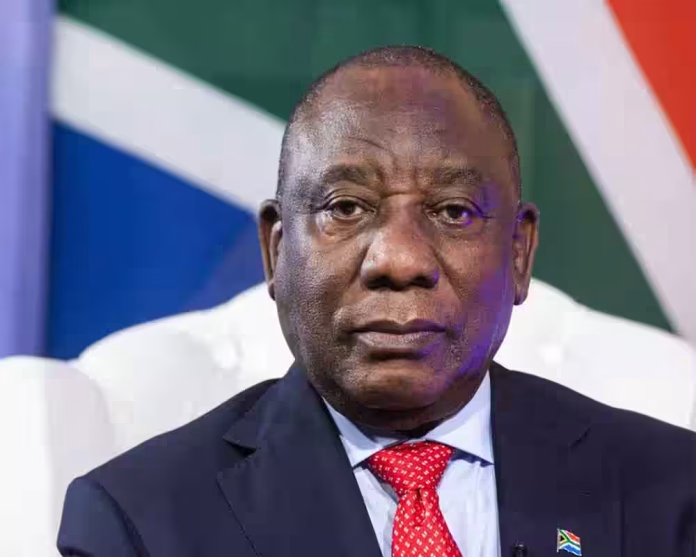
South African President Cyril Ramaphosa has dismissed Andrew Whitfield, a member of the Democratic Alliance (DA), from his role as Deputy Minister of Trade, Industry, and Competition. The DA is a key coalition partner in the unity government led by Ramaphosa’s African National Congress (ANC).
In a statement released on Thursday, the Presidency clarified that the dismissal does not signal a broader cabinet reshuffle.
Responding to the move, a DA spokesperson described the president’s decision as “a very serious development” and confirmed that the party’s Federal Executive would convene later on Thursday to deliberate on the matter.
No official reason was provided by the Presidency for Whitfield’s removal.
The ANC and DA South Africa’s two largest political parties formed a coalition government following last year’s election, in which the ANC lost its parliamentary majority. Since then, tensions have emerged between the two parties over the national budget and differing approaches to addressing racial inequality, a legacy of apartheid.
The DA has said it will issue a formal response to Whitfield’s dismissal following its leadership meeting.
President Bola Tinubu has officially signed into law four key tax reform bills aimed at overhauling Nigeria’s fiscal and revenue systems.
The signing took place at the Aso Rock Presidential Villa in Abuja at approximately 3:20 p.m. local time on Thursday.
The four pieces of legislation are the Nigeria Tax Bill, the Nigeria Tax Administration Bill, the Nigeria Revenue Service (Establishment) Bill, and the Joint Revenue Board (Establishment) Bill.
These bills were enacted by the National Assembly following extensive consultations with various stakeholders and interest groups.
According to presidential spokesperson Bayo Onanuga, “When the new tax laws become operational, they are expected to significantly transform tax administration in the country, leading to increased revenue generation, improved business environment, and a boost in domestic and foreign investments.”
Present at the signing were the Senate President, the Speaker of the House of Representatives, the Senate and House Majority Leaders, and the chairpersons of the Senate and House Committees on Finance.
Other dignitaries included the Chairman of the Governors Forum, Kwara State Governor Abdulrahman Abdulrazaq; the Chairman of the Progressives Governors Forum, Imo State Governor Hope Uzodinma; the Minister of Finance and Coordinating Minister of the Economy, Wale Edun; and the Attorney General of the Federation, Lateef Fagbemi.
One of the laws, the Nigeria Tax Bill (Ease of Doing Business), is designed to unify the country’s fragmented tax laws into a single, streamlined statute.
“By reducing the multiplicity of taxes and eliminating duplication, the bill will enhance the ease of doing business, reduce taxpayer compliance burdens, and create a more predictable fiscal environment,” the Presidency noted in a statement on Wednesday night.
The Nigeria Tax Administration Bill, the second law, seeks to create a standardized legal and operational framework for tax administration across all tiers of government.
The third law, the Nigeria Revenue Service (Establishment) Bill, repeals the existing Federal Inland Revenue Service Act and introduces a new, more autonomous and performance-oriented revenue body — the Nigeria Revenue Service.
It outlines an expanded mandate for the NRS, including the collection of non-tax revenues, and establishes guidelines for transparency, accountability, and operational efficiency.
The fourth piece of legislation, the Joint Revenue Board (Establishment) Bill, provides for a structured framework to enhance collaboration among federal, state, and local revenue authorities. It also includes vital oversight provisions, such as the creation of a Tax Appeal Tribunal and the establishment of an Office of the Tax Ombudsman.
With the 2027 Nigerian presidential election on the horizon, the All Progressives Congress (APC) is embroiled in a heated contest over who will run alongside President Bola Ahmed Tinubu as his vice-presidential candidate.
The decision, expected after the APC national convention in 2026, as confirmed by Special Adviser on Information and Strategy Bayo Onanuga, has sparked intense speculation about whether Vice President Kashim Shettima will retain his position or be replaced.
A chaotic APC North-East stakeholders’ meeting in Gombe on June 15, 2025, where Shettima’s omission from endorsements triggered violent protests, has intensified the debate.
As an emerging opposition coalition, the All Democratic Alliance (ADA), led by Atiku Abubakar, Peter Obi, and prominent figures like Nasir El-Rufai and David Mark, gears up to challenge Tinubu, the choice of running mate could redefine the APC’s electoral strategy.
President Tinubu faces mounting pressure to navigate party dynamics and regional strategies as he prepares to select his 2027 running mate after the 2026 APC convention.
Speculation swirls around potential replacements, particularly from the vote-rich North-West, as the All Democratic Alliance’s plan to register a new party, uniting Atiku Abubakar’s northern influence with Peter Obi’s southern appeal, heightens the stakes, especially in key regions like Kano.
Here are the key contenders vying for Tinubu’s running mate position in 2027.
Rabiu Kwankwaso
Rabiu Kwankwaso, former Kano State governor (1999–2003, 2011–2015), Minister of Defence (2003–2007), and Senator for Kano Central (2015–2019), is a leading contender.
As the national leader of the New Nigeria Peoples Party (NNPP), Kwankwaso commands the influential Kwankwasiyya movement, a grassroots force in Kano and parts of the North-West.
Sources indicate Tinubu is actively wooing Kwankwaso to rejoin the APC, citing his ability to mobilize voters in Kano, a state with 44 local governments.
“He has the experience and support base to ensure Tinubu’s re-election,” a party insider noted, suggesting that APC National Chairman Abdullahi Ganduje’s failure to endorse Shettima in Gombe was a strategic nod to Kwankwaso’s negotiations.
Kwankwaso’s influence was evident in 2023, when his NNPP candidacy split the opposition vote, indirectly aiding Tinubu’s victory in Kano.
However, his rivalry with Ganduje, a fellow Kano political leader, poses a challenge. A party source remarked, “Can Tinubu bridge the Kwankwaso-Ganduje divide to secure Kano’s loyalty?”
Additionally, Kwankwaso’s supporters may resist a vice-presidential role, preferring he pursue the presidency in 2031, when power is expected to return to the North. With the ADA’s coalition threatening to consolidate opposition votes, Kwankwaso’s inclusion could be a game-changer.
Barau Jibrin
Deputy Senate President Barau Jibrin, a Kano North senator since 2015 and a National Assembly veteran since 2003, is a strong candidate backed by the Northern Nigeria Progressive Youth Assembly (NNPYA).
On June 25, 2025, Jibrin declared, “Whatever Tinubu asks me to do, I’ll do. I’m loyal to him, 100%,” crediting the President for securing his 2023 Senate ticket and elevation to Deputy Senate President.
The NNPYA praised Jibrin’s role in delivering significant APC votes in Kano, where his influence ensured nearly all House of Representatives seats went to the party.
“Jibrin’s loyalty and regional pull make him a marketable choice,” the group stated, emphasizing the North-West’s electoral importance.
Jibrin, calling himself a “progressive to the core,” described Tinubu as his “political father” who resolved political disputes in Kano.
However, he urged supporters to focus on governance, labeling 2027 campaigns “premature.” A party chieftain noted, “Jibrin’s loyalty is unquestionable, but does his influence extend beyond Kano to rival Kwankwaso’s broader network?”
His candidacy could solidify APC’s North-West base, but his limited national profile compared to Kwankwaso’s Kwankwasiyya movement may be a hurdle.
Yakubu Dogara
Yakubu Dogara, former House Speaker (2015–2019) from Bauchi State, brings a unique perspective as a North-East Christian.
On June 24, 2025, the North-East Coalition of APC Support Groups endorsed him as a “unifying” candidate, citing his leadership experience and ability to appeal to Christian voters.
Dogara, who joined the APC in 2020 after leaving the PDP, opposed the 2023 Muslim-Muslim ticket but was recently appointed chairman of the National Credit Guarantee Company, signaling Tinubu’s trust. His Christian identity could counter criticism of the 2023 ticket, particularly in the North Central and South, where religious balance is a concern.
However, sources warn that a North-East Christian may struggle to retain support in the Muslim-majority North-West and North-East, especially with the ADA’s Atiku leveraging northern Muslim voters.
A party strategist remarked, “Dogara’s appointment shows Tinubu values him, but can he deliver the northern votes needed to counter the opposition?” His candidacy hinges on whether Tinubu prioritizes religious inclusivity over regional vote maximization.
Nuhu Ribadu
Nuhu Ribadu, the current National Security Adviser and former EFCC Chairman (2003–2007), is a North-East Muslim from Adamawa State. Known for his anti-corruption crusade under President Olusegun Obasanjo.
Ribadu has a strong national profile but a weak electoral record, having lost presidential (2011) and gubernatorial (2015, 2019) bids.
Speculation about his candidacy surfaced in 2025, though a reported APC Adamawa endorsement was clarified as support for his NSA role, not a political bid.
Retaining a North-East candidate like Ribadu may not address the APC’s need to strengthen its North-West base.
His rumored 2031 presidential ambition, denied in February 2025, adds complexity, as some see him as a long-term contender rather than a 2027 VP.
Other Contenders
Muhammad Inuwa Yahaya
As Gombe State governor since 2019 and Chairman of the North East Governors Forum, Yahaya is a rumored contender.
He publicly endorsed the Tinubu-Shettima ticket in Gombe, but sources suggest this was strategic, masking his interest in the VP slot. His regional influence is limited compared to North-West candidates, and Gombe’s smaller voter base reduces his appeal.
“Yahaya’s governorship gives him leverage, but does he have the national clout to compete?” an APC source asked.
Abubakar Badaru
Former Jigawa governor (2015–2023) and current Minister of Defence, Badaru is a North-West Muslim seen as a “safe pick” for continuity with the 2023 ticket’s religious composition.
His experience as governor and minister bolsters his credentials, but he lacks the grassroots fervor of Kwankwaso or Jibrin.
Simon Lalong
Former Plateau governor (2015–2023) and current senator for Plateau South, Lalong is a North Central Christian who served as Tinubu’s Minister of Labour until moving to the Senate.
His selection could appease critics of the Muslim-Muslim ticket, particularly in the North Central, where the APC won four states in 2023. However, his regional base may limit his appeal in the vote-rich North-West.
Sani Musa Senator for Niger East since 2019, Musa is a lesser-known North Central contender with limited national visibility. His inclusion in VP discussions stems from his APC loyalty, but his influence pales compared to others.
What Lies Ahead?
The Gombe chaos, where Shettima’s supporters shouted “No Shettima, no APC in the North-East” and attacked party leaders, highlights the risks of replacing the Vice President.
Former Minister Adebayo Shittu warned, “Dropping Shettima could fracture the party. If it isn’t broken, don’t fix it.”
Political analyst Dr. Okey Ikechukwu cautioned that public disputes undermine party discipline, questioning whether “Tinubu retains the freedom to choose his running mate.” Onanuga clarified that Tinubu’s history of changing deputies as Lagos governor—replacing Kofo Bucknor-Akerele with Femi Pedro—does not foreshadow Shettima’s fate, emphasizing that no decision has been made.
The ADA’s emergence, uniting Atiku, Obi, and figures like El-Rufai, Tambuwal, and David Mark, poses a formidable challenge. Their plan to register as a new party could consolidate northern and southern votes, threatening APC’s hold on key regions like Kano.
Tinubu’s strategists are banking on a North-West candidate like Kwankwaso or Jibrin to counter this, but retaining Shettima could preserve party unity.
Will Tinubu prioritize regional votes, religious balance, or loyalty? As the 2026 convention approaches, his decision will shape the APC’s 2027 prospects and the 2031 succession, determining Nigeria’s political trajectory.
To provide the best experiences, we use technologies like cookies to store and/or access device information. Consenting to these technologies will allow us to process data such as browsing behaviour or unique IDs on this site. Not consenting or withdrawing consent, may adversely affect certain features and functions.
Functional
Always active
The technical storage or access is strictly necessary for the legitimate purpose of enabling the use of a specific service explicitly requested by the subscriber or user, or for the sole purpose of carrying out the transmission of a communication over an electronic communications network.
Preferences
The technical storage or access is necessary for the legitimate purpose of storing preferences that are not requested by the subscriber or user.
Statistics
The technical storage or access that is used exclusively for statistical purposes.The technical storage or access that is used exclusively for anonymous statistical purposes. Without a subpoena, voluntary compliance on the part of your Internet Service Provider, or additional records from a third party, information stored or retrieved for this purpose alone cannot usually be used to identify you.
Marketing
The technical storage or access is required to create user profiles to send advertising, or to track the user on a website or across several websites for similar marketing purposes.