Ademola Lookman had a bittersweet return from injury in Atalanta’s Champions League play-off against Club Brugge. The Nigerian forward made an instant impact, scoring within 42 seconds of coming on in the second half. However, his missed penalty proved costly as Atalanta crashed out of the competition.
Gasperini’s Blistering Criticism
Atalanta coach Gian Piero Gasperini did not hold back in his post-match press conference, openly criticizing Lookman for taking the penalty.
“Lookman was not supposed to take that penalty; he is one of the worst penalty takers I’ve ever seen,” Gasperini said.
He further revealed that the designated takers, Mateo Retegui and Charles De Ketelaere, were available, but Lookman, riding on the momentum of his goal, took it upon himself to take the shot. His weak, central effort was easily saved by Simon Mignolet, draining the team’s morale and ending hopes of a comeback.
Atalanta’s Penalty Woes
Lookman’s miss is just the latest in a season riddled with Atalanta’s struggles from the spot. The club has had a poor penalty conversion rate across all competitions:
Mateo Retegui missed against Arsenal and Torino in games that ended 0-0.
Mario Pasalic also failed to convert against Torino in a 2-1 defeat.
Lookman’s latest miss against Brugge further highlighted the team’s penalty issues.
Only Retegui (2 out of 4) and De Ketelaere have successfully converted penalties this season.
Lookman’s History of Penalty Controversies
This isn’t the first time Lookman has drawn criticism for his penalty-taking decisions. His infamous Panenka attempt for Fulham against West Ham in November 2020 was widely ridiculed and remains one of the most talked-about penalty misses in recent memory.
Gasperini’s Frustration with Rafael Toloi
Lookman wasn’t the only Atalanta player to draw Gasperini’s ire. Captain Rafael Toloi saw red late in the game after aggressively chasing down Maxim de Cuyper, needing officials to hold him back from a physical altercation.
Gasperini condemned the incident, saying:
“That was an ugly incident. Atalanta must leave the Champions League with dignity, having played great games against the likes of Real Madrid, Arsenal, and Barcelona.”
What’s Next for Atalanta?
Despite their Champions League exit, Atalanta still have plenty to play for. They remain in contention for a top-four finish in Serie A, which would secure a spot in next season’s Champions League.
While unexpected penalty takers stepping up is common in football, a manager calling out his player as “one of the worst penalty takers I’ve ever seen” is rare. Lookman, who was instrumental in Atalanta’s Europa League triumph less than a year ago, now finds himself at a crossroads with the club.
The road ahead remains uncertain, but one thing is clear—Atalanta is no longer satisfied with simply competing in European tournaments; they expect to win.
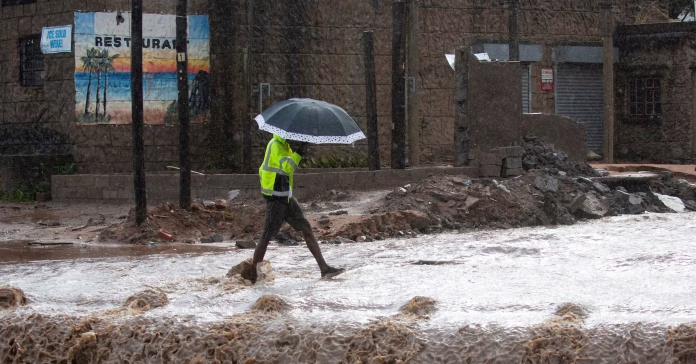
Heavy rains have been battering Johannesburg since the beginning of the week, with no immediate signs of relief. Now entering its fourth consecutive day, the relentless downpour has heightened concerns over potential flooding, particularly in vulnerable areas. Emergency services have ramped up their efforts to mitigate potential disasters and ensure residents’ safety. The Johannesburg Emergency Management Services (EMS) remains on high alert, monitoring the situation closely.
Emergency Management Services on High Alert
Despite the intense downpour, Robert Mulaudzi, spokesperson for Johannesburg EMS, reassures the public that no major incidents requiring evacuation have been reported.
“So far, we have been fortunate that no major incidents have been reported that required the evacuation of residents. While we continue to monitor the situation closely, our emergency teams remain on high alert,” Mulaudzi told Sowetan Live.
Challenges Faced in Flood-Prone Areas
One of the primary concerns during floods in Johannesburg is the vulnerability of informal settlements. These communities, often located near riverbanks and floodplains, face a heightened risk of being affected by rising water levels.
“The primary concern is informal settlements, as these areas are often located near river streams and floodplains, making them highly vulnerable during severe thunderstorms. Residents in these areas face a higher risk of being affected by flooding,” Mulaudzi explained.
EMS Preparedness and Resource Allocation
Johannesburg EMS remains fully equipped to handle flood-related emergencies. According to Mulaudzi, there are no shortages in terms of equipment and resources for the aquatic rescue unit, ensuring that response teams are well-prepared for any situation.
“We do not have any shortages in terms of equipment and resources for our aquatic rescue unit. Our teams are well prepared to handle flood-related emergencies,” he stated.
Safety Measures for Residents
With the risk of flooding increasing, EMS has issued safety guidelines to help residents minimize potential dangers. Motorists are urged to exercise caution on the roads, especially in flood-prone areas.
“Motorists should exercise caution while driving by extending their following distance and avoiding flooded roads or low-lying bridges. Residents in low-lying areas must avoid crossing river streams during their daily activities,” Mulaudzi advised.
He also emphasized the importance of avoiding construction in flood-prone areas, warning that homes in such locations could be swept away during severe thunderstorms.
“Most importantly, people should avoid building homes in flood-prone areas, as they could be swept away during severe thunderstorms. EMS continues to monitor weather conditions and urges residents to follow safety guidelines to prevent potential disasters,” he added.
A History of Flooding in Johannesburg’s Informal Settlements
Flooding has been a recurring issue in Johannesburg, particularly in informal settlements where drainage infrastructure is often inadequate. In 2016, severe flooding displaced hundreds of residents in areas like Alexandra and Diepsloot, leaving many without homes and necessitating large-scale rescue efforts.
Similarly, in December 2022, torrential rains led to significant flooding in Soweto and other low-lying areas, forcing emergency services to evacuate stranded individuals. These past disasters highlight the ongoing risks faced by informal communities and the need for long-term urban planning solutions.
As Johannesburg grapples with continued heavy rainfall, the efforts of EMS remain crucial in mitigating flood-related emergencies. While authorities have assured the public of their preparedness, residents must also take proactive steps to safeguard their lives and properties. The city’s history with flooding underscores the importance of long-term urban planning and improved drainage systems to prevent recurring disasters.
In a decisive move to curb bullying in schools, the Federal Ministry of Education (FME) has inaugurated a seven-member committee tasked with addressing bullying incidents nationwide.
The Minister of Education, Dr. Maruf Olatunji Alausa, emphasized the psychological toll of bullying on students, stressing the urgency of effective intervention. According to him, the committee will not only investigate reported cases but also ensure swift action against perpetrators.
This development complements the work of an existing 21-member team dedicated to formulating a National Policy on Anti-Bullying, reinforcing the government’s commitment to fostering a safe and conducive learning environment.
To encourage confidential reporting, the ministry has introduced multiple reporting channels, including a hotline (09012660044), email (antibullying@education.gov.ng), and a WhatsApp contact (08052536133).
Dr. Alausa reaffirmed the ministry’s zero-tolerance stance on bullying, urging school administrators, teachers, parents, and students to actively support the initiative. He added that this effort aligns with the Federal Government’s Renewed Hope Agenda, which prioritizes education as a key driver of national development.
Public Engagement Encouraged
The ministry called on all stakeholders in the education sector to utilize the provided reporting channels and cooperate in ensuring the success of the initiative.
Valentine’s Day is one of the most celebrated days in the world, marked by romantic gestures, gift-giving, and declarations of love. But have you ever wondered why February 14 is dedicated to love? What’s the origin of this special day, and how did it evolve into the global celebration we know today?
Who Was St. Valentine?
There isn’t just one Valentine associated with the origins of this holiday—there are actually multiple St. Valentines recognized by the Catholic Church. However, the most famous legend surrounds a priest named Valentine who lived during the reign of Roman Emperor Claudius II in the 3rd century.
Claudius II had banned marriages for young men, believing that single men made better soldiers. Valentine defied this decree and secretly performed marriages for young lovers. When his actions were discovered, he was imprisoned and later executed on February 14, around the year 269 AD. According to some stories, before his death, he wrote a letter to a young girl (possibly the jailer’s daughter) and signed it “From your Valentine,” a phrase still popular today.
The Pagan Connection: Lupercalia Festival
Before it became associated with love, February 14 was linked to the ancient Roman festival of Lupercalia, celebrated from February 13-15. This fertility festival was dedicated to Faunus, the Roman god of agriculture, and included rituals meant to ward off evil spirits and promote fertility. As Christianity spread, Pope Gelasius I outlawed Lupercalia in the 5th century and replaced it with St. Valentine’s Day, giving it a more romantic and spiritual meaning.
The Evolution of Valentine’s Day
By the Middle Ages, Valentine’s Day became linked to romantic love, particularly in England and France. The poet Geoffrey Chaucer played a significant role in this association. In his poem Parliament of Fowls (1382), he linked February 14 with the pairing of birds, suggesting it was a day for courtship. This romantic idea caught on, and people began writing love notes to their sweethearts, a tradition that evolved into modern Valentine’s cards.
The Rise of Valentine’s Day Cards
The first known Valentine’s Day card was sent in the early 1400s by Charles, Duke of Orleans, to his wife while he was imprisoned in the Tower of London. By the 18th and 19th centuries, printed Valentine’s cards became popular, especially in England and the United States. The advent of mass printing in the Victorian era made it easier for people to send romantic notes, and companies like Hallmark further commercialized the holiday in the 20th century.
How Different Cultures Celebrate
Today, Valentine’s Day is celebrated worldwide, but not always in the same way:
United States & UK: Couples exchange gifts like chocolates, flowers, and jewelry.
France: Known as one of the most romantic countries, France has a tradition of sending elaborate love letters and poetic cards.
Japan: Women give chocolates to men on February 14, while men return the favor on White Day (March 14).
Brazil: Instead of February 14, they celebrate Lover’s Day (Dia dos Namorados) on June 12.
South Korea: Each month on the 14th has a love-related holiday, including Black Day (April 14) for singles who eat black noodles if they didn’t receive a Valentine.
The Commercialization of Valentine’s Day
Valentine’s Day has grown into a billion-dollar industry. From roses to expensive dinners, brands capitalize on people’s desire to express love. Some criticize it as a “Hallmark holiday,” but for many, it remains a special occasion to show affection and appreciation.
So, what’s the fuss about St. Valentine’s Day? It’s a centuries-old tradition that has transformed from secret marriages and Roman festivals into a global celebration of love and affection. Whether you choose to mark the day with grand gestures, a heartfelt letter, or simply spending time with loved ones, Valentine’s Day remains a powerful reminder of love’s enduring significance.
South Africa has welcomed home the remains of 14 peacekeepers who lost their lives in the Democratic Republic of Congo (DRC). A solemn ceremony was held at the Air Force Base in Pretoria on Thursday to honor their bravery and sacrifice.
President Cyril Ramaphosa led the tribute, commending the soldiers for their courage and dedication to peacekeeping missions. “They answered the call to serve across the continent and beyond with unwavering bravery. As a nation, we take immense pride in our fallen heroes. Bringing them home is our solemn duty,” he stated.
The soldiers were killed last month amid clashes between the DRC army and M23 rebels, underscoring the immense risks peacekeepers face in conflict zones.
Ramaphosa further highlighted the critical role these soldiers played in the DRC. “South Africa regards them as national heroes. Their mission went beyond maintaining order—it was about fostering peace, building bridges, and paving the way for long-term stability in the region and across the continent,” he emphasized.
During the ceremony, Air Force personnel respectfully carried the flag-draped coffins, which were then handed over to grieving families who gathered to honor their loved ones.
This solemn tribute serves as a reminder of the sacrifices made by peacekeepers and reinforces South Africa’s unwavering commitment to peace efforts in Africa and beyond.
Renowned Afenifere chieftain, Pa Ayo Adebanjo, has passed away at the age of 96. He breathed his last on the morning of Friday, February 14, 2025, at his Lekki residence in Lagos.
In an official statement, his family confirmed his peaceful passing:
“With immense gratitude for a life dedicated to God, the nation, and humanity, we announce the passing of our beloved patriarch, Chief Samuel Ayodele Adebanjo. He peacefully departed this world at his home in Lekki, Lagos, at the age of 96.”
A highly respected nationalist, elder statesman, and distinguished lawyer, Adebanjo was a committed advocate for true federalism. He served as the former organizing secretary of the Action Group and held the position of National Leader of Afenifere.
He is survived by his 94-year-old wife, Chief Christy Ayo-Adebanjo, as well as children, grandchildren, and great-grandchildren.
The family expressed deep admiration for his lifelong pursuit of truth, justice, and a progressive Nigeria, emphasizing that he remained steadfast in his convictions until his final moments.
“We will forever cherish his unwavering dedication to truth, equity, and justice. His passion for a truly independent and progressive Nigeria was absolute, and he fought tirelessly for it throughout his life.”
Arrangements for a befitting funeral are currently being discussed in consultation with his associates and various interest groups across Nigeria and beyond. Further details will be announced in due course.
A condolence register has been opened at his Lagos residence (8, Ayo Adebanjo Close, Lekki Phase 1) and his country home in Isanya Ogbo, near Ijebu-Ode, Ogun State.
On Thursday 13 February, 2025, The Nigerian chief of Defence staff, General Christopher Musa and other top military officials were denied visa.
The Canadian Embassy reportedly denied visas to the Chief of Defence Staff, Gen. Christopher Musa, and other top military officials due to a diplomatic oversight.
The military officers’ Canadian visa applications were incomplete, lacking the required Note Verbale (diplomatic note) from the Ministry of Foreign Affairs.
A diplomatic source revealed that desk officers mishandled visa applications for high-ranking military officials traveling to Canada, failing to follow protocol by omitting a Note Verbale from the Ministry of Foreign Affairs. The source emphasized the importance of the Note Verbale in confirming the legitimacy of such trips and ensuring no security implications. The Federal Government is currently working with the Canadian Embassy to rectify the situation, assuring that there are no diplomatic issues with Canada.
Reaction from Nigeria’s National Security Adviser
Nuhu Ribadu, the National Security Adviser, has criticized the Canadian High Commission in Abuja for reportedly denying visas to Gen. Christopher Musa, Nigeria’s Chief of Defence Staff, and other senior military officers.
He spoke following Gen. Musa’s comment on the development.
Gen. Christopher Musa, the Chief of Defence Staff, revealed on Thursday at the National Association of the Institute for Security Studies’ inaugural annual lecture that the Canadian embassy denied him and some of his team visas to attend an event honoring war veterans in Canada.
“Every disappointment is a blessing. Yesterday (Wednesday), I was meant to be in Canada.
“There’s an event to honour our veterans, those injured during battles, and we were meant to be there. We were invited with our team. Half of the team have gone and the other half have been denied. It’s very disappointing,” Musa stated.
Musa expressed his disappointment, calling the incident a “wake-up call” for Nigeria to strengthen its sovereignty and resist being taken for granted by foreign nations.
“This is a reminder that we must stand on our own, stand strong as a nation, and refuse to be taken for granted,” he advised.
Ribadu agreed with Musa’s statement, commending him for openly addressing the issue.
He stressed the need for Nigeria to prioritize its internal strength instead of relying on external approval.
The NSA said, “Thank you for the courage to say Canada denied you visas. They can go to hell”.
“Even though it’s painful and disrespectful, we are peaceful, we are strong, and I agree with you—it is time to fix our country. This is yet another reason we must work hard to make Nigeria work.”
Ribadu also commended Gen. Musa’s leadership in the fight against insecurity, emphasizing the ongoing collaboration among Nigeria’s security agencies to enhance national security.
Ambassador Rasheed Akinkuolie, former Nigerian ambassador to Cameroon, believes that high-ranking officials like the Chief of Defence Staff, Chief of Army Staff, and other service chiefs should have diplomatic passports. He suggests that visa applications for these officials be routed through the Ministry of Foreign Affairs and accompanied by a Note Verbale.
“In this case, denial of visa will be inconceivable. If it is denied, the Nigerian mission in Canada will be instructed to delay all diplomatic, official and private applications of Canadians visiting Nigeria for an extended period, to reciprocate the hostile action.
“The Canadian High Commissioner in Nigeria should be summoned to investigate the visa denial, to avoid a repetition. Sometimes, the visa officers, who are from the home immigration department are very arrogant, with the tendency to treat all applications, the same way and with levity.
“However, in future, such delegations should not be unnecessarily over bloated, to include family members, who have nothing to do with the conference.”
Retired ambassador to Algeria, Amb. Mohammed Mabdul, criticized Canada’s visa denial to Nigerian officials as “highly undiplomatic,” despite the two countries’ friendly relationship. He urged the Canadian High Commission to reconsider its decision, emphasizing that diplomatic relations should not be jeopardized by such actions. Mabdul also stressed the importance of handling security issues with seriousness and caution, highlighting the need for careful consideration in diplomatic matters.
He said, “The visa denial between two friendly countries (Nigeria and Canada) is highly undiplomatic. The Canadian High Commission must review what transpired. The issue of security should not be taken for granted.”
Yemi Farounbi, a former Nigerian Ambassador to the Philippines, criticized NSA Ribadu’s choice of language in addressing the rejection of his Canada entry application, calling it undiplomatic.
Farounbi stated, “I don’t think the NSA handled the matter in the best possible way, and the language used cannot be considered diplomatic.
“Perhaps the matter should have been referred to the Ministry of Foreign Affairs. I am confident that the Ministry would have handled it differently, most likely by inviting the Canadian High Commissioner for a discussion.
“Every sovereign nation has the right to grant or deny visas to any applicant. In this case, considering the existing bilateral relationship, the matter could have been addressed through diplomatic channels. The Ministry of Foreign Affairs is the best agency for handling matters like this, and they would have used appropriate language,” he added.
Farounbi warned against Ministries, Departments, and Agencies taking on the responsibilities of the Ministry of Foreign Affairs without proper expertise.
“There is a tendency in Nigeria for other ministries to attempt to perform the functions of the Ministry of Foreign Affairs, despite lacking the required expertise.
“There are instances where top officials visit foreign countries without informing the Nigerian Embassy in those countries. This is not how such matters should be handled,” he added.
The National Examinations Council (NECO) has blacklisted 14 examination centres across Ogun and Oyo states due to their involvement in exam malpractice across nine subjects.
NECO Registrar, Prof. Dantani Wushishi, made this announcement on Friday at the Council’s headquarters in Minna, Niger State, during a media briefing where he released the 2024 Senior School Certificate Examination (External) results.
According to Wushishi, 10 of the blacklisted centres were in Ogun State, while four were in Oyo State. He added that the names of these centres and their supervisors would be forwarded to other examination bodies, including JAMB and WAEC, for further sanctions.
“The number of candidates involved in various forms of malpractice dropped to 6,169 in 2024, compared to 8,518 in 2023, marking a 27.7% decline.
“Seven supervisors were also recommended for blacklisting due to poor supervision, lateness, and aiding malpractice. These include two from Oyo, two from Ogun, and one each from Lagos, Cross River, and Ebonyi,” he stated.
Providing an overview of the examination statistics, Wushishi revealed that 86,067 candidates registered for the exam, consisting of 44,988 males and 41,079 females. A total of 84,799 candidates sat for the examination, including 44,277 males and 40,522 females.
He further disclosed the performance breakdown:
62,929 candidates (75.62%) scored a credit or above in English Language.
77,988 candidates (93.94%) obtained five credits and above in Mathematics.
57,114 candidates (63.35%) secured five credits and above, including English Language and Mathematics.
70,711 candidates (83.39%) attained five credits and above, regardless of English Language and Mathematics.
The Federal Ministry of Education has directed that the names of the blacklisted centres and supervisors be shared with other examination bodies to ensure accountability and uphold the integrity of Nigeria’s education system.
A deadly explosion in southwest Pakistan claimed the lives of ten labourers on Friday when their vehicle was struck by an improvised explosive device (IED), according to officials.
Shahzad Zahri, a senior government official, confirmed the attack in Harnai district, stating, “Ten mine workers were killed in the incident.”
Another senior official, Saleem Tareen, revealed that the victims were traveling from their work site to a nearby market when their car was targeted. “It was an IED blast, and we are currently investigating the attack,” he said.
Harnai district is located over 160 kilometers (104 miles) from Quetta, the capital of Balochistan province.
While no group has claimed responsibility, the Baloch Liberation Army has a history of carrying out deadly attacks in the region, often targeting security forces and non-Baloch individuals, particularly Punjabis.
A new revelation has emerged as Binance’s head of financial crime, Tigran Gambaryan, alleged that three Nigerian lawmakers demanded a $150 million bribe from him while he was in detention.
Gambaryan, who was held in Nigeria for months over allegations of money laundering and aiding criminal activities, was released after the charges were dropped following U.S. government intervention.
On Friday, in a post via his X handle, the Binance executive identified the lawmakers as Peter Akpanke, Philip Agbese, and Ginger Obinna Onwusibe.
During his time in custody, the Binance executive claimed that these lawmakers requested the bribe to prevent his prosecution.
MR Ginger Obinna Onwusibe. serves as the chairman of the House of Representatives Committee on Anti-Corruption, while Phillip Agbese holds the position of deputy spokesperson in the House.
The House of Representatives had refuted allegations that any of its members sought bribes from Binance officials and attempts to get comments from the accused lawmakers are ongoing
Gambaryan’s post included specific details about the alleged demand, including the date and circumstances.
“The DSS was involved in the House of Representatives matter. We met with them at their office on Friday, January 5, 2024, as a prerequisite to our meeting with the House of Representatives. They alluded to the fact that we had to comply with whatever the House members instructed us to do.
“At the House meeting, there were three members present. Two of them were Peter Akpanke and Philip Agbese, both working under the leadership of Ginger Obinna Onwusibe.
To provide the best experiences, we use technologies like cookies to store and/or access device information. Consenting to these technologies will allow us to process data such as browsing behaviour or unique IDs on this site. Not consenting or withdrawing consent, may adversely affect certain features and functions.
Functional
Always active
The technical storage or access is strictly necessary for the legitimate purpose of enabling the use of a specific service explicitly requested by the subscriber or user, or for the sole purpose of carrying out the transmission of a communication over an electronic communications network.
Preferences
The technical storage or access is necessary for the legitimate purpose of storing preferences that are not requested by the subscriber or user.
Statistics
The technical storage or access that is used exclusively for statistical purposes.The technical storage or access that is used exclusively for anonymous statistical purposes. Without a subpoena, voluntary compliance on the part of your Internet Service Provider, or additional records from a third party, information stored or retrieved for this purpose alone cannot usually be used to identify you.
Marketing
The technical storage or access is required to create user profiles to send advertising, or to track the user on a website or across several websites for similar marketing purposes.