Home Blog Page 67

Oil Prices Tumble Nearly 5% On Fresh US-Iran Talks

0

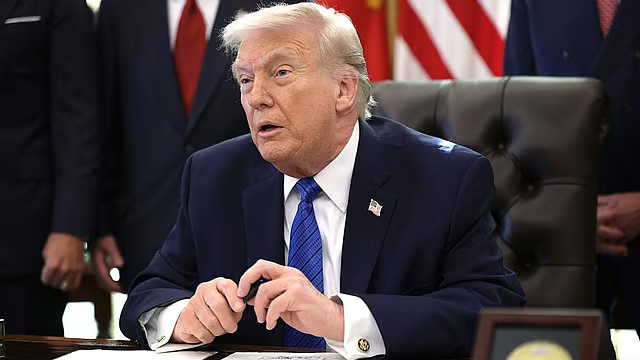
Global oil prices fell by nearly five per cent during early trading in Asia on Monday after US President Donald Trump announced a new round of negotiations with Iran aimed at ending the ongoing Middle East conflict and reopening the Strait of Hormuz.

The conflict, which began in late February following attacks on Iran by the United States and Israel, has triggered significant volatility in the oil market after disrupting traffic through the Strait of Hormuz, a critical shipping route for global oil and gas exports.

As of about 2250 GMT on Sunday, Brent North Sea crude, the international benchmark for September delivery, dropped 4.69 per cent to $83.81 per barrel.

Meanwhile, West Texas Intermediate (WTI), the US benchmark, declined 4.67 per cent to $80.72 per barrel.

President Trump said on Sunday that discussions with Iran would resume on Monday after the United States decided to suspend planned large-scale military strikes in favour of diplomatic engagement.

“Now what we’re doing is we’re talking to them in the form of a negotiation. It begins tomorrow afternoon,” he said, without providing further details of the venue of the talks or the participants.

The announcement came just hours after the United States halted its planned military action against Iran.

On Sunday, Iranian officials also disclosed that the country was close to reaching an agreement with Oman on establishing a new maritime route through the Strait of Hormuz.

The renewed diplomatic efforts have raised hopes of easing tensions in the region and restoring normal shipping operations through one of the world’s most strategic energy corridors.

Trump Announces Fresh Iran Talks As US Seeks Deal To End War And Resolve Strait Of Hormuz Dispute

0

US President Donald Trump has announced that a new round of negotiations with Iran will begin on Monday after deciding against launching fresh military strikes, opting instead to pursue a diplomatic solution to end the ongoing conflict, now in its sixth month.

Speaking to reporters on Sunday, Trump said the discussions would focus on the Strait of Hormuz—a critical global energy corridor that has become a major point of contention in the conflict—as well as Iran’s nuclear programme.

Meanwhile, Iran revealed that it is close to reaching an agreement with Oman on a new maritime route through the Strait of Hormuz. The announcement came as reports emerged of an explosion near a tanker in the strategic waterway, highlighting the continued security risks in the region.

Following Trump’s remarks, global oil prices declined sharply during the opening of Asian trading on Monday. West Texas Intermediate (WTI) crude fell by 4.7 per cent to $80.72 per barrel.

The conflict between Washington and Tehran began on February 28 when the United States and Israel launched coordinated strikes against Iran. Although diplomatic efforts have produced temporary periods of calm, renewed military exchanges in recent weeks have raised fears of further escalation.

Trump had earlier warned that Iran could face severe military action and was reportedly considering strikes on strategic facilities, including energy infrastructure. However, he announced on Saturday that he had decided to suspend those plans, saying the framework for a diplomatic agreement was beginning to take shape.

“Now what we’re doing is we’re talking to them in the form of a negotiation. It begins tomorrow afternoon,” Trump said while speaking aboard Air Force One, although he did not disclose the location of the talks or those expected to participate.

The US president also claimed that Iran, along with regional allies Saudi Arabia, the United Arab Emirates and Qatar, urged him to avoid military action, which he described as potentially “the biggest attack since World War II.”

Iranian state media, however, denied that Tehran had requested the United States to refrain from launching strikes.

A previous ceasefire arrangement that included reopening the Strait of Hormuz eventually collapsed, with Iran tightening its control over the waterway afterward.

Trump has consistently maintained that the conflict is aimed at addressing Iran’s nuclear ambitions. While Western governments accuse Tehran of pursuing nuclear weapons, Iran insists its nuclear programme is solely for peaceful civilian purposes.

Iran Signals Readiness for Further Negotiations

Hassan Ghashghavi, spokesperson for Iran’s parliamentary national security commission, disclosed on Sunday that mediators are working to revive the memorandum of understanding reached between the United States and Iran in June.

Although the agreement was not intended as a permanent peace settlement, it served as a foundation for broader negotiations and included provisions concerning the Strait of Hormuz.

“They know that the main issue and, in fact, the key to the matter right now is the issue of the Strait of Hormuz, so yes, there is an exchange of views,” Ghashghavi said.

Iranian President Masoud Pezeshkian also stressed the need to ensure all parties honour their commitments.

“We must strive to compel the enemy to remain committed to what it has signed.”

Oman Route Proposal Near Completion

Before the conflict, commercial vessels enjoyed unrestricted access through the Strait of Hormuz. However, Iran later imposed restrictions and insisted that ships use routes under its control while charging transit fees—an arrangement rejected by the United States.

The disagreement over shipping access contributed to renewed military tensions after Tehran refused to permit vessels to use routes outside those bordering its coastline.

Iran’s Foreign Ministry spokesperson, Esmaeil Baqaei, said discussions with Oman have progressed significantly toward establishing an alternative route through the strait.

“We are now going to reach an understanding on a route acceptable to both sides — neither the northern route nor the southern route — but one that respects the sovereign rights of both sides and safeguards our national interests and security,” he said.

Despite the progress, Baqaei clarified that the proposed arrangement does not amount to a full reopening of the Strait of Hormuz.

Maritime intelligence firm Kpler recently reported a sharp decline in shipping traffic through the vital waterway.

Adding to concerns, the United Kingdom Maritime Trade Operations (UKMTO) Centre confirmed that a tanker sailing off Oman’s coast reported hearing an explosion nearby on Sunday. The vessel and its crew were reported safe.

Source: AFP

43 Nigerian Insurers Meet New Capital Requirements, Regulator Says

0

Nigeria’s insurance regulator says 43 insurance and reinsurance companies have satisfied new capital requirements introduced under sweeping industry reforms, marking a key milestone in a recapitalisation drive that has run for more than a year.

The National Insurance Commission (NAICOM) said Sunday that eight additional insurers, which submitted compliance evidence just before the July 31 deadline, are still going through final verification and are expected to be cleared within 14 days.

The regulator said the higher capital thresholds are designed to strengthen insurers’ ability to pay out policyholder claims, absorb emerging risks, and support long-term investment across the economy. The recapitalisation exercise was carried out under the Nigerian Insurance Industry Reform Act (NIIRA) 2025, signed into law last year by President Bola Tinubu as part of wider financial sector reforms.

Nigeria had roughly 60 licensed insurance and reinsurance firms before the exercise began. Under the new framework, companies must now hold minimum capital based on their business type — 15 billion naira ($11.02 million) for life insurers, 25 billion naira for non-life insurers, and 45 billion naira for reinsurers.

NAICOM called the outcome a defining moment in the transformation of Nigeria’s insurance sector. The industry has long struggled with low penetration and limited capital reserves, which has restricted local insurers’ capacity to retain large risks in sectors like oil and gas, aviation, and infrastructure. The regulator did not disclose the total capital raised during the exercise.

2027: NDC, Labour, SDP Rift Over Consensus Candidate Strategy

0

Fresh attempts to unite Nigeria’s opposition ahead of the 2027 presidential election have revealed deep divisions among major political parties, as the Nigeria Democratic Congress (NDC), Labour Party (LP) and Social Democratic Party (SDP) expressed contrasting positions on the call for a single opposition presidential candidate.

The reactions followed an appeal by the G-100, a coalition of 100 prominent Nigerians, urging opposition leaders to put aside personal ambitions and support a consensus presidential candidate capable of challenging the ruling All Progressives Congress (APC) in the 2027 election.

In a seven-page open letter titled “The Doctrine of a Necessary Democratic Opposition,” dated August 2, 2026, the coalition appealed to opposition presidential hopefuls, including Atiku Abubakar of the African Democratic Congress (ADC), Peter Obi of the Nigeria Democratic Congress (NDC), former Rivers State Governor Rotimi Amaechi, former Kano State Governor Rabiu Musa Kwankwaso, and other political leaders to negotiate the emergence of a consensus flag bearer.

The letter was signed by former APC National Vice Chairman (North-West), Salihu Lukman; former House of Representatives member Nnenna Ukeje; former Kogi State Deputy Governor Simon Achuba; Professor Anthony Kila; and 96 other signatories.

According to the coalition, Nigeria’s democracy would benefit from presenting voters with a united and credible alternative to the APC, warning that continued fragmentation within the opposition would weaken democratic institutions and consolidate political power in the hands of the ruling party.

“There are seasons in the life of every nation when neutrality becomes a form of consent, and silence becomes an accomplice to decline. Nigeria has entered such a season,” the group stated.

The coalition argued that Nigeria’s problems go beyond inflation, unemployment and poverty, saying the country’s biggest challenge is a political system that rewards loyalty over competence, patronage over service, and power over accountability.

Previous Unity Effort Failed

The latest appeal follows the collapse of an earlier opposition alliance.

In April, opposition leaders, including Atiku Abubakar, Governor Seyi Makinde, Peter Obi, Rabiu Musa Kwankwaso, Rotimi Amaechi and Rauf Aregbesola, reportedly met in Ibadan, Oyo State, where they agreed in principle to produce a single presidential candidate.

However, that understanding later broke down as the key political figures eventually emerged as presidential candidates on different party platforms.

NDC: Nigerians Are Already United

Responding to the proposal, the Nigeria Democratic Congress acknowledged that a united opposition would be stronger but insisted that the electorate not politicians would ultimately determine Nigeria’s next president.

Speaking with Leadership, the party’s National Publicity Secretary, Osa Director, admitted that opposition parties would benefit from working together but argued that Nigerians are already united in their desire for better governance.

“If the opposition is termed as fragmented, the voters—the electorate who desire good governance—are not fragmented,” he said.

“They know the party they want to support and vote for in the 2027 general elections in order to get rid of the clueless APC government. The choice is obvious.”

SDP Welcomes Coalition Talks

The Social Democratic Party also expressed openness to collaboration, stating that it is willing to work with any genuine political movement committed to national development.

National Publicity Secretary Rufus Aiyenigba said the SDP was aware of the G-100 initiative and would announce its official position after internal consultations.

He noted that the party has consistently supported broad political alliances, recalling its involvement in the New Nigeria Movement in 2018 and previous coalition-building efforts.

According to him, many political groups are already aligning with the SDP because of confidence in the party’s leadership and presidential candidate.

“The SDP is part of any positive national platform that will lead to national redemption,” he said.

Labour Party Rejects New Coalition

The Labour Party, however, dismissed calls for another coalition, insisting that it already possesses the strongest grassroots political structure among opposition parties.

In a statement signed by its National Publicity Secretary, Ken Asogwa, the party argued that its long-standing relationship with the Nigeria Labour Congress (NLC) and the Trade Union Congress (TUC) gives it unmatched nationwide reach.

According to Asogwa, every serving and retired civil servant is naturally connected to the Labour Party through organised labour, giving the party representation in virtually every polling unit, ward and local government area across the country.

“There is hardly any polling unit, ward, local government or community in Nigeria that does not have a serving or retired civil servant. No other political party, including the APC, can genuinely boast of such an extensive nationwide structure,” he said.

The party therefore urged opposition politicians, political movements and pressure groups seeking to unseat the APC to merge with the Labour Party instead of forming another alliance.

It also maintained that it already has a credible presidential candidate, an active membership base and an established organisational structure capable of winning the presidency.

“It would therefore be politically unwise to sacrifice such enormous institutional advantages on the altar of an unnecessary coalition arrangement. The task before the opposition is not to reinvent the wheel but to unite behind the most viable platform. That platform is the Labour Party,” the statement added.

PDP, ADC Yet to React

Efforts to obtain official reactions from the Peoples Democratic Party (PDP) and the African Democratic Congress (ADC) were unsuccessful, as both parties did not respond to calls or messages before press time.

The varying responses highlight the growing challenge confronting Nigeria’s opposition as preparations for the 2027 presidential election gather momentum. While many stakeholders continue to advocate a united front against the APC, disagreements over the preferred platform and leadership of such an alliance remain unresolved.


Uganda Unveils Statue Honouring Netanyahu’s Brother, Hero Of 1976 Entebbe Raid

0

Uganda has unveiled a statue of Yonatan Netanyahu, the elder brother of Israeli Prime Minister Benjamin Netanyahu, marking 50 years since he died leading the Entebbe hostage rescue mission, the only Israeli soldier killed in the operation that freed more than 100 hostages.

Uganda’s army chief, Gen Muhoozi Kainerugaba, said the monument recognizes Netanyahu’s bravery and dedication, calling the rescue one of history’s most significant military operations and pointing to the strong Uganda-Israel relationship that has since developed. The statue, depicting Netanyahu advancing with a weapon in hand, now stands at the old airport terminal where the raid unfolded.

The crisis began on June 27, 1976, when Popular Front for the Liberation of Palestine hijackers boarded the Tel Aviv-to-Paris flight during a stopover in Athens, eventually diverting it through Libya to Entebbe, Uganda, where dictator Idi Amin personally welcomed the plane. The hijackers demanded $5m and the release of 53 jailed militants across several countries, gradually releasing non-Israeli, non-Jewish hostages while holding the rest. On July 3, Israeli commandos flew in via Kenya and carried out the rescue in under 90 minutes.

Beyond Netanyahu, three hostages — Jean-Jacques Mimouni, Pasco Cohen and Ida Borochovitch — died during the raid, and a fourth, Dora Bloch, was killed afterward in a Kampala hospital. The hijackers and their Ugandan-based accomplices were killed, along with at least 45 Ugandan soldiers who fought against the Israeli forces.

Kainerugaba honored the fallen on all sides, saying their memories should inspire future generations toward peace and justice, while acknowledging the Ugandan soldiers had fought for what they believed was right under a regime — Amin’s — now recognized as a brutal dictatorship that didn’t reflect the will of the Ugandan people. He described the events as a painful chapter in Uganda’s history, but one that has since given way to a relationship built on trust and cooperation between the two nations.

Benjamin Netanyahu visited the site a decade ago, reflecting that his brother taught him that defeating terrorism requires clarity and courage.

Inside The Machinery Behind Football’s Transfer Window

0

Premier League clubs have already blown past £1bn in spending this window, with Chelsea, Manchester City and Tottenham each breaking transfer records on deals worth £100m or more. Sandro Tonali’s £100m switch to Spurs was quickly overtaken by Elliot Anderson’s £116m move to Manchester City, before Chelsea set a new British transfer record signing Morgan Rogers from Aston Villa for £117m. It follows a winter window that already saw €2.2bn spent globally, raising the question of how clubs actually get these deals over the line.

Networking behind the scenes

Deal-making now happens well before the window opens. In February, around 100 club officials, scouts and agents gathered at Villa Park for an informal networking event, where representatives from clubs including Liverpool, West Ham, Birmingham and Manchester City mingled with agents to plan for summer business.

Aston Villa’s loans specialist Adam Henshall even gave a presentation on how the club manages young players sent out on loan, at the request of TransferRoom, an online platform with roughly 800 clubs signed up that helps connect clubs and agents to speed up deals. This week, more than 200 clubs, including Villa, Chelsea, Manchester City, Manchester United, Roma and Borussia Dortmund are meeting 55 agencies in Madrid for a dedicated “deal day,” with similar sessions also held online.

Big clubs plan early, smaller clubs react

Much of this year’s business is expected to explode in late August, since the World Cup delayed early deals. Smaller EFL clubs, meanwhile, often have to wait on decisions from bigger clubs before their own moves can progress. One senior Premier League recruitment executive said working at least one window ahead is essential, anything less becomes purely reactive.

Top-flight clubs can usually predict who’s likely to leave and plan accordingly, but lower down the pyramid, any player in form is considered sellable, forcing sporting directors into constant firefighting. Some EFL clubs even time signings later in the window deliberately, to cut down on wage costs. Data-driven recruitment tools exist across the game, but many lower-league clubs simply can’t justify the expense.

Former manager Michael Appleton described the rhythm: planning resumes just weeks after the January window shuts, with meetings growing more frequent from weekly in March to daily as deadline day approaches. Some transfer targets are tracked a year or more in advance, while other deals come together within days. One lower-league club reportedly even tracked down a target’s agent through Instagram.

The Deadline Day Reality

Agents’ growing influence has added complexity to deals, with more paperwork including the AF1 agency agreement outlining payment terms creating extra friction, even though agents remain essential to how the market functions. With deadline day about a month away, activity will only intensify, though most top Premier League recruitment figures believe deals rushed together on the final day are usually mistakes.

Ideally, clubs want deals essentially wrapped up 72 hours before the deadline, with last-minute movement usually just down to finalizing numbers rather than genuine last-gasp business. Appleton said he prefers to have his business done early, since deadline day is typically more about reacting to losing players than making new signings. As one recruitment chief summed it up: once you’re in the job, nothing about transfer season feels strange anymore.

Marc Skinner Departs Manchester United Ahead Of New WSL Season

0

Marc Skinner has left his role as Manchester United Women’s manager by mutual consent, just weeks before the new Women’s Super League campaign kicks off. The 43-year-old spent five years in charge, leading United to their first-ever major trophy, the 2024 Women’s FA Cup and their first Champions League group-stage appearance.

His exit comes a month before United’s season opener away at London City Lionesses on September 4. Skinner had reportedly grown frustrated with limited squad investment, and the club endured a quiet transfer window while rivals Manchester City, Arsenal and Chelsea strengthened significantly. London City Lionesses signed two-time Ballon d’Or winner Alexia Putellas, and Tottenham brought in Lyon defender Alice Sombath — moves that added to supporter frustration over United’s inactivity.

United have shifted strategy this year, prioritizing younger signings for long-term sustainability, and the club’s academy is set to train at the Carrington facility this season. Sources say discussions between Skinner and the club took place over the summer, resulting in the mutual split, and United are already well into identifying a successor, having completed background checks on candidates. A track record of developing young players is reportedly a top priority for the next hire.

Analysis: A relationship that never fully recovered

Skinner never quite won over United’s fanbase during his tenure. Criticism peaked in 2024 when supporters brought banners to Leigh Sports Village demanding his removal. He’d taken over in 2021 after Casey Stoney resigned over the same underlying issue — a lack of investment — which persisted throughout his time in charge and became a recurring explanation for losses to top-three rivals.

Owner Sir Jim Ratcliffe also faced criticism over remarks about the women’s team, and the club’s training facilities drew backlash in 2024, which Skinner publicly defended at the time. Working with a smaller budget than most WSL rivals, he still managed two top-three finishes, though United only got past Champions League qualifying once, last season. Fans also pointed to caution in big matches, rigid team selection, and few academy players breaking into the first team.

Missing out on the Champions League this season hurt United’s transfer plans, and even though Skinner signed a contract extension through 2027 last year, the relationship had cooled. Where he once shielded the club from criticism, he pushed back more openly last season on the lack of spending — a sign he wanted stronger backing that ultimately never came.

FA Set To Withdraw Support For Infantino As Fifa Crisis Deepens

0

The English Football Association is preparing to formally withdraw its backing for Fifa president Gianni Infantino, deepening a crisis that has seen Uefa threaten legal action and Wales pull its own support for his re-election bid.

The fallout stems from Infantino’s now-abandoned plan to sell minority stakes in Fifa’s competitions, including the World Cup, to outside investors through a new commercial entity called Fifa Forward Enterprise. The proposal had already drawn sharp criticism from European, North American, Central American and Caribbean football bodies before it was scrapped.

Uefa has gone further, warning Fifa in a letter that it is weighing legal action, arbitration or regulatory complaints over the scheme. The letter, first reported by The Telegraph, demands Fifa preserve all related records — including emails, messaging app conversations, texts and meeting notes — involving any Fifa official, member association, broadcaster, sponsor or financial institution tied to the plan. Uefa said this obligation overrides any standard document-deletion policy Fifa might otherwise follow, and it has asked Infantino to confirm in writing within five business days that he has received the notice and taken steps to preserve the material.

The investor group behind the scrapped plan was reportedly to be led by Thrive Eternal, a US venture capital firm founded by Joshua Kushner, brother of Jared Kushner. Fifa had offered member associations $40m each for backing the proposal, with a September 19 deadline attached to an initial payout.

Despite the backlash, Infantino still has notable support: Qatar, Lebanon, Kuwait and Sri Lanka have all publicly backed his continued leadership. He is expected to seek a fourth term in March, needing 106 of Fifa’s 211 member votes. By confederation, Uefa controls 55 votes, Africa 54, Asia 46, Concacaf 35, Oceania 11 and Conmebol 10 — and so far, only the Asian Football Confederation has explicitly sided with Uefa and Concacaf’s position, while Africa, Conmebol and Oceania have stayed publicly neutral.

A separate path to remove Infantino runs through Fifa’s 37-member Council, where 19 votes could force an emergency meeting within two weeks of being called. Whether the current pressure — including the threat of legal action and the withdrawal of support letters — will be enough to push him toward resignation remains unclear, with the rebellion so far concentrated mainly in Europe and Concacaf rather than spreading globally.

Bandits Attack Catholic Bishop’s Residence In Benue, Abduct Seminarian

0

Suspected bandits have abducted a Catholic seminarian, Kelvin Ochai, following an attack on the residence of the Catholic Bishop in Otukpo Local Government Area of Benue State.

The attack occurred on Wednesday at the Bishop’s residence in the Asa III area of Otukpo, where the armed assailants reportedly stormed the premises before abducting the seminarian.

The Catholic Diocese of Otukpo confirmed the incident in a statement issued on Friday by its Chancellor, Rev. Fr. Joseph Aboyi Itodo.

According to the statement, the Bishop of the Diocese, Most Rev. Michael Ekwoyi Apochi, expressed profound sadness over the incident and appealed to members of the Church and the public to pray for the seminarian’s safe return.

The Diocese also called on the faithful and all people of goodwill to remember the abducted seminarian in their prayers, expressing hope that he would regain his freedom unharmed.

“We commit our brother and all those in the kidnappers’ den throughout the country to the powerful intercession of the Blessed Virgin Mary for their speedy and safe release from the hands of their abductors,” the statement said.

At Least 25 Killed as Passenger Bus Overturns In Algeria

0

At least 25 people have been confirmed dead and 44 others injured after a passenger bus crashed and overturned in Algeria’s Boumerdès province on Friday, making it one of the country’s deadliest road accidents in recent years.

According to Algeria’s Civil Protection agency, the bus was travelling from Setif province to the capital, Algiers, when it was involved in what authorities described as a “tragic” road accident.

Emergency officials said the bus reportedly skidded off the road before plunging into a ravine and overturning in northern Algeria.

Rescue teams rushed to the scene, where dozens of emergency workers and local residents joined efforts to pull survivors from the wreckage.

The injured were evacuated to nearby hospitals for treatment, while officials warned that the death toll could still rise as rescue operations continued.

Videos from the scene showed the badly damaged coach lying at the bottom of the ravine as rescuers deployed a crane in an attempt to reach anyone who might still have been trapped inside.

Other footage captured large crowds gathering around the crash site, with several people climbing onto the overturned bus to search the wreckage while emergency personnel coordinated rescue efforts.

Algerian Prime Minister Sifi Ghrieb visited the scene shortly after the accident, where he received briefings from emergency responders overseeing the operation.

Authorities have yet to determine the exact cause of the crash.

In response to the tragedy, Algerian President Abdelmadjid Tebboune declared three days of national mourning, according to state television.

Civil Protection said emergency teams were dispatched to the crash scene at approximately 9:40 a.m. local time (8:40 GMT) to assist victims of what has become the country’s deadliest traffic accident in recent years.