
France Deployed 70,000 Police for Saturday’s Protests — and Bet That Force Can Contain Four Years of Anger in One Day
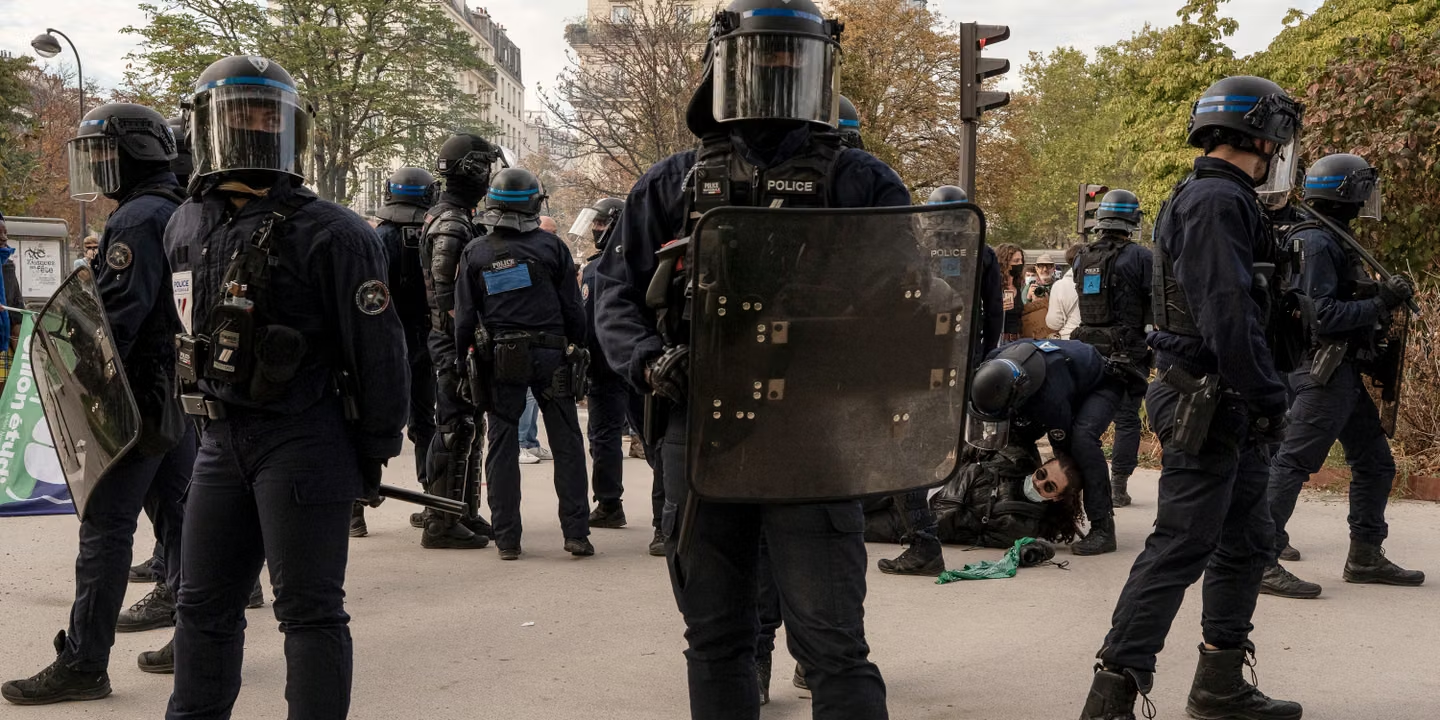
France woke on Saturday to the largest domestic police mobilisation in years.70,000 officers, elite intervention teams, armoured vehicles, water cannon, helicopters, drones and anti-drone systems, deployed to stop last weekend’s riots from repeating themselves.
Interior Minister Laurent Nuñez promised to be “uncompromising with rioters, looters and all those who commit acts of violence” — and admitted what everyone suspected: “We are not talking about a nice, friendly demonstration.”
The security posture
The deployment adds 10,000 officers to last weekend’s numbers. Curfews in sensitive areas remain in force. Only one union demonstration is authorised in Paris; the main student union UNEF and the Yellow Vests were refused permits, and many cities banned gatherings outright — though Marseille reversed its ban and allowed a union march. UNEF, whose high-school mobilisation against teacher shortages and dilapidated facilities ignited this wave three weeks ago, said its rallies would proceed regardless.

The political wound
The government’s position is that radical militants and criminal bands hijacked a legitimate grievance. Unions reject the framing. Marylise Léon, general secretary of CFDT, called the blanket refusals counterproductive: “There is a lot of anger, and a demand to be considered and to be listened to… It’s not for the president to decide who can legitimately request to protest.” Macron, meanwhile, has dismissed far-right attempts to blame migrants and radical Islam, and has accused foreign leaders — pointedly “on the other side of the Atlantic” — of exploiting French unrest for their own politics.
A flashpoint hours away
Beyond the protest bans, Orleans is hosting the National Rally’s annual congress, with left-wing and anti-racist counter-demonstrations already announced. Marine Le Pen, frontrunner for next year’s presidential election, is polling higher off the disorder and has framed it as proof that state authority has collapsed.
And a shooting
On Friday a man opened fire from a car west of Paris, killing one person and wounding four, including a 12-year-old girl. Officials suspect an Islamophobic motive. Local mayor Ali Rabeh called it “objectively a racist attack” and blamed far-right rhetoric for inflaming the climate. Two stories, one atmosphere.

Normal life suspended
The Louvre, Musée d’Orsay and the Opéra are closed all day. Paris Saint-Germain’s clash with Lyon moved to Monday; a Pittsburgh Steelers–New Orleans Saints NFL game is still scheduled in Paris on Sunday, despite Trump suggesting it be cancelled. Some 3,000 businesses were ransacked last weekend; France’s chamber of commerce chief Alain Di Crescenzo said shopkeepers are arming themselves with bats, crowbars and shotguns — and begged them not to. “It would add suffering onto suffering.”
The verdict that wasn’t
Markets watched Moody’s, widely expected to cut France over unchecked public spending. It held the rating at Aa3 but moved the outlook to negative — the third agency to signal structural concern after S&P and Fitch already downgraded. That is the deeper headline: France is not being punished yet. It is being warned.

Bottom line
The state has proved it can saturate a Saturday. It has not yet answered the question the protesters asked — whether anyone in authority is prepared to be considered, listened to, and to change something other than the policing plan.
Discover more from LN247
Subscribe to get the latest posts sent to your email.

