During an urgent gathering of the Bank of Ghana’s Monetary Policy Committee (MPC), the governor encouraged members to explore how best to aid the nation’s ongoing economic revival, while avoiding actions that might destabilize recent progress, according to comments shared with reporters on Friday.
Ghana, recovering from one of its worst economic downturns in recent memory, saw stronger-than-expected growth in early 2025 and experienced a drop in inflation to its lowest point since December 2021.
Thursday’s emergency session was called to assess the current economic indicators and shifts in the financial markets.
Ultimately, no immediate changes were made to the central bank’s policy interest rate. Governor Johnson Asiama later explained that the committee would reconvene for its standard meeting in roughly ten days.
“The key question is whether the current macroeconomic configuration permits a recalibration of the policy stance,” Asiama told the MPC at the beginning of Thursday’s session.
“With inflation expectations more firmly anchored, external buffers strengthened, and confidence returning, we must assess how to support the recovery without compromising the gains achieved,” he added.
Highlighting recent progress, the governor pointed to Ghana’s strong trade performance, which produced a $5.6 billion surplus in the first half of the year, alongside a broader current account surplus of $3.4 billion.
He further mentioned the Ghanaian cedi’s over 40% gain against the U.S. dollar since the start of the year, as well as improved reserve levels. However, he cautioned that the legacy of last year’s budget shortfall and global economic unpredictability continue to pose potential challenges.
The National Youth Service Corps (NYSC) successfully conducted its 2025 Batch B Pre-Orientation Workshop in Lafia, Nasarawa State, on July 16, 2025, as part of preparations for the upcoming orientation course for prospective corps members. The workshop, themed “Maintaining the Integrity of the Orientation Course in the Face of Competing Interests,” underscored the scheme’s commitment to ensuring a seamless and credible mobilization process. The event, held at the Lafia Youth Centre, brought together key stakeholders, including NYSC officials, security agencies, and representatives from various state ministries. The Inspector-General of Police, represented by Assistant Inspector-General of Police (AIG) Musa Garba, emphasized the importance of collaboration between the NYSC and security agencies to safeguard corps members during the orientation period. He reiterated the Nigeria Police Force’s commitment to providing adequate security at orientation camps nationwide. In his keynote address, the NYSC Director-General, Brigadier-General Yusha’u Dogara Ahmed, stressed the need to uphold the integrity of the orientation course, which serves as the foundation for the one-year mandatory national service. “The orientation course is not just a ritual; it is a critical phase where corps members are equipped with the skills, values, and discipline needed to serve the nation effectively,” he said. He urged all stakeholders to resist external pressures that could compromise the process, including attempts to manipulate postings or bypass protocols. The workshop featured interactive sessions on camp management, security awareness, and the integration of digital tools in NYSC operations. A key highlight was the discussion on leveraging technology to streamline registration and deployment processes, following recent challenges faced by prospective corps members in accessing their call-up numbers. The NYSC also reviewed feedback from the 2025 Batch A orientation to address logistical issues and improve the experience for Batch B corps members. Participants commended the NYSC for its proactive approach, with the Nasarawa State Commissioner for Youth and Sports Development, Hon. Jibrin Bala, pledging continued support from the state government. “Nasarawa State is proud to host this workshop, and we assure the NYSC of our commitment to providing a conducive environment for corps members,” he said. The 2025 Batch B orientation course is expected to commence in late July, with thousands of prospective corps members set to report to camps across the country. The NYSC has advised participants to verify their call-up numbers and print their green cards promptly to avoid delays. The scheme also reiterated its zero-tolerance policy for fraudulent activities, warning against fake recruitment messages circulating online. As the NYSC prepares to welcome the new batch, the Lafia workshop has set a tone of accountability and preparedness, ensuring that the orientation course remains a cornerstone of national unity and youth development.
The Nigerian Maritime Administration and Safety Agency (NIMASA) has sealed off ShellPlux and TMDK Terminals, both situated in the Ijegun-Egba axis of Lagos, for breaching the International Ship and Port Facility Security (ISPS) Code. In a statement issued on Thursday, NIMASA’s Head of Public Relations, Osagie Edward, said the enforcement was carried out in line with the agency’s responsibility as the designated authority for ISPS Code implementation in Nigeria. The ISPS Code—an amendment to the SOLAS Convention—was established by the International Maritime Organisation to improve security at ports and terminals engaged in global trade. Edward stated that the shutdown followed “persistent non-compliance by the facilities with the provisions of the ISPS Code, despite several formal warnings. ”The move aligns with global best practices and is by Section 79(f) of the ISPS Code Implementation Regulations (2014), which mandates the closure of any facility that remains in violation for over three calendar months,” Edward said. Commenting on the development, NIMASA Director-General, Dr. Dayo Mobereola, reaffirmed the agency’s dedication to securing Nigeria’s maritime environment. “In wielding the big stick, we acted only as a last resort. Our primary goal is to enforce safety and security practices across Nigerian ports and jetties. At a time when we are collaborating with the United States Coast Guard to lift the conditions of entry on vessels from Nigeria, we cannot afford lapses that jeopardise our progress,” Mobereola said. He noted that the terminals would resume operations once they fully meet all compliance standards, acknowledging their significant contribution to service delivery and trade facilitation. The NIMASA Director-General also highlighted the commitment of the Minister of Marine and Blue Economy, Adegboyega Oyetola, to promoting sustainable trade within a secure and enabling maritime environment.
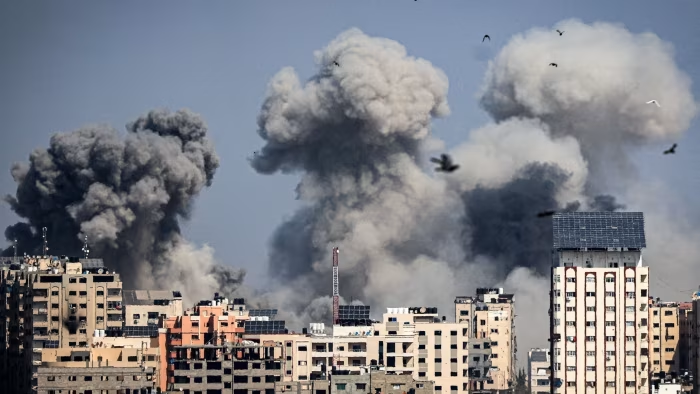
The Middle East is seeing a surge in violence, and tensions are higher than ever. From Israeli airstrikes in Syria to clashes between Syrian government forces and local militias, the region feels like it’s on the edge of a bigger conflict. This takes us to the question: Why is this happening?
Below is the break down of the recent developments and the reasons behind this escalation.
What’s Happening in the Middle East?
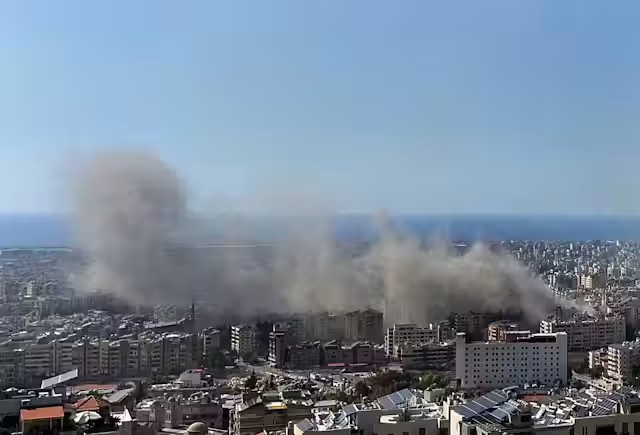
Israeli Airstrikes in Syria: Recently, Israel launched airstrikes on Damascus, Syria’s capital. These attacks hit military sites, killing at least one person and injuring 18 others. Israel said the strikes were to stop weapons from reaching groups they see as threats, like Hezbollah, a militia group backed by Iran. These strikes aren’t new, but they’re happening more often and hitting bigger targets, raising fears of a wider war.
Clashes in Southern Syria: In Syria’s south, fighting has broken out between the Syrian government and Druze militias in the Suweida region. The Druze, a religious minority, are clashing with government forces over local control and rights. Syria’s new president, Ahmed al-Sharaa, has promised to protect the Druze to avoid a full-blown conflict, but the situation is tense, and a fragile ceasefire is barely holding.
Iran’s Role and Regional Tensions: Iran, a major player in the region, supports groups like Hezbollah in Lebanon and militias in Syria. Israel and some Arab countries see Iran’s influence as a threat, leading to frequent attacks on Iranian-linked targets. This back-and-forth is pulling in other countries, like the U.S., which supports Israel, and Russia, which backs Syria’s government.
Refugee Crisis and Economic Strain: The fighting is pushing more people out of their homes. Millions in Syria are already displaced, and new clashes are making things worse. Countries like Lebanon and Jordan are struggling to handle refugees, while economic problems, like rising food and fuel prices, are fueling anger and unrest.
Why Is the War Escalating?
So, why is this all heating up now? Here are the main reasons, explained simply:
Power Struggles Between Countries: The Middle East has long been a battleground for big powers. Israel wants to limit Iran’s influence, while Iran is trying to expand its reach through allies like Hezbollah. The U.S. and Russia are also involved, backing different sides. Each country is pushing its own agenda, and that’s creating a cycle of attacks and counterattacks.
Weak Governments and Chaos: Syria’s government is struggling to control the country after years of civil war. When a government is weak, groups like militias or neighboring countries step in to fill the gap. This leads to more fighting as everyone tries to grab power or protect their people.
Old Rivalries and New Weapons: The Middle East has deep-rooted rivalries, like between Israel and Iran or Sunni and Shia Muslim groups. These tensions go back decades, but now, with advanced weapons like drones and missiles, small conflicts can quickly turn deadly and spread.
Economic Pain and Anger: People in the region are suffering. Jobs are scarce, prices are high, and many can’t afford basics like food or medicine. When people are desperate, they’re more likely to join militias or protest, which can spark violence. Governments, under pressure, sometimes use force to keep control, making things worse.
Outside Interference: Countries outside the Middle East, like the U.S., Russia, and even Turkey, are involved in the region’s conflicts. They send weapons, money, or troops to support their allies. This outside involvement often makes local fights bigger, as foreign powers have their own goals, like controlling oil or gaining influence.
What’s Next?
The situation is shaky. If Israel keeps striking Syria or Iran-backed groups, it could pull Lebanon or other countries into the fight. If the Syrian government can’t calm things down in Suweida, more militias might rise up. The world is watching, but peace feels far off because the reasons for fighting: power, fear, and survival, are so deeply rooted.
To stop the escalation, leaders would need to talk, not fight. But with so much distrust, that’s easier said than done. For now, the Middle East remains a powder keg, and every new strike or clash risks setting it off.
Femi Falana, a Senior Advocate of Nigeria, maintains that the NNPCL lacks the legal power to sell Nigeria’s public refineries, arguing they belong to the federation, federal, state, and local governments as provided by Section 44(3) of the Constitution. He also highlights concerns about transparency and accountability in the management of these assets.
Falana further raises allegations of missing funds, calling for an investigation into the $2.9 billion earmarked for refinery rehabilitation and noting that $18 billion has been spent on turnaround maintenance for the Port Harcourt, Warri, and Kaduna refineries without results. He also questions the NNPCL’s stake in the Dangote Refinery, pointing out the Federal Executive Council approved $2.76 billion for a 20% stake in 2021, but Aliko Dangote recently claimed only 7.2% was acquired, prompting calls for the EFCC to investigate.
No longer in contention for the title, Nigeria’s Junior D’Tigress will take on Argentina today (Friday) in the classification round of the ongoing FIBA U-19 Women’s Basketball World Cup in Brno, Czechia.
Led by coach Juliana Akhere, the Nigerian side suffered a 77-51 defeat to Hungary in the round of 16 on Wednesday, ending their hopes of lifting the trophy. However, there is still pride on the line as they battle the South Americans at the Starez Arena Vodova Hall for a place among the 9th–16th spots.
Making their debut at the tournament, Nigeria have posted commendable stats, averaging 61.8 points, 42.3 rebounds, and 11.8 assists per game. Their shooting efficiency includes a 65.8% success rate from the free-throw line, 33.1% for two-point field goals, and 21.2% from beyond the arc.
In contrast, Argentina have struggled throughout the competition, averaging just 46.5 points, 32 rebounds, and 12.3 assists per game. Their shooting metrics include a 64.6% free-throw conversion rate, 39.2% on two-point attempts, and 22.6% on three-pointers.
Nigeria began their Group B campaign with a historic win over China but followed up with losses to Canada and Portugal, finishing third in the group with a 1-2 record. The subsequent defeat to Hungary in the knockout stage relegated them to the classification matches.
Argentina, meanwhile, are still winless in the tournament. They opened with a 68-47 loss to Spain, were beaten 77-49 by hosts Czechia, then fell 83-44 to Japan in the group stage. Their round of 16 match ended in a heavy 95-46 defeat to Australia.
Toby Nweke has been Nigeria’s standout performer, averaging 11.5 points per game with back-to-back double-digit outings. Argentina’s top scorer is Nerea Lagowski, averaging nine points per game.
The winner of today’s clash will face either Brazil or South Korea in the next round of classification fixtures.
President Bola Tinubu has authorized the renaming of the University of Maiduguri in Borno State to Muhammadu Buhari University. ”May we now adopt the University of the Maduguri as the Muhammadu Buhari University,” Tinubu spoke at the conclusion of a special Federal Executive Council session held on Thursday at the Aso Rock Villa, Abuja, in honour of Buhari. Before that, the President offered high praise for Buhari, calling him “a good man, a decent man, an honourable man,” and commending his enduring legacy of discipline, patriotism, and integrity. Tinubu admitted that although the late president had his shortcomings, his deep commitment to national service made him stand out. “President Buhari was not a perfect man, no leader is, but he was, in every sense of the word, a good man, a decent man, an honourable man. “His record will be debated, as all legacies are, but the character he brought to public life, the moral force he carried, the incorruptible standard he represented, will not be forgotten. “His was a life lived in full service to Nigeria, and in fidelity to God,” he said. Reflecting on Buhari’s tenure and his extensive military and public service, Tinubu lauded the late leader’s modesty, humility, and steadfast refusal to be swayed by the allure of power. He said, “He stood, always, ramrod straight; unmoved by the temptation of power, unseduced by applause and unafraid of the loneliness that often visits those who do what is right, rather than what is popular. “His was a quiet courage, a righteousness that never announced itself. His patriotism was lived more in action than in words.” Tinubu also reflected on their political partnership, which led to the landmark 2015 elections—Nigeria’s first democratic transition of power between rival parties. ”We stood together, he and I. Alongside others drawn from across the political spectrum, regions and tongues, we formed an alliance that enabled Nigeria to experience its first true democratic transfer of power from one ruling party to another. “When he was sworn in as our party’s first elected President, he led with restraint, governed with dignity, and bore the burdens of leadership without complaint,” he said. The President praised Buhari’s humility after leaving office, highlighting how he quietly returned to his hometown of Daura without attempting to exert influence from the sidelines. “When his tenure ended, he returned to Daura; not to command from the shadows or to hold court, but to live as he always had, never seeking to impose his will but content to let others carry the nation forward. “Even in death, he maintained the serenity that defined him in life: not a sigh, not a groan, just a quiet submission to the will of God. Such was the man Nigeria has lost. Such was the man for whom our nation now mourns,” he added. Tinubu expressed gratitude to the Inter-Ministerial Committee and Katsina State Governor, Dikko Radda, for arranging a dignified state funeral within 48 hours, calling it a “profound honour” to lead the burial procession in Daura. He concluded his tribute with a prayer: “Mai Gaskiya, the People’s General, the Farmer President, your duty is done. May Almighty Allah forgive his shortcomings and grant him Aljannah Firdaus. May his life continue to inspire generations of Nigerians to serve with courage, conviction, and selflessness. President Buhari, thank you. Nigeria will remember you.” Buhari died on Sunday, July 13, at the age of 82.
Manchester United have submitted a third offer for Brentford forward Bryan Mbeumo, with the proposed deal potentially rising to £70 million. The offer consists of an initial £65 million fee, supplemented by £5 million in performance-related add-ons.
Brentford are yet to respond to the bid.
United remain confident of securing the Cameroon international’s signature and had hoped to finalise the deal ahead of their departure to the United States on Tuesday, where they are scheduled to play three pre-season matches. The team will be based in Chicago for the majority of the 13-day tour.
Despite recent links to Chelsea’s Nicolas Jackson and Aston Villa goalkeeper Emiliano Martinez, Mbeumo has always been the primary attacking target for new manager Ruben Amorim. The 25-year-old enjoyed a standout campaign last season, scoring 20 Premier League goals, and attracted interest from several clubs, including Tottenham Hotspur, now managed by former Brentford boss Thomas Frank. However, Mbeumo is understood to favour a move to Old Trafford.
Brentford may also face further disruption in attack, with fellow forward Yoane Wissa reportedly drawing interest from Newcastle United.
United’s push for Mbeumo comes amid a pressing need for greater attacking output. Last season, the club managed just 44 Premier League goals—their lowest tally since the 1973–74 relegation campaign. Manager Ruben Amorim has often criticised the team’s inefficiency in front of goal.
United have already reinforced their squad this summer with the signings of forward Matheus Cunha and defender Diego Leon. Should the Mbeumo deal be completed, Bruno Fernandes is expected to move into a deeper midfield role, with Cunha occupying one of the inside forward positions in Amorim’s preferred tactical setup.
The signing could also further diminish the chances of Marcus Rashford, Alejandro Garnacho, Jadon Sancho, and Antony—who are currently out of favour—returning to first-team contention.
Manchester United begin their Premier League campaign at home to Arsenal on 17 August.
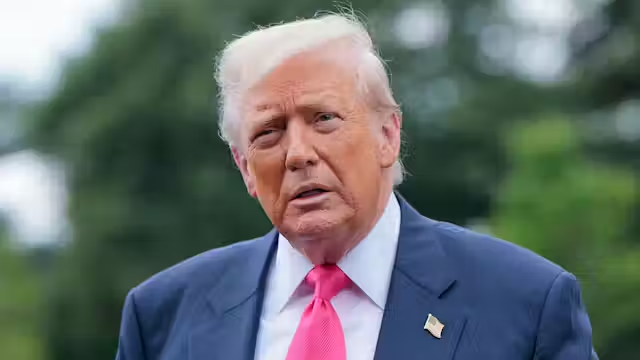
U.S. President Donald Trump is suffering from a chronic vein condition, the White House announced on Thursday, following days of public speculation sparked by photographs showing bruising on the former US president’s hand.
According to White House Press Secretary Karoline Leavitt, Trump recently experienced swelling in his legs and subsequently underwent a “comprehensive exam” that included vascular testing.
Leavitt explained that the bruising on Trump’s hand is consistent with “tissue damage from frequent handshaking” while taking aspirin, which she noted is “part of a standard cardio-vascular prevention regimen.” Despite these developments, Trump, now 79, has consistently maintained that he is in good health and once famously claimed to be “the healthiest president that’s ever lived.”
Understanding Chronic Venous Insufficiency
Chronic Venous Insufficiency (CVI) is a type of vein disorder that occurs when the veins in the legs become damaged, according to Cleveland Clinic. Veins contain valves that are designed to help blood flow upwards toward the heart. However, when these valves are damaged, they fail to close properly, causing blood to flow backward, a condition known as venous reflux.
This reflux often leads to blood pooling in the lower legs. Common symptoms include swelling, particularly around the feet and ankles, as well as aching legs, a heavy or tingling feeling, and the appearance of varicose veins. Cleveland Clinic states that about one in three adults are affected by this condition, with CVI being more common in people over the age of 50. The risk of developing this disorder increases with age.
What Are The Common Symptoms?
Some of the common symptoms include leg swelling, much like what the former president has reportedly experienced, along with skin irritation.
These skin-related issues often appear as red, itchy, or flaky patches on the lower legs due to poor blood circulation, and in some cases, may lead to ulcers.
Other possible symptoms may involve pain, itching, bleeding, a heavy or fatigued feeling in the legs, cramping, throbbing sensations, and restlessness.
Typical skin changes associated with this condition include:
Swelling in the legs
Irritated or cracked skin resulting from scratching
Red, swollen, crusted, or weepy skin, medically known as stasis dermatitis
Visible varicose veins on the skin’s surface
Thickening and hardening of the skin on the legs and ankles, known as lipodermatosclerosis
Wounds or ulcers on the legs or ankles that are slow to heal
What Causes Chronic Venous Insufficiency?
Chronic venous insufficiency (CVI) can often arise from common issues like varicose veins. It may also develop if the valves inside the veins are damaged by conditions such as deep vein thrombosis or other types of blood clots.
Over time, as the veins weaken, they struggle to push blood efficiently back to the heart. When the tiny valves within these veins fail, blood begins to pool in the lower limbs, resulting in leg swelling, pain, and other circulatory complications.
Not everyone with varicose veins will develop CVI. However, it tends to occur more frequently in individuals with certain risk factors, including:
Being female, tall, or overweight (obesity)
A family history of CVI
A personal history of deep vein thrombosis (DVT) in the legs
Middle-aged or older age
Pregnancy
Occupations or habits that involve prolonged standing or sitting
How Is Chronic Venous Insufficiency Diagnosed?
Doctors typically diagnose chronic venous insufficiency through a physical examination. During this process, they ask detailed questions about your symptoms, lifestyle, and closely inspect the appearance of your legs. Special attention is paid to the veins in your legs when you are standing or sitting with your legs dangling.
Your doctor may also recommend imaging tests. These are often performed in specialized vascular testing and diagnosis labs, such as those at Penn Medicine:
Duplex ultrasound: A noninvasive test using sound waves to examine blood flow in the veins and help rule out other conditions like blood clots.
CT or MRA scan: In cases where severe swelling is hard to manage, your doctor might request a CT or MRA scan to detect any blockages or narrowed veins within the abdomen and legs.
What Are The Treatments for Chronic Venous Insufficiency?
The treatment for chronic venous insufficiency typically begins with lifestyle adjustments and compression therapy. If these initial steps do not provide sufficient relief, your healthcare provider may suggest a medical procedure or surgery.
The most suitable treatment plan for you will depend on how advanced your condition is, as well as any other underlying health issues you may have. Your doctor will customize the treatment approach based on your specific needs. The primary goals of treatment are to:
Improve blood circulation within the veins
Promote healing of ulcers and prevent them from recurring
Enhance the appearance of the skin
Alleviate pain and swelling
Lifestyle Changes
Healthcare providers often recommend starting with lifestyle changes as the first line of treatment for CVI. These changes may include:
Elevating the legs regularly
Engaging in appropriate exercise
Managing body weight
Compression Therapy
Compression therapy is one of the most commonly prescribed treatments for managing CVI. It helps to reduce swelling and relieve discomfort in the legs. There are various types of compression bandages and stockings available. Some provide stronger compression than others, and the tightest types typically require a prescription from your healthcare provider.
Medications
Medications that may be used to treat CVI include:
Antibiotics
Anticoagulants, or “blood thinners,” which are used to treat existing blood clots and prevent new ones from forming
Surgical and Non-Surgical Treatments
In cases where lifestyle changes, compression therapy, and medications are not enough, your doctor may recommend surgical or non-surgical procedures to address the underlying vein issues.
If you notice symptoms of chronic venous insufficiency, don’t ignore them. Early medical attention, healthy lifestyle changes, and proper treatment can help manage the condition, ease discomfort, and prevent complications.
Former Vice President Atiku Abubakar has once again made headlines with his resignation from the Peoples Democratic Party (PDP) on July 14, 2025, marking his third official exit from the party he co-founded in 1998.
In a letter addressed to the PDP Chairman of Jada 1 Ward in Adamawa State, Atiku cited “irreconcilable differences” and the party’s deviation from its founding principles as the reason for his departure.
Publicly announced on July 16, 2025, the move has reignited debates about his political future, particularly as he now aligns with the African Democratic Congress (ADC) coalition ahead of the 2027 general elections.
Atiku’s Political Journey: Exiting and Rejoining the PDP
Atiku Abubakar’s political career is defined by strategic party movements, largely influenced by his presidential aspirations and internal party disagreements. Since Nigeria’s return to democracy in 1999, Atiku has switched parties six times, including three exits from the PDP.
1. 1998–2006: PDP Foundation and First Exit
Atiku joined the PDP in 1998 as a founding member and was elected Governor of Adamawa State in 1999. Before assuming office, he became the running mate to Olusegun Obasanjo and served as Vice President from 1999 to 2007.
His fallout with Obasanjo—especially over the latter’s alleged third-term bid—highlighted internal tensions within the PDP. In 2006, citing a lack of internal democracy, Atiku defected to the Action Congress (AC) to contest the 2007 presidential election. He lost to the PDP’s Umaru Musa Yar’Adua.
2. 2009–2014: Return and Second Exit
Atiku returned to the PDP in 2009 after disagreements with AC leaders, including Bola Tinubu. He contested the PDP’s 2011 presidential primaries, where he lost to Goodluck Jonathan, garnering 805 votes to Jonathan’s 2,736.
In 2014, citing again the PDP’s lack of internal democracy, he exited and became a founding member of the All Progressives Congress (APC). He contested the APC’s 2014 presidential primaries but lost to Muhammadu Buhari.
3. 2017–2025: Second Return and Third Exit
In December 2017, disillusioned by the APC’s leadership, Atiku rejoined the PDP. He clinched the party’s presidential ticket for both the 2019 and 2023 elections, losing to Buhari and Tinubu respectively.
Persistent internal conflicts, including unresolved zoning issues and post-election crises, led to growing frustration. On July 14, 2025, he announced his third exit, signaling a shift toward leading a new opposition coalition under the ADC.
In total, Atiku has:
Left the PDP three times: 2006, 2014, and 2025.
Rejoined twice: 2009 and 2017.
Contested elections under four different parties: SDP (1993), PDP, AC (2007), and potentially ADC (2027).
Is This Exit Permanent?
Atiku’s latest move, his third resignation from the PDP, raises the question: Is this truly the final break?
His leadership role in the newly formed ADC coalition, launched in March 2025 alongside figures like Peter Obi and David Mark, suggests a long-term realignment. The coalition aims to consolidate opposition forces following a fragmented 2023 election (Tinubu 37%, Atiku 29%, Obi 25%).
Citing “irreconcilable differences” in his resignation letter, Atiku appears intent on forging a new path. At 78, many believe this represents his last presidential run, with the ADC offering a cleaner slate and ideological repositioning.
Moreover, the PDP continues to struggle with internal disunity, unresolved factional disputes (e.g., Nyesom Wike’s bloc), and strategic failures—all of which have fueled Atiku’s frustration.
Yet, given Atiku’s history of returning to the PDP, critics argue his loyalty is flexible. While the ADC has gained momentum, with defections from PDP and APC in states like Borno and Gombe, its electoral viability remains untested. The party secured just 81,919 votes in 2023.
Should the ADC fail to build a cohesive platform or mount a serious challenge to the APC, Atiku might consider another return, especially if the PDP regains stability.
While Atiku Abubakar’s political career has been marked by frequent party shifts, the context of his 2025 resignationsuggests a more decisive and possibly permanent break from the PDP.
His leadership role within the ADC coalition, combined with the PDP’s deep-rooted crises and his advancing age, points to a strategic recalibration. Atiku likely views 2027 as his final shot at the presidency—and the ADC provides a fresh platform for that ambition.
However, given his history of reversals and the ADC’s uncertain strength, only time will tell if this exit truly marks the end of Atiku’s long-standing association with the PDP—or yet another twist in Nigeria’s evolving political drama.
To provide the best experiences, we use technologies like cookies to store and/or access device information. Consenting to these technologies will allow us to process data such as browsing behaviour or unique IDs on this site. Not consenting or withdrawing consent, may adversely affect certain features and functions.
Functional
Always active
The technical storage or access is strictly necessary for the legitimate purpose of enabling the use of a specific service explicitly requested by the subscriber or user, or for the sole purpose of carrying out the transmission of a communication over an electronic communications network.
Preferences
The technical storage or access is necessary for the legitimate purpose of storing preferences that are not requested by the subscriber or user.
Statistics
The technical storage or access that is used exclusively for statistical purposes.The technical storage or access that is used exclusively for anonymous statistical purposes. Without a subpoena, voluntary compliance on the part of your Internet Service Provider, or additional records from a third party, information stored or retrieved for this purpose alone cannot usually be used to identify you.
Marketing
The technical storage or access is required to create user profiles to send advertising, or to track the user on a website or across several websites for similar marketing purposes.