
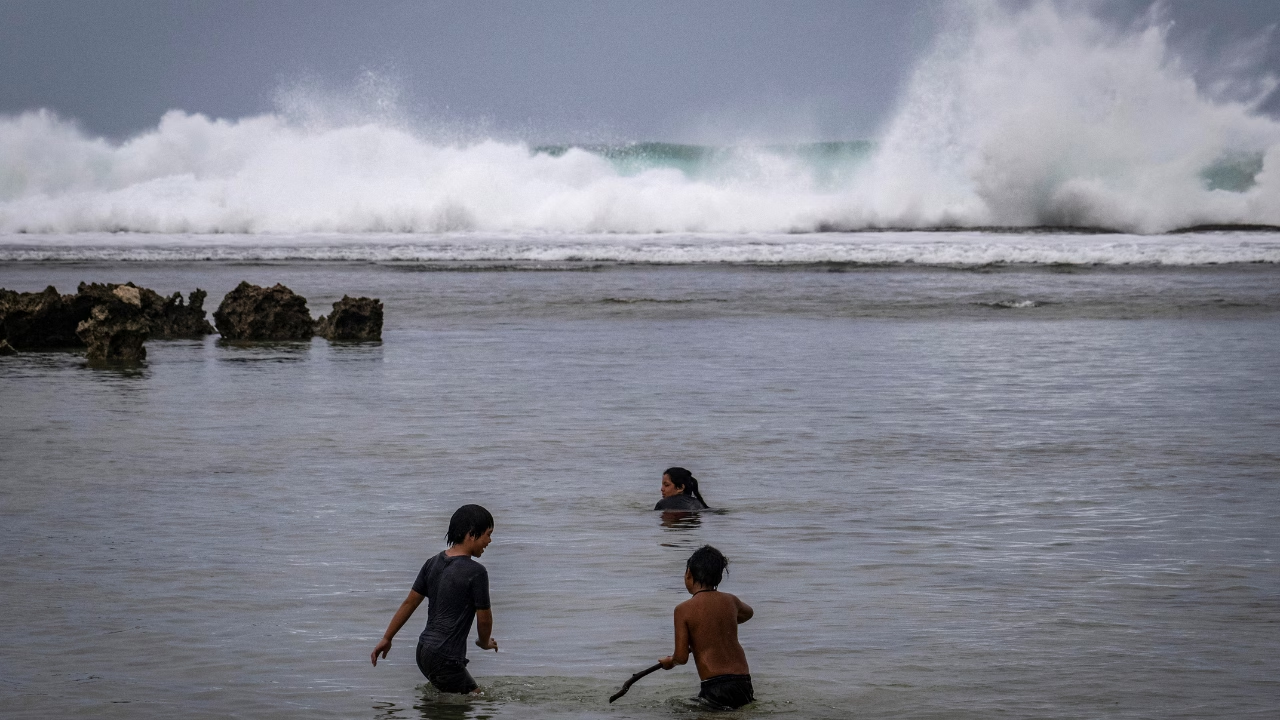
East Asia is preparing for the impact of Typhoon Bavi, one of the largest and most powerful storms to threaten the region in decades, after landslides triggered by heavy rainfall claimed at least 15 lives in the southern Philippines.
The deadly storm has already unleashed destruction in parts of the Philippines, while Taiwan, Japan and China are racing to strengthen emergency measures ahead of its expected landfall. Authorities have suspended classes, cancelled flights, mobilised rescue teams and urged residents to stock up on essential supplies as the typhoon approaches.
According to weather authorities, Typhoon Bavi stretches about 1,000 kilometres (620 miles) across at its widest point—roughly the size of France—and is moving across the Pacific toward Taiwan. It is expected to bring torrential rainfall to northern and eastern Taiwan, as well as a chain of remote Japanese islands, before making landfall in southeastern China on Saturday.
In the Philippines, overnight landslides on the island of Mindanao buried several families, leaving at least 15 people dead. Rescue teams are continuing search operations for those still missing, while officials warned that moderate to heavy rainfall would continue across affected areas throughout the weekend.
Taiwan has warned that the storm could dump up to one metre (39 inches) of rain, prompting the defence ministry to place about 29,000 soldiers on standby to support emergency response operations.
Taiwan’s Central Weather Administration told Reuters that Bavi is expected to be the largest storm by size to hit the island since 1987.
Farmers across the region rushed to harvest crops and protect farmland before conditions deteriorate, while fishermen secured their boats ahead of the storm.
“Don’t be fooled by the nice and calm weather now. A storm like this could be the most terrifying,” 60-year-old fisherman Chen Ming-hui told Reuters.
Authorities have also distributed thousands of sandbags to residents and business owners living in flood-prone communities.
Across the Taiwan Strait, Chinese authorities warned that the typhoon could have a “significant impact” even after making landfall, with forecasts suggesting it may continue moving northward across several provinces.
“Bavi’s large size and abundant energy mean its remnants and outer rainbands could move from Jiangsu and Anhui provinces toward the Bohai Sea region,” said Ma Jun, director of China’s Institute of Public and Environmental Affairs.
He warned that northern provinces, which have “less experience” dealing with typhoons than southern China, should “strengthen preparations.”
Some weather forecasts indicate that Bavi could make landfall twice in China.
Japan is also on alert, particularly across the remote Sakishima Islands, where residents have reinforced homes by taping windows and installing protective wind barriers.
Airlines across the region have cancelled hundreds of flights as a precaution. Japan Airlines suspended more than 100 flights for Friday and Saturday, affecting nearly 20,000 passengers, while All Nippon Airways cancelled more than 160 flights through Sunday, disrupting travel for another 20,000 passengers.
Thai Airways and Malaysia Airlines have also suspended flights to and from Taipei due to the approaching storm.
The latest weather emergency comes as parts of southern China continue recovering from the devastation caused by Typhoon Maysak earlier this week.
Maysak reportedly claimed at least 39 lives, forced the evacuation of more than 130,000 people—mostly in Guangxi—and caused extensive agricultural losses. The storm also triggered two rare tornadoes in central China’s Hubei province.
With Typhoon Bavi continuing to intensify, authorities across East Asia are urging residents to remain vigilant as emergency services prepare for what could become one of the region’s most destructive storms in recent years.
Discover more from LN247
Subscribe to get the latest posts sent to your email.

