Home Blog Page 282

ASUU Embarks On Indefinite Strike: What This Means For Public Universities

1

The Academic Staff Union of Universities (ASUU) has directed its members nationwide to suspend academic services following the delay in the payment of June 2025 salaries.

This latest action is not the result of new demands, but rather the enforcement of an existing resolution passed by the union’s National Executive Council (NEC).

The industrial action began with the University of Jos and the University of Abuja and is expected to spread to other institutions where salaries remain unpaid. At the core of this protest is ASUU’s “No Pay, No Work” policy, a standing resolution by its National Executive Council (NEC), which mandates that if salaries are delayed beyond the third day of any month, members must withdraw their services until payments are made.

This move not only signals the union’s growing frustration, but also highlights the structural issues affecting Nigeria’s higher education system.

What’s ASUU’s Demand?

ASUU’s immediate demand is simple: timely payment of salaries. Since university lecturers were migrated from the Integrated Personnel Payroll and Information System (IPPIS) to the Government Integrated Financial Management Information System (GIFMIS), delays in salary disbursement have reportedly become frequent and frustrating.

ASUU President, Prof. Chris Piwuna, condemned what he called a deliberate delay by government officials, particularly those in the Office of the Accountant General. He stated that while the GIFMIS payment platform is working efficiently, the people managing it are not fulfilling their responsibilities.

Beyond salary delays, ASUU is also demanding the release of an outstanding N10 billion in Earned Academic Allowances (EAA). The Federal Government had committed to paying N50 billion, of which only N40 billion has been released so far. The union warns that if these issues remain unresolved, further actions may follow.

What It Means For Students?

For students, the implications of this strike are severe, and deeply personal. Interrupted lectures, postponed exams, and suspended academic calendars have become recurring themes in public universities. Each time this happens, students are forced to endure extended academic years and an uncertain future.

In an economy where prices are climbing and many families are already financially strained, the psychological and economic cost of another academic delay is overwhelming. Many students rely on precise timelines for graduation to apply for jobs, scholarships, or postgraduate programs. A prolonged strike can push these plans off-course, or cancel them altogether.

This frustration is even more intense for final-year students preparing for their last exams or for those on the brink of graduation. Every additional week of idleness translates to lost time, lost money, and often, lost motivation. The repetitive nature of these strikes also breeds disillusionment. Some students have begun to consider private universities or even international options if they can afford it, further widening the gap in educational access.

ASUU Leadership Reaction

ASUU leadership is standing firm on its position. Prof. Piwuna explained that the decision to strike is not made lightly, but is the result of repeated inaction by the government despite numerous meetings and complaints.

He emphasized that the salary payment delay is not a technical issue. “The platform is working well. The people responsible are simply not releasing the funds on time,” he said.

At the University of Jos, ASUU Chairman Jurbe Molwus also confirmed that union members have stopped participating in lectures and meetings. A strike monitoring team has been activated to ensure full compliance. He reiterated the NEC’s resolution: any branch that does not receive salaries by the third day of the month must immediately withdraw services.

Government’s Response So Far

So far, the Federal Government has remained largely silent on the matter. No official statement has been issued in response to the current ASUU action. However, ASUU claims to have repeatedly engaged the Minister of Education and the Office of the Accountant General without success.

This lack of engagement is not new. In past instances, government representatives often promise dialogue but fail to meet agreed timelines or release allocated funds. ASUU believes this pattern of neglect leaves it no choice but to act in the only way it knows how, through industrial action.

Social Media Reactions

As expected, the announcement of a new ASUU strike has stirred mixed reactions online:

@1KingCJ: “When lecturers aren’t paid, students suffer. ASUU’s strike is a cry for dignity; education shouldn’t be treated with neglect.”

@Al_ameeen_yabo: “For a union full of ‘intellectuals,’ ASUU’s only solution for decades is strike after strike. No innovation, no alternative methods, just holding students hostage. Innocent students pay the price while careers are put on hold. Something has to change.”

@gyal_arike: “ASUU, don’t do this to me pls… let me be done with exams first 😭😭”

These varied perspectives reflect a deepening public debate. While some support ASUU’s right to protest unfair treatment, others question whether repeated strikes are still effective or ethical, especially considering their impact on students.

This latest ASUU strike is not just another protest. It’s a sign of deeper cracks within Nigeria’s educational framework. If timely salary payments and mutual respect between the government and academic institutions cannot be guaranteed, the future of public university education hangs in the balance.

For students, this is not just about delayed classes. It’s about their lives, their goals, and their hope for stability in a system that too often fails them. It is a call to all stakeholders, especially the government, to act with urgency, integrity, and empathy. Without lasting solutions, Nigeria risks further alienating its young, educated population and weakening one of its most critical national assets: public education.
Attack In Red Sea Leaves Two Crew Members Dead, Others Injured

1

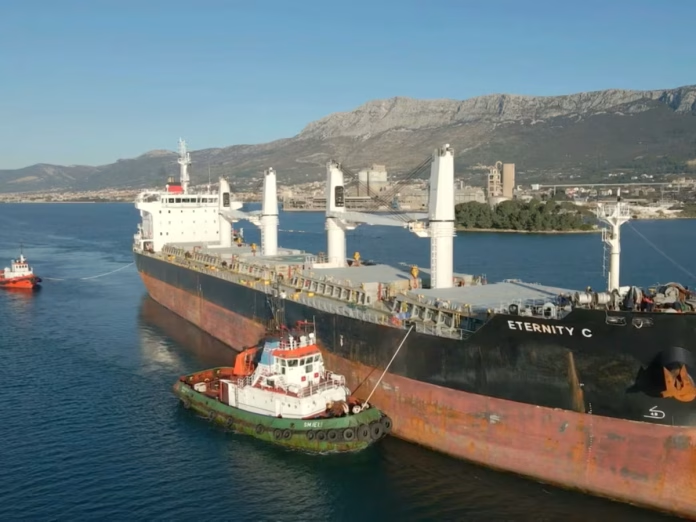
A deadly strike targeting the Liberian-flagged and Greek-operated bulk carrier Eternity C has claimed the lives of two crew members and wounded at least two more. The vessel came under attack near Yemen, marking a violent resurgence of maritime hostilities in the Red Sea.

According to Liberia’s delegation at a United Nations maritime gathering, the attack involved both sea drones and armed speedboats, and occurred just hours after a separate assault on another Liberia-registered, Greek-managed ship in the same region. This is the second such maritime incident reported in a single day after months of reduced activity.

The Red Sea, a vital corridor for global energy and goods, has seen a major decline in commercial traffic since November 2023 when the Houthis, a Yemeni armed group backed by Iran, began targeting vessels in protest of Israel’s actions in Gaza.

The deadly attack on Eternity C marks the first fatal incident involving merchant shipping in the area since June 2024. This raises the total number of seafarers killed in Red Sea-related maritime assaults to six.

Prior to the Eternity C incident, the Houthis claimed they had targeted the MV Magic Seas, another Liberian-flagged, Greek-run cargo vessel, allegedly sinking it during a strike off Yemen’s southwestern coast. However, no official confirmation regarding the ship’s sinking has been made.

All individuals aboard the Magic Seas were rescued by another merchant ship in the vicinity and have since arrived safely in Djibouti.

The Houthis have not issued any statements regarding the attack on the Eternity C.

“Just as Liberia was processing the shock and grief of the attack against Magic Seas, we received a report that Eternity C again has been attacked, attacked horribly and causing the death of two seafarers,” Liberia’s delegation told a session of the United Nations shipping agency, the International Maritime Organization, held in London this week.

Since the Houthis began their maritime campaign in late 2023, they have launched hundreds of aerial and sea-based weapons at passing vessels, claiming they are focused on ships tied to Israel.

Although a ceasefire agreement was reached with the United States in May, Houthi leadership has remained defiant, vowing to continue attacking vessels they suspect are affiliated with Israel.

“After several months of calm, the resumption of deplorable attacks in the Red Sea constitutes a renewed violation of international law and freedom of navigation,” IMO Secretary-General Arsenio Dominguez said on Tuesday.

“Innocent seafarers and local populations are the main victims of these attacks and the pollution they cause.”

Both ships involved in the recent incidents have been linked to commercial shipping lines with records of docking in Israeli ports within the past year.

“The pause in Houthi activity did not necessarily indicate a change in underlying intent. As long as the conflict in Gaza persists, vessels with affiliations, both perceived and actual, will continue to face elevated risks,” said Ellie Shafik, head of intelligence with the Britain-based maritime risk management company Vanguard Tech.

Additional injuries were reported among Eternity C’s crew, as confirmed by the vessel’s operator and maritime safety sources. The ship was said to be listing following the impact of the attack.

The bulk carrier had 22 people aboard, 21 Filipino nationals and one Russian when it was struck. According to maritime security insiders, the assailants used unmanned sea vehicles and rocket-propelled grenades launched from small, crewed speedboats.

In light of the situation, the Philippines’ Department of Migrant Workers advised Filipino seafarers who make up a significant portion of the global shipping workforce to consider declining assignments through high-risk maritime zones like the Red Sea.

The volume of shipping through this crucial trade corridor has fallen by roughly half since the first wave of Houthi assaults began last year, noted a senior official from a global shipping safety organization.

“This reduction in traffic has persisted due to the ongoing unpredictability of the security situation. As such, BIMCO does not anticipate the recent attacks will significantly alter current shipping patterns,” Larsen said.

The latest strike occurred approximately 50 nautical miles southwest of Hodeidah, Yemen, and is being reported as only the second such incident in the region involving merchant shipping since November 2024, according to an official involved in the European Union’s naval protection mission.

Nigerian Military Intensifies Airstrikes On Boko Haram In Borno

0

‎The Nigerian Air Force (NAF) launched precision airstrikes on July 6, 2025, targeting Boko Haram hideouts in the Mandara Mountains, Borno State, as part of Operation Hadin Kai.
‎
‎The operation demolished terrorist strongholds in Wa Jahode and Loghpere, neutralizing several insurgents and disrupting their logistics and command networks.
‎
‎Intelligence had revealed heightened activity by the Jama’atu Ahlis Sunna Lidda’awati wal-Jihad (JAS) faction, prompting swift military action.
‎
‎President Bola Tinubu has ordered the armed forces to escalate efforts against terrorists, insurgents, and separatists threatening Nigeria’s unity.
‎
‎“The military has my full support to crush these threats,” Tinubu declared, responding to growing security concerns in the northeast.
‎
‎The airstrikes come on the heels of a deadly Boko Haram attack in Malam Fatori, Abadam Local Government Area, which claimed nine lives and injured four, underscoring the persistent challenge of insurgency.
‎
‎Borno State Governor Babagana Zulum, represented by Commissioner Sugun Mele, condemned the Malam Fatori attack and warned residents against collaborating with terrorists.
‎
‎The state is working to resettle 3,000 households in the area to restore stability. Recent NAF operations, including strikes in Bita on May 30 that killed over 30 insurgents and a June 5 assault on fleeing terrorists in Buratai, have weakened Boko Haram’s operational capacity.
‎
‎Despite these efforts, Borno remains volatile, with recent suicide bombings and raids fueling fears of resurgent violence.
‎
‎The NAF, backed by regional forces like the Nigerien Defence Force, continues to target terrorist enclaves to prevent further attacks. As the military intensifies its campaign, Borno’s residents hope for lasting peace amid ongoing efforts to dismantle extremist networks.
‎
‎

Woman In Australia Found Guilty Of Deadly Mushroom Lunch That Killed Three

0

A woman in Australia has been convicted of fatally poisoning three of her former in-laws and attempting to kill a fourth after serving them a mushroom-laced meal, concluding a high-profile court case that has captured national attention.

Erin Patterson, 50, now faces the possibility of spending the rest of her life behind bars. A panel of 12 jurors, who spent a week reviewing the evidence under court-ordered isolation from media coverage, delivered the verdict on Monday. Her sentencing date has yet to be announced.

The case centers around a meal Patterson hosted nearly two years ago in the small community of Leongatha, where she prepared beef Wellington and invited several members of her estranged husband’s family to lunch.

Although her husband, Simon Patterson, declined the invitation, his parents Gail and Don Patterson, along with Gail’s sister Heather Wilkinson and Heather’s husband Ian Wilkinson, attended.

Three of the four guests died within days, showing symptoms aligned with toxic mushroom exposure. Ian Wilkinson became critically ill but survived and later gave testimony during the proceedings.

During the two-month trial, over 50 individuals gave testimony. Prosecutor Nanette Rogers did not provide jurors with a concrete reason behind Patterson’s actions, but she introduced material suggesting a troubled relationship between Patterson and her husband, including disagreements over parenting costs.

Despite the absence of a stated motive, Rogers insisted that Patterson’s guilt was made evident by numerous attempts to mislead including telling falsehoods about having cancer to justify hosting the lunch, pretending to fall ill herself, and taking steps to cover her involvement afterward.

Following the incident, Patterson allegedly got rid of a food dehydrator she used to dry mushrooms and initially misled investigators about its disposal. She also repeatedly reset her phone to factory settings, according to witness testimony.

“She, alone, chose what to cook, obtained the ingredients and prepared the meal,” Ms. Rogers told jurors in her closing arguments. “That choice to make individual portions allowed her complete control over the ingredients in each individual parcel.”

No response had been issued by Patterson’s legal team as of Monday afternoon regarding the jury’s decision.

Taking the stand in her own defense, Patterson insisted that the tragedy was accidental. She claimed she may have unknowingly combined wild mushrooms she had once gathered with store-bought varieties, unaware of their toxicity.

She also stated she had eaten the same food personalized servings of beef Wellington but later indulged in cake and vomited, a detail her defense argued might explain her survival. Her disposal of the dehydrator and initial dishonesty about it, she said, were due to fear and panic after her guests became sick.

One detail that stood out to the jury came from Ian Wilkinson, the only surviving guest, who pointed out that Patterson’s serving plate looked different in size and color from those used by the others.

The deeply unsettling nature of the incident set against the backdrop of a peaceful town, involving a familiar home-cooked dish and a seemingly ordinary murder amplified public interest far beyond typical criminal trials.

Daily conversation across the country reflected intense speculation and fascination with the story, from the meal’s details to the investigation’s digital trail.

Podcasts dedicated to breaking down each day of the court proceedings attracted millions of listeners, and public curiosity about the case eclipsed that of nearly any recent criminal trial in Australia.

Women’s Euro 2025: Spain Seal Quarterfinal Spot as Portugal Hold Italy

1

As the UEFA Women’s Euro 2025 group stage approaches its climax, Matchday 2 for Group B delivered fireworks, heartbreak, and brilliance. In Geneva, Portugal and Italy played out a tense 1–1 draw that kept Portugal’s hopes flickering and prevented Italy from sealing early progression. Meanwhile, in Zurich, a merciless Spain overwhelmed Belgium 6–2 in a goal-laden spectacle to become the first team from the group to secure a spot in the quarter-finals.

This round of matches not only reshaped the group standings but also confirmed Spain’s attacking superiority, put pressure on Italy to survive their next test, and signaled the end of the road for Belgium.

Portugal 1–1 Italy

Late Drama Keeps Portugal Alive

Venue: Stade de Genève, Geneva
Scorers:

  • Italy – Cristiana Girelli (70′)
  • Portugal – Diana Gomes (89′)

A game defined by tension and resilience, the Portugal–Italy clash saw both sides chasing different objectives—Italy eyeing qualification with a win, and Portugal desperate to stay in contention after a loss to Spain in their opener.

Match Summary

Italy broke the deadlock through the experienced Cristiana Girelli in the 70th minute. Her left-footed effort curled beautifully beyond Portuguese goalkeeper Patrícia Morais, capping a well-worked move. Just when Italy seemed poised to book their place in the quarter-finals, Portugal responded.

In the 89th minute, Diana Gomes capitalized on a loose ball from a corner and smashed home a thunderous equalizer that sent the Portuguese bench into raptures. The late goal not only salvaged a point but also left Group B’s second spot wide open.

Key Moments

  • 27’ – Diana Silva’s goal ruled out for offside after VAR review.
  • 52’ – Girelli narrowly missed a header from close range.
  • 70’ – Girelli scores a sensational goal to put Italy ahead.
  • 89’ – Diana Gomes fires in the equalizer from a rebound.
  • 90+5’ – Ana Borges is shown a red card for a second bookable offense, leaving Portugal to finish with ten.

Standout Performers

  • Cristiana Girelli – Proved why she remains one of Europe’s most reliable forwards.
  • Diana Gomes – Her late goal was a moment of sheer determination.
  • Patrícia Morais – Kept Portugal in the game with a string of strong saves.

Impact

  • Italy now sits on 4 points, needing at least a draw against Spain to qualify.
  • Portugal, with 1 point, must beat Belgium in their final game—and hope for a favorable result in the other tie.

Spain 6–2 Belgium

Spanish Flair Crushes Belgian Hopes

Venue: Letzigrund Stadium, Zurich
Scorers:

  • Spain – Putellas (22′, 86′), Paredes (39′), Esther (52′), Caldentey (61′), Pina (81′)
  • Belgium – Vanhaevermaet (24′), Eurlings (50′)

Spain delivered a masterclass in attacking football, scoring six goals against a spirited but overrun Belgian side. Alexia Putellas once again showed her world-class ability, netting twice and dictating the rhythm from midfield.

Match Summary

Despite Spain’s early dominance, Belgium briefly leveled through Justine Vanhaevermaet, only for Spain to retake the lead before halftime. The second half turned into a Spanish exhibition of movement, precision, and lethal finishing.

Clàudia Pina’s late strike was arguably the pick of the bunch—a thunderous long-range shot that found the top corner. Belgium did get a second through Hannah Eurlings, but the damage had long been done.

⚡ Key Moments

  • 22’ – Putellas slots home the opener after a flowing Spanish move.
  • 24’ – Vanhaevermaet equalizes against the run of play.
  • 39’ – Paredes powers in a header to restore Spain’s lead.
  • 52’ – Esther finishes from close range to make it 3–1.
  • 61’ & 81’ – Caldentey and Pina pile on the goals with finesse and flair.
  • 86’ – Putellas caps her night with a second goal.

🌟 Standout Performers

  • Alexia Putellas – Pulled the strings and delivered a captain’s performance.
  • Clàudia Pina – Electrifying pace and a goal-of-the-tournament contender.
  • Mariona Caldentey – A constant attacking threat and creative engine.

📊 Impact

  • Spain, with 6 points and a +9 goal difference, are through to the quarter-finals.
  • Belgium, now with 0 points, are officially eliminated.
  • Spain may rotate their squad in the final group match, offering Portugal or Italy a potential opening.

Matchday Stats Snapshot

MatchPossessionShots (On Target)Pass AccuracyCorners
Portugal vs ItalyITA 55% – POR 45%9 (3) – 8 (3)83% – 79%4 – 5
Spain vs BelgiumESP 64% – BEL 36%18 (11) – 7 (3)90% – 77%6 – 2

Final Group B Standings (After 2 Matches)

TeamPWDLGFGAGDPts
Spain2200112+96
Italy211031+24
Portugal201113-21
Belgium2002312-90

What’s Next?

Final Group B Fixtures – July 11, 2025

  • Spain vs Italy – Will Spain rest key players or look to send Italy packing?
  • Portugal vs Belgium – Can Portugal score big and hope for a miracle?

With one group spot locked down and the other up for grabs, the final matchday promises high drama.

Matchday 2 was a tale of two contests—Portugal vs Italy offered suspense and grit, while Spain vs Belgium dazzled with goals and flair. Spain looks unstoppable, while Italy must tread carefully. For Portugal, it’s all or nothing in their final showdown.

As the Women’s Euro 2025 continues to capture hearts and headlines, these performances reinforce how far the women’s game has come—and how much further it’s ready to go.

Cape Verde Marks 50 Years Of Independence With Pride And Reflection

3

Cape Verde has celebrated its 50th anniversary of independence from Portugal with a strong sense of pride in its progress and a sober reflection on the challenges that remain. Since gaining independence in 1975, the small Atlantic island nation has emerged as one of West Africa’s most stable and developed democracies.

A key area of progress has been Cape Verde’s performance on the United Nations Sustainable Development Goals (SDGs). The country has consistently scored above the African average across several indicators including education, healthcare, and poverty reduction. These global goals, set for achievement by 2030, serve as a benchmark for inclusive and sustainable development.

In the healthcare sector, the transformation has been remarkable. Back in 1974, Cape Verde had just 13 doctors and two hospitals. Today, the country boasts hundreds of medical professionals and healthcare facilities across nearly all of its islands. The government’s investment in public health infrastructure has significantly improved life expectancy and access to medical services for its citizens.

Former Prime Minister Gualberto do Rosario, reflecting on the journey since independence, said the country’s democratic stability and commitment to development were achievements to be proud of. Civil society leader Antonio da Silva echoed the sentiment, praising Cape Verde’s progress while highlighting key issues that remain.

“Cape Verde has come a long way. But youth unemployment and the continued migration of young people in search of better opportunities are real concerns,” da Silva noted.

Indeed, despite economic growth and strong institutions, many of the nation’s young people continue to face limited job prospects. This has led to ongoing migration to Europe and the United States, particularly among skilled graduates.

As Cape Verde enters its second half-century of sovereignty, national leaders and citizens alike are embracing both pride in the nation’s progress and a renewed commitment to solving the pressing challenges of youth empowerment, economic diversification, and long-term sustainability. The anniversary celebrations serve not only as a milestone but as a reminder that the journey of nation-building is ongoing.

Nigerian Railway Corporation Aims To Restore Lagos-Kano Route By End Of Year

0

‎The Nigerian Railway Corporation (NRC) has reaffirmed its commitment to restoring commercial train services along the Lagos-Kano narrow-gauge corridor, with operations expected to reach Offa, Kwara State, before the end of 2025.
‎
‎This ambitious initiative, led by NRC Managing Director Dr. Kayode Opeifa, aims to revitalize rail transport, boost economic activity, and enhance connectivity across Nigeria’s southwest and northern regions.
‎
‎Dr. Opeifa announced the restoration plan during a meeting with the Lagos State chapter of the Offa Descendants Union (ODU), as reported by Voice of Nigeria.
‎
‎He emphasized that NRC engineers are working tirelessly to repair damaged tracks, with service reactivation targeted to reach Offa, Ilorin, Mokwa, Kaduna, and ultimately Kano by December 2025.
‎
‎“Despite setbacks like washouts along the corridor, we are committed to restoring this vital route to facilitate passenger and cargo movement,” Opeifa stated.
‎
‎The Lagos-Kano route, part of Nigeria’s 3,505-kilometer narrow-gauge network, has been a critical artery for trade and travel but has faced challenges due to vandalism and aging infrastructure.
‎
‎The NRC’s efforts include partnerships with state governments in Niger, Kano, and Kaduna to restore shuttle services on the Minna-Kaduna and Kaduna-Kano routes, as well as collaborations to combat vandalism.
‎
‎Opeifa highlighted the exemplary role of Offa residents in safeguarding railway assets, urging other communities to follow suit.
‎
‎In a related development, the NRC has signed Memoranda of Understanding with five tertiary institutions, including Yaba College of Technology, Kwara State Polytechnic, and Federal Polytechnic Offa, to enhance local expertise in railway technology.
‎
‎These partnerships aim to train a new generation of professionals in locomotive engineering and rail logistics, reducing reliance on foreign expertise.
‎
‎“This collaboration will build skilled manpower to sustain our railway operations,” Opeifa noted.
‎
‎The restoration project is expected to boost economic activities by improving access to markets and reducing transportation costs for goods and passengers.
‎
‎Dr. Osita Chukwu, National Coordinator of the Save Nigeria Freight Forwarders, Importers & Exporters Coalition, praised the initiative, stating, “A dependable rail system linking Lagos to Kano will unlock trade corridors and cut transit times significantly.”
‎
‎Despite the optimism, challenges remain, including persistent vandalism and unresolved staff welfare issues.
‎
‎The National Union of Railway Workers in Zaria raised concerns about unpaid promotion arrears and career stagnation, urging the NRC to address these alongside route reactivation.
‎
‎As the NRC intensifies efforts to restore the Lagos-Kano corridor, Nigerians are hopeful that the revived route will enhance regional integration and drive economic growth, positioning rail transport as a reliable alternative to road travel.
‎

Trump Vows New 10% Tariff On Countries Backing BRICS Policies

0

US President Donald Trump has issued a strong warning nations aligning themselves with BRICS in ways that contradict American interests could soon face an added 10% tariff.

“Any country aligning themselves with the Anti-American policies of BRICS, will be charged an ADDITIONAL 10% tariff. There will be no exceptions to this policy,” Trump wrote on social media.

Trump has maintained a longstanding opposition to BRICS, a geopolitical bloc that includes major players such as China, Russia, and India.

While the US had initially provided a deadline of July 9 for countries to finalize trade deals, officials now say duties will be enforced starting August 1. Trump stated he would notify countries in writing of the new rates should no agreements be reached before the deadline.

Treasury Secretary Scott Bessent, speaking on Monday, suggested that the final days before the cut-off would be packed with negotiations.

“We’ve had a lot of people change their tune in terms of negotiations. So my mailbox was full last night with a lot of new offers, a lot of new proposals,” he said.

To date, the US has completed formal trade deals with the United Kingdom and Vietnam, and reached a partial agreement with China.

Still, ongoing talks between the US and the UK have yet to resolve disputes over American tariffs on British steel.

Since returning to the presidency in 2025, Trump has introduced multiple waves of import duties, arguing these measures will revitalize domestic manufacturing and safeguard employment.

Back in April, during what he dubbed “Liberation Day”, Trump revealed a series of aggressive tariff hikes, some as high as 50% targeting a wide range of foreign products. However, he quickly paused the most severe measures to allow three months for dialogue, with July 9 as the final date for compromise.

In the meantime, most imports into the US have been subject to a flat 10% charge.

Talks between the US and the European Union remain active, with EU officials pushing to extend the temporary 10% rate beyond the July deadline.

Other discussions are underway aimed at lowering a 25% duty on European automotive goods and a 50% surcharge on metal products entering the US market.

A spokesperson noted that President Trump and the head of the European Commission had a “good exchange” during recent talks. It comes weeks after Trump warned that failure to reach an accord could lead to a 50% levy on EU exports.

Just last week, the President also indicated that Japan may be hit with a 30% to 35% tariff if no trade pact is sealed by the upcoming Wednesday deadline.

When asked if tariff changes would happen on July 9 or August 1, Trump said: “They’re going to be tariffs, the tariffs are going to be tariffs.”

Commerce Secretary Howard Lutnick later clarified that the measures would begin taking effect on the first day of August.

Trump further announced that between 10 and 15 official notifications would be sent out Monday, informing nations of the potential new tariff rates in the absence of finalized deals.

Bessent described the letters as “just ‘thank you for wanting to trade with the United States of America. We welcome you as a trading partner, and here’s the rate, unless you want to come back and try to negotiate’.”

In 2023, BRICS welcomed new members expanding its circle beyond Brazil, Russia, India, China, and South Africa to now include Egypt, Saudi Arabia, the United Arab Emirates, Iran, Ethiopia, and Indonesia.

Together, these nations account for over half of the global population and were originally brought together to challenge Western dominance in global affairs, including economic and financial systems.

Last year, Trump had threatened tariffs of up to 100% on BRICS states if they moved forward with launching a new joint currency intended to compete with the US dollar.

Trump’s most recent warning came after BRICS finance ministers publicly condemned US tariffs and proposed overhauls to international institutions such as the IMF, while raising concerns about how currencies are valued worldwide.

Following a summit in Rio de Janeiro, the finance ministers released a joint statement accusing protectionist tariffs of destabilizing global markets and creating “uncertainty into international economic and trade activities”.

Andrew Wilson, a senior trade official from a global business chamber, noted the difficulty many countries would face in cutting economic ties with China.

He said: “Shifting away from China…in a number of sectors is far more difficult to achieve in the world in practice.

“You look at the dominance China has in a number of sectors – EVs, batteries [and] particularly rare earths and magnets, there are no viable alternatives to China production.”

Summary of U.S. Trade Deals as of July 7:

United Kingdom: US agreed to slash duties on UK car imports from 27.5% to 10%, covering up to 100,000 vehicles annually. Tariffs on aerospace parts were also removed. In return, the UK scrapped duties on US ethanol and beef.

Vietnam: Goods sent from Vietnam to the US will face a 20% import tax. American products entering Vietnam will be exempt from tariffs. However, items routed through Vietnam from third countries and sold in the US will be taxed at 40%.

China (Partial Deal): Import taxes on select Chinese goods were cut from 145% to 30%, while Chinese duties on American items dropped from 125% to 10%. China also lifted several non-tariff measures, including export restrictions on key minerals.

Jessie J Reveals Cancer Tests Show No Further Spread

4

Pop artist Jessie J has shared uplifting news following her breast cancer surgery, revealing that post-operative test results have confirmed the disease has not spread.

In a heartfelt message shared online, the singer said she was crying “happy tears” after learning the outcome.

Back in June, Jessie publicly disclosed her cancer diagnosis and shortly afterward underwent surgery to remove one of her breasts.

She expressed deep appreciation to her fans, saying she was overwhelmed by the “prayers, the love, the well wishes, the joy and all the positive energy” sent her way by her 14 million followers.

The 37-year-old artist has been candid about her journey through a mastectomy and has received widespread encouragement from fans and fellow celebrities for her openness.

Earlier this week, she posted a touching video taken just before her surgery, featuring her young son’s voice saying: “Mummy’s gonna be OK.”

“And… I am OK” she wrote, explaining that test results confirmed there was no sign of the cancer spreading.

Known for chart-topping tracks like Nobody’s Perfect and Who You Are, Jessie J has sold millions of records worldwide and is currently preparing for the release of a new album, her first in several years.

Her 2011 hit Price Tag has recently gained renewed attention, going viral as social media users shared videos inspired by its lyrics.

The post sharing her test results was quickly met with a flood of supportive messages, including notes from well-known figures like TV presenter Rochelle Humes. Singer Paloma Faith also chimed in to offer her congratulations.

Many women who have experienced breast cancer themselves responded with messages of solidarity and encouragement. Breast cancer remains one of the most common diagnoses in women, with over 56,000 cases reported annually, according to health statistics.

Jessie acknowledged that while the news is positive, her recovery journey isn’t over. She noted she has “lots of healing to go” and is preparing for reconstructive surgery to “make these cousins look more like sisters”.

She ended the post on a playful note, writing that she’s temporarily adopting the nickname “The LopJess monster”.

Healthcare guidance encourages women to monitor their breast health and consult a doctor if they notice:

Any lumps or swelling in the chest, underarm, or breast

Changes to the shape or appearance of their breast or nipple

Persistent pain in the breast or armpit

There are also resources and medical support available for men who may be concerned about breast cancer symptoms.

NDLEA Intercepts Cocaine Smuggled In Lipsticks And Documents

0

The National Drug Law Enforcement Agency (NDLEA) has dealt a significant blow to international drug trafficking networks with the interception of cocaine consignments cleverly concealed in female lipsticks and property title documents destined for the United Kingdom and Saudi Arabia.
‎
‎The seizures, announced on Sunday, July 6, 2025, highlight the agency’s ongoing efforts to curb the smuggling of illicit drugs from Nigeria.
‎
‎According to a statement by NDLEA spokesperson Femi Babafemi, operatives from the Directorate of Operations and General Investigation (DOGI) uncovered the consignments on Thursday, July 3, 2025, at a courier company in Lagos.
‎
‎A total of 420 grams of cocaine was found factory-fitted into 84 pieces of female lipsticks bound for the UK, while an additional 280 grams was hidden inside a Certificate of Occupancy (C of O) intended for shipment to Saudi Arabia.
‎
‎The sophisticated concealment methods underscore the lengths to which traffickers go to evade detection.
‎
‎In a separate operation, the NDLEA dismantled a major drug trafficking network in Lagos, culminating in the arrest of notorious drug kingpin Ajetsibo Emami, alias “Warri Kinsman,” on June 28, 2025.
‎
‎Following a three-day intelligence-led operation, Emami and three associates were apprehended in Ikeja, with authorities seizing 24 jumbo bags containing 681 pouches of Canadian Loud, a potent strain of cannabis weighing 414.2 kilograms.
‎
‎The bust followed credible intelligence about Emami’s plans to distribute the shipment from Lekki across Lagos and beyond.
‎
‎Further operations at Murtala Muhammed International Airport (MMIA) in Lagos revealed additional illicit activities.
‎
‎On July 2, NDLEA operatives intercepted Aburemi Hysent, a frequent flyer specializing in transporting goods between Nigeria and Italy. Hysent was caught with 7,660 tramadol pills (225mg and 200mg) concealed in food items, confessing he was promised €800 for successful delivery in Italy.
‎
‎On July 4, authorities seized 52 suspected counterfeit travelers’ cheques worth AU$17.7 million, hidden in children’s books and bound for Malaysia via Istanbul on a Turkish Airlines flight.
‎
‎The freight agent, Bolarinwa Saheed, was arrested and handed over to the Economic and Financial Crimes Commission (EFCC) for further investigation.
‎
‎The NDLEA’s nationwide crackdown extended beyond Lagos. At the Seme border in Badagry, operatives recovered 718 large balls of skunk weighing 359 kilograms from a store in the Baba-Pupa area on July 5.
‎
‎In Osun State, a raid on a 9.67-hectare cannabis farm in the Oke-Ila forest destroyed 24,175 kilograms of skunk, with seven suspects arrested.
‎
‎Additional seizures included 167 kilograms of skunk in Borno, 452 kilograms in Kano, and various quantities of tramadol and diazepam in Kaduna, Sokoto, Kebbi, and Taraba.
‎
‎NDLEA Chairman Brig. Gen. Mohamed Buba Marwa (Rtd) commended the operatives for their vigilance and balanced approach to drug supply and demand reduction.
‎
‎“These seizures and arrests reflect the commitment of our officers across multiple commands,” Marwa said, urging sustained efforts to disrupt trafficking networks.
‎
‎The operations also uncovered a family-run drug syndicate in Lagos, involving businessman Ajah Johnson Uchenna, his wife Rosemary, their daughters Stella and Ngozi, and a family friend, Okoro Elijah.
‎
‎The family was linked to 508.5 kilograms of skunk seized in two raids, following their initial arrest by the Department of State Services (DSS) on June 13.
‎
‎These successes come amid the NDLEA’s broader War Against Drug Abuse (WADA) initiative, which includes public sensitization campaigns in Lagos, Enugu, Katsina, and Borno to reduce drug demand.
‎
‎As investigations continue, the NDLEA’s actions send a strong message to traffickers: Nigeria’s borders and airports remain under intense scrutiny, with no room for illicit activities to go undetected.
‎