Home Blog Page 95

What You Should Know About The Latest U.S. Visa Renewal Policy Update

Starting September 2, 2025, the United States Department of State will implement significant changes to its nonimmigrant visa (NIV) interview waiver (IW) program.

‎The updated policy will restrict eligibility for interview waivers and reintroduce mandatory in-person interviews for many categories of visa applicants previously covered under exemptions.

Key Changes To The Interview Waiver Policy

Under the revised guidelines, only specific categories of B-1, B-2, and B1/B2 visa holders as well as diplomatic and official visa applicants will remain eligible for interview waivers.

‎This marks a departure from the broader policy implemented earlier this year, which allowed many nonimmigrant visa holders, including H-1B and F-1 applicants, to renew their visas without attending an in-person interview, provided their prior visa expired within the last 12 months.

‎From September, those with H-1B, L, and F visas will no longer qualify for the interview waiver based on the 12-month expiration rule.

‎This change is expected to significantly impact visa holders in employment and academic categories, who must now prepare to appear in person before a consular officer, even for renewals.

‎Additionally, applicants under the age of 14 and over the age of 79 who were previously exempt will now be required to attend interviews, except in diplomatic or official visa categories.

Who Are Eligible For Interview Waivers?

Despite the new restrictions, certain applicants can still avoid in-person interviews. These include:

‎Holders of full-validity B-1, B-2, or B1/B2 visas or Border Crossing Cards/Foils (for Mexican nationals) whose previous visa expired within 12 months or remains valid.

‎Applicants classifiable under diplomatic or official visa categories (A-1, A-2, C-3, G-1 through G-4, NATO-1 through NATO-6, and TECRO E-1).

‎‎To qualify for a waiver, eligible applicants must also:

‎Apply in their country of nationality or residence.

‎Have no record of prior visa refusal (unless overcome or waived).

‎Show no apparent or potential ineligibility for a visa.

‎‎Even for applicants who meet these criteria, consular officers retain the discretion to require in-person interviews on a case-by-case basis.

Interview Waivers Implications

This update supersedes the previous Interview Waiver Update issued on February 18, 2025, which had extended the waiver eligibility to broader nonimmigrant visa categories.

‎With the July 25 update, that flexibility has been rolled back, signaling a tighter and more security-focused visa adjudication process.

‎For B-1 and B-2 visa applicants, this means a continued pathway to visa renewal without interviews provided they meet the outlined conditions.

‎For others, including professionals on H-1B visas and international students on F-1 visas, this policy shift means preparing for longer wait times and the added step of scheduling and attending a consular interview.

Application Process And Expedited Appointments

Applicants must continue to submit the DS-160 online visa application form, pay the required visa fees, and book the first available appointment slot.

‎Those facing urgent, unforeseen circumstances such as a medical emergency or a school start date may request an expedited interview.

‎However, reasons such as tourism, weddings, or routine conferences do not qualify for expedited appointments.

‎It is also important to note that the interview waiver wait times only apply to locations where applicants submit their documents and passports. They do not include the time required for visa adjudication or document delivery.

As the U.S. adjusts its visa policies, applicants are advised to plan ahead, understand the specific requirements for their visa class, and ensure compliance with the new rules.

‎The latest changes reflect a more stringent approach to visa processing, particularly for employment-based and student categories, and underscore the importance of staying informed through verified official updates.

Electricity Act (Amendment) Bill: FG Considers Selling 11 Discos To New Investors

0

The Federal Government may repossess and re-privatise the 11 electricity distribution companies (DisCos) if they fail to inject fresh capital into the sector, according to provisions in the Electricity Act (Amendment) Bill, 2025 currently before the National Assembly.

‎The bill, sponsored by Senator Enyinnaya Abaribe, aims to amend the 2023 Electricity Act and introduce sweeping regulatory reforms. It seeks to address years of poor performance, mounting debts, and stalled investments in the power distribution segment.

‎If passed into law, the Nigerian Electricity Regulatory Commission (NERC) will be empowered to compel core investors in the DisCos to recapitalise within 12 months. Failure to comply could lead to punitive actions, including share dilution, takeover, or outright re-privatisation—particularly for DisCos already under receivership or experiencing financial distress.

‎The draft legislation, proposes a comprehensive financing framework to be developed within a year. This framework would prioritise long-term local currency investments, reduce reliance on diesel and petrol-powered generators, eliminate unstructured subsidies, and stabilise the Nigerian Electricity Supply Industry (NESI), which is currently weighed down by a debt overhang of over N4 trillion.

‎The affected DisCos are Abuja, Benin, Eko, Enugu, Ibadan, Ikeja, Jos, Kaduna, Kano, Port Harcourt, and Yola. The bill also calls for a reassessment of equity contributions by both federal and state governments in the DisCos, aligned with their ownership stakes.

‎Under Sections 228J and 228K of the amendment, the Minister of Power and NERC are tasked with implementing a robust financing strategy to de-risk investments across the power value chain—from generation to distribution. It also recommends phasing out regressive subsidies and enforcing a transparent tariff system that ensures cost recovery for efficient operators.

‎While the bill has been welcomed by some stakeholders, others, including the Forum of Commissioners of Power and Energy, have criticised it, warning that it could disrupt the decentralised electricity market established under the 2023 Act.

‎Power sector experts and consumer advocacy groups have also raised concerns. Many argue that the proposed 12-month window for recapitalisation is too short, recommending a 24-month timeline similar to previous banking reforms. Others stress that recapitalisation will remain ineffective unless the government settles all outstanding subsidy debts and allows cost-reflective tariffs.

‎Minister of Power Adebayo Adelabu has repeatedly expressed frustration with the DisCos, accusing them of stalling reforms and underperforming despite multiple government bailouts and tariff reviews. In May, he publicly stated that those unwilling to invest should exit the sector.

‎A report by the Bureau of Public Enterprises in May 2025 revealed that over 70% of the DisCos have failed to meet performance targets set during the 2013 privatisation.

‎Meanwhile, the Ministry of Power is piloting a reform programme involving two underperforming DisCos—one each from the North and South. The initiative, launched in collaboration with the Japanese International Cooperation Agency, is part of a broader plan to restructure the distribution segment.

‎When contacted for comments, a representative of the DisCos, speaking anonymously, said that once passed into law, the amended Electricity Act will be binding and must be implemented by all stakeholders. He noted that DisCos are prepared to cooperate with NERC and support reforms that improve the sector.

‎Electricity market expert Chinedu Amah said the issue isn’t a lack of policy but poor implementation. He called for the removal of inefficient subsidies and suggested that investment should be driven by market forces rather than obligation alone.

‎Another analyst, Habu Sadiek, echoed support for the bill but stressed the need for the government to first clear subsidy arrears and revise tariff structures. He also argued that the 12-month deadline for recapitalisation is unrealistic given the current economic climate.

‎The Ministry of Power has assured the public that the reform process is ongoing, with updates to be provided in due course, according to the Minister’s Special Adviser on Strategic Communications, Bolaji Tunji.

Building Scalable Tech Products For Merging Markets

0

Building scalable tech products for merging markets like Nigeria and across Africa means more than just developing apps, it means creating long-term, sustainable solutions to deep-rooted socio-economic problems. In regions where infrastructure gaps, limited access to essential services, and income inequality persist, tech must rise to meet those challenges.

The goal is to build systems that not only solve real, immediate issues but also have the resilience to adapt and evolve. Whether it’s financial inclusion, healthcare access, or education, building for scale means building for the future.

Over the last decade, we’ve witnessed a remarkable shift from basic electronic money transfers to robust digital banking platforms and wider access to fintech solutions. These innovations have redefined convenience and accessibility. Yet, in Africa, many of the most effective tech products are those designed specifically to address local challenges.

The uniqueness of the Nigerian market, for example, demands solutions tailored to its peculiar problems, tech that understands the environment, speaks the culture, and scales with it. Technology may cut across borders, but its most powerful impact comes when it meets people exactly where they are.

Can Corp Members Wear Skirts To NYSC? This Is What You Should Know

0

The National Youth Service Corps (NYSC) has long stood as a unifying institution for Nigerian graduates, known for its khaki uniforms, regimented drills, and strict codes of conduct. For many, it is a defining experience; a transition into adulthood and national service. But a recent court ruling has stirred public debate and legal reflection: Can religious convictions override NYSC’s uniform policy?

This question found its way into the courtroom when two former female corps members challenged the scheme’s dress code on the grounds of their Christian faith.

The judgment that followed could redefine how faith and federal policy intersect in Nigeria’s most symbolic youth program.

Why The Corpers Went To Court

Ogunjobi John Blessing and Ayuba Vivian, both former corps members, had one thing in common: their deep Christian conviction that wearing trousers was against their faith.

Citing Deuteronomy 22:5, a Bible verse that discourages women from wearing clothes meant for men, the women refused to wear the compulsory NYSC trousers during their service year. As a result, they were denied their discharge certificates.

Instead of letting the matter slide, they went to the Federal High Court in Abuja, claiming that the NYSC’s dress code violated their rights to religious freedom, human dignity, and protection from discrimination.

Their cases, filed separately in 2020 but heard together because of their similarities, brought an old debate back into public discussion, the clash between uniform rules and personal beliefs.

In June 2025, Justice Hauwa Joseph Yilwa delivered a landmark ruling. She declared NYSC’s refusal to allow the ladies wear skirts as unconstitutional. According to the judgment, forcing the women to wear trousers was a clear breach of their fundamental rights under the 1999 Constitution.

The judge ordered the NYSC to recall both women and issue them their discharge certificates. The court also awarded them 500,000 naira each as compensation for the humiliation they endured.

What Does The NYSC Handbook Say?

For years, NYSC has held tightly to its rule that all female corps members must wear trousers, especially during camp and official activities. The scheme insists that its uniform promotes unity, discipline, and uniformity among Nigeria’s diverse youths. Any deviation, the agency has argued, may disrupt the orderliness and identity the scheme is known for.

In the past, NYSC officials have been quick to dismiss requests for uniform exemptions based on religion, arguing that all participants sign up with full knowledge of the program’s structure. The message has always been clear: NYSC is a structured, secular program and everyone must comply equally.

However, this court ruling is likely to force NYSC to review that stance.

What Does The NYSC Act Say?

The NYSC Act, which guides the operations of the scheme, does not go into great detail about the specific dress code. It speaks generally about discipline, conduct, and the expected behavior of corps members.

The official NYSC handbook and camp guidelines are where uniform rules are explained in detail, including the enforcement of trousers for all female participants.

But here lies the key issue: internal policies like the handbook do not carry more weight than the Nigerian Constitution. When any guideline contradicts constitutional rights, the court has a duty to step in and correct it.

Has This Happened Before?

This is not the first time NYSC has faced legal challenges over its dress code. In 2014, a similar case came up when a Muslim corps member insisted on wearing her hijab with her full uniform. At the time, the matter stirred debate, though it did not lead to a major policy change.

What makes this current case different is that it went all the way to court and was decided in favor of the applicants. The ruling is not just symbolic. It sets a clear legal precedent that NYSC must now respect religious-based exemptions, at least in special cases where the applicant can prove genuine conviction.

Does The Court Have The Right To Intervene In Religious Matters?

This is where many people get confused. Nigeria practices a secular system, so the courts do not get involved in religious doctrine. That means judges won’t rule on what is “right” or “wrong” according to any religion. However, the Constitution gives every citizen the right to practice their faith without fear, pressure, or discrimination.

So, when a government agency, like NYSC, introduces a policy that forces someone to act against their religion, the court is empowered to step in. This is not about religion itself, it’s about protecting the person’s right to religious freedom. In the eyes of the law, no institution, no matter how powerful or old, is allowed to deny that right.

What Next?

The ruling opens up a new chapter in the NYSC’s story. With the court clearly stating that NYSC’s one-size-fits-all uniform policy violates fundamental rights, the scheme may now have to revisit its dress code.

We could see the introduction of official exemptions for religious reasons, just like how health conditions are treated. But this also raises a new set of questions: Will people misuse this? How will NYSC verify genuine religious claims? Will it cause division or confusion in the camps?

For now, what is clear is that the Constitution protects everyone’s right to serve their nation without compromising their deeply held beliefs. Whether in trousers or skirts, every corps member deserves to be treated with respect and dignity.

Boniface Mwangi Faces New Charges As Kenya’s Political Tensions Intensify

0

Prominent Kenyan activist Boniface Mwangi is facing fresh charges of unlawful possession of ammunition following the dismissal of an earlier terrorism case linked to him. Mwangi, known for his vocal criticism of government policies and advocacy for social justice, was initially accused of orchestrating violent anti-government protests that led to multiple deaths and extensive property damage.

The new charge stems from ammunition allegedly recovered during a raid on Mwangi’s residence when he was first detained. Prosecutors claim the discovery connects him to violent groups behind recent unrest, while Mwangi maintains the items were planted as part of an effort to silence him. His legal team argues that the accusations are politically driven and aim to deter public demonstrations against the administration.

The case comes at a time of heightened political tension in Kenya following weeks of demonstrations over economic reforms and governance issues. Human rights groups have condemned the renewed charges, warning that targeting activists under security laws risks undermining democratic freedoms.

While Mwangi’s arrest dominated national debate, the Nairobi Securities Exchange reported an unexpected increase in listings despite the volatile political climate. Analysts suggest the surge reflects attempts by businesses to project stability amid fears of prolonged unrest affecting investor confidence.

Kenyan authorities insist the charges are based on legitimate security concerns and not political interference. The case is expected to test the country’s legal and political landscape as Mwangi prepares to challenge the allegations in court.

Portugal Fights Major Wildfires Amid Hot Weather Across Country

Thousands of emergency responders, supported by a fleet of water-dropping aircraft, were actively engaged on Tuesday in suppressing three major wildfire outbreaks sweeping through parts of central and northern Portugal. Officials raised the fire threat level across much of the country following prolonged periods of extreme heat.

One of the most severe fires broke out near Arouca, approximately 300 kilometers north of the capital, Lisbon. As the flames spread through the area, civil protection authorities evacuated numerous residents and temporarily shut down the scenic Passadicos do Paiva boardwalk, a well-known destination for hikers and sightseers.

“It’s desperate to see this … we need help, we need air support,” said Rafael Soares, a resident of the village of Canelas, recalling a devastating wildfire last September which burned 6,000 hectares (15,000 acres) of forest near Arouca.
He blamed the fires on droughts linked to climate change that have left the area’s forests bone-dry.

Meanwhile, in the far north near the Spanish border, fires have been tearing through Peneda-Geres National Park since Saturday. The blaze produced heavy smoke that blanketed nearby towns and prompted authorities to issue repeated stay-at-home warnings to residents.

To assist with the effort, Spain dispatched several firefighting planes to help contain the flames in the border region.

Over in Spain, three separate wildfires were burning on Tuesday morning in the autonomous community of Castile and Leon. The most dangerous one was located outside the city of Avila, roughly 100 kilometers west of Madrid. Due to hazardous air quality, residents in the town of Mombeltran were instructed to remain indoors.

Although hot, dry summers are typical throughout the Mediterranean basin, the increasing frequency and severity of heatwaves have led to more frequent and intense wildfires in recent years attributed by many to rapidly rising global temperatures.

Turkey has been contending with numerous blazes over the past few weeks, worsened by soaring heat. Last week, ten firefighters tragically lost their lives battling a fire in the central region of Eskisehir.

Over the weekend, wildfires in Greece triggered evacuations across multiple villages, with at least five individuals sustaining injuries in separate incidents.

N160 Trillion And Counting: Implication Of Nigeria’s Growing Public Debt

0

Nigeria’s public debt hitting N160 trillion is not just a staggering figure, it’s a warning sign. As the country continues to borrow to fund budget deficits, service existing debt, and meet urgent obligations, the implications grow heavier. This mounting debt burden puts immense pressure on government revenue, most of which is already being used to service previous loans.

With little left for infrastructure, education, healthcare, or job creation, the consequences of debt dependency are already being felt in the daily lives of ordinary Nigerians.

What’s even more concerning is that this figure could rise even higher, as Nigeria continues to struggle with low revenue generation, oil theft, foreign exchange instability, and inflation. Borrowing may seem like a quick fix, but it risks trapping the nation in a cycle of debt with limited fiscal space for development.

N160 trillion is more than just a number, it’s a signal that urgent reforms in public finance, transparency, and sustainable economic planning are needed to secure Nigeria’s future.

Russian Bombing Of Ukrainian Prison Kills 17, Injures Dozens

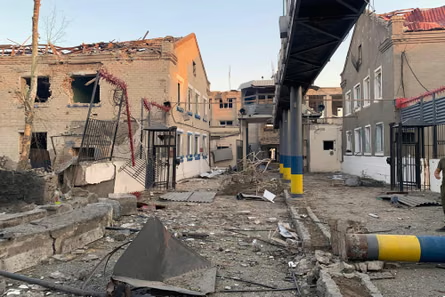
Ukrainian authorities have confirmed that an air assault carried out by Russian forces overnight struck a detention center in the southeast, resulting in the deaths of 17 individuals and injuring 42 more.

The facility, located in the Zaporizhzhia region, was hit during a series of eight powerful aerial attacks using high-explosive glide bombs. Regional head Ivan Fedorov stated that residential properties in the area were also damaged during the offensive.

Ukrainian President Volodymyr Zelensky denounced the incident as a “deliberate strike” on a correctional institution, accusing Russia of targeting civilians at a time when a ceasefire “could have long been in place.”

Though Russia lays claim to Zaporizhzhia as one of the four territories it says were annexed in 2022, Ukraine retains control over most of the region.

According to Ukraine’s justice ministry, four of the bombs landed directly on the Bilenke facility, leveling key parts of the prison including the kitchen, administrative building, and the intake area. All of the dead and wounded were inmates, the ministry confirmed.

Since the conflict escalated into a full-scale invasion in 2022, Zaporizhzhia has endured repeated assaults by Russian forces.

Ukraine’s human rights representative condemned the prison attack, emphasizing that incarcerated individuals retain their right to life and protection under international humanitarian law.

On Monday, U.S. President Donald Trump delivered a pointed message to the Kremlin, warning that Moscow had “about 10 or 12 days” to reach a ceasefire agreement or face sweeping new sanctions. Speaking during his visit to Scotland, Trump told reporters he would “announce it probably tonight or tomorrow,” adding, “there’s no reason to wait, if you know what the answer is.”

Zelensky welcomed Trump’s “very important words” and said that Russia was “wasting the world’s time.”

Trump had previously given Russia a 50-day window to agree to a truce with Ukraine, but that warning has yet to deter further Russian offensives.

Late Monday, additional strikes hit eastern Ukraine’s Dnipropetrovsk region, causing more civilian casualties.

In Kamyanske, a city known for its industrial base, two people lost their lives and five others sustained injuries following a missile and drone assault, regional leader Serhiy Lysak confirmed.

Elsewhere in the Synelnykivsky district, another civilian was killed, and multiple people were hurt. In one village, a 75-year-old woman died and a 68-year-old man was injured when a projectile hit their home late Monday night.

The fresh wave of bombings coincided with Russia’s continued military push into Dnipropetrovsk, where Moscow claimed over the weekend to have seized control of the village of Maliyevka. Ukrainian officials have publicly denied those claims.

Meanwhile, across the border in Russia, local authorities reported that Ukraine had launched a swarm of drones overnight into the southern Rostov region. One person died in the town of Salsk when their vehicle was struck, and a freight train caught fire during the attack.

Another fatality was reported in the Belgorod region, where a man was killed in his car and his wife injured during a separate drone incident.

Maurice Kamto Challenges Election Disqualification In Cameroon

0

Cameroonian opposition leader Maurice Kamto has appealed his exclusion from the 2025 presidential ballot. The electoral commission, ELECAM, announced that only 13 of the 83 applicants, including incumbent President Paul Biya, were cleared for the October 12 vote. Kamto, widely regarded as Biya’s main challenger, was left off the shortlist and quickly lodged an appeal with the Constitutional Council within the legal two day window.

The electoral body cited legal issues surrounding Kamto’s nomination, stating that his new party, MANIDEM, lacked elected officials, a requirement under Article 121(1) of the 2012 Electoral Code. They argued that his transition from the former party, MRC, did not meet the conditions. Kamto’s camp disputes this interpretation, insisting the rule does not apply to presidential elections and has taken the case to the Constitutional Council.

The opposition condemned the move as politically motivated, accusing the commission of working to protect the ruling party’s interests. They pledged to pursue all legal avenues to overturn the decision. Meanwhile, concerns have grown over possible unrest, prompting heightened security measures in major cities such as Yaoundé and Douala.

Kamto, who captured about 14% of votes in the 2018 presidential race, remains barred from the 2025 contest unless his appeal succeeds.

World Hepatitis Day: What To Know About Prevention And Safe Practices

0

World Hepatitis Day is commemorated annually on July 28 to spotlight viral hepatitis, an inflammation of the liver that can lead to serious liver damage and liver cancer.

The 2025 theme, “Hepatitis: Let’s Break It Down,” emphasizes the urgent need to eliminate the financial, societal, and systemic obstacles including stigma that hinder the fight against hepatitis and efforts to prevent liver cancer.

More than 300 million people globally are living with viral hepatitis, which causes over 1 million deaths each year. Even with the availability of effective vaccines, prevention methods, and treatments, hepatitis-related deaths continue to rise worldwide.

Organizations such as the CDC join global partners in recognizing World Hepatitis Day by spreading awareness about the impact of viral hepatitis, the challenges faced by those living with it, global response efforts, and preventive measures to stop future infections.

In Nigeria, the Federal Government disclosed that the nation loses between ₦13.3 trillion and ₦17.9 trillion each year in both direct and indirect costs linked to hepatitis. Additionally, it revealed that untreated hepatitis leads to 4,252 deaths annually from liver cancer in the country.

What You Should Know About Hepatitis

According to the World Health Organisation, hepatitis is an inflammation of the liver caused by a range of infectious and non-infectious agents, which can result in various health complications, including severe liver damage and cancer, some of which may be life-threatening.

There are five primary types of the hepatitis virus: A, B, C, D, and E. Although each strain can lead to liver disease, they vary significantly in how they are transmitted, the severity of illness they cause, their geographic prevalence, and the methods available for prevention.

Hepatitis A is caused by the hepatitis A virus (HAV) and typically manifests as an acute and short-lived illness. Hepatitis B, triggered by the hepatitis B virus (HBV), often develops into a chronic condition. According to the Centers for Disease Control and Prevention (CDC), an estimated 826,000 people in the U.S. are living with chronic hepatitis B, with about 257 million affected globally.

Hepatitis C stems from infection with the hepatitis C virus (HCV). It is one of the most widespread bloodborne viral infections in the United States and usually develops into a long-term, chronic illness.

What Are The Symptoms Of Hepatitis?

Hepatitis often develops quietly, and you might not notice any immediate changes in your body. However, when symptoms do appear, they can include:

  • Diarrhea
  • Feeling tired or exhausted
  • General weakness or discomfort
  • Fever (especially with viral hepatitis)
  • Nausea or a reduced appetite
  • Pain on the upper right side of your abdomen
  • If hepatitis progresses into a chronic condition and causes more liver damage, additional symptoms may occur, such as:
  • Confusion, disorientation, or extreme drowsiness (a condition known as hepatic encephalopathy)
  • Dark urine and pale stools
  • Persistent itchy skin (pruritus)
  • Yellowing of the skin or a yellowish tint in the whites of your eyes (jaundice)

What Are The Causes

Hepatitis can be triggered by a variety of factors.

However, hepatitis can also result from underlying health conditions that harm the liver, such as autoimmune disorders where the body’s immune system mistakenly attacks liver cells.

Exposure to toxic substances such as excessive alcohol consumption, certain prescription or over-the-counter medications (like acetaminophen in high doses), and environmental chemicals can also lead to hepatitis.

Additional causes include metabolic disorders like non-alcoholic fatty liver disease (NAFLD), prolonged use of anabolic steroids, contaminated food or water (particularly for hepatitis A and E), and even certain parasites or bacterial infections.

How Hepatitis Is Treated

Treatment options for hepatitis depend on the type of virus involved and whether the infection is acute (short-term) or chronic (long-term).

Hepatitis A
This type of hepatitis usually resolves on its own without specific medical treatment. However, if symptoms become uncomfortable, bed rest might be recommended. If you experience vomiting or diarrhea, your doctor may suggest a specific diet plan to help maintain proper hydration and nutrition levels.

Hepatitis B
Acute hepatitis B generally does not require a defined treatment regimen. On the other hand, chronic hepatitis B often requires long-term antiviral medications. These medications can be expensive and may need to be taken for several months or even years. Ongoing medical monitoring and routine evaluations are essential to assess how well the treatment is working against the virus.

Hepatitis C
Both acute and chronic hepatitis C can be managed using antiviral medications. Most people with chronic hepatitis C are treated with a combination of antiviral drugs, and additional tests may be needed to determine the most effective treatment plan. For individuals who develop serious complications like cirrhosis or liver failure, a liver transplant may be considered as part of their treatment options.

How To Prevent Hepatitis

Hepatitis viruses can spread from person to person through exposure to bodily fluids, contaminated water, and food containing infectious agents. Reducing your chances of contact with these substances is key to preventing hepatitis transmission.

Maintaining good hygiene is especially important in preventing hepatitis A and E, which are commonly linked to contaminated water sources. If you’re visiting regions with high rates of hepatitis, take precautions by avoiding:

  • local tap water
  • ice made from untreated water
  • raw or undercooked shellfish and oysters
  • unwashed or uncooked fruits and vegetables
    Hepatitis B, C, and D are primarily spread through contact with infected bodily fluids. You can lower your risk by:
  • avoiding the sharing of needles
  • not using someone else’s razor
  • steering clear of shared toothbrushes
  • refraining from touching spilled blood
    Additionally, hepatitis B and C can be transmitted through sexual contact. Using barrier protection like condoms or dental dams during sex significantly reduces the risk of infection.