
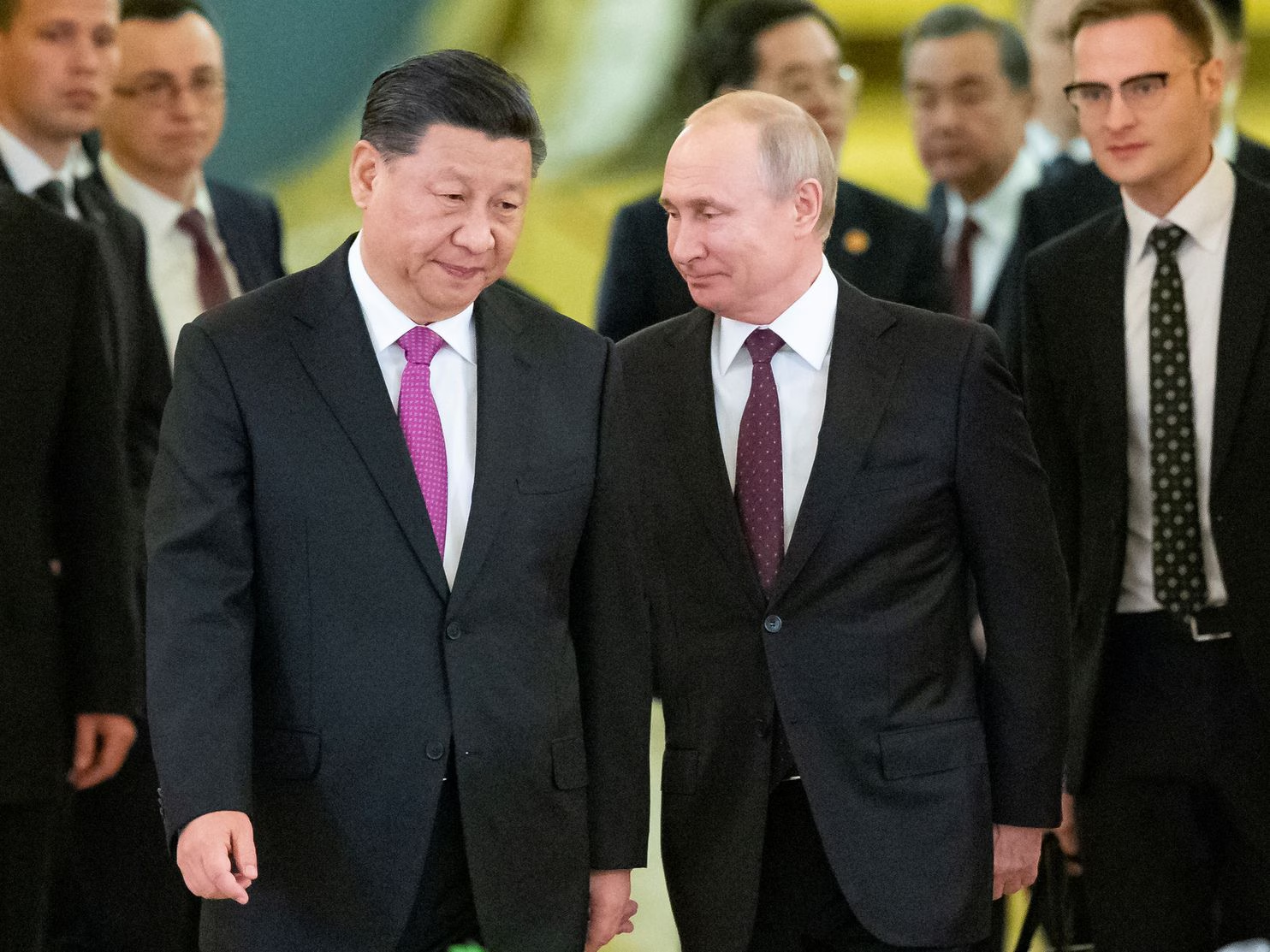
Chinese President Xi Jinping welcomed Russian President Vladimir Putin to Beijing on Monday as China sought to project itself as a pillar of global stability and diplomatic balance following last week’s high-profile visit by U.S. President Donald Trump.
Putin’s two-day visit comes just days after Trump concluded a closely watched summit with Xi, placing Beijing at the center of global diplomacy amid rising geopolitical tensions involving Ukraine, Iran and global trade disputes.
Chinese state media described the Putin visit as a reaffirmation of the “all-weather strategic partnership” between Beijing and Moscow, while Kremlin officials said the leaders would discuss energy cooperation, regional security and coordination on international affairs.
In remarks released ahead of the meeting, Putin said relations between Russia and China had reached “a truly unprecedented level,” reflecting Moscow’s growing reliance on Beijing as Western sanctions over the war in Ukraine continue to isolate Russia economically.
Analysts say the carefully timed summit is intended to send a broader message that China remains a stable global actor capable of maintaining strong ties with both Washington and Moscow despite intensifying rivalry between major powers.
The back-to-back visits by Trump and Putin have highlighted Beijing’s increasingly influential diplomatic position. During Trump’s visit, discussions reportedly focused on trade, Taiwan and Middle East security, while Xi’s talks with Putin are expected to emphasize energy cooperation and strategic coordination against Western pressure.
One of the key issues expected to dominate the Xi-Putin meeting is the proposed Power of Siberia 2 gas pipeline, a major energy project designed to expand Russian gas exports to China. Although negotiations have faced delays over pricing disagreements, both sides continue to present the deal as central to their long-term economic partnership.
China has become Russia’s largest trading partner since the start of the Ukraine war in 2022, purchasing large volumes of Russian oil and gas while providing Moscow with a critical economic lifeline. Western governments have repeatedly accused Beijing of indirectly supporting Russia’s war effort through trade and diplomatic backing, allegations China denies.
Despite strengthening ties with Moscow, Beijing has also attempted to stabilize relations with Washington after years of tensions over technology, tariffs and regional security. Chinese officials have framed the recent diplomatic engagements with both Trump and Putin as evidence of China’s role as a responsible global power capable of maintaining dialogue with rival nations.
Observers say the symbolism of hosting both leaders within days underscores Xi’s ambition to position China as a central force in shaping a new global order at a time of growing uncertainty in international politics.
Discover more from LN247
Subscribe to get the latest posts sent to your email.

