The All Progressives Congress (APC) has rejected the outcome of the Osun State governorship election, challenging the Independent National Electoral Commission’s (INEC) declaration of Governor Ademola Adeleke as the winner.
Rather than immediately announce whether it will challenge the result in court, the party says it is conducting a detailed review of the election results, electoral documents and events surrounding the poll.
The APC Osun State Governorship Campaign Director-General, Oluwole Oke, disclosed this during an interview on Arise News, saying the party believes Adeleke did not secure the highest number of valid votes.
“We do not agree with the declaration of INEC. That’s our position for now. We believe he did not score the highest valid votes,” Oke said.
According to Oke, the party has already begun auditing the election, with its agents directed to submit copies of relevant electoral documents to the APC secretariat for examination.
The documents include Forms EC8A, EC8B and EC8C, which contain results from polling units and subsequent stages of the collation process.
Oke said the party wants to examine the available records carefully before deciding what action to take.
“When you have a project of this nature with the outcome announced by INEC, we will not be in a haste, nor shall we be under pressure without doing the needful,” he said.
“The needful that we need to do is to evaluate the process, get all the records, review the process, and then form an opinion.”
The APC campaign DG said the party’s assessment would not be limited to the final figures announced by INEC.
According to him, the review will also cover events that occurred before and during the election, including whether they complied with the Electoral Act and other applicable laws.
“There are a lot of issues before us. There are a lot of issues for determination, even on a pre-election basis,” he said.
He added that the party would wait until the review was completed before making further statements.
“Until we do that and form our opinion, we won’t be able to go further to say anything on this.”
The position leaves open the possibility that the APC could challenge the election result through the appropriate legal process, although Oke did not confirm that the party had decided to approach the election tribunal.
Oke also rejected suggestions that internal disagreements within the APC were responsible for the party’s performance in the election.
He argued that disagreements exist within political parties generally and cited the Accord Party as an example.
“If you are talking about internal divisions, even the Accord Party itself is divided,” Oke said.
He pointed to the Accord Party chairman’s public endorsement of the APC candidate, arguing that disagreements within a political organisation do not necessarily prevent members from supporting a candidate during an election.
Oke also defended the Economic and Financial Crimes Commission’s (EFCC) decision to freeze an account belonging to the Osun State Government shortly before the election.
He argued that the anti-graft agency, as a lawful government institution, must have had reasons for taking the action.
“When you have a constitutional body, a lawful agency of government like the EFCC performing their lawful duty, I don’t see anything wrong in that,” he said.
However, Oke commended President Bola Tinubu for directing that the state government’s accounts be unfrozen.
He maintained that the controversy surrounding the account freeze was separate from the APC’s assessment of the governorship election and said he would not comment further without having all the relevant facts.
The APC official also dismissed claims that the party’s control of the Federal Government gave its candidate an unfair advantage during the election.
He argued that political realities at the state level could not simply be determined by which party controls the government at the centre.
“When people allude to the fact that our party is the ruling party and talk about federal might, it doesn’t work like that. Politics is local,” he said.
According to Oke, the involvement of APC governors and other senior party figures in the campaign was simply part of their support for the party’s candidate.
Oke also used the opportunity to criticise the Adeleke administration, particularly its record in education, healthcare and support for farmers.
He argued that the government’s performance would form part of the broader political assessment of the election.
“When you look at this in totality, you can see the failures of government glaring in the citizens’ faces,” he said.
Despite the party’s rejection of the result, Oke urged the public to wait for the completion of the APC’s review before drawing conclusions about its next move.
The party says it will examine the electoral documents and other available evidence before announcing its final position.
The development follows INEC’s declaration of Adeleke as the winner of the Osun governorship election. If the APC decides to pursue a legal challenge after completing its review, the dispute could move from the political arena to the election tribunal, potentially extending the contest beyond election day.
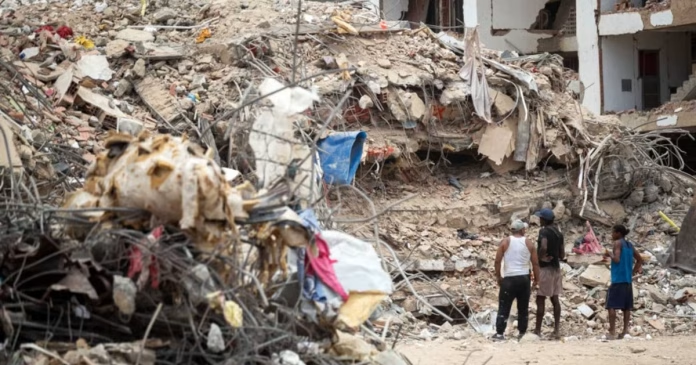
The death toll from the twin earthquakes that struck Venezuela in June has risen to 6,438, according to the latest official figures released on Monday, as rescue teams and relatives continue searching for people still missing.
The updated figure was announced by Parliament Speaker Jorge Rodriguez, increasing the previous death toll of 6,301 reported last week.
The two powerful earthquakes, measuring 7.2 and 7.5 in magnitude, struck near Venezuela’s coast on June 24 and caused extensive destruction. At least 190 buildings were brought down during the disaster.
Nearly two months after the earthquakes, the effects of the disaster continue to be felt across affected communities, with families and rescue workers still searching through the rubble for missing people.
Authorities estimate that at least 60,000 homes were affected by the earthquakes, with about 24,000 considered uninhabitable.
Thousands of people remain in temporary camps as they wait for permanent accommodation. Conditions in some of the camps have become increasingly difficult, particularly following heavy rainfall.
In Caracas over the weekend, heavy rain destroyed some of the tents being used to shelter earthquake victims, further worsening conditions for displaced residents.
The government of Interim President Delcy Rodriguez has promised to provide permanent housing for people whose homes were destroyed or rendered unsafe by the earthquakes.
However, progress has so far fallen short of the government’s target. Authorities had promised to make 4,000 homes available by the end of the year, but only 335 homes had been provided as of the latest update.
The rising death toll and continuing housing crisis highlight the scale of the devastation caused by the June earthquakes, with thousands of survivors still depending on temporary shelter and humanitarian assistance while reconstruction efforts continue.
Nigerian football icon Augustine “Jay-Jay” Okocha has disclosed that he continues to pay royalties to his brother for the famous nickname that has defined his career, tracing its origins back to their childhood in Enugu.
Speaking on the Obi One Podcast, the former Super Eagles captain explained that the moniker emerged from his neighbourhood, where numerous boys shared the name Austin, creating confusion among residents trying to distinguish between them.
To solve this problem, Okocha’s friends began calling him “Austin Jay-Jay’s brother,” a reference to his elder brother who already carried the Jay-Jay name. Over time, the tag shortened simply to “Austin Jay-Jay.” While Okocha stopped short of naming which sibling he compensates, his immediate elder brother Emmanuel was widely known by the Jay-Jay name during their youth.
Okocha reminisced about growing up with his brothers on the streets of Enugu, where football served as their primary pastime due to a lack of other recreational options. He recalled that all three siblings played the sport avidly, using the street as their training ground long before organised toys or facilities were available to them.
A student was shot dead at a Catholic high school in the Philippines on Tuesday after another student allegedly livestreamed the attack before taking his own life, authorities said.
The incident occurred at Ateneo de Zamboanga University, a private Catholic institution in Zamboanga City in western Mindanao. It is the second school shooting reported in the Philippines within two months.
Regional police spokeswoman Shella Chang said the suspect entered the classroom where the victim was located before shooting the student. The suspect then reportedly went to the fifth floor of the school building and shot himself.
“What we know so far is that (the shooter) went to the classroom of our known victim. He shot the victim, and after doing that, he went up to the fifth floor and shot himself,” Chang told AFP.
Interior Secretary Victor Remulla separately confirmed that the ninth-grade suspect had livestreamed the incident on social media. The Facebook account allegedly used during the broadcast has since been disabled.
Local media circulated footage from the livestream, which reportedly showed a gun being moved through a school hallway before it was pointed into a classroom and fired. Students in school uniforms could then be seen fleeing while screaming.
Authorities had not immediately established whether other people were injured.
The national police have launched an investigation to determine what led to the attack, where the firearm came from and how it was brought onto the school premises.
The interior ministry said police were working to “establish the motive behind the shooting, determine the ownership and source of the firearm used, and find out how it was brought inside the school campus”.
Police had yet to release the ages of either the suspect or the victim.
Ateneo de Zamboanga University President Father Guillrey Andal confirmed the two deaths and said the institution was “deeply saddened” by the incident.
He said the school was working with investigators to identify those involved and contact their families.
“We are in the process of working with the police for us to be able to identify them, so that we can communicate first with their loved ones,” he told reporters outside the school, while acknowledging that the incident had caused “deep concern and worry”.
Andal also said the school had already been considering additional safety preparations before the shooting.
“Prior to this, our security team had even been preparing a simulation exercise, precisely because we understand the value to everyone — our students, our personnel — of safety.”
School shootings remain relatively uncommon in the Philippines. However, the latest incident follows a June attack at a school in the central part of the country in which three teenage students were killed and 20 others injured.
Following that tragedy, Ateneo de Zamboanga and other schools across the Philippines conducted active-shooter preparedness drills.
Although firearm ownership is subject to strict regulation in the Philippines, authorities have long faced challenges from an illegal market for guns.
The investigation is expected to focus on the circumstances that allowed the weapon onto the school campus, the motive behind the attack and the events leading up to the shooting.
Veteran Nigerian actor Taiwo Hassan, popularly known as Ogogo, has reportedly been diagnosed with stage-four cancer, prompting an emotional appeal from his daughters for urgent medical assistance.
His daughters, Lima and Kira Taiwo, separately appealed on Instagram for Nigerians, well-wishers and medical professionals with experience in cancer care to help their father. In one of the videos, Lima said the actor’s condition had deteriorated and alleged that hospitals had refused to continue treating him.
Taiwo Hassan, who appeared emotional during the appeal, was also said to have urged Nigerians and well-wishers to help his family find a hospital or medical professionals willing to provide treatment. His family stressed that the appeal was not a request for financial donations.
The reports about his condition have raised public interest in what a stage-four cancer diagnosis actually means, whether it is always terminal, the symptoms that may occur, the factors that increase cancer risk and the treatment options available to patients with advanced disease.
What Is Cancer And What Does Stage 4 Mean?
Cancer is a broad term for a group of diseases in which abnormal cells grow uncontrollably and can invade surrounding tissues or spread to other parts of the body. The disease can develop in almost any organ or tissue.
Cancer is commonly described in stages to help doctors understand how far it has developed. Depending on the type of cancer, staging can take into account the size of the primary tumour, whether nearby lymph nodes are involved and whether the disease has spread to distant parts of the body.
Stage 4 is generally the most advanced stage for cancers that use this staging system. In many cancers, it means the disease has spread from the place where it began to distant organs or tissues. This spread is known as metastasis, and cancers that have spread in this way are often described as metastatic cancer.
For example, if breast cancer spreads to the lungs, the cancer in the lungs is still metastatic breast cancer, not lung cancer. The original cancer determines its name and many aspects of its treatment.
The liver, lungs and bones are among the sites where some cancers commonly spread, although the pattern varies considerably depending on the type of cancer.
It is also important to understand that stage 4 does not automatically mean that a person has no treatment options or that death is imminent. Some metastatic cancers can be controlled for long periods, and some patients live for years with treatment. The outlook depends heavily on the specific cancer, where it has spread, its biological characteristics, previous treatment and the patient’s overall health.
Symptoms Of Advanced Cancer And How They Can Vary
There is no single set of symptoms that applies to every stage-four cancer patient. Symptoms often depend on where the original cancer developed and which parts of the body have been affected by its spread.
Possible general symptoms can include:
Unexplained weight loss.
Persistent or severe tiredness and weakness.
Loss of appetite.
A new lump or swollen lymph node.
Persistent or worsening pain.
Changes in normal bodily functions, depending on the affected organ.
When cancer spreads to particular organs, additional symptoms may appear. For example, spread to the lungs may cause shortness of breath or breathing difficulties, while spread to the liver may cause jaundice or swelling of the abdomen. Cancer affecting the brain can cause headaches, dizziness, vision problems or seizures, while cancer that spreads to the bones can cause significant pain or fractures.
However, having any of these symptoms does not by itself mean that someone has cancer. Many other illnesses can cause similar symptoms, which is why diagnosis requires appropriate medical assessment, tests and investigations.
What Causes Cancer?
Cancer does not have one universal cause. It develops through changes in cells that can arise from a combination of genetic factors and exposure to cancer-causing agents.
The World Health Organization identifies several important risk factors, including:
Tobacco use.
Alcohol consumption.
Being overweight or obese.
Physical inactivity.
Unhealthy diets.
Exposure to air pollution.
Ultraviolet radiation.
Certain forms of ionising radiation.
Some workplace exposures.
Certain infections, including HPV and hepatitis B and C.
Some cancers also have an inherited genetic component, meaning that certain people may have a higher risk because of genetic changes passed through families. Age is another important factor, as cancer risk generally increases with age due to the accumulation of cellular changes and exposure to risk factors over time.
Cancer-causing infections are particularly important globally. WHO identifies infections such as HPV, hepatitis B and hepatitis C among important contributors to cancer, particularly in low- and middle-income countries.
Can Cancer Be Prevented?
Not every cancer can be prevented, and developing cancer is not necessarily a result of something a person did or failed to do.
However, a significant proportion of cancers can be prevented by reducing exposure to established risk factors. WHO and the International Agency for Research on Cancer estimated in 2026 that about 37% of new cancer cases in 2022 were linked to preventable causes.
Evidence-based ways to reduce cancer risk include:
Avoiding tobacco in all forms.
Limiting alcohol consumption.
Maintaining a healthy weight.
Eating a balanced diet rich in fruits and vegetables.
Engaging in regular physical activity.
Protecting the skin from excessive ultraviolet radiation.
Receiving recommended HPV and hepatitis B vaccinations.
Reducing exposure to known occupational and environmental carcinogens.
Following appropriate cancer-screening recommendations.
WHO says prevention, combined with early detection and effective treatment, can substantially reduce the burden of cancer.
How Is Stage 4 Cancer Treated?
Treatment for stage-four cancer is not one-size-fits-all. Doctors first need to establish what type of cancer the patient has, where it originated, how extensively it has spread and what biological characteristics the cancer possesses.
Because metastatic cancer can affect multiple parts of the body, treatment often involves therapies that can reach cancer cells throughout the body.
Depending on the cancer, these may include:
Chemotherapy.
Immunotherapy.
Targeted therapy.
Hormone therapy for cancers that respond to hormones.
Radiation therapy.
Surgery in carefully selected situations.
Other specialised medicines or treatments.
The National Cancer Institute says treatment for metastatic cancer is available for most types of metastatic cancer, although the goals differ from one patient to another. Treatment may aim to slow or stop the cancer’s growth, reduce the amount of cancer in the body, relieve symptoms and help the patient live longer.
In some cases, treatment may also focus on maintaining or improving quality of life.
Why Treatment Is Different For Every Patient
Two people can both have stage-four cancer and still require completely different treatment plans.
Doctors consider factors such as the original cancer type, the locations to which it has spread, previous treatments, the cancer’s genetic or molecular characteristics and the patient’s general health.
The intensity of treatment also depends on how well a person is likely to tolerate it. A treatment that is appropriate for a relatively fit patient may be too difficult for someone who is frail or dealing with other serious health problems.
This is why treatment decisions should be made by a specialist cancer-care team rather than based solely on the stage of the disease.
Can Stage 4 Cancer Be Cured?
This is one of the most difficult questions patients and families face, but there is no single answer.
For many metastatic cancers, doctors describe treatment in terms of control rather than guaranteed cure. The aim may be to shrink or slow the cancer, prevent further progression, relieve symptoms and extend life.
However, some patients with metastatic disease can experience long periods of effective control, while selected patients whose cancer has spread to only a small number of sites may be candidates for more aggressive treatment.
This is sometimes referred to as oligometastatic disease. In carefully selected cases, doctors may use surgery or focused radiation to treat individual areas of metastatic disease.
Therefore, a stage-four diagnosis should not be interpreted as a prediction of exactly how long someone has to live.
The Role Of Palliative Care In Stage 4 Cancer
Palliative care is sometimes misunderstood as treatment that is offered only when a patient is dying.
In reality, palliative care can be provided alongside cancer treatment at different stages of the illness. Its purpose is to relieve symptoms and treatment-related side effects while supporting the patient’s quality of life.
Depending on the patient’s needs, palliative care may help manage:
Pain.
Breathing difficulties.
Nausea and other treatment side effects.
Fatigue.
Emotional distress.
Nutritional difficulties.
Other symptoms associated with advanced cancer.
For patients and families dealing with advanced disease, this form of care can be an important part of comprehensive cancer management.
What Determines A Patient’s Outlook?
A stage-four diagnosis alone cannot determine a patient’s prognosis.
Doctors generally consider:
The type of cancer.
The location of the original tumour.
Where the cancer has spread.
How quickly it is growing.
The genetic and molecular characteristics of the tumour.
How the cancer responds to treatment.
The patient’s age and general health.
Previous treatments and their effectiveness.
This is why statistics about one type of cancer should not automatically be applied to another patient.
What Taiwo Hassan’s Reported Diagnosis Means
In Taiwo Hassan’s case, the public information currently available does not identify the specific type of cancer, the organ where it originated, the locations to which it may have spread, or the treatment plan being recommended by his doctors.
Those details are important because “stage 4 cancer” describes the extent of disease, not one particular illness. Different cancers behave differently and respond to different treatments.
Reports about Hassan’s condition originated from public appeals by his daughters, who said his condition had deteriorated and sought assistance from medical professionals and healthcare facilities.
A recent report also highlighted medical discussion around palliative care following the family’s appeal, underscoring why the exact clinical circumstances and treatment plan should ultimately come from Hassan’s medical team.
Until further medical information is released by the family or his doctors, it would be inappropriate to speculate about the actor’s specific prognosis.
Zambian authorities have confirmed the arrest of several senior opposition figures on the night of last week’s general elections, accusing them of threatening state security as vote counting continued into Monday.
Partial results from Thursday’s presidential and parliamentary polls show President Hakainde Hichilema holding a lead, with the outcome widely viewed as a referendum on whether his economic recovery efforts since the pandemic-era debt crisis are enough to secure him a second term in the copper-rich nation.
Opposition leader and Hichilema’s main challenger, Brian Mundubile, said armed security personnel stormed his residence following the election, describing the raid as an attempt on his life. However, the government offered a starkly different account, stating in a release issued Sunday night that Mundubile was present when 11 people were apprehended after shots were fired at law enforcement officers from within the property, triggering an exchange of gunfire.
According to the statement, those detained were found in possession of military-grade weapons, ammunition, and materials linked to plans for armed insurrection, adding that the individuals had been under surveillance for several months. Six people were named as being in custody, including a spokesperson for Mundubile, with the remainder described as senior members of various political parties.
The arrests come after opposition figures had already been demanding the safe return of several people close to Mundubile who they said had gone missing or been detained. Opposition parties and civil society organizations have accused the government of escalating repression ahead of the vote, pointing to restrictions placed on campaign gatherings and political activity, allegations the government has rejected.
Thousands of people displaced by a powerful earthquake in eastern Indonesia spent another night away from their homes on Monday, as they waited for emergency assistance and feared returning to buildings damaged by the disaster.
The magnitude 7.7 earthquake struck early on Saturday and killed 54 people, while more than 100 others were injured. Rescue officials said there had been no reports of missing people.
The number of people unable to return home had risen to 12,800 by Monday morning, according to Berton Suar Pelita Panjaitan, a spokesperson for Indonesia’s National Disaster Management Agency (BNPB). Those displaced were spread across several communities on Flores Island.
Many residents were preparing to spend a third night outdoors because more than 1,600 aftershocks had been recorded following the main earthquake, according to Indonesia’s geological agency, BMKG.
In the town of Mbay, in Nagekeo Regency near the earthquake’s epicentre, residents were seen sleeping in makeshift shelters constructed from tarpaulins and poles.
One resident, 32-year-old Junaidin, said many homes had become unsafe because of collapsed sections and extensive cracks.
“Our houses are no longer liveable, because many have collapsed and are full of cracks, so we can’t go inside anymore,” Junaidin said outside a makeshift tent where about 30 people were sleeping.
“We only go back home to get water, clothes, pillows, and then we… spend the nights here.”
The disaster has also revived painful memories for residents who experienced another magnitude 7.7 earthquake on Flores in 1992. That earthquake triggered a tsunami and killed about 2,500 people.
Junaidin expressed frustration over what he described as delays in receiving government assistance, particularly as Indonesia marked Independence Day with celebrations in the capital, Jakarta.
“As for help from the government, there hasn’t been any — no tents, no medicine, no food, no drinking water, nothing,” he said.
“Please open your eyes, government. We are your people, we are part of you. So please look after us.”
The Indonesian authorities subsequently began increasing the delivery of emergency supplies to affected communities.
The Indonesian Air Force said it was transporting 13 tonnes of relief materials using two Hercules aircraft and a Boeing aircraft. Helicopters were also being deployed to deliver supplies directly to survivors in isolated areas, according to the state news agency Antara.
The emergency supplies include food, clothing, clean water and medical equipment, while military personnel have been deployed to assist with distribution from key supply centres.
For residents who fled their homes with little or nothing, however, assistance remains urgently needed.
“We fled with nothing. Just the clothes on our backs. We’re victims; we’re going through a disaster,” said 31-year-old Siti Saudah Daso, a mother of three from Mbay.
“They said they would give us something, but there’s no proof. So honestly, we’re a bit upset, disappointed.”
Rescue teams were continuing to search affected areas for anyone who might still require assistance.
Search-and-rescue official Fathur Rahman said teams were conducting both ground and aerial operations.
“We conduct land and air operations from helicopters. There haven’t been any reports on missing persons, but we are still scouring the area just to be sure.”
The earthquake was relatively shallow, with its epicentre located just off the northern coast of Flores, according to geological authorities.
Although the affected communities have few high-rise buildings, the earthquake caused extensive damage to homes and public infrastructure.
BNPB spokesperson Berton said at least 914 houses had been severely damaged, while hundreds of others suffered less serious damage.
Several public buildings were also affected, including schools, healthcare facilities and government offices.
The disruption to education has raised particular concerns for children in the affected communities. Save the Children said more than 8,000 children faced “safety risks and disruptions to their education” as a result of the earthquake.
Indonesia is particularly vulnerable to earthquakes because it lies along the Pacific “Ring of Fire”, a vast zone of intense seismic activity extending from Japan through Southeast Asia and around the Pacific basin.
The country has experienced some of the world’s most devastating earthquakes and tsunamis.
In 2004, a magnitude 9.1 earthquake struck off the coast of Sumatra and triggered a massive tsunami that killed about 220,000 people across the region, including approximately 170,000 in Indonesia.
That disaster remains one of the deadliest natural catastrophes ever recorded, underscoring the scale of the risks faced by communities living along Indonesia’s seismically active islands.
Two people have died and hundreds of residents and visitors were evacuated after two wildfires broke out almost simultaneously on the Greek island of Salamina, near Athens, on Sunday.
Around 200 firefighters were deployed to prevent the two fires from joining together and creating a much larger blaze, as strong winds made firefighting efforts more difficult.
The first fire was reported at about 14:40 local time (11:40 GMT) near the island’s southern coast. It spread quickly through the area, with another fire breaking out around 20 minutes later in the eastern part of Salamina. Authorities have not yet established what caused either blaze.
The first fire began in a forested residential area in Peristeria, in the southern part of the island. Fire official Vasilios Vathrakoyannis said firefighters responding to the incident discovered two bodies at the scene.
The local mayor told Greek media that the victims were believed to have been a couple.
By Sunday evening, one of the fires had been brought under control and evacuation operations had been completed, according to Greek media reports. About 500 people were evacuated from the island by sea as authorities worked to keep the flames from spreading.
The second fire, which started in the eastern town of Selinia, was later reported to have “no active front”, although firefighters continued monitoring scattered areas of fire.
Authorities kept two coast guard vessels and a fire department vessel in the area to provide surveillance and emergency assistance.
At least 10 other people suffered burns or experienced “symptoms of smoke inhalation”, according to Greek Health Minister Adonis Georgiades. Five of those affected were taken to local medical facilities for treatment.
Firefighting operations involved 50 fire engines, water tankers, construction machinery and several aircraft. The scale of the deployment reflected concerns that strong winds could push the flames across the island and cause the two separate fires to merge.
Salamina Deputy Mayor Thodoris Zannis said earlier that firefighters were working to prevent the fires from crossing a mountain on the island and joining together to form a single, potentially more dangerous blaze.
Several patrol boats and private vessels were also sent to the area to assist with evacuation and emergency operations.
Salamina is located just west of Athens and has a population of around 37,000 people, many of whom are elderly, making evacuation and emergency response particularly important during a major wildfire.
The fires on Salamina were part of a wider series of wildfires affecting parts of Europe over the weekend.
In Belgium, firefighters were battling a wildfire for a third consecutive day in Hautes Fagnes, the country’s largest nature reserve. The fire has been described as the largest in Belgium’s recent history and reportedly more than doubled in size within 24 hours.
Croatia’s coastline was also affected by a major wildfire that killed at least one person and injured dozens of others. Around 1,200 residents and tourists were evacuated, with Croatia’s fire chief, Slavko Tucakovic, describing it as “one of the worst” fires in the country’s history.
The latest fires come amid growing concerns over extreme heat and wildfire conditions across Europe. The EU’s Copernicus Climate Change Service has reported that western Europe experienced its hottest June-to-July period on record, adding to concerns about the increasingly difficult conditions faced by firefighters during the summer wildfire season.
UK Prime Minister Andy Burnham exchanged messages with an individual who was pretending to be Susie Wiles, US President Donald Trump’s chief of staff, in a security incident that has reportedly been referred to the appropriate authorities.
The incident was first reported by Politico, which said Burnham communicated with the person claiming to be Wiles before becoming suspicious that the contact was not genuine.
Sources said only a few messages were exchanged and that “No messages of significance” were involved.
A UK government spokesperson declined to provide further details, saying: “We do not comment on national security matters.”
It is understood that the communication took place entirely through text messages and that Burnham did not have a conversation or call with the person impersonating Wiles.
Sources said the messages were “quickly reported to the appropriate authorities” after officials became concerned that the contact was suspicious.
The latest incident comes against the background of an earlier security breach involving Wiles.
The BBC previously reported that the FBI investigated the hacking of Wiles’ phone in May last year. Wiles said her personal phone had been compromised after one or more impersonators obtained access to her contacts and used them to contact senior US officials.
Although the incident involved Wiles’ personal phone rather than an official government device, the people targeted included US senators, governors and prominent business executives.
Wiles, one of Trump’s closest political allies, was also previously targeted by a cyber-espionage group linked to Iran’s Revolutionary Guards in 2024.
The latest impersonation incident highlights the potential security risks created when attackers use the identities and contact information of senior government officials to establish apparently legitimate communication with political leaders.
According to Politico, Burnham exchanged the messages with the person posing as Wiles before becoming suspicious about the authenticity of the contact.
The limited nature of the exchange means there is currently no indication that sensitive information was disclosed.
However, the fact that the communication involved a senior UK political figure and someone impersonating a senior White House official makes the incident significant from a security perspective.
Officials are understood to have acted after the messages were considered suspicious, with the matter being passed to the relevant authorities.
The Burnham incident is not the first time a senior British politician has been targeted by someone pretending to be a foreign leader or official.
In 2024, the Foreign, Commonwealth and Development Office confirmed that then-Foreign Secretary David Cameron had been targeted in a hoax communication involving someone impersonating former Ukrainian President Petro Poroshenko.
Cameron also exchanged several text messages with the impersonator.
The Foreign Office subsequently made details of the incident public because of concerns that the communication could be “manipulated”.
Cameron had previously dealt with Poroshenko on several occasions while serving as prime minister, including during international summits, which may have helped make the impersonation appear credible.
Other UK government ministers have faced similar attempts.
In 2022, Defence Secretary Ben Wallace and then-Home Secretary Priti Patel were targeted by an individual impersonating Denys Shmyhal, who was Ukraine’s prime minister.
The communications were conducted through Microsoft Teams, with Wallace blaming Russian “dirty tricks” for the attempted deception.
A Ministry of Defence source described the video call as “fairly sophisticated”, noting that it had come through another government department, which increased its apparent credibility.
The incidents demonstrate how impersonation attacks can exploit existing political relationships and trusted communication channels rather than relying solely on traditional hacking techniques.
The Burnham episode underscores the growing security challenge facing politicians and senior government officials, particularly as political communication increasingly takes place through personal phones and messaging platforms.
An attacker does not necessarily need to gain direct access to a government system to cause concern. By impersonating a trusted official, obtaining access to a contact list or exploiting an existing relationship, they can attempt to create a credible channel of communication with influential decision-makers.
In Burnham’s case, officials say the exchange was limited and that the messages contained nothing significant. Nevertheless, the incident has been reported to the relevant authorities, while Downing Street has declined to discuss the details because of the national-security implications.
Six people were killed and four others injured after Ukrainian missile strikes hit Russia’s Belgorod region overnight, according to the region’s acting governor, Alexander Shuvaev.
A 14-year-old child was among those injured, Shuvaev said in a Telegram post on Monday. The reported strikes came amid a sharp escalation in long-range attacks between Russia and Ukraine, with both sides continuing to target locations away from the front lines.
Ukrainian officials, meanwhile, said Russian drone strikes killed two people in Ukraine’s Sumy region, which borders Russia and has frequently come under attack.
The latest exchange followed what Russian officials described as the “largest-scale” Ukrainian attack of the year. At least seven people were reportedly killed in that attack. Russian strikes on Ukraine also killed at least seven people and injured more than 39 others on Saturday night.
Russia launched its full-scale invasion of Ukraine in February 2022 and currently controls roughly a fifth of Ukrainian territory.
In Belgorod, the latest strikes reportedly caused a building to catch fire and damaged a vehicle in the village of Koloskovo, in the Valuysky district near the Ukrainian border. Shuvaev said the injured teenager was taken to hospital, while two other injured people received medical attention.
A separate Ukrainian drone strike in Russia’s southern Astrakhan region also killed a woman, according to regional Governor Igor Babushkin. He said the attack targeted an industrial facility, although the facility itself was not damaged.
The violence also continued on the Ukrainian side of the border. In the Black Sea port city of Odesa, a Russian overnight attack damaged a civilian vessel and injured four people, according to regional governor Oleh Kiper.
Moscow has increasingly targeted Ukraine’s ports and coastline, while Kyiv has stepped up its long-range drone campaign against targets deep inside Russia.
Ukraine has significantly increased its use of drones against Russian territory in recent weeks.
During Saturday night’s attacks, Ukraine launched about 822 drones towards Russia, according to Russian officials, who said approximately 600 were directed towards the Moscow region. The Moscow regional governor described the assault as “one of the most massive drone attacks in recent memory”.
The attacks caused deaths and damage in several parts of Russia.
Five people were killed in the southwestern Rostov region, according to its governor. In Belgorod, officials reported that a woman was killed in an attack on a civilian bus, while an 83-year-old man was killed in a drone strike in the Moscow region.
A warehouse belonging to Russian online retailer Wildberries was also hit.
Ukraine has repeatedly targeted the company since July, accusing it of supporting Russia’s military logistics. Ukraine’s defence ministry said the latest strike meant that seven of the company’s 10 largest logistics centres had been “disabled”.
While Ukraine has expanded its attacks on Russian territory, Russia has also intensified its missile and drone strikes across Ukraine.
Ukrainian energy company Naftogaz said on Monday that Russian forces had attacked its facilities 13 times during the previous week.
During Saturday night’s Russian attacks, a man and a woman were killed after a private home in the Zaporizhzhia region was hit by a guided aerial bomb, according to Ukrainian officials. Five other people were reportedly killed in attacks elsewhere in the country.
Russia said its strikes on Kyiv were aimed at a FirePoint facility involved in producing components for Ukrainian Flamingo missiles and a factory manufacturing drone components.
The Russian attacks also damaged a book market in Kyiv’s Pochayna district, where burnt books were seen scattered across the ground.
Ukrainian President Volodymyr Zelensky said 13 regions of Ukraine had come under attack during the week.
According to Zelensky, Russia launched more than 1,550 attack drones, nearly 1,560 guided aerial bombs and 62 missiles during the period.
The figures underline the scale of the aerial campaign being conducted by both countries as the war enters another increasingly intense phase.
The United Nations recently reported that civilian casualties in Ukraine rose sharply in July, with at least 437 civilians killed and 2,610 injured. The UN said the figures represented the highest monthly civilian death toll in Ukraine since May 2022.
Russia and Ukraine continue to accuse each other of attacking civilian areas, while both governments deny deliberately targeting civilians.
The latest strikes demonstrate how the conflict has increasingly expanded beyond traditional front-line fighting. Long-range drones and missiles are now regularly being used to hit military, industrial, energy and logistics targets deep inside both countries, while civilian areas are also suffering damage and casualties.
The escalation comes as Ukraine seeks to impose greater costs on Russia’s military and economic infrastructure, while Moscow continues its campaign of missile and drone attacks against Ukrainian cities and critical infrastructure.
Recent attacks have also raised concerns beyond the two countries. A major Ukrainian strike on Russia’s Black Sea port of Novorossiysk earlier in August damaged naval assets and disrupted grain terminals, with fears over possible effects on global wheat supplies.
The latest exchange therefore points to an increasingly dangerous phase of the Russia-Ukraine war, with both sides expanding the range and intensity of their attacks while diplomatic efforts to end the conflict remain unresolved.
To provide the best experiences, we use technologies like cookies to store and/or access device information. Consenting to these technologies will allow us to process data such as browsing behaviour or unique IDs on this site. Not consenting or withdrawing consent, may adversely affect certain features and functions.
Functional
Always active
The technical storage or access is strictly necessary for the legitimate purpose of enabling the use of a specific service explicitly requested by the subscriber or user, or for the sole purpose of carrying out the transmission of a communication over an electronic communications network.
Preferences
The technical storage or access is necessary for the legitimate purpose of storing preferences that are not requested by the subscriber or user.
Statistics
The technical storage or access that is used exclusively for statistical purposes.The technical storage or access that is used exclusively for anonymous statistical purposes. Without a subpoena, voluntary compliance on the part of your Internet Service Provider, or additional records from a third party, information stored or retrieved for this purpose alone cannot usually be used to identify you.
Marketing
The technical storage or access is required to create user profiles to send advertising, or to track the user on a website or across several websites for similar marketing purposes.